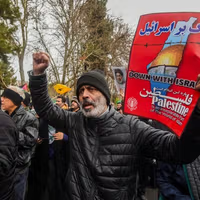
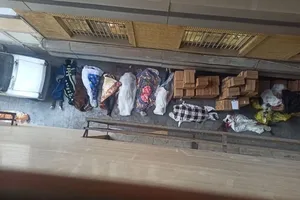
IRGC-linked outlet confirms Ghalibaf, Araghchi visit to Qatar
Tasnim news agency confirmed on Monday that Parliament Speaker Mohammad Bagher Ghalibaf and Foreign Minister Abbas Araghchi have traveled to Qatar.



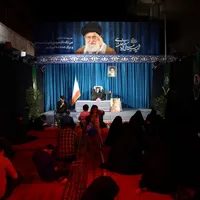
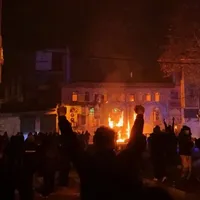
Iranian Parliament Speaker Mohammad Bagher Ghalibaf and Foreign Minister Abbas Araghchi are in Doha to meet Qatar’s prime minister over a potential US-Iran deal to end the war, Reuters reported on Monday, citing an official briefed on the visit.
Talks in Doha are primarily focused on the Strait of Hormuz and Iran’s highly enriched uranium, the official said.
Iran’s central bank governor was part of the Iranian delegation in Doha to discuss the possible release of frozen Iranian funds as part of an eventual final US-Iran agreement, the official added.
Iran’s state media had reported earlier that Abdolnaser Hemmati traveled to Qatar for talks on Iran’s frozen funds.
Iran’s authorities approved returning internet access to its pre-January 2026 status, state media reported on Monday after 87 days of digital blackout and isolation from the global internet.
The reports, citing informed sources, said the decision was made at a meeting of the Supreme Council of Cyberspace chaired by Vice President Mohammadreza Aref.
The reports come as internet access has been cut in Iran since the start of the war with the United States and Israel. Before that, access had also been disrupted around January 8 and 9, during nationwide protests.
Rauf Derakhshani-Mehr, a 19-year-old university student killed during January protests in the southern city of Dezful, was buried at night under pressure from security forces after his family located his body in a morgue, according to information obtained by Iran International.
Derakhshani-Mehr, a law student at Islamic Azad University, was shot dead during protests on January 9, a source familiar with the case said.
He was struck by a live bullet in the side and had also suffered metal pellet wounds to the left side of his body before the fatal shooting, the source said.
US President Donald Trump said on Monday that any deal with Iran would have to be “great and meaningful,” adding that otherwise there would be no agreement.
“The deal with Iran will either be a great and meaningful one, or there will be no deal,” Trump wrote in a post on Truth Social.
Trump attacked Democrats and some Republicans who criticized the potential agreement, saying they knew nothing about terms.
"I laugh at all of the Dumocrats, RINOS, and Fools who know nothing about the potential deal I am making with Iran, things that haven’t even been negotiated yet," he wrote in a post on Truth Social.
He said any agreement would be “the exact opposite” of the 2015 nuclear deal reached under former US President Barack Obama, which he called a “direct and open path” for Iran to obtain a nuclear weapon.
Rauf Derakhshani-Mehr, a 19-year-old university student killed during January protests in the southern city of Dezful, was buried at night under pressure from security forces after his family located his body in a morgue, according to information obtained by Iran International.
Derakhshani-Mehr, a law student at Islamic Azad University, was shot dead during protests on January 9, a source familiar with the case said.
He was struck by a live bullet in the side and had also suffered metal pellet wounds to the left side of his body before the fatal shooting, the source said.
After he was transferred to Ganjavian hospital, his body was left alongside those of several other young protesters in the hospital grounds, according to witnesses and hospital staff cited by the source.
Witnesses said wounded protesters were denied treatment and that several people died because they did not receive medical care. Blood covered parts of the hospital grounds because of the severity of the injuries, they added.
Family searched hospitals and morgues
Derakhshani-Mehr’s family spent hours searching for him and went to the hospital, where officials initially denied he was there despite the family checking different wards.
Emergency personnel later told the family his body was being held in the hospital morgue, but security forces sealed the facility and prevented relatives from seeing him, the source added.
Family members were also given conflicting information by different authorities and were at one point told that he was still alive.
His body was eventually identified at the forensic medicine office in Ahvaz after being transferred there as an unidentified person, according to the account received by Iran International.
Before handing over the body, authorities forced the family to agree that the burial would take place at night and attended only by a small number of people. Derakhshani-Mehr was buried in Shahidabad cemetery in Dezful.
Night burials reported in earlier crackdowns
Security forces in Iran have previously buried slain protesters at night or without notifying their families.
In one case previously reported by Iran International, a 16-year-old boy named Reza who was killed during protests in Karaj was secretly buried by members of the Islamic Revolutionary Guards Corps without his family’s knowledge.
Witnesses said Reza was shot by a sniper around 9 p.m. on January 8 in the Shahin Vila neighborhood of Karaj. He later died after being moved to a residential parking area and then taken to a clinic.
People familiar with the case said the teenager’s family was informed the following day that members of the Revolutionary Guards had buried him overnight and disclosed the location of the grave afterward.