• العربية
  • فارسی
Brand
  • Iran Insight
  • Politics
  • Economy
  • Analysis
  • Special Report
  • Opinion
  • Podcast
  • Iran Insight
  • Politics
  • Economy
  • Analysis
  • Special Report
  • Opinion
  • Podcast
  • Theme
  • Language
    • العربية
    • فارسی
  • Iran Insight
  • Politics
  • Economy
  • Analysis
  • Special Report
  • Opinion
  • Podcast
All rights reserved for Volant Media UK Limited
volant media logo

Iran’s partial internet return exposes rift inside ruling system

Maryam Sinaiee
Maryam Sinaiee

Iran International

May 27, 2026, 20:54 GMT+1
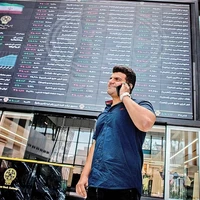
Iranian men use their phones, after a reported reopening of international internet access, in Tehran, Iran, May 27, 2026.

Iran’s partial restoration of international internet access after nearly three months of blackout has opened a new fight inside the ruling system, with hardliners accusing President Masoud Pezeshkian’s government of bypassing powerful security and cyberspace institutions.

The dispute centers on a “special headquarters” set up earlier this month under First Vice President Mohammad-Reza Aref to determine how and when broader access to the global internet should resume after wartime restrictions imposed during the recent conflict between Iran and Israel.

Hardliners have portrayed the body as a parallel institution created to sideline opponents inside the Supreme National Security Council and the Supreme Council of Cyberspace, two of Iran’s most influential policymaking bodies on security and internet governance.

Hardliners go to court

The backlash intensified after the headquarters voted on Monday to move forward with restoring international internet access.

In response, four hardline members of the Supreme Council of Cyberspace filed a complaint with Iran’s Administrative Justice Court, seeking to halt implementation of the decision and dissolve the newly formed body.

The court quickly ordered the suspension of the headquarters’ decisions pending a final review. But the government later moved ahead with reconnection, and within hours home internet services began returning in parts of the country, followed later by access through some mobile operators.

The legal complaint drew particular attention because of the people involved. Iranian media identified the four plaintiffs as figures affiliated with the ultra-conservative Paydari, or Steadfastness, camp who also serve on the Supreme Council of Cyberspace.

Reports also suggested that the complaint was encouraged by Mohammad-Amin Aghamiri, secretary of the Supreme Council of Cyberspace, who was appointed during the administration of former president Ebrahim Raisi. Reformist allies of Pezeshkian have repeatedly called for Aghamiri’s removal, but he has remained in office.

According to reports from inside the meeting chaired by Aref, nine members voted in favor of restoring broader internet access, while three opposed it. Those reportedly opposed included Aghamiri and Peyman Jebelli, head of Iran’s state broadcaster.

Both men have consistently opposed access to the global internet and have publicly supported a “Chinese-style” internet governance model, centered on a heavily controlled domestic network often described by critics as the “Iranian internet.”

Attacks on government

Hardline criticism has focused less on the technical restoration itself than on who had the authority to make the decision.

Hamshahri, a newspaper run by Tehran Municipality and heavily influenced by hardline factions, argued that restrictions should remain because cyberspace had become one of the main fronts of war.

“Is it really still unclear that today’s war is no longer fought only on land, in the air and at sea, and that cyberspace has become one of the principal battlefields?” the newspaper wrote.

The IRGC-linked Fars News Agency wrote that critics of the government were concerned that “legal mechanisms in the country’s macro-decisions” could gradually be weakened if the authority of other institutions were compromised.

Hamid Rasaee, a hardline member of parliament, wrote on X that the committee formed by Aref had submitted its resolution to the president for approval, “but Pezeshkian himself knows that although he is the head of the Supreme National Security Council, he has no authority to violate its resolutions."

Hamed Nikoonahad, a law professor at Shahid Beheshti University, also told state television that without a resolution from the Supreme National Security Council, the internet should not return to its previous state unless a higher authority, meaning the Supreme Leader, orders it.

Raja News, which reflects the views of Saeed Jalili and the Paydari Front, criticized the silence of other conservatives who support Pezeshkian’s administration. In a note titled “The government’s fabricated headquarters bypassed the Supreme National Security Council resolution,” it demanded that they take a clear position.

Partial and fragile access

The restoration remains limited.

The partial return is far from a full reopening. Internet monitor NetBlocks said access remains heavily filtered, with new restrictions on messaging platforms and app stores, while unstable connections continue to leave many users dependent on VPNs.

According to NetBlocks, access has recovered to slightly more than 60 percent of normal levels.

Neda, an interior designer in Tehran, told Iran International that past experience had made her skeptical of the sudden change. She recalled how internet access improved briefly after the January unrest, only to be restricted again when the war began.

She said nearly three months of total disconnection had changed public expectations.

“As the saying goes, they made us look at death so we would settle for a fever,” she said.

Most Viewed

Iran restores internet after 88-day blackout, keeps social media blocked
1

Iran restores internet after 88-day blackout, keeps social media blocked

2
VOICES FROM IRAN

Iranians greet internet return with grief, anger and defiance

3

Rising care costs hit Iranians with spinal injuries

4
INSIGHT

Khamenei vows Israel’s annihilation as Hezbollah steps up attacks- why now?

5

Period poverty, stigma deepen hardships for Iranian women

Banner
Banner

Spotlight

  • Iran’s partial internet return exposes rift inside ruling system

    Iran’s partial internet return exposes rift inside ruling system

  • Iranian students in Canada caught between blackout, debt and fear of return

    Iranian students in Canada caught between blackout, debt and fear of return

  • Khamenei vows Israel’s annihilation as Hezbollah steps up attacks- why now?
    INSIGHT

    Khamenei vows Israel’s annihilation as Hezbollah steps up attacks- why now?

  • Oil pressure and economic strain drive Iran-US talks
    ANALYSIS

    Oil pressure and economic strain drive Iran-US talks

  • Family forced into nighttime burial after student killed in protests
    EXCLUSIVE

    Family forced into nighttime burial after student killed in protests

  • Trump vs Tehran: how not signing became the deal
    OPINION

    Trump vs Tehran: how not signing became the deal

•
•
•

More Stories

Prospect of US-Iran deal fuels attacks on Ghalibaf

May 25, 2026, 02:58 GMT+1

Talk of a possible agreement between Tehran and Washington has intensified political attacks on parliament speaker Mohammad Bagher Ghalibaf, a central figure in Iran’s diplomatic push and a politician widely seen as backing a more pragmatic approach to negotiations.

The pressure comes as parliament prepares to elect its new presidium on Monday.

An unusually blunt report published Sunday by the semi-official Iran Labour News Agency (ILNA) described what it called “organized destruction,” media pressure campaigns and coordinated text-message attacks targeting Ghalibaf ahead of the vote.

A lawmaker interviewed by ILNA, Rouhollah Lak Aliabadi, accused political rivals of orchestrating text-message campaigns against Ghalibaf in an effort to influence members of parliament before the leadership vote.

He said opponents were portraying support for negotiations as a form of surrender or deviation from revolutionary principles, even though decisions regarding diplomacy ultimately rest with Iran’s top leadership.

The attacks reflect broader tensions inside Iran’s conservative establishment as indirect negotiations with Washington appear to be gaining momentum.

US President Donald Trump struck a cautiously optimistic tone over the weekend, saying negotiators should “not rush into a deal” because “time is on our side,” while administration officials indicated progress had been made on the outlines of a possible agreement.

At the same time, officials and media outlets close to the Revolutionary Guards have emphasized deep skepticism toward Washington, insisting major disagreements remain unresolved and warning against excessive optimism.

Among the most contentious issues are restrictions affecting the Strait of Hormuz, sanctions relief, the future of Iran’s enriched uranium stockpile and the sequencing of commitments by both sides.

The growing attacks on Ghalibaf suggest hardliners fear that even a limited diplomatic breakthrough could shift the balance of power within the Islamic Republic toward figures advocating a more controlled and pragmatic form of engagement with the West.

A similar dynamic is also visible in Washington, where prominent Republican hawks and conservative commentators have begun warning against any agreement they believe would leave Iran’s military or nuclear infrastructure substantially intact.

Senator Ted Cruz has been among those signaling concern that the administration may be softening its position, while Democratic critics such as Senator Chris Murphy argue the war failed to achieve its objectives and ultimately left Tehran in a stronger position.

Hope for US-Iran deal faces hardliner hostility in Tehran

May 23, 2026, 03:37 GMT+1
•
Behrouz Turani

Hope for a limited US-Iran agreement gained momentum Friday as regional mediators intensified efforts to stabilize the ceasefire, but the fragile diplomacy faced hostility from Iranian hardliners who cast negotiations as a prelude to renewed conflict.

Iranian Foreign Ministry spokesman Esmail Baghaei said Friday morning that despite growing speculation surrounding the talks, “no significant progress” had been made.

Diplomatic sources say discussions have focused on a possible memorandum of understanding envisioned as a first step toward broader negotiations, including over Iran’s nuclear program.

The proposed framework would reportedly seek to stabilize the ceasefire and establish mechanisms for managing shipping and navigation disputes in the Strait of Hormuz.

Such an arrangement could provide both sides with temporary political breathing room while reducing pressure on global energy markets already shaken by weeks of conflict and shipping disruptions.

But neither Tehran nor Washington has ruled out military escalation if negotiations collapse before an agreement is finalized.

The Trump administration was preparing on Friday for a fresh round of military strikes against Iran, CBS reported citing sources familiar with the planning, even as indirect diplomacy continues.

The fragility of the process was also underscored Friday by continued attacks from Iranian hardliners who argue the ceasefire itself represented a strategic mistake.

Tehran University lecturer Mohammad Sadegh Koushki said in an interview with the IPTV program Zoom, affiliated with the Fararu website, that Iran had halted military operations just as it had gained the upper hand.

“It’s like a football team that is up by a goal and can score one or two more,” he said. “The momentum of battle was brought to a screeching halt under the name of negotiations and a ceasefire.”

Koushki dismissed the idea that Iran’s conflict with the United States could ultimately be resolved through diplomacy, arguing that years of negotiations had only resulted in greater sanctions and pressure.

Similar arguments appeared across hardline political circles Friday. MP Alireza Salimi said Iran’s control over the Strait of Hormuz was “not negotiable” and that Tehran alone would define and enforce the strait’s “new rules.”

Diplomatic activity nevertheless appeared to intensify throughout Friday as Pakistani Interior Minister Mohsin Naqvi returned to Tehran, with CBS citing a senior Pakistani official as saying his meetings had helped negotiations move “in an important direction,” prompting Pakistan’s Field Marshal Asim Munir to join the mediation effort.

Reuters also reported that a Qatari negotiating team arrived in Tehran in coordination with the United States to help secure an agreement aimed at ending the war and resolving outstanding disputes.

Still, similar moments of optimism earlier in 2025 and again in early 2026 ultimately collapsed into waves of US and Israeli strikes on Iran, leaving deep skepticism about the durability of diplomacy.

In a widely circulated post on X, establishment academic Foad Izadi argued that Washington had paid too little a cost for the conflict to abandon long-term pressure on Iran.

“The cycle of attack, ceasefire, negotiation and attack will repeat,” Izadi wrote, warning against rapid concessions or reopening the Strait of Hormuz too quickly.

The remarks reflected broader hardline skepticism toward the diplomatic push even as intensified mediation efforts suggested Tehran and Washington may still see a narrow path toward a limited deal.

Iran scrambles for Omani back channel around the Hormuz blockade

May 22, 2026, 13:28 GMT+1
•
Farnaz Davari

A small port on Oman’s Musandam Peninsula has become part of Iran’s workaround to the maritime blockade in the Strait of Hormuz, traders say, as goods once routed through the UAE are shifted through costlier channels.

Before the war involving the United States, Israel and Iran, Khasab was better known to many Iranians as a stop on informal maritime routes used by fishermen, tourists and fast boats moving between Oman and Iran’s southern coast.

Among those boats were vessels known locally as shooti boats, a term borrowed from Iranian smuggling slang. In Iran, shooti usually refers to high-speed cars that carry untaxed or smuggled goods across long distances, often traveling in groups and avoiding stops.

Around Khasab, traders and locals use the same word for fast boats that make quick crossings to places such as Qeshm and other Iranian coastal points.

For years, the route was associated mostly with informal trade and small-scale smuggling. Iranian cigarettes, alcohol and hashish were moved from Iran to Oman, while consumer goods, home appliances and luxury items were brought back from Oman to Iran.

Iranian fishing boats around Khasab were also a familiar part of the area’s maritime landscape.

A port at the mouth of Hormuz

Khasab is the capital of Oman’s Musandam governorate, an exclave separated from the rest of Oman by the United Arab Emirates.

  • Rapid deterioration of Iran-UAE ties threatens a critical trade lifeline

    Rapid deterioration of Iran-UAE ties threatens a critical trade lifeline

Its geography gives it unusual importance: the port sits near the mouth of the Strait of Hormuz, about 35 kilometers from Iran, surrounded by dry mountains and fjord-like inlets that before the war were mostly associated with leisure boats and maritime tours.

The blockade has changed the function of the route.

With main passages in the Strait of Hormuz closed to Iranian ships and vessels linked to the Islamic Republic, Khasab has shifted from a local secondary route into one of several alternatives for moving goods into Iran.

  • Iran-UAE breakdown leaves Iranian expats in limbo

    Iran-UAE breakdown leaves Iranian expats in limbo

Cargoes that previously traveled through standard commercial channels and UAE ports are now, in parts of the transport network, being redirected through Oman and Khasab.

How the route works

A trader told Iran International that since the ceasefire, Iran-bound cargo is first carried from UAE ports to Khasab on vessels flying non-Iranian flags.

The goods are then unloaded at Khasab’s pier onto Iranian vessels, which take them to Iranian ports outside the main controlled routes.

A significant share of the movement is carried by landing craft, the trader said.

Those vessels are useful for the route because they can move through shallow waters and dock at smaller piers. Some can carry hundreds of tons of cargo, and in some cases close to 1,000 tons, including containers, vehicles and heavier freight.

The goods moving through Khasab are not limited to one category, according to trade sources.

They can include cars, spare parts, home appliances, consumer goods, hygiene products and some items linked to petroleum products.

Iranian vessels carrying goods from Khasab toward Iran (file photo)
100%
Iranian vessels carrying goods from Khasab toward Iran

A costly workaround

The route is significantly more expensive than Iran’s previous channels.

One trader told Iran International that moving goods through Khasab costs about six times more than the earlier route from the UAE to the southwestern port city of Khorramshahr.

Still, the trader said the higher cost has become one of the few remaining options for many businesses trying to continue operating.

Local officials in Iran have also referred to the growing use of Omani ports.

Khorshid Gazderazi, head of the Bushehr Chamber of Commerce, said on Thursday that the UAE had previously served as Iran’s main hub for exports and imports, but that after the war began and loading and container departures were disrupted, using Omani ports was placed on the agenda.

He named Khasab, Suwaiq, Shinas and Muscat among the ports being used to move goods.

Morad Zerehi, governor of Bandar Khamir in Hormozgan province, also announced a plan called “boat transport” for the “legal transfer of basic goods from Omani ports” to the county. 

A route advertised online

The shift is also visible on Iranian social media, where accounts selling goods have begun advertising the Oman route.

Some accounts have posted videos of goods being moved from Oman, presenting the route as proof that imports into Iran are continuing despite the war and maritime restrictions.

They market Khasab as a new way to bring goods into Iran and encourage customers to keep buying.

But the route also shows the limits of Iran’s workaround.

For traders, Khasab offers a way to keep goods moving. For Iran’s trade network, it is also a sign of how the blockade has pushed ordinary commerce into longer, more expensive and less predictable routes.

The strange afterlife of Iran’s firebrand president

May 21, 2026, 23:15 GMT+1
•
Maryam Sinaiee

A New York Times report claiming former Iranian president Mahmoud Ahmadinejad was considered by some US officials for a post-war role in Iran triggered a storm of speculation, ridicule and conspiracy theories inside Iran.

The report alleged that during the opening days of Israeli and US attacks on Iran, discussions took place in Washington about whether Ahmadinejad could help manage a political transition after the collapse of the Islamic Republic’s leadership and the death of Supreme Leader Ali Khamenei.

But many Iranian commentators quickly questioned both the credibility of the report and the assumptions behind it.

Conservative journalist Parisa Nasr described the story as “weak and flimsy” in a post on X, arguing that circulating such narratives under current conditions risked contributing to “wartime psychological operations.”

Security analyst Majid Rajabi also challenged the report’s premise, noting that Ahmadinejad had spent recent years openly criticizing official policies and meeting supporters publicly, making claims that he had effectively been under tight restrictions difficult to reconcile.

The reaction soon expanded beyond skepticism over the report itself.

Online users across Iran’s political spectrum revived longstanding accusations that Ahmadinejad’s presidency and rhetoric had ultimately served Israeli interests. Some mockingly referred to him as “Iran’s Eli Cohen”while others demanded investigations into his past conduct and political ties.

One widely circulated post argued that if the report were true, Ahmadinejad would represent “a super-spy unlike anything in human history,” noting that he had served eight years as president while later remaining a member of the Expediency Discernment Council.

Online speculation also revived scrutiny of Ahmadinejad’s unusual foreign trips in recent years, particularly visits to Guatemala and Hungary that some commentators retrospectively framed as politically suspicious after the New York Times report.

An editorial in Asr-e Iran argued that Ahmadinejad’s insistence on traveling to countries viewed as close to Israel had “raised many questions among the Iranian public,” especially given his former image as one of Iran’s most hardline anti-Israel presidents.

Former Ahmadinejad adviser Abdolreza Davari—now a vocal critic—argued that many of Ahmadinejad’s statements during his presidency benefited Israel’s far right by portraying Iran as radical and extreme.

“Ahmadinejad said things that the Israeli far right needed,” Davari said. “Things that could present Iran as radical and extreme and strengthen the project of Iranophobia.”

But Davari also cautioned against drawing definitive conclusions about covert ties. “Whether there was truly an organic convergence or not, I honestly do not know,” he said.

According to the New York Times report, some US officials believed Ahmadinejad—despite years of anti-American and anti-Israeli rhetoric—still retained influence within parts of Iran’s security and military establishment and could play what they viewed as a stabilizing role during a period of turmoil.

At the time, US President Donald Trump had publicly suggested that perhaps “someone from inside Iran” should govern the country after the conflict. Speculation had largely centered on figures such as former president Hassan Rouhani, former security chief Ali Larijani or parliament speaker Mohammad Bagher Ghalibaf.

The report further alleged that Ahmadinejad was aware of the proposal but changed his position after being injured in an attack during the first day of the war.

Neither Ahmadinejad nor his close associates have commented publicly.

Reinvention and political survival

Ahmadinejad’s relationship with Khamenei deteriorated sharply during his second presidential term, most notably during a 2011 dispute over intelligence minister Heydar Moslehi, whom Khamenei publicly reinstated after Ahmadinejad attempted to remove him.

The episode exposed the limits of Ahmadinejad’s authority and marked the beginning of his gradual marginalization within the establishment.

State media reportedly restricted coverage related to him, and despite explicit opposition from Khamenei, Ahmadinejad repeatedly attempted to return to the presidency only to be disqualified each time.

Yet unlike former presidents Mohammad Khatami and Hassan Rouhani, he was never fully pushed out of the system and remained a member of the Expediency Discernment Council.

In recent years, Ahmadinejad and his allies have sought to recast him as an independent nationalist politician and critic of the establishment rather than the confrontational populist associated with his presidency.

He has largely abandoned the anti-Western rhetoric that defined his years in office, focusing instead on economic grievances, governance failures and criticism of mandatory hijab policies.

Reformist commentator Ahmad Zeidabadi wrote that Ahmadinejad had changed his positions on “almost every important issue” over the past two decades and was “no longer the same person” he had once been.

“He has long remained silent—or been forced into silence,” Zeidabadi wrote, “but even the occasional hints and meanings between the lines of his statements clearly show his growing distance from the Ahmadinejad of the past.”

Some Iranian outlets argued that despite lingering anger over the economic legacy of his presidency, Ahmadinejad still appears to retain support in parts of the lower-income electorate and in smaller cities.

Ahmadinejad has not appeared publicly since the war began. His office near his residence was reportedly targeted during the conflict, killing three IRGC protection officers.

Apart from several brief written statements, including condolences following Khamenei’s death and congratulations to Mojtaba Khamenei after his selection as supreme leader, he has remained largely absent from public view.

The reaction to the New York Times report nevertheless highlighted a broader reality inside Iran: more than a decade after leaving office, Ahmadinejad remains one of the few former insiders capable of provoking suspicion, fascination and hostility across nearly every political faction.

Hardliners attack Pezeshkian over talks and wartime candor

May 21, 2026, 02:49 GMT+1
•
Maryam Sinaiee

President Masoud Pezeshkian has come under mounting attack from Iran’s hardline factions after publicly defending negotiations with the United States and warning that war and sanctions are inflicting serious economic damage on the country.

Pezeshkian questioned opponents of diplomacy in a speech that quickly triggered a fierce backlash from hardline media and politicians.

“If we do not negotiate, then what should we do? Fight forever?” the president said Monday, adding that any talks with Washington would be conducted “with dignity.” He also argued that authorities must speak honestly to the public in order to maintain trust.

The reformist newspaper Sazandegi turned the president’s question into its front-page headline, framing it as a direct challenge to hardline rhetoric.

The reaction from hardline outlets close to the Paydari (Steadfastness) Party was swift.

Raja News described Pezeshkian’s remarks as “deviational” and accused him of becoming “a platform for the pro-Western current.”

In an editorial published Tuesday, the outlet wrote that insistence on negotiations with an enemy that “understands nothing but force” showed that “even the warnings of missiles are not enough to awaken simplistic minds that are comforted by the lullaby of negotiations.”

Hardline lawmaker Hamid Rasaei also attacked the administration during a speech at a pro-government gathering, arguing that negotiations with the United States had repeatedly failed and would bring no benefit to Iran.

Diplomacy continued amid such voices on Wednesday as Pezeshkian met Pakistani Interior Minister Mohsin Naqvi, who is in Tehran to help exchange messages between Iran and Washington.

Pezeshkian said afterward that Iran had “consistently honored its commitments and explored every avenue to avert war,” adding that “all paths remain open from our side.”

The debate quickly spread across Persian-language social media, where hardline activists accused the president of weakness while supporters praised his candor and argued that acknowledging economic strain was necessary to maintain public trust during wartime.

The controversy also expanded beyond diplomacy into a broader dispute over whether Iranian officials should openly acknowledge the country’s economic and wartime difficulties.

In recent speeches, Pezeshkian warned against presenting an unrealistic image of Iran by pretending enemies were collapsing while Iran itself faced no economic strain. He spoke openly about oil export problems, gasoline shortages and the pressure created by sanctions and war.

Raja News accused the president of “displaying misery and backwardness” and “painting a bleak picture during wartime.”

The outlet mocked what it called his “latest masterpieces,” including remarks such as: “They blocked our path and we are not exporting oil,” “our gasoline production capacity has declined,” and “do we even have dollars at all?”

The backlash also exposed widening tensions within conservative circles, particularly between the ultrahardline Paydari camp and allies of parliament speaker Mohammad Bagher Ghalibaf.

Raja News criticized media outlets close to Ghalibaf for failing to sufficiently challenge the president’s comments, while some hardline activists accused the speaker of enabling Pezeshkian’s approach.

Following the criticism, Ghalibaf issued an audio message defending the government against what he described as politically motivated attacks.

Ghalibaf warned that some critics were speaking “as if no war had happened,” accusing politically motivated figures of blaming the government while ignoring broader realities.

Supporters of the president meanwhile defended his unusually candid tone.

Lawyer Yazdollah Taherinasab wrote on X that Pezeshkian’s willingness to speak openly about both the country’s strengths and weaknesses had increased public trust during wartime conditions.