Cleric threatens attacks on Tel Aviv and Persian Gulf capitals
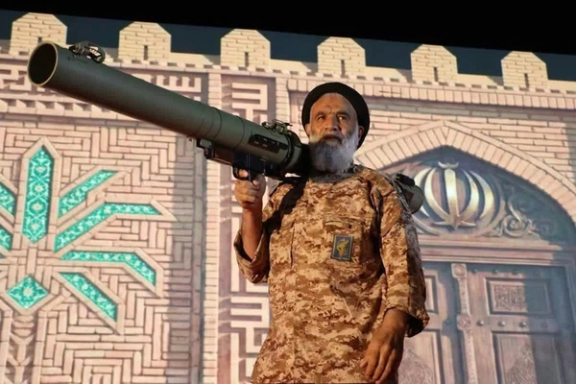
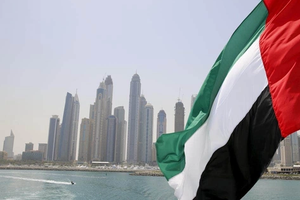
Ahvaz’s Friday prayer leader says Iran would flatten Tel Aviv and regional capitals including Riyadh, Abu Dhabi, Kuwait City and Manama if its enemies made what he called a “strategic mistake.”
Mohammad Nabi Mousavifard said Tehran would deliver a forceful response against the United States to establish “full deterrence” and rejected calls for compromise with Washington.


Before the war involving the United States, Israel and Iran, Khasab was better known to many Iranians as a stop on informal maritime routes used by fishermen, tourists and fast boats moving between Oman and Iran’s southern coast.
Among those boats were vessels known locally as shooti boats, a term borrowed from Iranian smuggling slang. In Iran, shooti usually refers to high-speed cars that carry untaxed or smuggled goods across long distances, often traveling in groups and avoiding stops.
Around Khasab, traders and locals use the same word for fast boats that make quick crossings to places such as Qeshm and other Iranian coastal points.
For years, the route was associated mostly with informal trade and small-scale smuggling. Iranian cigarettes, alcohol and hashish were moved from Iran to Oman, while consumer goods, home appliances and luxury items were brought back from Oman to Iran.
Iranian fishing boats around Khasab were also a familiar part of the area’s maritime landscape.
A port at the mouth of Hormuz
Khasab is the capital of Oman’s Musandam governorate, an exclave separated from the rest of Oman by the United Arab Emirates.
Its geography gives it unusual importance: the port sits near the mouth of the Strait of Hormuz, about 35 kilometers from Iran, surrounded by dry mountains and fjord-like inlets that before the war were mostly associated with leisure boats and maritime tours.
The blockade has changed the function of the route.
With main passages in the Strait of Hormuz closed to Iranian ships and vessels linked to the Islamic Republic, Khasab has shifted from a local secondary route into one of several alternatives for moving goods into Iran.
Cargoes that previously traveled through standard commercial channels and UAE ports are now, in parts of the transport network, being redirected through Oman and Khasab.
How the route works
A trader told Iran International that since the ceasefire, Iran-bound cargo is first carried from UAE ports to Khasab on vessels flying non-Iranian flags.
The goods are then unloaded at Khasab’s pier onto Iranian vessels, which take them to Iranian ports outside the main controlled routes.
A significant share of the movement is carried by landing craft, the trader said.
Those vessels are useful for the route because they can move through shallow waters and dock at smaller piers. Some can carry hundreds of tons of cargo, and in some cases close to 1,000 tons, including containers, vehicles and heavier freight.
The goods moving through Khasab are not limited to one category, according to trade sources.
They can include cars, spare parts, home appliances, consumer goods, hygiene products and some items linked to petroleum products.
A costly workaround
The route is significantly more expensive than Iran’s previous channels.
One trader told Iran International that moving goods through Khasab costs about six times more than the earlier route from the UAE to the southwestern port city of Khorramshahr.
Still, the trader said the higher cost has become one of the few remaining options for many businesses trying to continue operating.
Local officials in Iran have also referred to the growing use of Omani ports.
Khorshid Gazderazi, head of the Bushehr Chamber of Commerce, said on Thursday that the UAE had previously served as Iran’s main hub for exports and imports, but that after the war began and loading and container departures were disrupted, using Omani ports was placed on the agenda.
He named Khasab, Suwaiq, Shinas and Muscat among the ports being used to move goods.
Morad Zerehi, governor of Bandar Khamir in Hormozgan province, also announced a plan called “boat transport” for the “legal transfer of basic goods from Omani ports” to the county.
A route advertised online
The shift is also visible on Iranian social media, where accounts selling goods have begun advertising the Oman route.
Some accounts have posted videos of goods being moved from Oman, presenting the route as proof that imports into Iran are continuing despite the war and maritime restrictions.
They market Khasab as a new way to bring goods into Iran and encourage customers to keep buying.
But the route also shows the limits of Iran’s workaround.
For traders, Khasab offers a way to keep goods moving. For Iran’s trade network, it is also a sign of how the blockade has pushed ordinary commerce into longer, more expensive and less predictable routes.
Woolwich Crown Court on Thursday was told that Nandito Badea, 21, and George Stana, 25, received thousands of pounds through payments linked to Hemroc Ltd, a company based in Park Royal, west London, which was incorporated in 2020 and listed its business as the construction of domestic buildings.
Badea and Stana are accused over the March 2024 stabbing of Zeraati outside his home in Wimbledon, southwest London. They deny the charges.
Prosecutors allege the attack was carried out by criminal proxies acting on behalf of the Islamic Republic, an allegation Iran’s embassy in London has called “baseless.”
Prosecutors said Hemroc had links to another company, Besuch Ltd, which operated “unlicensed restaurants and cafes” and traded under the name Tehran Lounge.
The court was told a man named Constantin Matache was a director of the company and that Hemroc made 183 payments totaling £80,540 to Stana’s sister, Florina, with the reference “loan.”
Florina then made 130 payments to Stana, who mainly passed the money on to others but used some for food, travel, cash withdrawals and other spending, retaining £1,330, prosecutors said.
Badea received 78 payments from Florina, the court heard. Prosecutors said he used the money for daily expenses and payments to Hotel Lily in West Brompton, where the men stayed while conducting surveillance, retaining £8,312.
Earlier in the trial, jurors were shown CCTV that prosecutors said captured the alleged getaway after Zeraati was stabbed three times in the leg in broad daylight.
The court has heard the defendants flew in from Romania and spent about a month carrying out surveillance near Zeraati’s home. On the day of the attack, prosecutors allege, Andrei grabbed Zeraati from behind while Badea stabbed him and Stana waited in a side road as the getaway driver.
The men later took a taxi to Heathrow Airport, changed clothes and boarded a British Airways flight to Geneva, the court was told.
Police found the car two days later. Arrest warrants were issued on October 3, and all three men were arrested in Romania on December 4. Badea and Stana were extradited to Britain 13 days later. Andrei could not be extradited because he was subject to domestic proceedings in Romania.
Iranian authorities in 2022 labeled Iran International a terrorist organization and said anyone working with the broadcaster would be deemed a threat to national security.
That year, posters were put up in Tehran featuring pictures of several journalists, including Zeraati, under the heading “Wanted: dead or alive.”
The court has also heard that police provided armed security for Iran International’s offices in Chiswick in 2022, and that the broadcaster later moved to Washington for a period after being told its employees could not be adequately protected in the UK.
The trial is continuing. The defense case is expected to begin next week.
In a separate case earlier this month, a trial date was set for three defendants charged over an alleged arson incident near Iran International’s studios in northwest London. That trial is scheduled to begin on January 25 next year at the Central Criminal Court.