• العربية
  • فارسی
Brand
  • Iran Insight
  • Politics
  • Economy
  • Analysis
  • Special Report
  • Opinion
  • Podcast
  • Iran Insight
  • Politics
  • Economy
  • Analysis
  • Special Report
  • Opinion
  • Podcast
  • Theme
  • Language
    • العربية
    • فارسی
  • Iran Insight
  • Politics
  • Economy
  • Analysis
  • Special Report
  • Opinion
  • Podcast
All rights reserved for Volant Media UK Limited
volant media logo

Iran, US clash at UN over Strait of Hormuz closure

Apr 27, 2026, 23:15 GMT+1
The United Nations Security Council

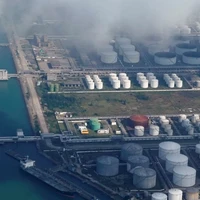
Iran and the United States traded accusations at the United Nations on Monday over the Strait of Hormuz, as the archfoes’ weeks-long standoff over the strategic waterway continued to disrupt global energy supplies and world trade.

At a Security Council debate on maritime security, the U.S. envoy accused Tehran of holding the global economy “hostage,” while Iran’s envoy denounced Washington as “pirates and terrorists” for targeting commercial vessels.

“The world’s critical waterways are not bargaining chips that belong to any one country,” U.S. envoy Dorothy Shea told the council.

She said Iran was using the strait “like its own moat and drawbridge” and accused Tehran of laying sea mines, firing on civilian ships and threatening to charge tolls to allow vessels through.

Iran’s ambassador to the UN, Amir Saeid Iravani, rejected the accusations and said the United States was “acting like pirates and terrorists” by targeting commercial vessels through “coercion and intimidation,” terrorizing crews, seizing ships and “taking crew members hostage.”

He said countries condemning Iran over the strait “do not dare” criticize Washington’s actions and insisted Tehran’s measures were “grounded in its rights and obligations under the law of the sea and its national laws.”

The Strait of Hormuz, which links the Persian Gulf to the Gulf of Oman and the Arabian Sea, typically handles around 20% of the world’s daily oil and liquefied natural gas supplies.

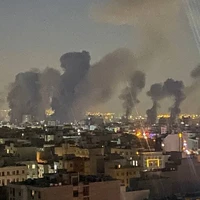
Before the U.S.-Israeli war on Iran began on February 28, between 125 and 140 ships passed through the strait each day. In the past 24 hours, only seven vessels have done so, according to ship-tracking data.

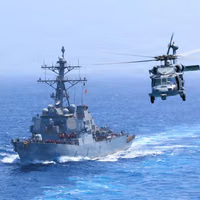
Iran closed the strait after the start of U.S. and Israeli military operations against the Islamic Republic and launched attacks on Arab Gulf states, prompting Washington to begin enforcing a naval blockade on Iran-related shipping.

Hundreds of ships and an estimated 20,000 seafarers remain stranded inside the Gulf, according to maritime analysts.

UN Secretary-General António Guterres appealed directly to the parties to restore maritime traffic.

“Open the strait,” he said, “let ships pass, no tolls, no discrimination, let trade resume, let the global economy breathe.”

Arsenio Dominguez, secretary-general of the International Maritime Organization, also weighed in, saying Iran could neither legally close the strait nor impose fees on vessels using it.

“There is no legal basis for any country to introduce payments, tolls, fees or discriminatory conditions on international straits,” he told the council.

Dominguez warned that crews were under “significant risks and considerable psychological strain” and said the longer the crisis continues, “the greater the risk of serious accidents, including environmental accidents.”

Most Viewed

Ukraine moves to aid US in Iran war after striking Tehran-Moscow supply link
1

Ukraine moves to aid US in Iran war after striking Tehran-Moscow supply link

2
PODCAST

Is Iran using the US war to accelerate executions and silence dissent?

3

Potential US targets in Iran extend beyond Pickaxe Mountain - WSJ

4

Thousands pack Tehran mall as Gen Z rallies around a YouTube star

5
ANALYSIS

Iran is living through America’s 2022 inflation shock almost every month

Banner
Banner
Banner

Spotlight

  • US strikes pause. What comes next for Iran?
    PODCAST

    US strikes pause. What comes next for Iran?

  • Iran is living through America’s 2022 inflation shock almost every month
    ANALYSIS

    Iran is living through America’s 2022 inflation shock almost every month

  • Tehran braces for possible new phase of war
    INSIGHT

    Tehran braces for possible new phase of war

  • Cafés close, tolerance ends: Iran’s post-war shift on compulsory hijab
    INSIGHT

    Cafés close, tolerance ends: Iran’s post-war shift on compulsory hijab

  • Iran bears biggest economic cost of Hormuz closure
    ANALYSIS

    Iran bears biggest economic cost of Hormuz closure

  • Russia’s gasoline imports add pressure to Iran’s strained fuel market
    ANALYSIS

    Russia’s gasoline imports add pressure to Iran’s strained fuel market