Iran internet shutdown passes 1,200-hour mark, NetBlocks says


Iran’s internet blackout has passed the 1,200-hour mark and entered its 51st day, according to NetBlocks, extending what monitoring groups have described as an unprecedented shutdown for a connected country.
“As peace negotiations appear to flounder, one of the most important factors for Iranians, the restoration of international connectivity, is still overlooked," NetBlocks said.
Access to the global internet remains heavily restricted, with most users limited to Iran’s domestic network.


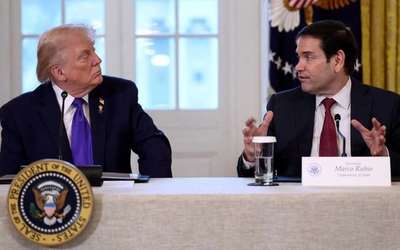
Iranian President Masoud Pezeshkian said US president Donald Trump had no right to deny Iran what he described as its lawful nuclear rights, while insisting that Tehran was not seeking to widen the war and was acting only in self-defense.
“The US president says Iran should not make use of its nuclear rights, but he does not answer for what crime,” Pezeshkian said. “Who is he, after all, to deprive a nation of its legal rights?”
He also said: “Iran is not seeking to expand the war and has not started any conflict and will not do so. We have not attacked any country, and under the current circumstances we have no intention of attacking any side. We are only engaged in legitimate self-defense.”
During the conflict, Iran carried out attacks across the region, including against Bahrain, Kuwait, Oman, Qatar, the United Arab Emirates, Jordan, Saudi Arabia, Syria, Iraq, Turkey, the British overseas territory of Akrotiri and Dhekelia, and the West Bank. Other alleged activity was reported in Azerbaijan, while maritime targets were said to include Thai-flagged ships.
Pezeshkian condemned attacks on civilians and scientific institutions, saying: “The assassination of scientists, attacks on scientific centers, targeting innocent people and the killing of 168 schoolchildren have no justification, and no free human being in the world accepts such behavior.”
Hamidreza Hajibabaei, a deputy speaker of parliament, said at a pro-government street gathering that lawmakers had formed a special combat unit for the Strait of Hormuz and that all members of parliament had signed up.
He said the MPs were ready to “take up arms” and stand against the United States.
He had earlier told Fars news agency that lawmakers were forming a combat unit for possible ground fighting on Kharg Island or anywhere else the United States might try to deploy forces or, in his words, “cause trouble.”
An Iran-linked group has claimed responsibility for an arson attack on a building in north London that was formerly used by a Jewish organization.
The building in Hendon still displayed the sign for Jewish Futures, an educational organization, when it was attacked. No injuries were reported.
According to The Times, Harakat Ashab al-Yamin al-Islamiya, or HAYI, said it carried out the attack. The newspaper said British police were examining whether the group is a front for Iran’s security forces.
The group has also posted videos on social media about other recent incidents in London, including an arson attack on a synagogue in Finchley, a reported drone threat near the Israeli Embassy, and an attack on the offices of Iran International.
It previously claimed similar attacks in Belgium and the Netherlands.
Iranian lawmaker Ahmad Anaraki Mohammadi said there was no problem with negotiating with the United States if talks took place on the basis of Iran’s own demands and conditions.
Referring to talks in Islamabad, he said: “The end of every war is peace, and when we are ready to negotiate based on our own demands and the conditions we set, there is no problem in negotiating.”
He added that all branches of the Islamic Republic must follow the leader’s direction and said no one had the right to create doubt or uncertainty among the public.
Iran’s judiciary chief called for no leniency in confiscating the assets of convicted individuals and said such cases should be handled with accuracy and speed under the law.
Gholamhossein Mohseni Ejei said cases involving what he described as foot soldiers and accomplices of the attacking enemy should not be handled under normal procedures.
He said they must be dealt with on an extraordinary basis at every stage, including the prosecutor’s office, trial courts and the Supreme Court.