• العربية
  • فارسی
Brand
  • Iran Insight
  • Politics
  • Economy
  • Analysis
  • Special Report
  • Opinion
  • Podcast
  • Iran Insight
  • Politics
  • Economy
  • Analysis
  • Special Report
  • Opinion
  • Podcast
  • Theme
  • Language
    • العربية
    • فارسی
  • Iran Insight
  • Politics
  • Economy
  • Analysis
  • Special Report
  • Opinion
  • Podcast
All rights reserved for Volant Media UK Limited
volant media logo
PODCAST

UAE crackdown could hit Iran’s wider shadow network, experts say

Negar Mojtahedi
Negar Mojtahedi

Iran International

Apr 5, 2026, 05:34 GMT+1
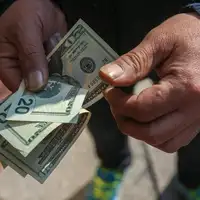
Electronic boards showing stock information are pictured at the stock market, in Dubai, United Arab Emirates, November 5, 2020.

The UAE’s recent arrest of IRGC-linked money changers could expand into a broader crackdown on Iran’s shadow financial network, experts said on this week's episode of Eye for Iran podcast.

Earlier this week, UAE authorities detained dozens of money changers tied to financial entities linked to Iran’s Revolutionary Guards, shut down associated companies and closed their offices, sources familiar with the matter told Iran International.

The crackdown followed days of mounting regional tensions and came after other measures targeting Iranian nationals, including visa revocations and tighter travel restrictions through Dubai.

While the initial crackdown appears focused on exchange houses and foreign-currency procurement, the bigger question now is whether Emirati authorities are prepared to move deeper into the far larger ecosystem of front companies and free-zone entities that have long enabled Iran’s oil, petrochemical, metals and procurement networks.

That next step could determine whether this is a structural threat to one of Tehran’s most important offshore financial systems.

“It’s unclear, I think we’ve got to wait and see the extent of the crackdown,” Miad Maleki, former senior US Treasury sanctions strategist and a senior fellow at the Foundation for Defense of Democracies (FDD) said on Eye for Iran podcast.

“If it only has to do with the current crackdown....whether it’s really limited to IRGC's foreign currency procurement activities in Dubai, which is significant or it goes beyond that and they’re going after Iranian connected companies in free zones," said Maleki.

That distinction matters.

For years, Dubai’s exchange houses were only the most visible layer of Iran’s shadow economy. Beneath them sits a much deeper network of shell firms, nominee ownership structures, commodity brokers and free-zone companies often run by third-country nationals.

According to Maleki, many of those firms were designed precisely to hide any direct Iranian fingerprints.

“Usually, the connections to Iran are nothing. There are no Iranian hands or fingerprints over these companies,” he said.

“There are third country nationals, Indians and Pakistani nationals who are running these companies and you have an Emirati national who is only on paper as the owner.”

That architecture has allowed Iranian petrochemical, petroleum and metals businessmen to move funds, settle transactions and procure goods while remaining beyond the immediate reach of sanctions enforcement.

Daniel Roth, research director at United Against Nuclear Iran, said the sophistication of those structures is exactly what makes the next phase of enforcement so consequential.

“It has been a sophisticated operation to the extent that anybody working in just the general compliance AML unit, say in the west wouldn’t necessarily know that this is,” Roth said on Eye for Iran.

He warned that seemingly generic corporate branding can make sanctions-linked entities difficult to detect.

“If I’m going to be a little bit more clever than that, and obviously I’m getting to use a name like some generic name, some boilerplate name.”

Roth added that the opacity of Dubai’s business ecosystem has historically made ownership trails difficult to establish.

“The Dubai environment or the financial system, it is quite opaque.”

That opacity becomes even more important when looking beyond money changers and toward the free-zone corporate structures that may still remain untouched.

Mohammad Machine-Chian, a senior journalist covering economic affairs at Iran International, said the economic stakes of a broader move into shell companies could be enormous.

“So all in all, I think it’s fair to estimate around $8 to maybe $15 billion a year,” he said, referring to the Dubai channel’s role in supplying hard currency.

“In this scenario, they’re expected to lose much more, maybe between at least $15 to $20 billion.”

If authorities expand the crackdown into those deeper layers, the consequences for Tehran could extend far beyond exchange houses.

It would raise the cost of moving oil proceeds, complicate hard-currency conversion, threaten procurement channels, and strike at the free-zone companies that have long helped disguise Iranian-linked exports.

For now, that remains the unanswered question.

The arrests have exposed the first layer of Iran’s financial architecture in Dubai.

Whether the UAE is prepared to absorb the economic and political costs of moving against the deeper shell-company maze may determine whether Tehran’s most important offshore pressure valve is merely disrupted or fundamentally dismantled.

You can watch Eye for Iran on YouTube or listen on any podcast platform of your choosing.

Most Viewed

Iran’s wartime messaging targets its own citizens
1
INSIGHT

Iran’s wartime messaging targets its own citizens

2

Two more political prisoners executed in Iran

3

Hardliners pile on 'traitor' Zarif, urge his arrest over call for end of war

4

Multiple US aircraft downed or damaged in bruising day of losses in Iran war

5

Iran executes two men as protest-related hangings continue

Banner
Banner

Spotlight

  • UAE crackdown could hit Iran’s wider shadow network, experts say
    PODCAST

    UAE crackdown could hit Iran’s wider shadow network, experts say

  • Trump’s ‘Stone Age’ threat draws fury from Iranians
    INSIGHT

    Trump’s ‘Stone Age’ threat draws fury from Iranians

  • Iran’s wartime messaging targets its own citizens
    INSIGHT

    Iran’s wartime messaging targets its own citizens

  • War follows us Iranian scientists far from home
    OPINION

    War follows us Iranian scientists far from home

  • War tests Iran’s Dubai trade lifeline
    ANALYSIS

    War tests Iran’s Dubai trade lifeline

•
•
•

More Stories

For Washington and Tehran, negotiations are still part of the war

Apr 3, 2026, 19:36 GMT+1
•
Ata Mohamed Tabriz

Iran and the United States may prefer an end to the war, but the gap between the minimum terms each side could accept is so wide that a deal remains unlikely for now.

What we are more likely to see instead are continued displays of power intended to shape the terms of any eventual agreement.

For now, negotiations speak the language of war more than diplomacy. When Washington talks about “progress” or “flexibility,” it is not simply describing talks; it is projecting the idea that military pressure is forcing Iran toward an American framework for ending the conflict.

Tehran’s denial of negotiations serves a similar purpose. Rejecting reports of talks helps prevent any existing contacts from being interpreted as evidence of weakness or submission.

Nor will the outcome depend only on Washington and Tehran. Regional actors will seek a role in shaping any settlement, and any country or coalition attempting to reopen the Strait of Hormuz will attach its own demands to the process.

Washington’s rhetoric reflects this struggle over narrative as much as over territory. In the second week of the war, the US defense secretary said that “at every stage, the conditions of the war will be determined by us.” Similar language echoes in Donald Trump’s repeated threats to send Iran “back to the Stone Age.”

Yet military power becomes a real victory only when it can be translated into a political settlement. When US officials speak about “progress in negotiations,” they are attempting to move from delivering blows to defining the outcome.

The very need to emphasize negotiations suggests that this transition remains incomplete. If battlefield superiority had already produced a decisive political result, Washington would have little reason to stress mediation and contacts.

The rhetoric also serves audiences beyond Tehran: financial markets, domestic politics, and allies trying to assess the war’s trajectory.

Israeli objectives further complicate the picture. US officials have acknowledged that Washington’s goals differ from those of Israel, which appears more focused on weakening Iran’s leadership.

Tehran’s definition of victory is also different. For the Islamic Republic, success means preserving the regime while reshaping the balance of power in the Strait of Hormuz.

Admitting negotiations under intense military pressure and under Washington’s conditions would risk appearing politically subordinate. Denial therefore becomes part of the struggle over legitimacy.

At the same time, Iran’s leadership—its military weakened and many senior figures killed—also needs a way out of the conflict. It must keep communication channels open while ensuring those contacts cannot be portrayed as retreat.

Iran’s strategy is therefore less about proving it has won than about preventing the United States from presenting its victory as complete. Tehran may not be able to claim triumph outright, but it seeks to ensure Washington cannot dictate the outcome alone.

Trump’s push for negotiations may also serve another purpose: testing where real power lies inside Iran. Every reported contact, denial, or proposed channel becomes a way of probing who still has the authority to make decisions.

Reports of fractures inside Iran’s leadership since the war began suggest uncertainty over that question. In wartime conditions, however, the Revolutionary Guards appear to hold the strongest position within the system.

Meanwhile, mediators are beginning to shape the diplomatic landscape. Turkish Foreign Minister Hakan Fidan recently suggested that neither Washington’s nor Tehran’s demands will remain at their current levels, and that the task of mediators is to bring those positions closer to political reality.

But mediators are not neutral actors. Any settlement will also reflect their own interests in the region’s future energy and security order.

These states are caught between two fears: they do not want the Gulf to become a permanent instrument of Iranian pressure, yet they are also wary of confronting Tehran alone if Washington eventually disengages.

For now, mediation reflects less a drive for peace than a shared effort to contain instability.

Diplomacy has become another arena in the struggle to shape the balance of power emerging from the battlefield. As long as both Washington and Tehran continue to claim the upper hand, escalation remains more likely than compromise.

For now, what passes for diplomacy is the management of collapse, not the architecture of peace.

Trump’s ‘Stone Age’ threat draws fury from Iranians

Apr 3, 2026, 19:19 GMT+1
•
Maryam Sinaiee

President Trump’s threat to bomb Iran’s infrastructure and “send it back to the stone ages,” followed by strikes that reportedly included a not-yet-opened bridge, has sparked anger among Iranians at home and abroad.

Iran’s president Masoud Pezeshkian condemned the remarks, writing: “Does threatening to send an entire nation back to the Stone Age mean anything other than a massive war crime? … History is full of those who paid a heavy price for their silence in the face of criminals.”

Ground Forces commander Ali Jahanshahi, warned to send US troops “not to the Stone Age but to pre-Stone Age.”

International reactions have also been critical. Former IAEA chief Mohamed ElBaradei accused Trump and Israel’s prime minister Benjamin Netanyahu of “employing horrific methods” and quipped, “I truly don't know who belongs to the Stone Age!”

Former Swedish prime minister Carl Bildt also weighed in, saying Iranians want “a decent and representative government” not being bombed back to the Stone Age.

‘War crimes’

Anger also surged among ordinary Iranians and diaspora communities—many of whom oppose the government but object strongly to threats against national infrastructure and civilian sites.

Strikes on health facilities such as the Pasteur Institute of Tehran have heightened sensitivities about civilian harm.

Hadi Partovi, a technology investor with Iranian roots, framed the issue in moral terms: “Many Iranians supported your war because your plan was to liberate Iran. Instead, you celebrate sending a civilization to the Stone Age. Great leaders build, not destroy… I weep to see America like this.”

London-based human rights lawyer Shadi Sadr accused Western governments of hypocrisy, arguing that initial justifications under the “Responsibility to Protect” have given way to actions that “send those same people back to the Stone Age, committing war crimes on a massive scale.”

Tehran-based journalist Yashar Soltani wrote: “You first spoke of ‘liberating Iran.’ Then you bombed a school in Minab and took the lives of children. And today you speak of dragging Iran back to the ‘Stone Age’.”

“Iran is a land that, when many nations were still in the Stone Age, was building cities, writing laws, and creating civilization,” he added.

Rift over costs of war

Despite widespread criticism, reactions among Iran’s opposition have not been uniform.

Some supporters of regime change argue that damage to infrastructure, while painful, can ultimately be repaired. They point to historical precedents such as the Iran–Iraq War, when key facilities including oil refineries and export terminals were rebuilt after extensive destruction.

Others contend that the Islamic Republic’s long-term impact on governance, the economy and human capital outweighs the immediate damage caused by military strikes. For them, the focus should remain on political repression, including executions and internet shutdowns.

One social media user questioned priorities: “How can your infrastructure and the Stone Age be your priority before you even mention the executions and internet shutdowns!”

Another argued that reconstruction would follow regime change, writing: “Don’t worry about iron and concrete; worry about a homeland occupied by incompetence… after that, a free Iran will build infrastructure worthy of the name Iran.”

Some commentators have also suggested that Trump’s rhetoric was directed primarily at Iran’s ruling establishment rather than the public. “When he says… ‘we’ll hit you and send you back to the Stone Age,’ he’s talking to the clerics, not the people,” one user wrote.

Iran child recruitment amounts to war crime, Amnesty says

Apr 3, 2026, 07:55 GMT+1

Amnesty International said on Thursday that Iran’s recruitment of children as young as 12 for roles linked to the Islamic Revolutionary Guard Corps amounts to a war crime.

The statement follows remarks aired on state media by IRGC official Rahim Nadali, who said the minimum age for participation in support roles such as patrols, checkpoints and logistics had been lowered to 12 under a campaign encouraging volunteers.

“Given that the age of those coming forward has dropped … we lowered the minimum age to 12,” Nadali said, adding that 12- and 13-year-olds could take part if they wished.

“The Iranian authorities are shamelessly encouraging children as young as 12 to join an IRGC-run military campaign,” Amnesty said, adding that “recruiting children under 15 into the armed forces constitutes a war crime.”

The group cited video and eyewitness accounts which it said showed minors deployed at checkpoints and patrols, some carrying weapons, exposing them to risk as US and Israeli strikes target IRGC-linked sites across the country.

  • Children as young as 12 can join war support, IRGC says

    Children as young as 12 can join war support, IRGC says

The development has revived concerns over the use of minors in security roles in Iran, including during the 2022 protests triggered by the death of Mahsa Amini, when images appeared to show children and teenagers in military-style gear.

Human rights groups have also accused Iranian authorities of killing child protesters during past crackdowns, with the Center for Human Rights in Iran saying more than 200 children were killed during unrest earlier this year.

Amnesty said the recruitment comes despite Iran’s commitments under the Convention on the Rights of the Child, which prohibits the use of children in military activities, and called on authorities to immediately stop enlisting anyone under 18.

Drug shortages push essential medicines in Iran to record prices

Apr 2, 2026, 13:52 GMT+1

Residents told Iran International that severe shortages and soaring prices for key medicines, including insulin and blood thinners, have persisted over the past month, with some insulin brands reaching seventy million rials (≈$46.7).

Several citizens said the price of Ryzodeg insulin jumped from 12 million rials (≈$8) to 76 million rials (≈$51). Five-dose packs of NovoRapid and Lantus now sell for 15–18 million rials (≈$10–$12).

A resident reported that the blood thinner Plavix, crucial to preventing strokes and heart attacks, rose from 7.5 million rials (≈$5) to 27 million rials (≈$18) in recent weeks.

An ordinary Iranian citizen earns approximately $100–$150 per month.

Shortages leave patients struggling

Before the war and US-Israeli attacks, insulin was already limited, with insurance covering only one dose per week. Residents say the scarcity has now reached crisis levels.

One citizen in Parand near Tehran said: “I couldn’t find my diabetes medications for a month, even without a prescription. Two types, Lantus and Apidra, usually last a week each, but I ran out completely.”

  • Iran drug stocks under two months, 800 medicines at risk as FX delays bite

    Iran drug stocks under two months, 800 medicines at risk as FX delays bite

Another said his mother had to travel from Karaj to Qazvin (over 110 km) to obtain essential medicines. Tehran residents report difficulty finding Asentra (sertraline) for depression and Iran-made blood thinner Osvix.

Supply chain disruptions deepen crisis

Residents link shortages to halted imports from Turkey and Dubai. A transit driver said fewer registered shipments have reduced cargo flow. Local distributors have paused sales, while pharmacies face delayed deliveries and payments.

“Our city has more pharmacies than any other shop, but even acetaminophen is unavailable,” a Sari resident in northern Iran said.

The shortages coincide with rising food prices and widespread business closures, adding to economic strain.

However, Mohammad Reza Aref, First Vice President, said on Wednesday that strategic drug reserves are in good condition and ordered “immediate import” of essential medicines. Residents, however, continue to report high prices and irregular availability.

Global healthcare impact

NHS England chief executive Sir Jim Mackey warned that the Iran war could disrupt healthcare supplies internationally. Speaking to LBC Radio on Wednesday, Mackey said syringes, gloves, and intravenous bags may become scarce due to the closure of the Strait of Hormuz.

  • Iran faces looming medicine shortages as UN sanctions strain drug supply chains

    Iran faces looming medicine shortages as UN sanctions strain drug supply chains

“A team has been set up across the NHS to assess risks through the supply chains. Almost everything may be at risk, as Britain relies heavily on imports for medicines and healthcare equipment,” Mackey said.

Medicines UK chief executive Mark Samuels said Britain could face further shortages if the conflict prolongs, noting that 85 percent of NHS medicines are generic and largely sourced from India.

Goldman Paris under police watch after bomb threat linked to Iran group

Apr 2, 2026, 11:45 GMT+1

The Paris offices of Goldman Sachs were placed under police surveillance after a bomb threat believed to be linked to an Iranian group, Le Parisien reported.

Prosecutors in Paris said on Thursday no suspicious items had been found.

Goldman told staff they could work remotely on Thursday, a source familiar with the matter said, while employees at Citigroup in Paris and Frankfurt also worked from home as a precaution. Citigroup said the move was a precautionary measure.

The heightened alert followed a foiled bomb attack near the Paris offices of Bank of America last week.

French anti-terrorism prosecutors said a man and three teenagers aged 16 and 17 had been placed under formal investigation and held in pre-trial detention on suspicion of manufacturing, transporting and handling an explosive device and attempting to destroy property as part of a terrorist organization.

They said the device, made from a five-litre petrol can attached to a large pyrotechnic charge containing a 650-gram active-material cylinder, was the most powerful of its kind identified in France and could have generated a fireball several meters wide.

Investigators said the adult suspect recruited the teenagers, paying them between 500 and 1,000 euros to plant and film the device. All four denied terrorist intent.

Authorities said the plot may be linked to a pro-Iranian group known as HAYI, which had posted a video naming Bank of America’s Paris headquarters, though prosecutors said the link had not been formally established.