Iran state TV warns public against disclosing officials’ hiding places

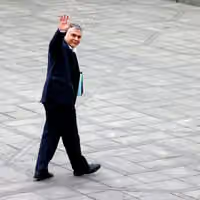
Iranian state television has escalated its messaging by warning citizens not to reveal the locations of officials hiding among civilians.

Iranian state television has escalated its messaging by warning citizens not to reveal the locations of officials hiding among civilians.
As the regional conflict involving Iran, Israel, and the United States escalates, Iran’s state broadcaster, Islamic Republic of Iran Broadcasting (IRIB), has undergone a marked transformation in tone and language.
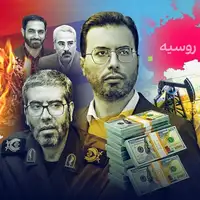
In a segment of a program on Iran’s state broadcaster, presenter Mohammad Jafar Khosravi acknowledged that officials are hiding in safe houses among ordinary citizens and urged the public not to reveal their locations, warning that otherwise they would be “finished” and targeted.
Alongside this shift, dehumanizing language toward foreign adversaries has become increasingly common. Following intensified strikes in late February, IRIB hosts and commentators repeatedly described Israeli officials as “rabid dogs,” portraying them as threats that must be eliminated.
The escalation in tone extends beyond broadcast television. On social media platform X, IRIB presenters have engaged in increasingly personal exchanges with Israeli officials.
Figures such as Ameneh Saadat Zabihpour and Ali Rezvani, both sanctioned by the United States in 2022 as "Interrogator Journalists", have traded insults with Israeli spokespersons, with some interactions descending into personal attacks, religious provocation, and inflammatory rhetoric.
"After blunt death threats by the Revolutionary Guard, aired on State TV and the televised intimidation of the women's football team, State TV presenters are openly calling for the murder of the people of Iran," the Iranian Independent Filmmakers Association (IIFMA) said in a post on its Instagram.
"The recent calls for 'shoot-to-kill' verdicts make the broadcaster an instrument of direct attack on a population already reeling from the violent suppression of January uprising," the Association said last month.


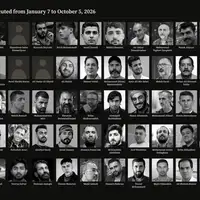


Iran’s judiciary said on Thursday it had carried out the execution of Amirhossein Hatami, a protest detainee convicted in a case linked to a fire at a Basij base in Tehran during January protests.
Hatami was among a group of detainees held responsible for the events at the “185 Mahmoud Kaveh” Basij base on January 8. Families of the detainees told Iran International that Hatami and others were pushed into the building by unidentified armed individuals, after which the base caught fire. Witnesses said the protesters were trapped inside, with the blaze putting their lives at risk.
Mizan, the judiciary news outlet, wrote that Hatami was “convicted of actions that targeted national security and involved attempting to access weapons and ammunition in a classified military site” and that his trial followed the presentation of confessions and investigative reports. The outlet added that the Supreme Court had reviewed and upheld the ruling.
The other detainees named in the report were Mohammadamin Biglari, Shahin Vahedparast, Abolfazl Salehi and Ali Fahim.
Their case was heard at Branch 15 of Tehran’s Revolutionary Court, presided over by Judge Abolqasem Salavati, and death sentences were issued in February, according to the report.
Court documents cited in the report said Hatami’s presence at the base coincided with efforts to breach military restrictions, although family accounts and independent reporting suggest he did not set the fire nor voluntarily enter the premises.
Eyewitnesses told Iran International that a large crowd had gathered outside the base on the evening of January 8 during nationwide protests, and several motorbikes in the street were set on fire. Some armed and unidentified individuals pushed protesters into the base and locked the doors, filling the building with smoke and putting those inside at immediate risk.
Detainees caught in prearranged scenario
Based on witnesses’ reports, the seven detainees were victims of a prearranged scenario by security and Basij forces intended to make them appear culpable for the fire. After the plan failed, five of them were referred for execution on charges including “enmity against God, corruption on earth, and conspiracy against national security.”
Hatami was one of five prisoners removed from Ghezalhesar prison for execution on Tuesday. Families reported that detainees, including Hatami, were transferred to undisclosed locations shortly before the execution. The prisoners, aged between 19 and 25, had limited access to legal counsel during a trial concluded within 30 days of their arrest.
Iran’s judiciary also announced that other political prisoners, including Pouya Ghobadi Bistouni and Babak Alipour, were executed earlier this week, along with Akbar (Shahrokh) Daneshvarkar and Mohammad Taghavi Sangdehi. Two additional prisoners, Vahid Baniamrian and Abolhassan Montazer, had been sentenced to death in December 2024.
Human rights groups warn of rushed executions
Families and human rights groups have repeatedly warned against executing prisoners under such circumstances and called for an immediate halt to the sentences. The cases have drawn international attention, highlighting the dangers of issuing death penalties without guaranteeing basic legal rights.
Amid heightened security tensions and restricted internet access, the rapid pace of executions in politically sensitive cases has increased, leaving detainees exposed to unpredictable and direct threats to their lives. Human rights organizations have warned that the acceleration of these executions could lead to a humanitarian crisis.
Rising tensions between the Pezeshkian administration and Iran’s military leadership have pushed the president into a “complete political deadlock,” with the Revolutionary Guard effectively assuming control over key state functions, informed sources told Iran International.
The IRGC has blocked presidential appointments and decisions while erecting a security perimeter around the core of power, effectively sidelining the government from executive control.
Efforts by Masoud to appoint a new intelligence minister last Thursday collapsed under direct pressure from IRGC chief-commander Ahmad Vahidi, sources with knowledge of the situation told Iran International.
All proposed candidates, including Hossein Dehghan, were rejected. Vahidi is said to have insisted that, given wartime conditions, all critical and sensitive leadership positions must be selected and managed directly by the IRGC until further notice.
Under Iran’s political system, presidents have traditionally nominated intelligence ministers only after securing the approval of the Supreme Leader, who holds ultimate authority over key security portfolios.
However, with the condition and whereabouts of Supreme Leader Mojtaba Khamenei unclear in recent weeks, the IRGC is now effectively blocking the president from advancing its preferred candidate, further consolidating its grip over the state’s security apparatus.
Security cordon around Khamenei Jr.
Pezeshkian has repeatedly sought an urgent meeting with Mojtaba Khamenei in recent days, but all requests have gone unanswered, with no contact established.
Informed sources say a “military council” composed of senior IRGC officers now exercises full control over the core decision-making structure, enforcing a security cordon around Mojtaba Khamenei and preventing government reports on the country’s situation from reaching him.
Speculation has also emerged regarding whether Mojtaba Khamenei’s health condition may be contributing to the current power dynamics.
Efforts to remove Hejazi
At the same time, an unprecedented internal crisis is reportedly unfolding within Mojtaba Khamenei’s inner circle. Some close associates are said to be pushing to remove Ali Asghar Hejazi, a powerful security figure in the Supreme Leader’s office.
The tensions are rooted in Hejazi’s explicit opposition to Mojtaba Khamenei’s potential succession. He had previously warned members of the Assembly of Experts that Mojtaba lacks the necessary qualifications for leadership and argued that hereditary succession is incompatible with the principles outlined by Supreme Leader Ali Khamenei, according to informed sources.
Hejazi reportedly cautioned that elevating Mojtaba would effectively hand full control of the country to the IRGC and permanently sideline civilian institutions.
In the first week of the ongoing war, Israeli media reported that Hejazi had been targeted in an airstrike in Tehran. However, later reports indicated that he survived the attack.
The rise of Mojtaba Khamenei is not an unexpected deviation within the Islamic Republic—it is the logical outcome of a system carefully engineered over nearly four decades by Ali Khamenei.
What appears, at first glance, as a dynastic shift is in fact the continuation of an ideological and institutional project: the consolidation and reproduction of Khameneism.
The central argument is straightforward: Mojtaba Khamenei does not represent a new phase in the Islamic Republic. He represents the success of a long-term process of “rail-laying”—a deliberate restructuring of power that ensures continuity regardless of who formally occupies the position of Supreme Leader. In this sense, the system no longer depends on individual authority; it reproduces a predefined ideological and political logic.
This transformation was made possible by the way Ali Khamenei maximized the latent capacities of the Islamic Republic’s constitutional framework. The constitution already concentrates extraordinary power in the office of the Supreme Leader. However, Khamenei did not merely operate within these limits—he expanded and operationalized them. Over 37 years, he systematically turned flexible or ambiguous mechanisms into rigid and enforceable structures, embedding his ideological preferences into the institutional fabric of the state.
One of the clearest examples of this process is the evolution of the Supreme Council of the Cultural Revolution. This body, notably absent from the constitution, was gradually transformed under Khamenei into a central pillar of ideological control. What began as a mechanism for purging universities in the early years of the revolution became a highly structured institution with dozens of sub-councils, extending its reach across education, culture, media, and social policy. It evolved into a powerful instrument for shaping and policing societal norms—without ever requiring formal constitutional legitimacy. This is Khameneism in practice: the ability to formalize control without formal law.
A similar trajectory can be observed in the transformation of the Guardian Council. Originally conceived as a supervisory body overseeing legislation and elections, it was reengineered into a decisive mechanism for controlling political outcomes. Through expanded vetting powers and systematic disqualification of candidates, the council moved from oversight to orchestration. Over time, it became capable not only of influencing elections but effectively determining their results in advance. This shift—from supervision to engineering—was not incidental; it was a key step in institutionalizing Khameneism.
These developments were not isolated. They formed part of a broader strategy to eliminate unpredictability from the system. Independent political actors were sidelined, reformist currents neutralized, and institutional autonomy steadily eroded. What emerged was a tightly controlled ecosystem in which all meaningful levers of power—political, judicial, cultural, and economic—were aligned with a single ideological framework.
Within this context, the emergence of Mojtaba Khamenei as a central figure becomes comprehensible. His lack of traditional religious credentials or broad political legitimacy is not a contradiction—it is a consequence of the system’s evolution. Years of institutional engineering, including the careful management of the Assembly of Experts and the systematic removal of potential obstacles, made such a transition possible. The “selection” process itself reflects the culmination of Khamenei’s long-term restructuring: a system in which outcomes are preconfigured rather than contested.
More importantly, Mojtaba’s rise demonstrates that Khameneism has achieved a critical threshold—it can now sustain itself without its original architect. The ideology has been embedded so deeply within the system that any successor, regardless of personal inclination, is compelled to operate within its parameters. The structure dictates the outcome.
This is why the question of leadership succession is, in many ways, secondary. Whether it is Mojtaba Khamenei or another figure, the current institutional configuration leaves little room for deviation. The mechanisms of control, the networks of power, and the ideological priorities—particularly the emphasis on regime preservation, anti-Western positioning, and hostility toward Israel even at significant national cost—are all structurally entrenched.
Khameneism, therefore, is no longer simply an ideology associated with one leader. It is a system of governance—self-reinforcing, expansive, and resistant to change. The Islamic Republic has, through decades of deliberate restructuring, lost its capacity to generate alternative political paths from within.
In this sense, Mojtaba Khamenei is not the beginning of a new chapter. He is the continuation of a trajectory that has been decades in the making.
And perhaps more significantly, this continuity underscores a deeper reality: the Islamic Republic has reached a point where change from within has become structurally improbable. The very mechanisms designed to preserve the system have also eliminated its flexibility.
Khameneism, as both ideology and structure, may ultimately define not only how the system survives—but how it ends. It sustains the Islamic Republic by centralizing power, eliminating dissent, and enforcing ideological conformity across all institutions. Yet those same mechanisms steadily erode the foundations of long-term stability: public trust, institutional adaptability, and economic resilience. A system built to prevent deviation becomes incapable of reform; a state designed to suppress a crisis becomes dependent on perpetual coercion to manage it.
In this sense, Khameneism transforms survival into a self-consuming process. Each cycle of repression narrows the regime’s options further, raises the cost of governance, and deepens the gap between state and society. The tools that once ensured control—security dominance, ideological rigidity, and exclusion of alternative voices—gradually become liabilities, locking the system into a path where it can neither evolve nor retreat.
As a result, Khameneism may determine not only the durability of the Islamic Republic, but also the form of its eventual breakdown: not a sudden collapse, but an accumulated exhaustion. A system that endures by sacrificing its capacity to renew itself ultimately reaches a point where continuation itself becomes unsustainable.
An Iranian man whose viral plea for Donald Trump’s help drew millions of views says he was forced to flee the country after being targeted by the Revolutionary Guard, warning from exile that negotiating with Tehran would allow its repression to continue.
Ali Rezaei Majd still looks toward the rugged peaks of the Zagros Mountains — just beyond them now, across the border in Iraqi territory.
More than six feet tall, with a muscular build, tattoos etched across his body, and long, thick, curly hair, Majd is a presence that’s hard to ignore.
He looks like a fighter. The truth is — he is one.
A proud Lor from Iran’s tribal province of Lorestan, Majd comes from a people known for their deep connection to their land — and for their resilience. The Lors are an Iranian ethnic group rooted in the Zagros region, with a long history shaped by life in the mountains and a culture that values strength, independence and loyalty.
His life has been on the run since early January, when he posted a video from his hometown that would soon be seen around the world.
In it, holding up his Iranian ID, he made a direct plea to then-President Donald Trump and the American people:
“I’m speaking to you from inside Iran… not as a politician, not as a soldier, but as a human being living under fear and oppression every single day… Please don’t forget us.”
The video struck a nerve — garnering over nine million views on Instagram. The English version was also viewed nearly two million times.
But it also made him a target.
Majd says the Islamic Revolutionary Guard Corps (IRGC) began searching for him. With operatives closing in, he fled — crossing mountainous terrain with the help of Kurdish people.
“I was in a prison for 30 years. Iran was like a prison for me,” he told the Eye for Iran podcast.
“When you grow up in a prison, you risk everything for freedom — even for one day.”
Today, his safety remains uncertain, with threats from a regime never far behind.
Now in exile, he is speaking out — with one message above all:
“We cannot make a deal with them. Dealing with them means letting this cancer continue.”
Majd says many of his friends were killed when the regime unleashed force — including heavily armed units — against what he describes as a largely defenseless population.
“When you come to the streets in Iran, you’re going to die,” he said. “They don’t shoot to stop you — they shoot to kill.”
He also has a message for the West — and for the media.
Watching coverage from abroad, Majd says he is frustrated by calls to halt military operations, arguing they misunderstand the reality inside Iran.
“I see many channels trying to stop this operation… saying this is the wrong way,” he said. “But this regime is a threat to the whole world.”
For him, this moment represents something else — a rare opportunity.
“This is the best chance to stop this regime,” he said. “If you don’t stop them, they will become more dangerous.”
He considers himself lucky to be alive.
And now, he says, it is his responsibility to carry the voices of those who can no longer speak.
“The best of us — the bravest — they are gone. So I have to speak for them.”
Majd described the violence he witnessed in chilling terms: “It was like a video game. They were just shooting people — so easily.”
Despite the danger and despite what he says are ongoing threats from regime operatives — Majd continues to speak publicly.
Because for him — and for those who can no longer speak — silence is not an option.
Dismay and alarm are spreading among Iranians over reports and images showing Iraqi Popular Mobilization Forces, or Hashd al-Shaabi, inside Iran, with messages sent to Iran International describing fear, anger and a growing sense of insecurity.
The strongest reaction has come from people in cities where the forces have reportedly been seen, especially in the southwest.
Viewers who contacted Iran International said the arrival of Hashd al-Shaabi fighters in Abadan had made the city feel “unsafe and frightening,” and said residents were worried about their children.
One viewer described the forces as “terrorists” and said their entry into Iran, particularly in Ahvaz, Khorramshahr and Abadan, was aimed at “another massacre of the people.”
Another message asked: “Hashd al-Shaabi convoys entered Iran with armored vehicles. Why are Israel and America not targeting them?”
A message from Abadan said: “I’m sending this message from Abadan. The presence of these forces with flags and military uniforms has made the city frightening.”
Another viewer said: “These forces have come to kill people. We have not forgotten the January killings, when the government used them to help kill people.”
Anger was also directed at the cost of hosting such forces at a time of economic hardship.
One viewer wrote: “In these terrible economic and inflationary conditions that people are facing, why should the Islamic Republic pay for Hashd al-Shaabi terrorists and even house and feed their families for free?”
Other messages sent to Iran International suggested a wider pattern of deployment.
One said Hashd al-Shaabi forces had gathered in warehouses belonging to the Arvandan company in Dehloran county in Ilam province.
Another said the forces had been stationed since the previous day at the Persian Gulf Hotel in Genaveh, Bushehr province.
A more detailed message from Abadan said: “Around 1:30 a.m. on March 30, Hashd al-Shaabi forces arrived with several Hilux vehicles at the Basij base opposite the City Center to be stationed there, and along the route there were several checkpoints with a large number of IRGC forces inspecting people so they could not film.”
The reports followed footage circulated this week showing a convoy of Iran-backed militias in Iraq moving toward Iran.
Iran International audiences also reported on Sunday that Iraqi militias had been housed in residential units belonging to Revolutionary Guards personnel on Otobusrani Street in Bandar Abbas.
Dadban, a legal advisory and training center for activists, warned this week that the purpose of deploying Hashd al-Shaabi forces inside Iran was “participation in repression.”
According to its report, Iraqi militias crossed into Iran and entered Abadan and Khorramshahr in Khuzestan province, where they were received by officials of the Islamic Republic.
Dadban said the organized and armed presence of foreign forces inside the country, without going through a legal process, had no legal basis and pointed to Article 146 of Iran’s constitution, which bars the establishment of foreign military forces in Iran.
It also warned that using foreign forces to suppress domestic protests would amount to an escalation in violations of citizens’ fundamental rights, including the right to assembly and personal security.
Reaction on social media echoed many of the concerns raised in messages sent to Iran International.
Users described the presence of Hashd al-Shaabi as a violation of national sovereignty and a sign that the authorities were preparing for a harsher phase of internal repression.
One user, referring to reports of their presence in Khorramshahr, wrote: “God freed Khorramshahr, and with the help of the disgraceful Islamic Republic it has been occupied again.”
Another wrote: “Hashd al-Shaabi terrorists have officially entered Iran. This is the invasion of Iranian soil by a foreign ground force. We must stand against it completely.”
Another user mocked pro-government rhetoric by writing: “What happened to the people who said domestic problems must be solved inside the family? Is Hashd al-Shaabi family too? Here, a foreign force is acceptable? But if we ask for help, we are traitors?”
Another post said the government knew “the final battle will be decided on the streets of the big cities, especially Tehran,” and argued that Hashd al-Shaabi had been brought in to help defend the state at that front.
Together, the messages and online reactions suggest that for many Iranians, the issue is not only the arrival of an allied militia, but what its presence may signal about the Islamic Republic’s readiness to use outside forces to intimidate and suppress people at home.


Iraqi criticism of support for Iran
The backlash has not been limited to Iran.
In an exclusive interview with Iran International, Sheikh Abdullah al-Jughayfi, a member of the Security and Defense Committee and adviser to the Anbar governorate, confirmed that “Hashd al-Shaabi forces in recent days have transferred financial and non-financial aid to Iran.”
He said the aid had been sent over the past three days “with Hashd al-Shaabi flags raised.”
Al-Jughayfi criticized the move and warned that “this action could further complicate Iraq’s relations with the United States and increase the likelihood of new sanctions.”
At the same time, Jalil al-Lami, deputy head of the Iraq Center for Strategic Affairs, told Iran International from Baghdad that the move amounted politically to “a clear alignment by Iraq” and warned that it effectively ended Baghdad’s balancing policy between Washington and Tehran.
He added that “the presence of Hashd al-Shaabi forces inside Iran could expand the range of targets inside Iraq, whether through direct attacks or indirect escalation, pushing the country toward an open atmosphere of confrontation.”