Iran officially confirms death of top security official Ali Larijani
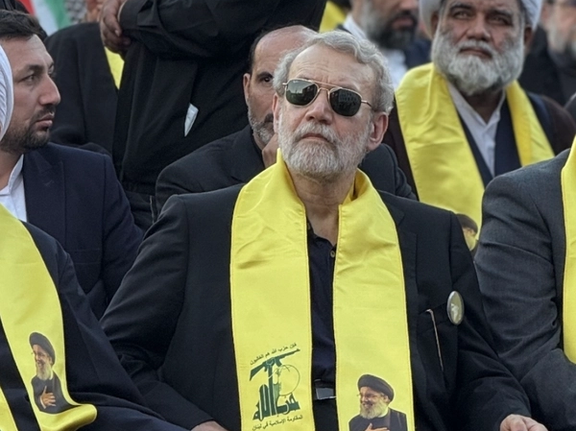
The secretariat of Iran’s Supreme National Security Council said in a statement on Tuesday night that its secretary, Ali Larijani, was killed in a morning airstrike along with his son Morteza and several bodyguards.
The statement added that Alireza Bayat, the SNSC’s deputy secretary for security affairs, was also killed in the strike.



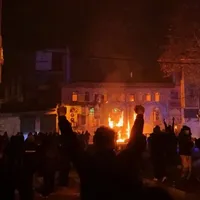
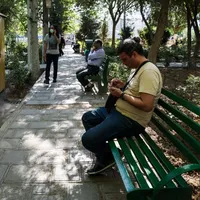
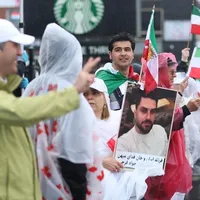
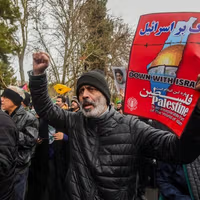
As dusk falls across Iran on Tuesday, bonfires, fireworks and street gatherings take place to mark Chaharshanbeh Suri, an ancient fire festival that has also become a public act of defiance, this year unfolding under war, heavy security and fears of bloodshed.
Iranian authorities have issued stark warnings ahead of Chaharshanbeh Suri, pointing to what they describe as wartime conditions and the risk of unrest.
Nevertheless, Iranians celebrated the festival, as Iran International's Negar Mojtahedi explains.
The Israeli killing of Ali Larijani marks another blow to the Islamic Republic’s capacity for coordination, weakening an already fragmented system and raising the risk of miscalculation under pressure.
Iran confirmed on Tuesday that Larijani—Secretary of the Supreme National Security Council and one of the regime’s central security coordinators— was killed in a morning strike on Tehran.
The strike inevitably recalls the killing of Qassem Soleimani in 2020: another precise removal of a figure who linked diplomacy, intelligence and military power.
Soleimani’s death did more than eliminate a commander. It weakened the regime’s ability to calibrate risk. Radical in purpose, cautious in execution, he pushed proxies forward without inviting existential retaliation.
His absence left a gap no successor fully filled. Coordination frayed, misjudgments mounted and responses grew less predictable. The network endured, but its timing became erratic and its restraint thinner.
Larijani’s role must be understood against that backdrop.
According to a source cited by Christiane Amanpour, Larijani had, as recently as September 2025, been viewed in some Western and Israeli assessments as a potentially acceptable transitional figure before becoming a target by early February 2026.
The account attributes the shift to his role in pressing for domestic crackdowns, adopting a more confrontational posture toward the United States and Israel and assuming a central role in shaping IRGC military operations.
The claims remain unverified but highlight how Larijani straddled internal consolidation and external escalation at a moment of acute pressure.
His career began during the Iran-Iraq War, where he rose within the Islamic Revolutionary Guard Corps to brigadier general, later serving as Speaker of Parliament (2008–2020), where he advanced a hard-line agenda aligned with the consolidation of power in the Office of the Supreme Leader.
In the years that followed, he moved from battlefield to bureaucracy, helping consolidate the regime’s coercive and ideological infrastructure.
As head of Islamic Republic of Iran Broadcasting (1994–2004), Larijani oversaw more than a media organization. The state broadcaster worked closely with the intelligence services and the IRGC, shaping narratives that reinforced loyalty and narrowed the space for dissent.
The 1996 Hoviyyat (Identity) series publicly branded intellectuals and professionals as traitors, airing coerced confessions and drawing sharp limits around permissible thought. At the same time, official memory of the Iran-Iraq War was recast into doctrine: martyrdom elevated, endurance framed as victory.
Over time, this messaging helped consolidate a narrower but more disciplined base embedded across Basij and IRGC networks. Its purpose was not persuasion but enforcement: to secure the regime against a broader, often unwilling society.
That framework endured. It underpinned repression during the 2009 Green Movement, resurfaced during the Woman, Life, Freedom protests in 2022 and shaped the violence of January 2026.
Beyond Iran, the same logic informed Hezbollah’s campaign in Syria, Hamas operations culminating in October 7 and the IRGC’s maritime doctrine of asymmetric pressure.
Despite tensions within the political elite, Larijani remained firmly inside the core leadership. Loyal and disciplined, he embodied continuity across institutions.
Following the death of Supreme Leader Ali Khamenei in the February 28 strike that opened the current phase of war, Larijani’s experience and connections positioned him as a potential stabilizing figure.
His 2025 reappointment as Iran’s security chief reinforced that role. From there he coordinated nuclear policy, crisis management and relations among the regime’s core institutions.
Larijani’s removal would introduce immediate disruption: friction in command and pressure for retaliation. The deeper consequence may be fragmentation.
The Islamic Republic now operates less as a unified state than as a dispersed system under sustained pressure from Israel and the United States. Authority increasingly runs through provincial clerical networks, IRGC commanders and Basij structures. Resources are mobilized locally, repression enforced locally and survival managed locally.
Larijani belonged to the shrinking circle still capable of linking these fragments to a central command. His loss risks accelerating the incoherence the system is already struggling to contain.
Soleimani’s precedent is instructive: decapitation weakens coordination and invites miscalculation, even as the structure endures.
Missile infrastructure remains dispersed across hardened and subterranean sites. Fast naval craft and unmanned vessels continue to threaten shipping in the Strait of Hormuz. Proxy militias operate through channels designed to outlast leadership losses.
What appears as resilience may instead reflect dispersal without coordination — a system that survives but no longer acts as one.
Larijani’s killing tests not only the state’s durability but its capacity to function as a coherent force under sustained pressure. The war may not bring immediate collapse. But without figures such as Soleimani and Larijani, adaptation may hasten, rather than forestall, its demise.
The State Department has instructed all US diplomatic missions worldwide to “immediately” carry out security assessments, citing “the ongoing and developing situation in the Middle East and the potential for spillover effects,” The Washington Post reported citing a cable sent Tuesday.
The cable said “ALL posts worldwide” must convene Emergency Action Committees (EAC), multidisciplinary teams tasked with identifying and planning for threats, and reviewing their “security posture.”
The cable, signed by Secretary of State Marco Rubio, originated from Undersecretary for Management Jason Evans, according to the report.
The Islamic Revolutionary Guard Corps (IRGC) in a statement on Tuesday confirmed the death of Brigadier General Gholamreza Soleimani, the commander of its paramilitary Basij forces in what it called a US-Israeli airstrike.
"We warn the wicked and terrorist killers of this esteemed martyr that the devoted Basij fighters will never abandon avenging the slain leader, the fallen commanders, and the many martyred members of the people," the statement warned.
The Israel Defense Forces (IDF) said in a statement on Tuesday it had targeted hundreds of Basij and IRGC command centers in recent weeks, particularly in the capital.
The statement added that Iranian forces had repeatedly relocated operations after earlier strikes, including to sites it said were embedded in civilian areas.
The military said one target was an emergency command center operating from a former football club compound, accusing Iranian authorities of using civilian locations as cover.