• Iran Insight
  • Politics
  • Economy
  • Analysis
  • Special Report
  • Opinion
  • Podcast
All rights reserved for Volant Media UK Limited
volant media logo
  • العربية
  • فارسی
Brand
  • Iran Insight
  • Politics
  • Economy
  • Analysis
  • Special Report
  • Opinion
  • Podcast
  • Iran Insight
  • Politics
  • Economy
  • Analysis
  • Special Report
  • Opinion
  • Podcast
  • Theme
  • Language
    • العربية
    • فارسی

Iran’s top security official warns Trump attack on power grid could black out region

Mar 12, 2026, 12:58 GMT

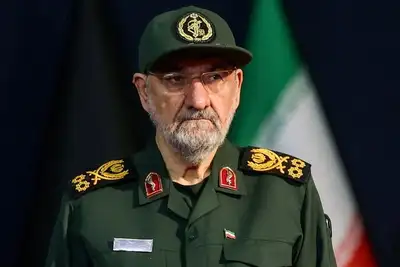
Iran’s top security official Ali Larijani warned that a US strike on Iran’s electricity infrastructure could plunge the region into darkness, responding to comments by Donald Trump.

Trump said on Wednesday that the United States could dismantle Iran’s electric capacity quickly.

“We could take apart their electric capacity within one hour, and it would take them 25 years to rebuild it,” he said, adding Washington would ideally avoid such strikes.

“Well, if they do that, the whole region will go dark in less than half an hour,” Larijani wrote on X, adding that the blackout would provide “ample opportunity to hunt down US servicemen running for safety.”

Most Viewed

A leader no one has seen: The unusual debut of Mojtaba Khamenei
1
ANALYSIS

A leader no one has seen: The unusual debut of Mojtaba Khamenei

2
ANALYSIS

Can widening the war save Iran’s rulers?

3

Britain bans London Quds Day march run by pro-Islamic Republic group

4

Tehran checkpoints hit in reported drone attacks

5

UNESCO warns of rising risks to Iran’s historic sites

Banner
Banner

Spotlight

  • Power vs piety: Khamenei Jr inherits legitimacy dilemma of Iran's theocracy
    ANALYSIS

    Power vs piety: Khamenei Jr inherits legitimacy dilemma of Iran's theocracy

  • System over leader: Tehran broadcasts stability in wartime
    INSIGHT

    System over leader: Tehran broadcasts stability in wartime

  • Can widening the war save Iran’s rulers?
    ANALYSIS

    Can widening the war save Iran’s rulers?

  • Hormuz disruption tests limits of global energy markets
    ANALYSIS

    Hormuz disruption tests limits of global energy markets

  • Inside the dramatic escape of Iranian women footballers seeking asylum
    INSIGHT

    Inside the dramatic escape of Iranian women footballers seeking asylum

  • A leader no one has seen: The unusual debut of Mojtaba Khamenei
    ANALYSIS

    A leader no one has seen: The unusual debut of Mojtaba Khamenei

•
•
•

More Stories

Iran women’s football team kept under tight security in Kuala Lumpur

Mar 12, 2026, 12:06 GMT

Members of Iran’s women’s national football team, after some delegation members sought asylum abroad, are being kept under tight security during a camp in Kuala Lumpur, Malaysia, Iran International has learned.

Players who arrived on Wednesday are being kept at a hotel where journalists and media are not allowed to enter, according to sources familiar with the situation.

Some players had their mobile phones confiscated, while others were allowed to keep them only under the supervision of security personnel from the Iranian football federation.

Sources told Iran International that pressure on the players began in Tehran and has continued during the team’s camp ahead of the 2026 Asian Championship.

Mohammad Rahman Salari, a member of the Iranian Football Federation’s board, played a central role in enforcing the restrictions and repeatedly collected and inspected the phones of players and staff after the team’s first match.

Fatemeh Bodaghi, who is traveling with the delegation as manager of Iran’s women’s national team, was described by sources as acting on behalf of the federation’s security apparatus under the leadership of federation president Mehdi Taj, monitoring players’ social media accounts and reporting their activities to authorities in Tehran.

Sources also said Zeinab Hosseinzadeh, the team’s physiotherapist, was among those involved in exerting pressure on players.

Farideh Shojaei, the women’s vice president of the football federation, is also accompanying the team. She previously said options for the team’s return to Iran amid US-Israeli airstrikes were being examined, including a possible land route through Turkey, after attempts to return via the United Arab Emirates did not succeed.

  • Inside the dramatic escape of Iranian women footballers seeking asylum

    Inside the dramatic escape of Iranian women footballers seeking asylum

  • Australia grants asylum to five players of Iran women’s football team

    Australia grants asylum to five players of Iran women’s football team

Players face pressure after anthem protest

The crisis surrounding the Iranian women’s national football team began on March 2, when the squad refused to sing the Iranian national anthem before their opening match against South Korea at the AFC Women's Asian Cup in Australia.

This silent protest, occurring shortly after the start of the Iran war and the killing of Supreme Leader Ali Khamenei, was immediately labeled an act of "wartime treason" by the state media. As the team progressed through the group stage, they were reportedly kept under strict surveillance by delegation minders, with international human rights groups and political figures warning that the athletes faced severe punishment, including the possibility of the death penalty, if they were forced to return to Tehran.

Six members of the delegation accepted humanitarian visas and remained in Australia to seek asylum, while the rest of the team boarded their flight to Malaysia.

Iran keeps oil flowing to China as Hormuz pressure forces reserve release

Mar 12, 2026, 11:38 GMT

Iran is still loading about 1.5 million barrels of crude a day in March while China is receiving about 1.25 million barrels daily, Kpler data show, even as days of Iranian pressure around the Strait of Hormuz and rising prices force consuming nations to tap emergency reserves.

The figures suggest Tehran’s oil lifeline has not been cut despite a widening maritime crisis that has already disrupted shipping and shaken energy markets since the war began on February 28.

Instead, the conflict is evolving into a prolonged contest over energy flows: Iran continues exporting oil – largely to China – while simultaneously applying military pressure on one of the world’s most important oil chokepoints.

The Strait of Hormuz, the narrow passage off Iran’s southern coast connecting the Persian Gulf to global markets, normally carries about a fifth of the world’s oil and liquefied natural gas shipments.

Continue reading

Israel says IRGC missile unit commander within Hezbollah killed in Beirut

Mar 12, 2026, 11:27 GMT

Israel’s military said it killed a commander in the missile unit of the Islamic Revolutionary Guard Corps operating within Hezbollah in Beirut.

The Israel Defense Forces said Abu Dharr (Abuzar) Mohammadi served as operations commander in the unit and coordinated between Hezbollah and Iran.

It said he also played a key role in rebuilding Hezbollah’s missile program after Operation Northern Arrows.

Iran keeps oil flowing to China as Hormuz pressure forces reserve release

Mar 12, 2026, 11:22 GMT
•
Arash Sohrabi

Iran is still loading about 1.5 million barrels of crude a day in March while China is receiving about 1.25 million barrels daily, Kpler data show, even as days of Iranian pressure around the Strait of Hormuz and rising prices force consuming nations to tap emergency reserves.

The figures suggest Tehran’s oil lifeline has not been cut despite a widening maritime crisis that has already disrupted shipping and shaken energy markets since the war began on February 28.

Instead, the conflict is evolving into a prolonged contest over energy flows: Iran continues exporting oil – largely to China – while simultaneously applying military pressure on one of the world’s most important oil chokepoints.

The Strait of Hormuz, the narrow passage off Iran’s southern coast connecting the Persian Gulf to global markets, normally carries about a fifth of the world’s oil and liquefied natural gas shipments.

But the waterway has effectively become a war zone.

Since the start of hostilities, at least 16 commercial vessels have been struck or attacked in and around the strait and the wider Persian Gulf, according to a Reuters tally.

The incidents have included attacks on tankers, bulk carriers and container ships, forcing evacuations, halting port operations in parts of Iraq and driving insurers and ship operators to reconsider voyages through the area.

Iran’s Revolutionary Guards have warned that ships passing through the strait could be targeted, reinforcing fears that the waterway is now being used as a pressure point in the wider conflict.

A foreign tanker carrying Iraqi fuel oil damaged after catching fire in Iraq's territorial waters, following unidentified attacks that targeted two foreign tankers, according to Iraqi port officials, near Basra, Iraq, March 12, 2026.

Release of strategic reserves

The growing disruption has pushed the International Energy Agency and major consuming nations to take the extraordinary step of releasing 400 million barrels from strategic reserves, the largest such intervention in the agency’s history.

IEA Executive Director Fatih Birol said the decision had already had a “strong impact” on markets and was aimed at stabilizing supply after the war triggered one of the biggest oil disruptions on record.

The agency estimates global supply could fall by 8 million barrels per day in March as production across the Middle East is curtailed and shipping through Hormuz slows to a fraction of normal levels.

But the reserve release has done little to calm markets.

Oil prices briefly surged above $100 a barrel this week and remain volatile as traders weigh the risk that shipping through the Persian Gulf could remain constrained for weeks or months.

Analysts say the problem is not simply the availability of oil but the difficulty of moving it safely through a militarized sea lane.

Joel Hancock, an energy analyst at Natixis CIB, said markets were questioning how quickly emergency reserves could reach buyers, warning that a market balanced through stock releases would be “far less logistically efficient.”

Shockwaves beyond oil

The war has also begun to ripple through global energy markets beyond crude.

In Europe, gas prices rose sharply as fears grew that tanker attacks in the Persian Gulf could disrupt shipments of liquefied natural gas, around 20% of which normally transits the Strait of Hormuz.

Qatar, one of the world’s largest LNG exporters, has declared force majeure on some shipments, tightening global supplies and raising concerns about Europe’s ability to refill depleted gas storage before next winter.

Financial markets have reacted nervously as well. Rising oil prices have revived fears of inflation and pushed investors to scale back expectations of interest rate cuts by major central banks.

The war’s central energy paradox is that Iran cannot fully shut global oil flows without hurting itself, yet it has shown it can make the Persian Gulf and the Strait of Hormuz dangerous enough to rattle markets and force governments to act, even while keeping a substantial share of its own exports – mainly to China – moving.

Poland says Iran may be behind foiled cyberattack on nuclear center

Mar 12, 2026, 11:06 GMT

Poland said on Thursday it had foiled a cyberattack on its national center for nuclear research and was examining indications that Iran may have been behind it, while cautioning the signs could have been planted to conceal the attackers’ true location.

Digital Affairs Minister Krzysztof Gawkowski told TVN24+ the attack took place in recent days and that it was stopped before breaching the center’s defenses.

He said initial indicators linked the attack to Iran, but added that the findings were still being verified.

The center conducts research into nuclear energy, subatomic physics and related fields. Poland does not have nuclear weapons and is building its first nuclear power plant.