• العربية
  • فارسی
Brand
  • Iran Insight
  • Politics
  • Economy
  • Analysis
  • Special Report
  • Opinion
  • Podcast
  • Iran Insight
  • Politics
  • Economy
  • Analysis
  • Special Report
  • Opinion
  • Podcast
  • Theme
  • Language
    • العربية
    • فارسی
  • Iran Insight
  • Politics
  • Economy
  • Analysis
  • Special Report
  • Opinion
  • Podcast
All rights reserved for Volant Media UK Limited
volant media logo

Iran says families of embassy staff left Beirut due to security situation

Mar 11, 2026, 09:18 GMT+0

Families of staff at Iran’s embassy in Beirut have temporarily left the city due to the security situation in Lebanon after Israeli attacks, Iran’s embassy said on Wednesday.

Iran’s ambassador to Lebanon, Mohammad-Reza Raouf Sheibani, said the move was made to protect the safety of Iranian nationals.

He said families of embassy employees, along with teachers and students from an Iranian school and some Iranian residents, had temporarily departed Beirut following coordination by the embassy.

Most Viewed

Behind Tehran’s unity show: The secret letter to the shadow king
1
INSIGHT

Behind Tehran’s unity show: The secret letter to the shadow king

2
PODCAST

US should use Iran talks leverage to help Iranian people, veteran journalist says

3

Iran executes protester over January uprising

4

Iranian national charged in US over migrant smuggling scheme

5

Iran officials project unity after Trump leadership remarks

Banner
Banner

Spotlight

  • US should use Iran talks leverage to help Iranian people, veteran journalist says
    PODCAST

    US should use Iran talks leverage to help Iranian people, veteran journalist says

  • Iran’s economy after the March war: how bad can it get?
    ANALYSIS

    Iran’s economy after the March war: how bad can it get?

  • Behind Tehran’s unity show: The secret letter to the shadow king
    INSIGHT

    Behind Tehran’s unity show: The secret letter to the shadow king

  • Rapid deterioration of Iran-UAE ties threatens a critical trade lifeline
    ANALYSIS

    Rapid deterioration of Iran-UAE ties threatens a critical trade lifeline

  • Tehran stocks head for reopening, but it risks triggering a new crisis
    ANALYSIS

    Tehran stocks head for reopening, but it risks triggering a new crisis

  • Power vacuum in Tehran emboldens hardliners
    INSIGHT

    Power vacuum in Tehran emboldens hardliners

  • Inflation spikes, basic goods slip out of reach for Iranians, citizens say
    VOICES FROM IRAN

    Inflation spikes, basic goods slip out of reach for Iranians, citizens say

•
•
•

More Stories

Italy says Iran cannot have nuclear weapons with missile capability

Mar 11, 2026, 09:14 GMT+0

Iran cannot be allowed to possess nuclear weapons alongside missile capabilities that could reach Europe, Italian Prime Minister Giorgia Meloni said on Wednesday.

“We cannot allow the Ayatollah regime to possess nuclear weapons, combined with a missile capability that could soon be able to strike Italy and Europe directly,” Meloni told the Italian Senate.

She warned such a development could trigger a nuclear arms race.

Pezeshkian says 'global order will be shaken' if US, Israel not held accountable

Mar 11, 2026, 08:30 GMT+0

Iran’s president warned that global order and security would be shaken if the international community does not hold the United States and Israel accountable for attacks on the Islamic Republic, state media reported.

Masoud Pezeshkian made the remarks in a phone call with Pakistani Prime Minister Shehbaz Sharif.

“The Islamic Republic of Iran has no intention of targeting or engaging with countries in the region,” Pezeshkian said.

“Only bases from which attacks are launched against our territory will be targeted, within the framework of our legitimate right of self-defense,” he said.

Pezeshkian warned that failure by the international community to act would undermine global stability.

“If the international community and international organizations do not address the main causes of this imposed war and military aggression against Iran, the conditions governing global order and security will become chaotic and unstable,” he said.

Britain bans London Quds Day march run by pro-Islamic Republic group

Mar 11, 2026, 08:25 GMT+0

Britain banned London’s al-Quds march on Sunday, saying the annual event organized by a pro-Islamic Republic group could trigger serious disorder as tensions over Iran and planned counter-protests intensify.

Home Secretary Shabana Mahmood approved a Metropolitan Police request to prohibit the march and any associated counter-marches for one month from 1600 GMT on Wednesday, while allowing only a static protest under strict conditions.

Police said it was the first time such powers had been used since 2012 and said ordinary protest conditions would not be enough given the scale of the event, expected counter-protests and heightened tensions linked to the Middle East conflict and Tehran’s threats to British allies and bases overseas.

The Met said the London march was “uniquely contentious” because it originated in Iran and is organized by the Islamic Human Rights Commission, which police described as supportive of the Iranian regime.

Officers also pointed to security service warnings about Iranian state-backed threats in Britain, saying MI5 and counterterrorism police had foiled more than 20 such plots over the past year.

Previous Quds marches in London have led to arrests for support for proscribed groups and antisemitic hate crimes, police said, though they stressed this year’s ban was based on a specific risk assessment rather than politics.

The IHRC condemned the ban as politically motivated and said a static protest would still go ahead. Its spokesman Faisal Bodi told British media the march had taken place peacefully for decades, but he also openly praised Iran’s former supreme leader Ali Khamenei and said he would “happily” hold his picture.

Britain is not the first European country to move against such rallies. Berlin banned its annual Quds march in 2021 after years of controversy over Hezbollah-linked symbols and antisemitic messaging, although German courts and local authorities have continued to wrestle with similar cases since then.

Iran says it will target US, Israeli economic centers and banks in region

Mar 11, 2026, 08:20 GMT+0

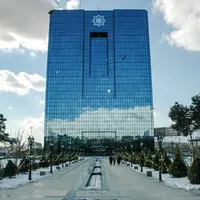
The spokesman for Iran’s Khatam al-Anbiya Central Headquarters said Iran would target economic centers and banks belonging to the United States and Israel in the region, state media reported.

Spokesman Ebrahim Zolfaghari said the warning came after what he said was a US and Israeli strike on one of Iran’s banks overnight.

He said the move opened the way for Iran to target economic centers and banks linked to the United States and Israel across the region.

“Americans should wait for our painful response,” Zolfaghari said.

He also warned people in the region not to remain within one kilometer of banks.

Can widening the war save Iran’s rulers?

Mar 11, 2026, 07:33 GMT+0
•
Reza Haji Hosseini

Tehran’s decision to widen the war is an attempt to project strength but may better be understood as a survival strategy—one rooted in deliberate escalation and shaped by a logic akin to mutually assured destruction.

Following US and Israeli attacks on the killing of Supreme Leader Ali Khamenei, Iran’s leadership followed through with a long-standing threat: expanding the conflict beyond its borders and drawing neighboring states into the confrontation.

One notable example came on February 1, roughly a month before Khamenei was killed in a joint US–Israeli missile strike on February 28, when he said that if the United States attacked Iran militarily, the conflict would become “regional.”

Today, the armed forces of the Islamic Republic—led by the Islamic Revolutionary Guard Corps—appear to be implementing that doctrine by expanding hostilities beyond Iran’s borders.

The logic is to link the fate of the Islamic Republic to the stability of the wider region: as the state faces mounting internal and external pressures, it seeks to entangle neighboring countries in the crisis, raising the costs of continued confrontation.

This approach resembles elements of Nixon’s “madman theory” and Israel’s “Samson option,” reflecting a strategic logic akin to mutually assured destruction. Whether such a strategy can deter adversaries—or instead isolate Tehran further—remains uncertain.

Several neighboring countries have now been drawn into the conflict. States along the Persian Gulf have been targeted, and missile and drone strikes have also been directed toward Azerbaijan and Turkey.

In some cases, countries that previously maintained relatively cooperative relations with Tehran, including Qatar, have found themselves on the receiving end of these attacks.

The responses of neighboring governments suggest that widening the conflict could ultimately produce stronger regional opposition rather than easing pressure on Tehran. From their perspective, the concern is precedent: if such attacks occur once, what guarantees exist that they will not happen again?

This concern increases the likelihood of coordinated responses designed to prevent further escalation.

The strategy also reflects long-running domestic pressures on the system. Over the course of its existence, the Islamic Republic occasionally managed to regain some degree of public support at critical moments—including the elections of Mohammad Khatami in 1997 and 2001, the high participation in the 2009 election, and the victories of Hassan Rouhani in 2013 and 2017.

But the broader trajectory has been one of declining engagement and growing disillusionment. By the time of the 2024 presidential election—officially won by Masoud Pezeshkian—turnout had fallen sharply, reflecting wider frustration shaped by years of repression and repeated cycles of protest.

Demonstrations in 1999, 2009, 2019 and 2022 were met with force, while the downing of the Ukrainian passenger plane and the large-scale crackdown in January 2026 further deepened mistrust between the state and society.

At the same time, nearly five decades of governance have left Iran confronting multiple structural crises, including environmental degradation, water scarcity, energy shortages, mounting economic pressure on households, systemic corruption and widening inequality.

Together, these pressures have steadily eroded confidence in the system and narrowed expectations for reform from within.

Against this backdrop, widening the conflict may appear to the leadership less a choice than a calculation: that survival at home increasingly depends on raising the stakes abroad. Yet this logic carries obvious risks.

Attempts to regionalize the confrontation could deepen Iran’s isolation and accelerate pressures already bearing down on the system.

Taking into account both long-term domestic trends and the current military situation—including damage to Iran’s military capabilities and the widening of hostilities—the future of the Islamic Republic remains uncertain.

International politics rarely unfolds along a single predictable path, and multiple outcomes remain conceivable. Still, history suggests that political systems under sustained internal strain and external pressure often appear stable until they do not.

As Iran confronts war with the United States and Israel abroad while continuing to face mistrust and periodic unrest at home, the strategy of widening the conflict may prove less a path to survival than a reflection of the system’s mounting vulnerability.