US president Donald Trump said on Wednesday if Iran refuses to make a deal, the United States may need to use Diego Garcia, hinting at possible military action from the strategic Indian Ocean base.
“Should Iran decide not to make a Deal, it may be necessary for the United States to use Diego Garcia, and the Airfield located in Fairford, in order to eradicate a potential attack by a highly unstable and dangerous Regime — An attack that would potentially be made on the United Kingdom, as well as other friendly Countries,” Trump posted on Truth Social.


The UN Special Rapporteur on the situation of human rights in Iran said she is strongly critical of any potential US military action against Iran.
"I am very critical of any kind of military action without the approval of the UN Security Council," Mai Sato said in an interview with Spanish newspaper, El País.
"When there has been military action elsewhere, it has not provided clear solutions. I do not see military action as a magic solution to resolve the problems in Iran," she added.
When asked whether the Islamic Republic had committed crimes against humanity during recent protests, Sato said, “It would be very irresponsible of me to say yes, because this is a very serious accusation that requires investigation.”
"Even if we ask ourselves 'Why can’t we define it that way?' The answer is that we don’t act that way in our own criminal justice systems either. I wouldn’t define someone as a murderer without a conviction for that crime, even if there are videos showing the alleged crime," she added.

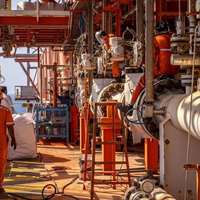
Capital flight from Iran is accelerating just as oil revenues decline, according to new data from the Central Bank of Iran—a convergence that helps explain the sharp fall of the national currency in recent months.
Central bank (CBI) figures show that, even before accounting for sanctions-evasion costs or discounts offered to Chinese buyers, the nominal value of Iran’s oil exports fell about 10 percent to $30.7 billion in the first half of the current Iranian fiscal year, which began on March 21, 2025.
Additional CBI data show that the nominal value of Iran’s total exports—including oil, non-oil goods and services—reached about $59 billion in the first six months of the fiscal year, while imports totaled roughly $48 billion.
On paper, that left a trade surplus of $11 billion. Yet during the same period, nearly $15 billion in capital left the country. That’s a record outflow that more than offset the surplus.
The outflows appear to be intensifying as Iran remains suspended between uncertain nuclear negotiations and the persistent risk of military escalation.
Earlier this month, US Treasury Secretary Scott Bessent said Iranian leaders were “wiring money out of the country like crazy,” but did not offer any more details.
CBI does not specify how much revenue was lost through sanctions circumvention. But a member of parliament’s Budget and Planning Commission recently said Iran earned only $20 billion from oil exports in the first eight months of the fiscal year—far below the nominal value of shipments.
Put simply, Iran’s actual oil income over eight months was substantially lower than the nominal value of exports recorded over six months, pointing to significant losses through price discounts and restricted access to proceeds.
Even those reduced revenues have not fully reached the government. Last month, Gholamreza Tajgardoon, head of parliament’s Joint Budget Commission, said only $13 billion of the $20 billion in oil export earnings had actually been received.
The figures underscore a dual constraint: Iran is not only earning less from its oil exports but is also struggling to access the revenue it does generate, limiting its ability to finance imports or stabilize domestic markets.
The gap has forced the government to rely increasingly on domestic borrowing.
Central bank data show that by November 2025, government debt to the banking system had risen 41 percent from a year earlier, while its debt to the central bank surged 68 percent. Commercial banks’ own borrowing from the central bank rose 63 percent over the same period.
In effect, the state has compensated for lost oil income by drawing on the banking system and expanding the money supply. Liquidity—a key driver of inflation and currency depreciation—rose more than 40 percent in November 2025 compared with a year earlier.
The consequences are visible in the exchange rate. The rial has depreciated roughly 75 percent since February last year.
Taken together, declining oil revenues, restricted access to export proceeds, record capital flight and rapid monetary expansion are reinforcing one another.
The prolonged state of geopolitical limbo appears to be amplifying those pressures, encouraging businesses and elites alike to move assets abroad and leaving the economy increasingly exposed to further instability.

Nineteen-year-old protester Mohammadamin Biglari has been sentenced to death in a group case tried alongside six other defendants, with the maximum punishment issued for all individuals in the case, Tehran-based news outlet Emtedad reported, citing his lawyer.
"The head of Branch 9 did not grant us permission to review the case file nor permission to present a defense," Emtedad quoted Biglari's lawyer Hassan Aghakhani as saying.
He added that Mohammadamin had been under his grandmother’s guardianship since childhood and had been working two jobs at the same time.

Forty days after more than 36,500 protesters were killed in a two-day crackdown in January, Iranians are marking the traditional chehelom not only in cemeteries but also in the streets and hospitals where the dead fell – a scale of loss that is reshaping how the country mourns.
In Iranian culture, the fortieth day after a death is a solemn threshold. Families and friends traditionally gather at the grave, laying flowers, reciting prayers and receiving visitors – a ritual of grief that is both private and communal, and that often carries religious undertones.
This week, cemeteries were only part of the picture as mourners map memory onto the sites of violence. With so many deaths concentrated in urban centers and around hospitals, intersections and residential streets, memorials have spread outward from cemeteries into the everyday fabric of cities.
Videos sent to Iran International and others circulating on social media show flowers placed not only on graves but on asphalt, sidewalks and hospital entrances – at the very spots where protesters were shot.
In Shiraz, relatives and close friends of Hamidreza Hosseinipour covered the boulevard where he was killed in petals. In Tehran’s Sadeghieh Square, citizens gathered at the traffic circle where demonstrators had been shot, laying flowers in what is normally a site of rush-hour congestion.
In Tehranpars district of the capital, mourners placed flowers and candles outside a hospital where wounded protesters were taken and where some died.
In Mazandaran province, black balloons were released into the sky.
Schools, too, became sites of commemoration. Videos show groups of schoolgirls lighting candles and singing patriotic songs, marking the chehelom inside classrooms rather than in mosques.
The sites of commemoration have widened beyond the places where many Iranians once expected mourning to unfold. Where people believe their loved ones fell, they now leave photographs, flowers or pieces of clothing.
Pavements become shrines. Traffic circles are transformed into temporary altars. Hospital gates turn into gathering points. The geography of grief has changed.
There are simply too many dead, and too many sites tied to their final moments, for remembrance to remain confined to cemetery gates.
Even when ceremonies do take place at graves, the atmosphere captured in recent videos differs sharply from older conventions of public mourning, where religious elegies used to set the tone. Today, music and movement have emerged as ways of carrying grief.


At Behesht Zahra cemetery in Tehran, footage shows families gathering and playing traditional musical instruments. In Najafabad, Isfahan province, mourners applauded and played music.
In Zanjan, kites were sent into the sky above the cemetery as names were read out.
In Shahreza, a video shows a traditional Qashqai dance performed during the fortieth-day memorial for 20-year-old Pouria Jahangiri, killed on January 8.
In Qarchak, near Tehran, mourners clapped in time to songs played for Hamid Nik, a resident who died after being hit during the crackdown. In another video from Najafabad, fireworks illuminate the night as people gather and chant.
In Mashhad, the memorial for Hamid Mahdavi – a firefighter whose act of carrying an injured protester on his back had spread widely online – took place not in silence but amid chants in the street: “For every one person killed, a thousand will rise behind them.”
These moments do not erase grief, they translate it.
The scenes appearing in recent weeks suggest a shift: not away from mourning itself, but away from a single, familiar language of mourning. Music, clapping, balloons released into the sky, kites and dance have become part of the ritual vocabulary.
After decades in which public mourning was steeped in official religious symbolism, the scenes in recent weeks suggest some are shaping something different: a mourning that is national in tone, public in form, and edged with defiance.
The fortieth day has long been a marker of closure in Iranian tradition – a moment when visitors thin out and life, at least outwardly, resumes.
But with flowers now laid on asphalt and candles lit at hospital doors, the boundary between mourning and daily life has blurred. The city itself has become the setting of remembrance – and, for many, the proof of how profoundly the culture of grief is changing.

Australia granted permanent residency to Hanieh Safavi, the daughter of Iranian Major General Yahya Rahim Safavi, a sanctioned adviser to Supreme Leader Ali Khamenei and a former senior figure in the Revolutionary Guards, despite repeated warnings to the government, The Australian reported on Wednesday.
Safavi arrived on a student visa in 2024 and later obtained a skilled independent visa. She is now registered as a provisional psychologist in Australia.
Her residency has drawn criticism from members of the Iranian diaspora and opposition lawmakers. Liberal Senator Dave Sharma wrote to Home Affairs Minister Tony Burke that it was “concerning and potentially alarming that the daughter of a senior IRGC commander, on the Australian sanctions list, appears to be residing in Australia.”
An Iranian-Australian activist also wrote to authorities, saying: “(Ms Safavi) left her IRGC commander father behind and came to live freely in Australia. This is the injustice I cannot remain silent about.” He added that the issue was about ensuring the visa system “applies the same rigorous standards to everyone.”
A government spokesperson said all visa applications are assessed on a case-by-case basis and must satisfy all criteria before approval.