Iran detains journalist over online posts


Iranian journalist Kianoush Darvishi was arrested on Monday after being summoned to the prosecutor’s office and was transferred to Tehran Greater Prison, sources familiar with the matter told Iran International.
Sources close to his family said Darvishi is the sole caregiver for his mother, who has cancer and is undergoing chemotherapy.
Darvishi wrote on X on February 3 that Iran’s cyber police had contacted him and summoned him over stories he posted on social media. He also said the cyber police froze his bank accounts without referring the case to court and solely by sending a letter.
New details from eyewitnesses and medical staff in Iran’s southeastern city of Kerman indicate that security forces opened fire and killed dozens of protesters attempting to reach a statue of slain IRGC commander Qassem Soleimani in early January.
Witnesses said the violence unfolded on the evening of January 8 around Azadi Square, where one of the country’s most prominent monuments to Soleimani stood.
Protests in Kerman had begun days earlier with small, scattered gatherings around the city’s bazaar and residential neighborhoods, residents said. But by late afternoon on January 8, significantly larger crowds, including families, were moving toward the square.
One resident said Azadi Square had gradually become a focal point for protesters in the preceding days, despite the absence of formal calls to gather. Videos reviewed by Iran International show the Soleimani statue set on fire during the unrest.
According to a member of the medical staff at a Kerman treatment center, at least 70 protester deaths were registered in the city’s hospitals. He said the figure included only those formally recorded in medical facilities and did not capture all fatalities.
Iran’s government has not provided city-level breakdowns of protest deaths but leaked documents obtained and reviewed by. Iran International shows up to 36,500 people were killed across the country on those two days.
Witnesses said security forces had deployed in force around Azadi Square before peak gathering hours, blocking roads with vehicles and personnel to prevent crowds from reaching the monument. Protesters instead gathered along surrounding streets, including Jomhouri Boulevard, Khajoo intersection, and Bahmanyar and Esteghlal streets.
One protester said security forces initially used tear gas, pellet fire and warning shots. Drones were visible overhead between roughly 7:00 and 8:00 p.m. By around 8:00 p.m., he said, live ammunition was being fired directly at crowds.
He said some of the heaviest clashes occurred near Khajoo intersection and along Jomhouri Boulevard, where large crowds had formed. Witnesses also reported gunfire from elevated positions on nearby buildings, though this could not be independently verified.
Because of the concentration of hospitals, clinics and medical complexes near Azadi Square, many wounded protesters were able to reach treatment facilities quickly. Medical staff described treating gunshot wounds, severe bleeding and respiratory injuries caused by tear gas exposure.
In the days that followed, security forces detained medical personnel who had assisted protesters, according to a healthcare worker familiar with the arrests. He said at least 10 doctors in Kerman had been detained, though only two—Amir Shafiei and Saman Salari—have been publicly identified.
Witnesses said the scale of the January 8 turnout had been significantly larger than previous protests in the city. Some participants said the presence of families and older residents created a false sense of safety, leading many to underestimate the likelihood of lethal force.
A woman who took part in the protests said clashes continued across multiple neighborhoods late into the night and into the following day. Tear gas and gunfire affected large areas of the city, forcing residents indoors.
She also described the sudden appearance of motorcyclists who vandalized banks and government buildings while security forces present at the scene did not intervene. After the motorcyclists left, she said, security forces moved against protesters. The identities and affiliations of the motorcyclists could not be independently confirmed.
The crackdown was followed by widespread arrests and legal action, according to a lawyer in Kerman familiar with the cases. He said detainees were frequently moved between facilities, making it difficult for families to determine their whereabouts.
The lawyer said at least 30 detainees have been charged with “moharebeh,” or waging war against God, a capital offense under Iranian law. He also reported that approximately 500 detainees had received prison sentences, including medical staff and young protesters, while many others remained in legal limbo.
These figures could not be independently verified.
Families have often been reluctant to publicize arrests or disappearances, he said, citing fear of retaliation and reports of abuse in detention.
Among those whose deaths have been publicly confirmed were Mehdi Khosravi, 24, who was shot on January 8, and Ehsan Jafari, a university student who died weeks later after being wounded during the protests. Other victims included students, teachers and residents from across Kerman province.
The protests in Kerman focused in part on the Soleimani statue, which has become a symbol of state authority in the city where the general is buried.
Residents said many protesters viewed the monument as a representation of the political system itself. Their attempt to topple it was met by a brutal force that turned the surrounding streets into one of the deadliest flashpoints of unrest in the city.
The full death toll in Kerman remains unknown.

US Ambassador to Israel Mike Huckabee said he hopes a diplomatic accord with Iran can be reached but expressed skepticism that military action can ultimately be avoided, as US-Iran nuclear talks resume in Geneva on Tuesday.
“Will there be anything that can come from that that will bring peace? I honestly don’t know. I know there’s a lot of significant and legitimate doubt that the Iranians will ever agree to something that would cause them to lay down any ambitions of nuclear weaponry,” Huckabee said while speaking to Jewish leaders at a Conference of Presidents gathering in Jerusalem.
Huckabee said US President Donald Trump had made clear military action was “not his first choice.”
He added the president’s “absolute desire” was to ensure Iran does not continue to wreak havoc globally.
“At some point, the United States needs to say: enough is enough, we’re not going to continue to believe that they’re ever going to be different than they are. And it’s time for them to either make a radical change of their point of view and their direction, or for them to experience what we call in the south, the ‘second kick of a mule,’” he said.
Huckabee said Israel and the United States were “absolutely aligned in our understanding that Iran has to be dealt with and it cannot continue as it is.”
“They cannot remain a nuclear threat. They cannot continue to build extraordinary surpluses of ballistic missiles and aim them, not just at Israel, but also at the rest of the world,” he said.
Huckabee added it would be “miraculous if some deal could be reached that would thwart the need, the necessity, the absolute certainty of some military action.”

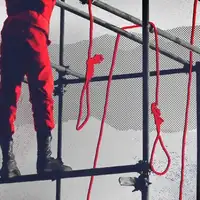
Iran has sentenced at least 14 protesters to death in group online trials, people familiar with the matter told Iran International, with additional indictments accusing detainees of acting against the country’s security on calls from the US president and Israel.
The trials were presided over by Judge Abolghasem Salavati, head of Branch 15 of Tehran’s Revolutionary Court, who is widely known for handing down severe sentences in protest-related and political cases, the sources said.
Salavati has been holding simultaneous virtual hearings in which detainees are tried in groups of 14, according to the sources.
Among those sentenced is Abolfazl Karimi, a detained protester who the sources said had told his family in a phone call that he had been subjected to forced confessions under beatings and torture.
Karimi is the father of a young child and previously worked as a motorcycle courier in eastern Tehran.
He was arrested on January 6 while returning from work in Tehran’s Hengam neighborhood, where he encountered two injured women whose legs had been hit by gunfire from security forces, the sources said.
When he went to assist them, officers shot his leg with pellet rounds and arrested him along with the two wounded women, the sources added.
After about a month in detention in Greater Tehran Prison, he was recently transferred along with around 50 other protesters to Ghezel Hesar Prison, the sources said.
In a later phone call, Karimi told his family he had been tortured without medical treatment for his wounds and, while blindfolded, was forced to sign papers containing confessions against himself, according to the sources.

In recent days, Iran’s judiciary has intensified the process of trying protesters detained during the nationwide protests and issuing death sentences, the sources said.
On Monday Tehran Revolutionary Court, also presided over by Salavati, sentenced 19-year-old Mohammadamin Biglari to death on the charge of “enmity against God,” and the case has been referred to the Supreme Court, the sources said.
Biglari was arrested on January 8 on Tehran’s Damavand Street.
His mother is deceased, and his father was unaware of his fate for weeks, searching for him among bodies in Kahrizak before authorities informed him after three weeks that his son had been detained, the sources said.
Separately, on Sunday, the judiciary announced the first hearing session for three detained protesters—Ehsan Hosseinipour Hesarloo, Matin Mohammadi and Erfan Amiri—on charges including allegedly setting fire to Seyed al-Shohada Mosque in Pakdasht and alleged participation in murder.
Other charges against the three were announced as “assembly and collusion to appear and act against the country’s internal security following calls on hostile social media, particularly the US president and the Zionist regime (Israel)…” according to the judiciary-affiliated Mizan News Agency.
Norway-based rights group Hengaw said the case against the three was marred by due process violations.
"The hearing was held despite reports that the detainees have been denied basic rights since their arrest, including access to a lawyer of their choice and contact with their families. They were subjected to intense pressure and torture during detention and compelled to provide forced confessions," Hengaw said.
Tens of thousands of people have been arrested during the nationwide protests, many facing heavy charges, the sources said.
Some families have reported being pressured by security bodies to refrain from speaking to media or publicly discussing the cases of detained relatives, the sources added.
Iran’s exiled prince Reza Pahlavi praised protesters who chanted ant-government slogans from their homes in Iran and members of the Iranian diaspora who attended rallies abroad over the weekend.
“Your resounding cries within Iran on the nights of February 14th and 15th, and your remarkable presence in the rallies of the February 14th Global Day of Action were a clear manifestation of our national unity,” he said in a post on X.
“Our struggle to overthrow the Islamic Republic and establish a national and democratic government is irreversible… We will continue this struggle with strength until the overthrow of this criminal regime and the expulsion of the occupiers from our beloved Iran,” he added.

Rising bread prices have become a growing source of concern within Iran’s political establishment, with warnings that further increases could trigger unrest as inflation erodes living standards.
The hardline newspaper Kayhan, aligned with Supreme Leader Ali Khamenei, warned on Sunday that raising bread prices could have “catastrophic consequences,” cautioning that “Iranian society cannot tolerate a new shock.”
Kayhan urged the heads of Iran’s executive, legislative and judicial branches to intervene, calling the planned price increase “mysterious and suspicious” and accusing economic advisers to President Masoud Pezeshkian of “playing into the hands of Iran’s enemies.”
The warning came days after government spokesperson Fatemeh Mohajerani said bread prices would “most certainly” rise soon, signaling a politically sensitive move affecting a staple food relied upon by millions of low-income Iranians.
Iran’s Statistical Center reported inflation at about 60%, sharply reducing purchasing power and placing essential goods increasingly out of reach for poorer households.
Economists warn that price increases in staples such as bread can ripple across the economy, raising costs and accelerating inflation.
Blame game
Bread has long been a politically sensitive commodity in Iran, where subsidies have historically helped preserve social stability. Price increases or subsidy cuts affecting basic goods have previously triggered protests and unrest.
Kayhan linked the issue to recent protests, saying earlier subsidy cuts had already produced “heavy social and security consequences.” It said officials had “chosen the worst possible time” for further increases, given the country’s economic and political pressures.
The dispute reflects a broader pattern in Tehran, where competing factions often blame one another for economic hardship. Hardline outlets and political figures frequently accuse elected governments of mismanagement, while President Pezeshkian and his allies have said entrenched interests and powerful unelected institutions are obstructing efforts to stabilize the economy.
Rarely acknowledged in these public exchanges is the extent to which Iran’s economic trajectory is shaped by political and foreign policy decisions made at the highest levels of the system.
Under Iran’s constitution, Supreme Leader Ali Khamenei holds ultimate authority over key areas including foreign policy, defense and the nuclear program, decisions that have played a central role in triggering sanctions and shaping the country’s economic environment.
Cash payments
The newspaper also accused the government of disguising subsidy reductions through technical language, saying officials claim subsidies have merely been “shifted in the supply chain” rather than eliminated.
Such explanations, Kayhan said, “never convince the people and will certainly lead to crises.”
The government has said it plans to offset higher bread prices through cash payments to households.
But economic researcher Yaser Bagheri said the current monthly subsidy allows recipients to buy only three loaves of bread, highlighting the limited impact of compensation measures.
Iranian outlets including the moderate Rouydad24 reported last week that food prices rose by more than 13.7% in a single month, underscoring mounting pressure on household budgets.
Kayhan’s unusually blunt warning underscores growing concern within Iran’s political establishment that economic hardship—especially involving essential goods such as bread—could carry serious political consequences.