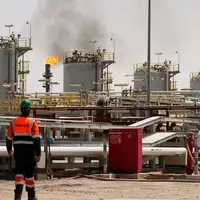
Crude oil loadings from Iran’s Persian Gulf terminals fell to below 1.39 million barrels per day in January, a 26 percent drop from a year earlier, according to data from commodity intelligence firm Kpler reviewed by Iran International.
The decline extends a steady downward trend since October, suggesting sustained pressure rather than a temporary disruption.
The slowdown is most visible in China, Iran’s primary—and effectively only—major oil buyer under sanctions. Daily discharges of Iranian crude at Chinese ports fell to 1.13 million barrels per day last month, down from an average of around 1.4 million barrels per day in 2025.
Unsold Iranian crude is also accumulating at sea. The volume of oil stored on tankers has nearly tripled over the past year to more than 170 million barrels, a sign that shipments are becoming harder to sell or deliver.
Keeping that oil afloat is costly. Chartering a Very Large Crude Carrier typically costs more than $100,000 per day, and tankers carrying sanctioned Iranian oil command even higher rates due to legal and insurance risks. Analysts estimate that roughly one-fifth of Iran’s oil revenue is effectively consumed by these transport and storage costs.
Much of the oil remains stranded in Asian waters. About one-third of Iranian tankers are anchored offshore, while others move continuously or conduct ship-to-ship transfers to evade sanctions enforcement—tactics that have become standard within Iran’s so-called shadow fleet.
Sanctions are increasingly targeting those networks. According to Kpler, 86 percent of the tankers transporting Iranian oil over the past year have themselves been sanctioned by the United States, highlighting the expanding scope of enforcement.
The pressure has forced Iran to offer steep discounts to maintain sales. Iranian crude is currently priced about $11 to $12 per barrel below comparable benchmarks, up from a discount of roughly $3 per barrel early last year, significantly reducing Tehran’s net income.
The decline extends beyond crude oil. Exports of petroleum products such as fuel oil fell to about 350,000 barrels per day in January, down from 410,000 barrels per day a year earlier, with China and the United Arab Emirates among the main buyers.
Additional pressure may be coming. President Donald Trump recently signed an executive order imposing a 25 percent tariff on trade partners of Iran, a measure that could further deter companies and countries from handling Iranian oil.
The mounting economic strain provides important context for renewed indirect talks between Washington and Tehran.
For Iran’s leadership, easing sanctions remains the most direct path to stabilizing oil revenues and relieving fiscal pressure. But deep differences over Iran’s nuclear program, missile development, and regional activities make an agreement unlikely unless one side decides to compromise on core demands.
Taken together, the data suggest that Iran’s ability to sustain oil exports under sanctions—long a cornerstone of its economic resilience—is becoming more constrained.