“Diplomacy is ongoing. For talks to resume, Iran says there should not be preconditions and that it is ready to show flexibility on uranium enrichment, including handing over 400 kg of highly enriched uranium, accepting zero enrichment under a consortium arrangement as a solution,” Reuters quoted an unnamed Iranian official as saying.
However, the official added that for talks to begin, Tehran wanted US military assets moved away from Iran.
“Now the ball is in Donald Trump’s court,” the official said, according to the report.

As Iranians mourn those killed in the nationwide crackdown, state-aligned voices are falling back on familiar defenses: downplaying the toll, casting the protests as a foreign plot, and stripping victims of civic status by branding them religious enemies.
Variations of this message have surfaced across pro-government platforms, from seminarians presenting bloodshed as “righteous” to well-connected insiders arguing that killing protesters in the street is cheaper than arresting and executing them one by one.
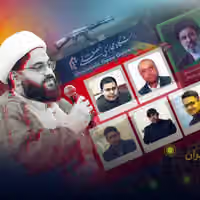
A week after Iran killed more than 36,500 people, a state-affiliated analyst, Hesamoddin Haerizadeh, framed the protests not as civic dissent but as a divinely charged war, wrapping state violence in religious and moral language.
Opening his remarks, Haerizadeh cast the uprising as an externally orchestrated assault, describing the unrest as foreign backed riots and part of a broader confrontation between the Islamic Republic and the "non-believers front."
From there, he moved beyond political framing into a religious logic that treats street protests as a battlefield where killing is not a crime but an inevitable feature of a sacred struggle.
Haerizadeh branded the protests as “armed rebellion,” insisting that what had taken place was not peaceful protest but organized violence.


Haerizadeh then introduced an explicitly theological lens, portraying the crackdown as part of what he described as a divine process of purification.
“These events are meant to separate the impure from the pure,” he said, adding that turmoil is necessary so that “the impure are distinguished from the pure.”
In one of the starkest passages, he cited a Quranic verse often used to legitimize violence against perceived enemies: “And fight them until there is no more fitna,” he said, quoting scripture, “until religion is entirely for God.”
Critics say the effect of this framing is to turn the killing of protesters into something sacred: not a state decision, but a divine sorting mechanism—a form of moral cleansing.
Haerizadeh’s rhetoric relied heavily on dehumanization, dividing society into moral categories rather than citizens with rights.
“Kill, but with a ‘pure heart,’” activist Ahmad Batebi wrote, arguing that the lecture was designed to allow perpetrators to believe: “I didn’t kill; God sifted.”
The civic technology group TavaanaTech described the session as “workshops for killing and murder,” warning that such religious framing lowers the moral barrier to atrocity.
“This language is the language of genocide,” the group wrote, “a language that first makes the victim worthless so killing becomes easier.”
Killing as bureaucratic efficiency
A separate set of remarks, contained in an audio file attributed to Ahmad Ghadiri Abyaneh – the son of a former senior Iranian diplomat – moves beyond ideology into blunt cost-benefit logic.
In an online session on Thursday, January 29, he argued that killing protesters in the street could spare the Islamic Republic the international pressure that follows formal executions.
He minimized the scale of the deaths, reducing reported killings from tens of thousands to just over 3,000, and said the cost of killing protesters on the streets was far lower than arresting and executing them one by one.
“Why didn’t you kill them on the streets?” he asked, addressing the authorities. “You know that if they had been eliminated on the spot, the cost to the system would have been far, far lower than if you tried to execute them one by one.”
“Each one becomes a case file and a source of pressure on the Islamic Republic,” he continued. “By any logic—by any religious reasoning—it would have been right to show an iron fist with a decisive strike and wipe them out on the scene.”


Mockery on state television
The narrative hardened further when a host on Ofogh TV, an IRIB channel affiliated with the Revolutionary Guards, mocked reports that thousands of bodies had been transported in refrigerated trailers.
“What type of refrigerator do you think the Islamic Republic keeps the bodies in?” he asked sarcastically, offering joking options including an “ice cream machine” and a “supermarket freezer.”
The remarks sparked outrage across Iran’s political spectrum. IRIB later removed Ofogh TV’s director, Sadegh Yazdani, and pulled the program, though many critics said deeper accountability was unlikely.
'Enemies of God'
The same logic resurfaced on Sunday, when Tehran City Council head Mehdi Chamran denied protest deaths while labeling victims with one of the Islamic Republic’s harshest religious-legal categories.
“In these protests we had no deaths, and only moharebs were present with guns and knives,” Chamran said.
The term mohareb –used for those accused of waging war against God – has long been associated with the harshest punishments, including execution. Critics say it functions as a rhetorical weapon, transforming civilians into divine enemies.
Taken together, these remarks point to a single through-line: Tehran's effort to frame violence as either sacred duty or bureaucratic convenience.

US President Donald Trump said Washington has ordered 25 new B-2 stealth bombers, arguing that under his administration the United States has regained global respect following US strikes on Iran’s nuclear sites in June.
“The bottom line is that we are respected again like never before,” Trump said on The Dan Bongino Show. “And they saw what happened in Iran… with those beautiful B-2 bombers. We just ordered 25 more of them. Even the newer upgraded version, you got to see these things. They’re invisible.”
Trump also cited the US killings of Islamic State leader Abu Bakr al-Baghdadi and IRGC Quds force commander Qassem Soleimani during his first term.
“I got Soleimani. I got al-Baghdadi in my first term, two of the worst, the worst ever,” Trump said. “One was the founder of ISIS. He was rebuilding it. I took him out.”
Trump suggested that the killing of Soleimani made the June strike on Iran possible.
“If he lived, that attack that we made on Iran would not have been the same thing,” Trump said. “He was a great general. And they don’t have that now.”

Iran’s leadership is increasingly worried that a US military strike could drive an already enraged public back onto the streets and threaten the survival of the Islamic Republic, according to Reuters citing current and former officials cited by Reuters.
In recent high-level meetings, officials warned Supreme Leader Ali Khamenei that public anger following last month’s bloody crackdown has reached a point where fear is no longer a deterrent.
Officials told Khamenei that many Iranians were prepared to confront security forces again and that external pressure, including a limited US strike, could embolden protesters and cause irreparable damage to the political system.
One official told Reuters that an attack combined with renewed demonstrations could lead to the collapse of the ruling establishment.
The private concerns stand in contrast to Tehran’s defiant public stance toward both protesters and the United States, and come as US and Iranian officials have confirmed direct talks in Turkey scheduled for Friday.
The timing suggests that mounting US pressure may have helped accelerate Tehran’s decision to engage, even as Iranian leaders continue to publicly project defiance.
US Senator Dan Sullivan called on Washington to maintain its support for the Iranian people.
“We need to continue to stand with the brave young men and women of Iran,” Sullivan, the Republican senator representing Alaska, said in a post on X. “The terrorist regime in Iran would be wise to heed the President’s warnings.”

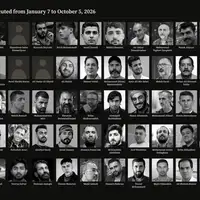
Iran International has documented the deaths of more than six thousands people during recent protests in Iran whose names do not appear on an official government list published over the weekend.
“In a shameful attempt to downplay the scale of the largest street massacre in Iran’s contemporary history, Tehran has sought to cast doubt on the figures reported by Iran International,” the broadcaster’s editorial board said in a statement on Monday.
“Yet the statistics released by the government itself constitute further evidence of their dishonesty.”
The list published by Tehran includes 2,986 names. Fewer than 100 of those overlap with the 6,634 deaths compiled by Iran International since it issued a public call for documentation from families, witnesses and citizen journalists.
The information collected includes victims’ names, photographs, places of residence, circumstances of death and testimony from relatives, gathered despite severe internet restrictions and security pressure on families inside Iran.
Protests erupted in late December and escalated sharply on January 8 and 9, following a call for nationwide action by the exiled prince Reza Pahlavi. The demonstrations were met with a sweeping security crackdown in which thousands were killed and many more wounded or detained.
Iran International has previously put the death toll at at least 36,500, citing leaked official documents—a figure Tehran disputes.
The government’s release of an official “casualties list” appears to have been intended as a rebuttal to that report, but it has instead triggered a backlash.
Critics, including families of victims and activists, have pointed to alleged errors, duplicated identities, inconsistencies in official figures, and the absence of information about unidentified bodies and missing persons.
Iranian officials say the discrepancies stem from the presence of unidentified remains—a claim critics question given the scale of the state’s security and forensic apparatus.
You can read the full statement by Iran International’s editorial board here.