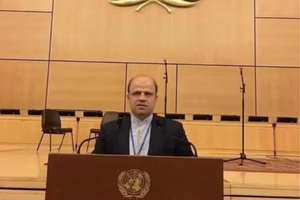
Another Iran diplomat seeks asylum in Switzerland, sources say

An Iranian diplomat posted in Austria has left his assignment and sought asylum in Switzerland, informed sources told Iran International on Tuesday.

An Iranian diplomat posted in Austria has left his assignment and sought asylum in Switzerland, informed sources told Iran International on Tuesday.
Gholamreza Derikvand, Iran’s chargé d’affaires in Vienna, had broken with Tehran and is now in Switzerland. There was no immediate comment from Iran’s foreign ministry.
Sources told Iran International that officials at the ministry had avoided discussing the case, with some staff citing security concerns.
Derikvand previously served as charge d’affaires at Iran’s embassy in the Czech Republic from 2011 to 2014 and was viewed by colleagues as a career diplomat who could have risen to ambassador.
The move follows a similar case last month in which Alireza Jeyrani Hokmabad, a senior Iranian diplomat based at the United Nations European headquarters in Geneva, left his post and sought asylum in Switzerland with his family.
Diplomatic sources said fears linked to Iran’s political unrest and concerns over the stability of the governing system had prompted the decision.

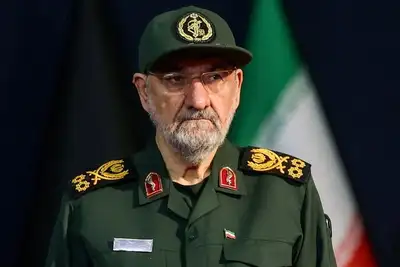
Iran could launch its Hatef-3 satellite on a Simorgh rocket by the end of the current Iranian year in March, the head of the country’s space agency said on Tuesday, adding that compatibility tests are under way.
Iran’s space agency chief Hassan Salarieh said the newly unveiled Hatef-3 is a full-scale test model for the planned 24-satellite “Martyr Soleimani” constellation and would be launched once final checks are completed.
Salarieh said Hatef-3 satellite is still considered an “experimental sample because the system must be placed into orbit and its performance be assessed in space.”
Iran is carrying out integration and compatibility tests between the Hatef-3 satellite and the Simorgh launch vehicle, he added, describing a launch by year-end as likely but subject to technical reviews.
According to Salarieh, a space base was also unveiled in Salmas in northwestern Iran and another in Chenaran in the northeast.
Also on Tuesday, Iran’s defense minister said the country must accelerate its space program to close what he described as lingering gaps, warning that falling behind could undermine national governance and independence.
Aziz Nasirzadeh said Iran should prioritize developing an air-launched rocket system and securing a presence in geostationary orbit, calling space a new arena for strategic competition.

Australia imposed new sanctions on 20 individuals and three entities linked to Iran’s Islamic Revolutionary Guard Corps, accusing them of involvement in a violent crackdown on protests.
“The Australian Government is today imposing further targeted financial sanctions on Iran in response to the regime’s horrific use of violence against its own people,” read a government media release on Tuesday.
The Australian government said those sanctioned include senior IRGC officials and entities that violently suppress domestic protests and threaten lives inside and outside Iran.
Among those named are Iran’s national police chief Ahmad-Reza Radan, who has been a central figure in directing street-level repression, mass arrests and the use of force against protesters.
Intelligence Minister Esmail Khatib was also on the list. He oversees the security and intelligence apparatus responsible for surveillance, detentions and interrogations of activists and dissidents.
Ali Fazli, a senior IRGC commander and former Basij chief, who has long been associated with suppressing protests and coordinating paramilitary forces against demonstrators, was also sanctioned by Canberra.
Other notable names on the list included Mohammad Reza Fallahzadeh, a senior commander in the IRGC’s Quds Force, Mohammad Saleh Jokar, a former commander of student Basij forces, and Yahya Hosseini Panjaki, the intelligence ministry's deputy for domestic security.
Canberra’s sanctions also targeted the IRGC Cyber Defense Command, involved in online surveillance and information control; IRGC Quds Force Unit 840, a covert unit accused of planning operations against dissidents and foreign targets; and the IRGC Intelligence Organization, which oversees domestic intelligence, arrests and interrogations and plays a central role in suppressing protests inside Iran.
The Australian government said the new measures build on earlier step of listing the IRGC as a state sponsor of terrorism and its existing sanctions framework on Iran.
Australia officially designated IRGC as a state sponsor of terrorism in November after intelligence linked the group to attacks on Jewish centers in Sydney and Melbourne.
The Guards, who have been designated a terrorist organization by the United States since 2019, were also put on the EU’s terrorist list in late January.
The Albanese government has so far sanctioned more than 200 Iranian individuals and entities, including more than 100 linked to the IRGC.

Reza Bahmani Alijanvand, a 34-year-old Iranian protester, disappeared after attending protests in the central Iranian city of Shahin Shahr on January 8, and was later found dead in the cold storage of a cemetery, people familiar with the matter told Iran International.
The sources said Alijanvand was shot by security forces with two live rounds, one striking his lower back and another his abdomen. His family spent five days searching hospitals, police stations and prisons across Isfahan province before identifying his body in the cold storage at Bagh-e Rezvan cemetery on January 13, the sources said.
According to the sources, Alijanvand's body was transferred later that night, on January 13, to Shahin Shahr's morgue.
Authorities initially refused to hand over the body and sought to have Alijanvand declared a “martyr,” a condition the family rejected, which would have required them to accept the state’s official account of the death rather than acknowledge that he was killed by state security forces.
Alijanvand was eventually buried under heavy security at around 4 a.m. on January 15, in a tightly controlled ceremony at Behesht-e Zahra Chaharbisheh cemetery in his hometown of Masjed Soleyman in southwestern Iran, with only five family members present and several plainclothes agents in attendance, the sources said.
Alijanvand was married and worked as a forklift driver at a brick factory, according to the people familiar with the matter.
“Reza worked from morning until night. He was deeply patriotic and hopeful for Iran’s freedom,” the source said, adding that Alijanvand believed Iran’s exiled prince Reza Pahlavi would return to the country.
Last month, Iran International reported that more than 36,500 Iranians were killed by security forces during the January 8-9 crackdown on nationwide protests, making it the deadliest two-day protest massacre in history.


Iran’s Foreign Minister Abbas Araghchi said on Monday that Tehran was ready for diplomacy and said he hoped there would be results soon, as Iran weighs possible talks with the United States.
Araghchi said Iran had never abandoned diplomacy based on mutual respect and mutual interests.
“The people of Iran must be spoken to with respect,” Araghchi said, adding that Iran would respond respectfully to anyone who did so.
Iran’s President Masoud Pezeshkian, meanwhile, ordered the start of negotiations with the United States, Fars news agency quoted a source in the administration as saying, adding that negotiations would take place within the framework of the nuclear issue.
Fars later changed the wording of the report and said nothing is final about the status of the negotiations.
The report followed remarks earlier in the day by foreign ministry spokesperson Esmaeil Baghaei, who said talks between Iran and the US would probably be held in Turkey in the coming days.
At his weekly news conference, Baghaei said any Tehran-Washington negotiations would proceed step by step.
He said alongside “the issue of threats,” the priority for the Islamic Republic would be sanctions relief, which he called “a fundamental and non-negotiable priority.” He also thanked Turkey for its role in helping reduce regional tensions.
Tasnim news agency, which is affiliated with the Revolutionary Guard, confirmed the possibility of talks but said the time and place were not final. It said talks would likely be held between the Iranian foreign minister, and Steve Witkoff, the US special envoy.
A senior Iranian official and a Western diplomat told Reuters on Monday that Witkoff and Araghchi could meet in Turkey in the coming days.
A Turkish ruling party official told Reuters that Tehran and Washington had agreed that talks would focus on diplomacy, seen as a possible reprieve from potential US strikes.
Qatar and Egypt were also being considered as possible hosts for talks, Iran’s ISNA news agency reported.

A leaked Tasnim memo seen by Iran International shows the IRGC media apparatus sought to manipulate narratives around the protests and crackdown, undermine exiled Prince Reza Pahlavi, and frame the uprising as foreign-driven – not rooted in public anger at the Islamic Republic.
The document, issued by the Strategic Center of Tasnim News Agency – an outlet linked to the Islamic Revolutionary Guard Corps (IRGC), instructs that audiences should be led to view Pahlavi not as a political alternative, but as a Western-backed media instrument. It outlines three main lines of messaging.
First, it denies that Pahlavi has any meaningful social base inside Iran, saying recent protests were not the result of his calls but were planned on the ground by the United States and Israel. His statements, it argues, serve only as media coverage of unrest rather than leadership.
Second, the strategy seeks to separate broad social anger from support for Pahlavi, saying that many protesters were expressing accumulated frustration with the Islamic Republic rather than endorsing his political qualifications. Supportive slogans, it adds, reflect opposition to the system more than approval of Pahlavi himself.
Third, the document focuses on undermining Pahlavi’s political and personal credibility, portraying him as inconsistent, unwilling to take responsibility, lacking courage, and ultimately depicted as a “puppet” rather than a serious political actor.
Commenting on the document, political analyst Rouhollah Rahimpour, a freelance journalist, told Iran International that within the Islamic Republic’s broader media machinery, “nothing is random – neither words, nor terminology, nor narratives, nor timing.”
He described the approach as a classic narrative war designed to separate the public from political alternatives, allow anger to be released without enabling leadership to form, and keep society in a state of resentment.
“They tried to show that Crown Prince Reza Pahlavi is not a political actor but a tool,” Rahimpour said.
He added that the strategy also aims to prevent any perceived identity link between protesters inside Iran and Pahlavi, ensuring that “no identity connection is established between protesters inside Iran and Pahlavi.”