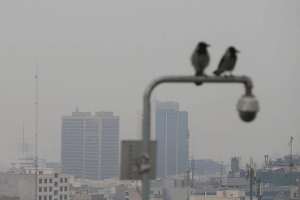
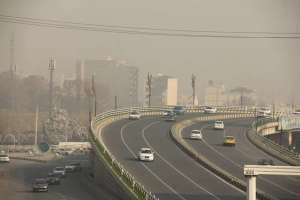
Air quality in nine monitoring stations across Tehran Province was classified as red on Saturday, according to the National Air Quality Monitoring System. Pollution levels in the cities of Damavand, Varamin, Pakdasht, Gharchak, and Shahriar in Tehran province ranged between 150 and 170 on the Air Quality Index (AQI), placing them in the “unhealthy for all” category.
The average air quality across Tehran’s 22 municipal districts stood at 136, categorised as “unhealthy for sensitive groups.” Under AQI scale, readings above 150 are considered unhealthy for the general population, while levels above 200 are deemed very unhealthy.
Khuzestan sees most severe conditions
Air pollution reached more alarming levels in Khuzestan Province in the south, where officials reported some of the worst conditions nationwide. The air quality monitoring center said the AQI in the city of Hendijan rose to 212, placing it in the purple category and signalling “very unhealthy” air.
Several other cities, including Ahvaz, Khorramshahr, Mahshahr, Dezful, etc. recorded AQI readings above 150, leaving air quality unhealthy for all age groups. Authorities advised elderly people, children, pregnant women and those with heart or respiratory illnesses to avoid outdoor activity, urging others to limit time outside.
Isfahan and Mashhad affected
In Isfahan Province, conditions were also severe. The AQI in the city of Isfahan reached 186 on Saturday morning, while some stations recorded readings above 200.
Meanwhile, officials in Mashhad said air quality there had reached “unhealthy for sensitive groups,” with pollution recorded in 16 areas of the city.
Despite recurring winter pollution crises, Iranian authorities have so far relied largely on temporary measures such as short-term closures, with critics saying no effective or lasting solution has been implemented to address the underlying causes of chronic air pollution.