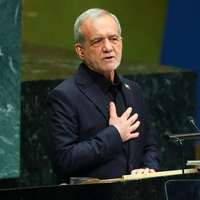
“In my view, we are in an all-out war with the United States, Israel, and Europe; they do not want our country to stand on its own feet,” Masoud Pezeshkian said in an interview with the Supreme Leader’s official website.
He said the current war is worse than the Iraq war in the 1980s. “If one understands it properly, this war is far more complex and more difficult than that war.”
“In the war with Iraq, the situation was clear; they fired missiles, and it was clear where we would strike back. But here, they are now besieging us in every respect, putting us under pressure and in tight corners, creating problems—economically, culturally, politically, and in terms of security.”
Pezeshkian made the comments on the eve of Israeli Prime Minister Benjamin Netanyahu's trip to the United States, where he plans to brief President Donald Trump on options for potential future strikes against Iran, amid concerns that Tehran is rebuilding ballistic missile production facilities and repairing air defenses damaged during the June conflict, according to NBC News.
Israel has told the United States that the recent Iranian missile drills may conceal preparations for a potential strike, Axios reported last Sunday, one day after Iran International reported unusual Iranian air activity spotted by Western intelligence agencies.
Israeli Chief of Staff Eyal Zamir raised the issue directly with Brad Cooper, head of US Central Command, warning that recent missile movements could serve as a cover for a surprise operation against the Jewish state.
Pezeshkian said on Saturday that Iran is "stronger than during the 12‑day war" with Israel in terms of equipment and manpower. "If the enemy chooses confrontation, they will naturally face a more decisive response."
In June, Israel carried out airstrikes and covert operations against Iranian military and nuclear sites, killing more than 1,000 people including senior officials and nuclear scientists.
Iran retaliated by launching hundreds of missiles and drones at Israel, killing at least 33 people, among them an off-duty soldier.
The United States helped Israel intercept Iranian attacks and later joined the Israeli campaign, bombing three Iranian nuclear facilities on June 22.