Jailed Iranian doctor starts hunger strike to protest ‘inhumane’ treatment
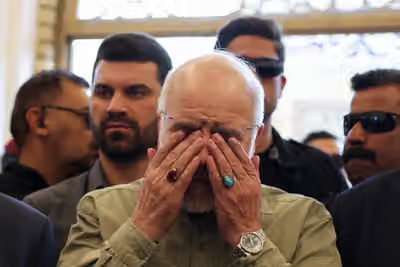
Hamid Qarahassanlou in a court
A 56-year-old Iranian radiologist who evaded execution but received a long prison term for his participation in Iran’s 2022 protests says he has launched a hunger strike to protest what he describes as “inhumane” treatment in prison.
In an audio file obtained by Iran International, Hamid Qarahassanlou (Gharehassanlou) said he started the hunger strike on Thursday, December 25, in protest at “inhumane and shocking” conditions of detention in the Yazd Central Prison.
Qarahassanlou and his wife Farzaneh were arrested on November 4, 2022, in Karaj after participating in protests where a member of the Basij militia, Rouhollah Ajamian (27), was beaten to death by angry protesters but both denied any involvement in the incident.
Qarahassanlou was initially sentenced to death and his wife to twenty-five years prison, but their sentences were later reduced due to a strong backlash on social media and lack of evidence of their involvement in a second trial.
Farzaneh is serving a five-year jail term in Mashhad prison, over 900 km (565 miles) away from Yazd, where her husband is jailed.
In the audio recording, Hamid said that although two and a half years have passed since his imprisonment in Yazd Prison, he remains held in the prison’s quarantine ward and, despite repeated requests to the prison administration, has not been transferred to the political prisoners’ ward.
He named the prison’s warden as Hassan Madadi Moghaddam, who he said would be responsible for any consequences.
Qarahassanlou further warned that his life is under threat in the quarantine ward, and emphasizes that he has been “deprived of the basic rights of a prisoner,” that his access to welfare facilities has been restricted, and that he has been exposed to multiple illnesses.
Hamid Qarahassanlou hospitalized, image released in February 2023 by Iranian state-media
Later in the audio file, he also spoke of inadequate food and months-long deprivation of sunlight, saying: “I have faced numerous problems in terms of nutrition and have been deprived of sunlight for months.”
“Given my lack of access to any means to seek justice, I have no choice but to go on a hunger strike. I hereby announce the start of my hunger strike until my demands are met, and any harm to my life resulting from this will be the responsibility of the prison warden, Mr. Madadi.”
While Qarahassanlou was spared execution in the Basij militant’s murder case, the Islamic Republic’s judiciary executed two young protesters, Mohammad Mehdi Karami, 22, and Mohammad Hosseini, 39, in January 2023 over Ajamian’s death after a hasty trial that human rights activists called a travesty of justice.