Iranian Islamic body hid official's child rape conviction, source says
Illustration by Iran International
A state body in Iran tasked with purveying Islamic values concealed the conviction of a senior official for raping and sexually assaulting his young daughters, a source in the Islamic Ideology Dissemination Organization (IIDO) told Iran International.
Nasir Abedi, the former administrative and financial deputy of IIDO's Tehran office, had been convicted of rape and sexual abuse of one daughter and assault against another, according to the source who requested anonymity for fear of retaliation.
Abedi, the source said, repeatedly assaulted one girl before she turned twelve, adding that a forensic examiner confirmed rape and the court upheld the findings.
But senior figures, the source added, intervened in the judicial process as the case progressed.
The charge relating to the second child was removed from the final verdict following internal pressure, leaving only one count of rape. The sentence of flogging “was never carried out because of outside interference,” the source told Iran International.
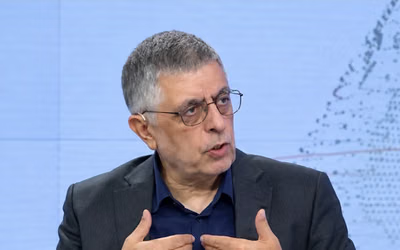
Former administrative and financial deputy of IIDO Tehran office, Nasir Abedi
The organization, according to the source, also acted to block any public disclosures once details of the case circulated internally.
Potential death sentences
Under Iranian criminal law, sexual relations with close relatives constitute one of the gravest offenses, carrying a potential death sentence if penetration is legally established.
While cases involving coercion against children can result in capital punishment or other severe penalties, proceedings within family structures are often influenced by pressure from political, clerical or security institutions.
The timing of the revelations coincides with the International Day for the Elimination of Violence Against Women, drawing renewed attention to domestic and sexual violence in Iran.
Advocacy groups and survivors have long argued that opaque judicial processes allow politically connected offenders to evade serious consequences.
Past cases echo similar pressures
The Islamic Republic has faced earlier allegations of interference in sexual-abuse cases involving figures.
Another notable case involved Saeed Toosi, a prominent Qur’an reciter linked to the Supreme Leader’s office, whose accusers said judicial proceedings collapsed under political influence.
Saeed Toosi (right) and Iran's Supreme Leader Ali Khamenei
Abedi previously held positions in other religious foundations, including the Ghadir International Foundation, and in public statements had described the IIDO as an institution “serving Islam” and “affiliated with the leader.”
The organization identifies the promotion of what it calls “pure Islam” as its mandate and plays a central role in enforcing the compulsory hijab and state-endorsed social norms.
Transparency concerns
Although many sexual-violence cases in Iran remain confidential, available reports suggest incidents involving women and children have risen in recent years.
Activists say survivors often lack safe reporting channels and face family pressure and social stigma, while state bodies have at times prioritized institutional reputation over accountability.
The latest allegations highlight the structural obstacles confronting survivors who seek justice and the enduring role of secrecy in shielding powerful offenders.
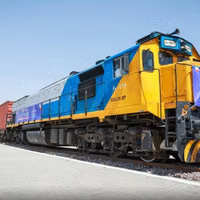
Iran and Turkey have agreed to start building a new joint rail line that will serve as a strategic trade corridor between Asia and Europe, Iranian foreign minister Abbas Araghchi said Sunday.
The Marand–Cheshmeh Soraya transit line, which will run toward Turkey’s Aralik border region, will span about 200 kilometres and cost roughly $1.6 billion.
Iranian authorities say construction is expected to take three to four years to complete.
Speaking in Tehran alongside his Turkish counterpart Hakan Fidan, Araghchi said the two sides had agreed in their meeting “to begin work, on a priority basis, to connect the two countries’ railway lines at the border.”
Earlier this month, Iran’s transport minister Farzaneh Sadegh said the project would transform the southern section of the historic Silk Road into an “all-rail corridor ensuring the continuity of the network between China and Europe”.
She said it would enable “fast and cheap transport of all types of cargo with minimal stops”.
The ancient Silk Road linked East Asia to the Middle East and Europe for centuries before declining with the rise of maritime trade routes.
China launched its Belt and Road Initiative in 2013, seeking to revive those connections through major maritime, road and rail projects. Despite close political relations with China, Iran has been largely left out of the initiative’s major investments.
Iran has sought to expand infrastructure and trade ties with neighbouring states as it works to revive its strained economy.
Iran is expanding its network of schools abroad with two new institutions in Iraq’s Kurdistan region and the reopening of a school in Saudi Arabia, the country’s education minister announced on Sunday.
Iran's semi-official ISNA cited education minister Alireza Kazemi as saying that Iranian school in Jeddah has reopened after years of closure.
The move, Kazemi said, has "increased Iran’s educational influence in the region."
Iran’s only school in Saudi Arabia was closed in 2016 after Iran withdrew its diplomatic staff from the kingdom.
At the time, Iranian reported that the school had 15 students and two Iranian teachers, who returned to Iran along with the diplomats after the ambassador left Saudi Arabia.
In January 2016, Saudi Arabia severed ties with Iran in 2016 following the storming of its embassy in Tehran during a dispute over Riyadh's execution of Shiite Muslim cleric Sheikh Nimr al-Nimr.
Nimr, who was one of the leaders of the Shiite protests in Saudi Arabia in 2011, had studied in Iran’s religious city of Qom.
Iran's Supreme Leader Ali Khamenei called the execution of Nimr "a political mistake and a great sin".
In 2020, Iran’s state-run English-language newspaper Tehran Times reported that the education ministry was overseeing 95 Iranian schools in 43 countries. However, in 2022, Iranian media, citing the deputy head of the Centre for International Affairs and Overseas Schools, said the number of overseas schools had fallen by about half, without giving a new total.
Former Iranian president Hassan Rouhani said Iran remains in a fragile security limbo months after the 12-day war in June, warning that the country cannot restore stability or economic confidence without rebuilding deterrence and addressing persistent public insecurity.
Rouhani told former ministers and senior officials that Iran had entered a prolonged period of strategic uncertainty following the 12-day confrontation, arguing that the absence of clear deterrence has left the country exposed to regional pressures and foreign threats.
Rouhani said that “after five months have passed since the 12-day war, we are still in a situation of neither war nor peace, and there is no sense of security in the country. Whether actual security exists or not is another matter.”
He added that “when people do not feel secure, talking about economic growth, lowering inflation or attracting investment has little meaning. This feeling of insecurity – psychological insecurity, social insecurity, intellectual insecurity, mental insecurity – exists.”
He said national security in any country rests on deterrence and on stopping adversaries from initiating conflict.
Rouhani tied Iran’s own shortfalls in deterrence to regional instability, saying neighboring states still rely heavily on the United States and Israel for security. He said Iraq, Syria, Lebanon and Jordan do not control their airspace or security environments in ways that would limit hostile activity, and that this has reduced Iran’s strategic buffer zone.
“Unfortunately, we do not currently have broad regional deterrence. Our neighboring countries – Iraq, Syria, Lebanon and Jordan – are, unfortunately, operating in environments largely shaped by the United States and Israel.”
Former Iranian president Hassan Rouhani during a meeting with former ministers and senior officials in Tehran on November 26, 2025
He warned that this landscape has created what he described as unusually free access for Israel, saying “Israel moves up to our borders in undefended and open airspace” and “the sky up to Iran has become completely safe for the enemy.”
Rouhani said national cohesion and accurate assessments of Iran’s own capabilities remain essential for maintaining deterrence. He cautioned against overestimating Iran’s military or technological strengths and said misjudging adversaries could lead to strategic miscalculations.
Rouhani said renewed diplomacy remains essential even if political negotiations are difficult. “In politics, a complete dead end is very rare. We must make extra efforts to resolve issues.”
He said avoiding a renewed conflict ultimately rests with Iran, adding “whether war happens again is in our hands.”
Prolonged drought and the halt to permanent flows in the Zayandeh-Roud river have driven land subsidence and the Gavkhouni wetland toward an apparent point of no return, raising risks to Isfahan’s drinking-water supply, a provincial environmental official said.
“The continued drying and the cut in permanent flows have brought land subsidence and the death of Gavkhouni to a point of no return and even put drinking water on the threshold of threat,” said Dariush Golalizadeh, the provincial environment department chief.
“The Zayandeh-Roud played a key role in recharging aquifers and preventing subsidence. With multi-year drought and sharply reduced inflows, alongside heavier pumping from wells and wastewater use, subsidence has intensified alarmingly.”
Golalizadeh said the internationally listed Gavkhouni wetland downstream of Isfahan is turning into a dust hotspot. “When the wetland falls apart, it means there are serious problems in water and land management above it.”
He linked the ecological stress to livelihoods, saying orchards, urban green spaces and farmers have been hit across the basin. Authorities are now working on support programs for Isfahan’s eastern districts to soften the blow to agriculture, he said.
The official urged emergency measures to keep minimum flows to the river and wetland.
“At present, because of the sharp drop in river yield, drinking water is under threat,” he said. “We are looking to other sources, but rising temperatures and drought have cut inflows to a minimum.”
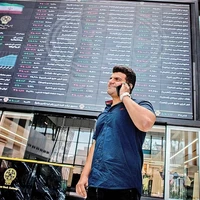
The US dollar surged to 1,160,000 rials in Iran’s unofficial market on Saturday, adding to inflationary pressures and deepening worries about the country’s worsening economic outlook.
The US dollar, which traded at about 140,000 rials in 2018, has risen roughly eight-fold since Donald Trump restored US sanctions on Iran seven years ago.
The current dollar rate of 1.16 million rials is just shy of the all-time high of 1.17 million recorded on September 30.
The reimposition of UN sanctions in September deepened the currency shock, Parliamentarian Valiollah Bayati said last month. Addressing President Masoud Pezeshkian, Bayati said public anxiety was mounting.
The sanctions were restored 30 days after Britain, France and Germany triggered the so-called snapback mechanism under the UN Security Council Resolution 2231, citing Iran's failure to comply with its nuclear obligations.
The move restored UN penalties previously suspended under the resolution, tightening external constraints on Iran’s economy.
Farid Mousavi, a member of parliament’s economic committee, warned earlier this month that the currency rise could accelerate in coming weeks. “With inflation continuing at this pace, a 1.3 million-rial dollar rate in winter is not far-fetched."
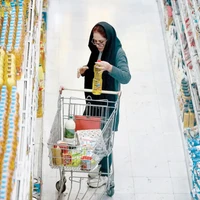
Official figures show food costs up more than 66 percent over the past year, with bread and grains up 100 percent, fruit and nuts 108 percent, and vegetables almost 69 percent.
The central bank’s latest report also indicates a record surge in capital flight during the spring, underscoring dwindling market confidence.
Rising fuel costs compound volatility
The currency rise follows a domestic fuel-price increase that legislators warn will spill into transport and retail markets.
Mohsen Biglari, secretary of parliament’s budget committee, told the Rouydad24 outlet that higher gasoline costs would influence prices across sectors. “If people have to buy fifty-thousand-rial gasoline, it will certainly affect other goods and services."
The government’s new fuel pricing system, announced on Tuesday, introduces a third rate of 50,000 rials per liter (4.4 cents per the free market rate) for drivers refueling without smart rationing cards or beyond their quota, while keeping existing 15,000- and 30,000-rial rates ((1.3 and 2.6 cents, respectively).
The accelerating dollar, mounting household costs, and weakening investor sentiment together signal a deepening inflationary cycle likely to shape Iran’s economic trajectory in the months ahead.