• العربية
  • فارسی
Brand
  • Iran Insight
  • Politics
  • Economy
  • Analysis
  • Special Report
  • Opinion
  • Podcast
  • Iran Insight
  • Politics
  • Economy
  • Analysis
  • Special Report
  • Opinion
  • Podcast
  • Theme
  • Language
    • العربية
    • فارسی
  • Iran Insight
  • Politics
  • Economy
  • Analysis
  • Special Report
  • Opinion
  • Podcast
All rights reserved for Volant Media UK Limited
volant media logo

Ex-president says Iran still in ‘no war, no peace’ limbo months after 12-day war

Nov 30, 2025, 11:03 GMT+0Updated: 23:48 GMT+0
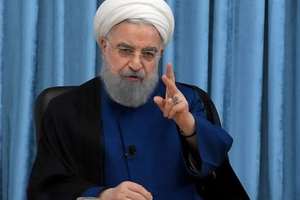
Former Iranian president Hassan Rouhani (left), former vice president Es’haq Jahangiri (center) and former foreign minister Mohammad Javad Zarif during a meeting in Tehran on November 26, 2025.

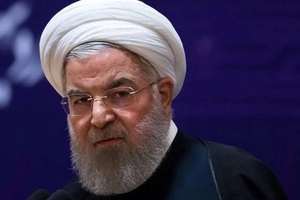
Former Iranian president Hassan Rouhani said Iran remains in a fragile security limbo months after the 12-day war in June, warning that the country cannot restore stability or economic confidence without rebuilding deterrence and addressing persistent public insecurity.

Rouhani told former ministers and senior officials that Iran had entered a prolonged period of strategic uncertainty following the 12-day confrontation, arguing that the absence of clear deterrence has left the country exposed to regional pressures and foreign threats.

Rouhani said that “after five months have passed since the 12-day war, we are still in a situation of neither war nor peace, and there is no sense of security in the country. Whether actual security exists or not is another matter.”

He added that “when people do not feel secure, talking about economic growth, lowering inflation or attracting investment has little meaning. This feeling of insecurity – psychological insecurity, social insecurity, intellectual insecurity, mental insecurity – exists.”

He said national security in any country rests on deterrence and on stopping adversaries from initiating conflict.

Rouhani tied Iran’s own shortfalls in deterrence to regional instability, saying neighboring states still rely heavily on the United States and Israel for security. He said Iraq, Syria, Lebanon and Jordan do not control their airspace or security environments in ways that would limit hostile activity, and that this has reduced Iran’s strategic buffer zone.

“Unfortunately, we do not currently have broad regional deterrence. Our neighboring countries – Iraq, Syria, Lebanon and Jordan – are, unfortunately, operating in environments largely shaped by the United States and Israel.”

Former Iranian president Hassan Rouhani during a meeting with former ministers and senior officials in Tehran on November 26, 2025
100%
Former Iranian president Hassan Rouhani during a meeting with former ministers and senior officials in Tehran on November 26, 2025

He warned that this landscape has created what he described as unusually free access for Israel, saying “Israel moves up to our borders in undefended and open airspace” and “the sky up to Iran has become completely safe for the enemy.”

Rouhani said national cohesion and accurate assessments of Iran’s own capabilities remain essential for maintaining deterrence. He cautioned against overestimating Iran’s military or technological strengths and said misjudging adversaries could lead to strategic miscalculations.

Rouhani said renewed diplomacy remains essential even if political negotiations are difficult. “In politics, a complete dead end is very rare. We must make extra efforts to resolve issues.”

He said avoiding a renewed conflict ultimately rests with Iran, adding “whether war happens again is in our hands.”

Most Viewed

Ideology may be fading in Iran, but not in Kashmir's ‘Mini Iran'
1
INSIGHT

Ideology may be fading in Iran, but not in Kashmir's ‘Mini Iran'

2
INSIGHT

Hardliners push Hormuz ‘red line’ as US blockade tests Iran’s leverage

3
VOICES FROM IRAN

Hope and anger in Iran as fragile ceasefire persists

4

Iran International says it won’t be silenced after London arson attack

5

US sanctions oil network tied to Iranian tycoon Shamkhani

Banner
Banner

Spotlight

  • Hardliners push Hormuz ‘red line’ as US blockade tests Iran’s leverage
    INSIGHT

    Hardliners push Hormuz ‘red line’ as US blockade tests Iran’s leverage

  • Ideology may be fading in Iran, but not in Kashmir's ‘Mini Iran'
    INSIGHT

    Ideology may be fading in Iran, but not in Kashmir's ‘Mini Iran'

  • War damage amounts to $3,000 per Iranian, with blockade set to add to losses
    INSIGHT

    War damage amounts to $3,000 per Iranian, with blockade set to add to losses

  • Why the $100 billion Hormuz toll revenue is a myth
    ANALYSIS

    Why the $100 billion Hormuz toll revenue is a myth

  • US blockade targets Iran oil boom amid regional disruption
    ANALYSIS

    US blockade targets Iran oil boom amid regional disruption

  • Iran's digital economy battered by prolonged blackout
    INSIGHT

    Iran's digital economy battered by prolonged blackout

  • Comeback or last stand? Rouhani in crosshairs of Iran’s power struggle

    Comeback or last stand? Rouhani in crosshairs of Iran’s power struggle

  • Diplomatic concessions and reform needed to forestall war, Rouhani warns

    Diplomatic concessions and reform needed to forestall war, Rouhani warns

•
•
•

More Stories

Iran warns Isfahan’s drying river and wetland at ‘point of no return’

Nov 30, 2025, 07:14 GMT+0

Prolonged drought and the halt to permanent flows in the Zayandeh-Roud river have driven land subsidence and the Gavkhouni wetland toward an apparent point of no return, raising risks to Isfahan’s drinking-water supply, a provincial environmental official said.

“The continued drying and the cut in permanent flows have brought land subsidence and the death of Gavkhouni to a point of no return and even put drinking water on the threshold of threat,” said Dariush Golalizadeh, the provincial environment department chief.

“The Zayandeh-Roud played a key role in recharging aquifers and preventing subsidence. With multi-year drought and sharply reduced inflows, alongside heavier pumping from wells and wastewater use, subsidence has intensified alarmingly.”

Golalizadeh said the internationally listed Gavkhouni wetland downstream of Isfahan is turning into a dust hotspot. “When the wetland falls apart, it means there are serious problems in water and land management above it.”

  • Isfahan official warns of drinking water crisis within 45 days

    Isfahan official warns of drinking water crisis within 45 days

He linked the ecological stress to livelihoods, saying orchards, urban green spaces and farmers have been hit across the basin. Authorities are now working on support programs for Isfahan’s eastern districts to soften the blow to agriculture, he said.

The official urged emergency measures to keep minimum flows to the river and wetland.

“At present, because of the sharp drop in river yield, drinking water is under threat,” he said. “We are looking to other sources, but rising temperatures and drought have cut inflows to a minimum.”

'Hyped heroism': Iran's state TV draws fire with wartime presenter film

Nov 29, 2025, 21:09 GMT+0
•
Behrouz Turani

The decision by Iran’s state broadcaster to produce a film about a female presenter whose image went viral when Israeli missiles hit its headquarters has sparked a wave of criticism and accusations of political propaganda.

The planned feature, Re-Birth, casts actress Atefeh Habibi as Sahar Emami—presented by state media as a symbol of defiance during Iran’s 12-day war with Israel in June.

Emami was on air when IRIB’s Glass Building in Tehran was bombed on June 16. She rushed out of the studio but returned to present from another set within minutes.

“(She) bravely continued her program after the attack,” the film’s promoter asserted Thursday, branding her a hero.

But many remain unconvinced, accusing the broadcaster of glossing over “real heroes” and victims of the war.

'Propaganda’

“Making a film about Sahar Emami is not a cultural choice. It is a propaganda project,” a commentary in the moderate outlet Rouydad24 argued.

“What is it that makes her stand out from all others?” it asked, offering a characteristically factional answer: “It is easy propaganda that conveys their ideological perspective,” referring to IRIB’s leadership and its ties to the ultrahardline Paydari Front.

The commentary also criticised the lack of scrutiny of the broadcaster itself.

In the days after the attack, state TV filled its programming with tributes to Emami, sponsored billboards across Tehran, and received praise from senior officials—including Supreme Leader Ali Khamenei—for her “bravery.”

Critics said the network was exploiting the incident to deflect attention from its declining viewership.

Dwindling popularity

IRIB holds a legal monopoly over broadcasting in Iran; private television networks are not permitted.

In recent years, however, a proliferation of digital platforms—often backed by different branches of the state or powerful institutions—has begun to challenge that dominance in entertainment.

In news, IRIB’s audience has been shrinking for years, with Persian-language broadcasters in exile becoming the main source of information for most people inside Iran.

An official survey in late 2024 put IRIB’s popularity at just 12.5%, while the head of its internal polling unit claimed it was closer to 72%, adding the figure “could have been higher if, like elsewhere in the world, Generation Z had not turned away from national television.”

A survey by the Netherlands-based polling institute GAMAAN also found that only a small minority of Iranians tuned in to IRIB during and after the June war with Israel.

The broadcaster’s chief has since requested additional funding to rebuild the damaged headquarters, saying rubble will be cleared by January with reconstruction to follow.

Critics note that IRIB’s current budget of 350 trillion rials (more than $300 million) exceeds that of ten ministries combined.

The broadcaster also receives ad-hoc allocations in US dollars from the national reserve alongside lucrative advertising revenue.

Hardliners pillory Khamenei's office over photo of female Israel war victim

Nov 29, 2025, 17:50 GMT+0

The office of Iran's Supreme Leader has come under fire from hardline supporters after its online newspaper posted a photo of a woman killed in June’s war with Israel without a headscarf, sparking a rare public dispute within the pro-theocracy camp.

The online newspaper Seday-e Iran (Voice of Iran) dedicated its Thursday issue to Niloufar Ghalehvand, a young coach killed along with her parents in an Israeli strike.

However, the newspaper used a real photograph showing her wearing a cap rather than a headscarf, falling short of the mandatory veiling rules promoted by the Islamic Republic.

The choice triggered angry reactions from several conservative activists and ultra-loyalist groups.

Among the critics was Mehri Talebi Darestani, a prominent hardline commentator, who questioned whether the outlet was justified in “ignoring divine boundaries (hijab) and promoting wrongdoing for the sake of a lofty divine goal (maximum outreach)”.

In a lengthy post, she argued that no individual or institution “has ironclad immunity,” quoting past remarks by Khamenei that everyone must remain accountable under the law — comments she framed as a rebuke to those shielding the Khamenei-linked publication from criticism.

The pro-establishment group “Banouye Tamaddon-Saz” (Civilization-‌Building Woman) also joined the backlash, echoing objections to showcasing an unveiled image of a female “martyr,” a term used by the state for those killed in the conflict.

The controversy drew further attention after Fars News, an outlet affiliated with the Revolutionary Guard entered the debate.

Defending Khamenei’s office, Fars published an AI-generated veiled photo of Ghalehvand to show that producing such images “is not difficult,” adding that the newspaper had deliberately used the real photograph “based on the core media principle of truthful storytelling.”

A photo published by Fars News displaying an AI-generated veiled photo of the war victim (left) and the original one
100%
A photo published by Fars News displaying an AI-generated veiled photo of the war victim (left) and the original one

Fars argued that authentic representation carries several messages: that Israel “targets Iranians, regardless of appearance, clothing, taste, or lifestyle”; that victims of the war come from “all social and ideological backgrounds” and should not be reshaped to fit a predetermined narrative; and that showing reality “deepens the human dimension of their suffering” and elevates the story from a partisan frame to a national one.

The dispute reflects a broader struggle inside Iran’s conservative camp over the mandatory hijab, which is widely flouted by the public these days, at a time the Islamic Republic or at least the relatively moderate government of Masoud Pezeshkian seeks to project unity after the brief but intense conflict with Israel.

"Some of Khamenei’s supporters believe that once the 'hijab frontline' is captured by the public, the rest will fall as well. So they insist that this frontline must be retaken," says London-based journalist Mohammad Rahbar.

"For that reason, they are now seeking to enforce the hijab law even without the morality police — by making conditions so strict and penalties so severe that they can somehow re-impose the old mandatory-hijab order. But it is highly unlikely they have the power to reverse what has taken root in society."

Iran faces new inflation pressure as dollar rate nears all-time high

Nov 29, 2025, 15:30 GMT+0

The US dollar surged to 1,160,000 rials in Iran’s unofficial market on Saturday, adding to inflationary pressures and deepening worries about the country’s worsening economic outlook.

The US dollar, which traded at about 140,000 rials in 2018, has risen roughly eight-fold since Donald Trump restored US sanctions on Iran seven years ago.

The current dollar rate of 1.16 million rials is just shy of the all-time high of 1.17 million recorded on September 30.

The reimposition of UN sanctions in September deepened the currency shock, Parliamentarian Valiollah Bayati said last month. Addressing President Masoud Pezeshkian, Bayati said public anxiety was mounting.

The sanctions were restored 30 days after Britain, France and Germany triggered the so-called snapback mechanism under the UN Security Council Resolution 2231, citing Iran's failure to comply with its nuclear obligations.

The move restored UN penalties previously suspended under the resolution, tightening external constraints on Iran’s economy.

Farid Mousavi, a member of parliament’s economic committee, warned earlier this month that the currency rise could accelerate in coming weeks. “With inflation continuing at this pace, a 1.3 million-rial dollar rate in winter is not far-fetched."

Official figures show food costs up more than 66 percent over the past year, with bread and grains up 100 percent, fruit and nuts 108 percent, and vegetables almost 69 percent.

The central bank’s latest report also indicates a record surge in capital flight during the spring, underscoring dwindling market confidence.

100%

Rising fuel costs compound volatility

The currency rise follows a domestic fuel-price increase that legislators warn will spill into transport and retail markets.

Mohsen Biglari, secretary of parliament’s budget committee, told the Rouydad24 outlet that higher gasoline costs would influence prices across sectors. “If people have to buy fifty-thousand-rial gasoline, it will certainly affect other goods and services."

The government’s new fuel pricing system, announced on Tuesday, introduces a third rate of 50,000 rials per liter (4.4 cents per the free market rate) for drivers refueling without smart rationing cards or beyond their quota, while keeping existing 15,000- and 30,000-rial rates ((1.3 and 2.6 cents, respectively).

The accelerating dollar, mounting household costs, and weakening investor sentiment together signal a deepening inflationary cycle likely to shape Iran’s economic trajectory in the months ahead.

Drought forces Iran to halt power generation at major dam

Nov 29, 2025, 12:13 GMT+0

Iran’s Karkheh Dam hydroelectric power plant has stopped generating electricity because of a sharp drop in the reservoir’s water level, state media reported on Saturday.

Amir Mahmoudi, head of the Karkheh Dam and power plant, said water is now being released through lower outlets to supply downstream needs after the generating units went offline. He said the dam’s reservoir currently holds about one billion cubic meters of water, with the water level 40 meters below normal operating height.

Mahmoudi said the Karkheh basin has endured several years of drought and low rainfall, urging conservation of water for drinking, farming, livestock, and industrial use.

The Karkheh Dam, one of the largest earthen dams in the world and the biggest in Iran and the Middle East, was built on the Karkheh River about 22 kilometers northwest of Andimeshk in Khuzestan province. It has a total generating capacity of 400 megawatts.

The shutdown comes as Iran faces one of its worst droughts in decades, with reservoirs across the country running dangerously low. Domestic media have reported steep drops at Tehran’s Karaj and Latian dams, while officials in Mashhad, Kerman and Yazd warn of collapsing aquifers and forced water rationing.

The Kurdish rights group Hengaw said this week that authorities in western Iran have also increased pressure on local journalists covering the crisis. Reporters in the city of Baneh were summoned or threatened by security agents after publishing reports on water shortages that left some neighborhoods without running water for more than three days.

The group said some journalists were accused of “spreading public anxiety” and forced to sign written pledges not to report further on the issue.