• العربية
  • فارسی
BrandBrand
  • Iran Insight
  • Politics
  • Economy
  • Analysis
  • Special Report
  • Opinion
  • Podcast
  • Live TV
  • Iran Insight
  • Politics
  • Economy
  • Analysis
  • Special Report
  • Opinion
  • Podcast
  • Live TV
  • Theme
  • Language
    • العربية
    • فارسی
  • Iran Insight
  • Politics
  • Economy
  • Analysis
  • Special Report
  • Opinion
  • Podcast
  • Live TV
All rights reserved for Volant Media UK Limited
volant media logo

US lawmakers urge probe into China’s missile fuel precursor supplies to Iran

Nov 14, 2025, 01:30 GMT+0Updated: 23:56 GMT+0
The logo of Chinese chemical producer Hengli Group is seen at its headquarters in Dalian, Liaoning province, China August 27, 2019

Two Democratic members of the United States Congress urged the Secretary of State and CIA Director to investigate a large shipment of missile propellant precursor material from China to Iran.

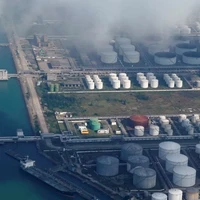
Representatives Raja Krishnamoorthi and Joe Courtney sent a letter to Secretary of State Marco Rubio and CIA Director John Ratcliffe on Wednesday, calling for a probe into Chinese firms' delivery of 2,000 tons of sodium perchlorate - a critical ingredient in making ballistic missile propellant - to Iran since late September in violation of UN sanctions.

The chemical shipped via 10 to 12 vessels to Bandar Abbas port, could fuel up to 500 mid-range missiles, accelerating Tehran's arsenal rebuild after a 12-day war with Israel in June, the congressmen said based on report previously appeared on CNN.

The letter said the shipments contravene September's reinstated UN sanctions prohibiting support for Iran's ballistic missile program and nuclear delivery systems.

“Beijing's aid enables Tehran's post-war rearmament efforts despite US efforts to deter such transfers,” the lawmakers said. “April Treasury sanctions on Iranian and Chinese entities failed to halt the flow, as shipments continued unabated with another 1,000 tons delivered in June.”

Iran has rejected reported US demands that it curb the range of its missiles to achieve any peace deal, calling the requests a non-starter which curbs its defense.

Sanction enforcement

In April the US Treasury sanctioned several Iranian and Chinese entities for facilitating transfers of sodium perchlorate and similar chemical precursors to the Islamic Revolutionary Guards Corps (IRGC) for ballistic missile production.

"Beijing’s continued transfers to Tehran represent a direct threat to regional stability and enable authoritarian aggression," the lawmakers said, asking for details on US countermeasures and coordination with allies.

The letter said the shipments were tracked through cargo manifests, crew social media, and shipping data. Several vessels, including the sanctioned MV Basht, disabled Automatic Identification System (AIS) tracking to disguise their movements.

The transfers involved previously sanctioned Chinese entities like Shenzhen Amor Logistics and Yanling Chuanxing Chemical Plant, targeted in April Treasury sanctions.

Unofficial accounts pointed to sodium perchlorate and other compounds imported from China for Iran’s missile program as the cause of an April 26 blast at the Bandar Abbas port which killed 57 people. Authorities have denied any military link.

The United States on Tuesday announced sweeping sanctions on 32 individuals and companies across eight countries it accused of helping Iran rebuild its ballistic missile and drone programs.

Most Viewed

Iran’s trade squeeze spreads from sea to land
1
INSIGHT

Iran’s trade squeeze spreads from sea to land

2

Iran is running out of economic escape routes

3

US says it can sustain Iran blockade for ‘foreseeable future’

4
ANALYSIS

US strikes on Iran now serve the blockade

5
ANALYSIS

Once US blockaded Iran, China’s ‘Malaysian’ oil imports dried up

Banner
Banner
Banner
Banner
Banner

Spotlight

  • Baluch insurgency tests a war-weakened Islamic Republic as attacks mount
    PODCAST

    Baluch insurgency tests a war-weakened Islamic Republic as attacks mount

  • US strikes on Iran now serve the blockade
    ANALYSIS

    US strikes on Iran now serve the blockade

  • Salvation or tragedy? Iranians debate prospect of another war

    Salvation or tragedy? Iranians debate prospect of another war

  • More patrols, slower internet suggest Tehran is bracing for trouble
    VOICES FROM IRAN

    More patrols, slower internet suggest Tehran is bracing for trouble

  • Iran’s evasion network survives, but the crude feeding it has run dry

    Iran’s evasion network survives, but the crude feeding it has run dry

  • Once US blockaded Iran, China’s ‘Malaysian’ oil imports dried up
    ANALYSIS

    Once US blockaded Iran, China’s ‘Malaysian’ oil imports dried up

  • Istanbul meeting: A new division of labor in the Iran war?
    ANALYSIS

    Istanbul meeting: A new division of labor in the Iran war?

  • China values Iran but won't pay any price to defend it
    ONE-ON-ONE

    China values Iran but won't pay any price to defend it