Iran’s most senior Sunni cleric, MowlaviAbdolhamidEsmaeelzahi, warned on Wednesday that the reimposition of international sanctions had plunged the country into “serious and unbearable crises."
In a post on X, the influential Friday prayer leader of Zahedan said Iran’s negotiators had “returned without any achievement” from recent talks with Western powers.
“The people demanded a change and reform of the fruitless policies of the past, but there is no sign of determination or will among the officials to realize these demands. Today, the Iranian people see no window of hope,” Abdolhamid wrote.

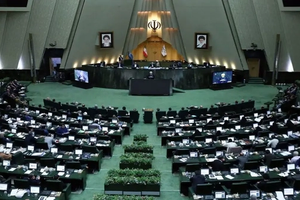
Iran’s Guardian Council on Wednesday approved a bill imposing harsher penalties for espionage and collaboration with Israel, the United States and other “hostile states,” clearing the way for the law to be enacted once signed by President Masoud Pezeshkian.
The legislation, formally titled the “Intensification of Punishment for Espionage and Cooperation with the Zionist Regime and Hostile States Against National Security and Interests,” was passed by parliament in late June following the 12-day war between Iran and Israel.
The Guardian Council, a powerful 12-member body of clerics and jurists that vets legislation and elections in Iran, initially sent the bill back in July citing ambiguities, but said after revisions it no longer conflicted with Islamic law or the constitution.


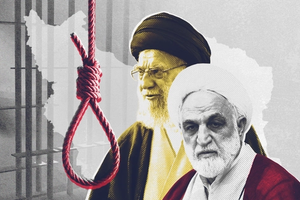
The measure classifies espionage or intelligence cooperation with Israel and the US as “corruption on earth,” a charge under Iran’s penal code that can carry the death penalty.
It also criminalizes providing information, media content or assistance to groups deemed hostile, with prison sentences ranging from two to 15 years depending on the offense.


Supporters say the law is needed to counter infiltration and disinformation. “Any cooperation in media or propaganda activity, including sending videos or images to hostile channels that weaken public morale or create division, undermines national security and will face severe judicial response,” said Ebrahim Azizi, a former Revolutionary Guards commander and head of parliament’s national security committee.


The bill follows the June conflict in which Israeli airstrikes targeted Iranian nuclear and missile sites, prompting Tehran to retaliate with hundreds of missile and drone launches.
Iranian authorities later announced the arrest of hundreds of people accused of spying for Israel and the US.
Rights advocates have expressed concern that the law’s broad definitions, including provisions applying retroactively, could restrict free expression and be used against journalists and activists.
Ali Saeedi, head of Supreme Leader Ali Khamenei’s political-ideological office, said on Wednesday that there were differing views on whether Israel might launch another attack on Iran.
“Some say the enemy may commit another madness, while others believe Israel’s internal turmoil prevents it from taking action,” he told ILNA.
Saeedi added that while “the armed forces must be 100% ready,” ordinary people should “continue with their lives and not be agitated.”
He said Iran had seen “no signs of an enemy attack” at present.


Jailed Georgian opposition leaders have accused the ruling Georgian Dream party of forging closer ties with Iran and urged Britain to expand sanctions on its allies, the Guardian reported on Wednesday.
In a letter to UK Foreign Secretary Yvette Cooper from prisons in Rustavi, south-east of Tbilisi, seven politicians warned of what they called an “unprecedented expansion” of Iranian influence in Georgia.
They wrote: “We … respectfully urge you to consider extending sanctions to these individuals, their entities, and their family members, to ensure they can no longer enjoy the benefits of the UK’s democratic society while working to erode it.”
As evidence, the letter cited solidarity expressed by Deputy Foreign Minister Aleksandre Khvtisiashvili at Iran’s embassy after US strikes on nuclear facilities, and Prime Minister Irakli Kobakhidze’s recent visit to Tehran, where, they said, he “stood alongside leaders of Hamas and Hezbollah as chants of ‘Death to America’ echoed.”
The politicians -- including Zurab Japaridze, leader of the pro-EU Girchi–More Freedom party -- also accused Georgian Dream and its founder, billionaire Bidzina Ivanishvili, of “full state capture” and compared conditions to Russia, alleging more than 60 political prisoners and violent crackdowns on protests.
“More than 500 peaceful demonstrators … were brutally beaten, including many who suffered broken facial bones,” they wrote.
Imedi TV, Georgia’s most-watched broadcaster owned by London-based Hunnewell Partners and named in the letter, rejected the claims as “unfounded,” saying it was independent and allowed vigorous debate.
“Being sympathetic to Georgian Dream is not a crime,” a spokesperson said. “We strongly reject the allegation that Imedi TV is a propaganda outlet.”
Georgian Dream, which says it is pro-European, has been accused by critics of realigning the country with Moscow’s interests and eroding democratic standards.
The UK has previously sanctioned Georgian judges and politicians, as well as media figure Levan Vasadze for spreading pro-Russian disinformation. The opposition leaders said London’s measures had “real impact” but called for wider action against Ivanishvili’s network.
In July, US-based defense policy think tank Jamestown Foundation wrote of the growing ties between Tbilisi and Tehran, with trade and commerce a key incentive to the former Soviet state.
“Georgia’s Deputy Foreign Minister Alexander Khvtisiashvili expressed solidarity with Iran following the Israeli airstrikes, sparking outrage from the Israeli Embassy and raising domestic accusations of Georgian Dream acting as a regional proxy for Tehran," its author, Beka Chedia, wrote.
“Russia is intensifying efforts to pull Georgia into strategic regional frameworks, positioning Iran as a key partner, which aligns with Georgian Dream’s pivot away from the West. Iran’s connectivity and economic presence in Georgia has been rapidly growing under Georgian Dream, marked by a surge in Iranian companies, residents, and trade.”
Data from the National Statistics Office of Georgia says that over the past 10 years, 10,000 Iranian citizens have arrived in Georgia for permanent residence and following the rise to power of Georgian Dream, the number of private companies established in Georgia by Iranian citizens has increased significantly.
Jamestown Foundation research says that in 2010 there were only 84 Iranian companies registered in Georgia but between 2013 and 2024, 9,300 were registered, including 125 new companies registered in 2025.
In the wake of US sanctions against Iran, Georgia has also become a key market for Iranian goods such as food, plastic products and construction materials. Of the total trade turnover of $322 million between Georgia and Iran in 2024, $285 million was imported products from Iran to Georgia.
Georgian NGO Civic IDEA reported earlier this year that “as diplomatic ties between the Georgian Dream government and Iran have grown closer, several Georgian-registered companies have emerged with direct links to Iran’s Ministry of Defense and the Armed Forces Logistics Agency.”
The NGO said: “Iranian businessmen are using Georgia as a strategic transit point to evade international sanctions and channel funds back to the Islamic Republic of Iran.”
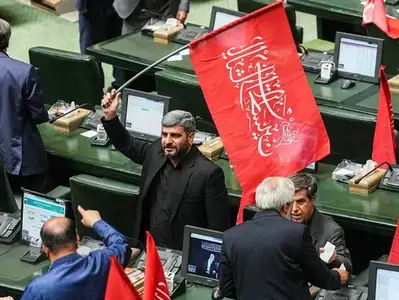
Iran’s currency fell to a record low in Tehran’s unofficial market on Wednesday, days after the reimposition of UN snapback sanctions, trading at about 1,151,000 rials per US dollar.
The euro stood at 1,352,200 rials and the pound at 1,548,300, according to local exchange rates.

Iran’s government will approve a response plan on Sunday to the reimposition of UN snapback sanctions, state media quoted spokesperson Fatemeh Mohajerani as saying.
She told reporters after Wednesday’s cabinet meeting that the plan assigns specific tasks to each ministry “to minimize pressure on people’s lives.”
Mohajerani said Tehran had sought to avert the measure through diplomacy, including a last-minute proposal to delay the sanctions by 45 days, but the effort was blocked by what she described as lobbying pressure on European powers.
She added that Tehran had expressed readiness to hold a meeting in New York with Britain, France, Germany, the International Atomic Energy Agency (IAEA) and US Middle East envoy Steve Witkoff, but that “the proposal was not accepted or the counterparts did not attend.”
She added that Foreign Minister Abbas Araghchi briefed the cabinet on his New York visit, saying Iran’s push to scrap or delay the snapback failed after Western rejection of its proposals.