The ultra-hardline Kayhan newspaper, which is linked to the office of Iran's Supreme Leader, dismissed the UN Security Council’s decision, and called for Tehran's withdrawal from the Nuclear Non-Proliferation Treaty (NPT) in response to the looming sanctions snapback.
"The snapback mechanism does not change anything in practice, since current US sanctions are far more severe than the UN Security Council resolutions," the newspaper added.
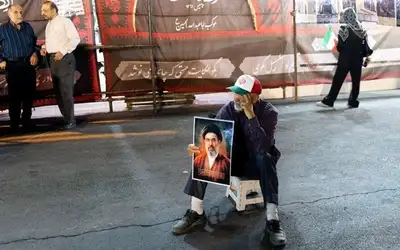

Hossein-Ali Haji-Deligani, a senior member of Iran’s parliament, said the looming snapback of UN sanctions will bring no new sanctions or significant economic impact.
“Europe is waging psychological warfare to create a neither war nor peace scenario, but Iranian people will remain steadfast and unfazed,” he said.
With just one week left before UN sanctions are set to snap back on September 28, Iran’s Deputy Foreign Minister Kazem Gharibabadi warned that the move would derail a recent agreement with the UN nuclear watchdog, signed in Cairo.
“If no diplomatic action takes place, in one week — by the end of September 27 — these sanctions will return, and the agreement Iran reached with the IAEA in Cairo will certainly be halted," he told the state TV.
"Foreign Minister Araghchi also stressed on the very day this agreement was signed that if any hostile action is taken against Iran, including activation of the snapback, the deal will be considered terminated.”

Viral videos of women dancing unveiled in Iranian concerts have reignited debate over whether the apparent social opening is genuine or contrived by a ruling system facing external military pressure and domestic discontent.
For musician Arash Sobhani—a solo artist in exile in the United States and frontman of the acclaimed Iranian band Kiosk—the answer is complicated but clear: there is no real reform afoot, only a choreographed spectacle.
“Reform happens if we see a woman singer, if you see a female singer on stage, that would have been a reform,” said Sobhani, who left Iran in 2005 after performing underground in Tehran for two years.
A recent Sirvan Khosravi concert on the grounds of the former Shah’s palace in Tehran has become a touchstone for the debate.
Videos flooding social media show women in the audience discarding the compulsory hijab and dancing openly—acts that were harshly punished until recently.
The imagery from a site tied to Iran’s ousted monarchy struck some observers as a sign Tehran may have relaxed old taboos.
Sobhani urged caution. “We want people to be happy. Everybody should be happy all the time,” he told the Eye for Iran podcast. “But let’s not just close our eyes and ignore the elephant in the room. Female singers, your colleagues are not allowed to sing, yet, still, and nothing has changed.”
He argues that venue choice and access matter. Staging concerts in controlled, ticketed spaces—often priced beyond the reach of many—differs fundamentally from allowing free, mass gatherings in iconic public squares.
“They (the Islamic Republic) want (events) in closed spaces, not more than 2,000 to 3,000 people … because they can control that,” he said, contrasting it with a hypothetical crowd of “100,000 people” in a central square.
The push and pull were visible beyond Tehran. In Shiraz, the popular band Bomrani performed to jubilant scenes that some hailed as a cultural opening—only for authorities to ban the group from playing in the city and the wider Fars province days later, accusing it of “norm-breaking behavior.”
The reversal underscored how precarious such moments remain.
Joy is not structural change
Sobhani acknowledges that public joy can itself be opposition—but warns against mistaking it for structural change.
“Joy in the way we live is an opposition, is a form of rebellion, is a form of protest ... but ... as long as these guys are in power, no change is permanent. It’s just going to be temporary, makeshift, just cosmetic ... that’s going to be gone in two days.”
The concerts arrive amid the enduring legacy of Mahsa Jina Amini, whose September 2022 death in morality police custody sparked the Woman, Life, Freedom protest movement.
While the demonstrations were crushed, visible social shifts—like widespread noncompliance with hijab rules at public events—have persisted.
A proposed new hijab and chastity law was put on hold earlier this year amid concerns it could inflame tensions, even as authorities continue arrests and executions.
For Sobhani, the real test isn’t a few exuberant nights but who gets to stand on stage and who gets to attend without fear. Until women can sing freely and artists can speak without reprisal, he says, viral concerts are—at best—nuanced snapshots of resilience, not proof of reform.
You can watch the full episode of Eye for Iran with Arash Sobhani on YouTube, or listen on Spotify, Apple, Amazon, Castbox, or any podcast platform of your choosing.

A decisive UN Security Council vote setting Iran on course for the automatic return of pre-2015 sanctions has heightened tensions inside Tehran, as rival factions clash over strategy while officials strive to project a unified message abroad.
The resolution that could have lifted the sanctions was rejected after nine members voted against it on Friday, meaning they will be reimposed on 27 September unless a drastic diplomatic breakthrough prompts the Council to reconsider before then.
“The carelessness and passivity of the Islamic Republic in the face of the snapback is truly astonishing,” wrote outspoken sociologist Hossein Hamdieh on X, urging leaders to “wrest the national interests from the devil’s mouth in the middle of hell.”
Ultra-hardliners, meanwhile, remain opposed to any concession and lay the blame for the so-called snapback at the moderates’ door for agreeing to a deal with such mechanisms a decade ago.
“This flawed mechanism is the result of the mistakes of the JCPOA negotiating team in 2015, including Mr. Araghchi himself,” lawmaker Amir-Hossein Sabeti wrote on X.
“The cost of implementing the snapback is less than the cost of extending it,” he added, arguing that prolonging the deadline would strip Iran of its “nuclear ambiguity” card.
Diplomacy or publicity stunt?
Araghchi’s authority, under attack at home, is also being questioned abroad.
A day earlier, French President Emmanuel Macron had called the sanctions return a “done deal” and questioned whether Araghchi had full authority when presenting his recent IAEA agreement and proposal to the Europeans.
Araghchi rejected the claim, writing on X that he enjoyed the backing of Iran’s Supreme National Security Council. Analysts in Tehran said Macron’s comments were aimed at pressuring Supreme Leader Ali Khamenei to openly endorse or reject the initiatives.
Skepticism also persists over Araghchi’s timing.
“The proposal ahead of the UNSC vote on Resolution 2231 was not meant as a serious move,” Turkey-based analyst Ruhollah Rahimpour wrote on X.
Submitting such a plan just two days before the vote, he argued, meant “you have no sense of timing, or you only sought publicity.”
Last chance?
Some analysts believe the UN General Assembly next week could be Tehran’s final opportunity to resolve the standoff.
“The only chance remaining is that Iran’s proposals are submitted in writing and signed, and direct dialogue between Iran and the United States takes place when Pezeshkian is in New York,” Canada-based commentator Alireza Namvar-Haghighi told Iran International.
Both US and Iranian envoys said after the UNSC vote on Friday that the door is not shut to diplomacy. A negotiated way to avoid UN sanctions is still possible — but not probable.
The United States, France, and Britain pressed South Korea, the rotating chair of the UN Security Council, to convene the vote on Friday, before the beginning of UN General Assembly high-level week on Monday, Axios reported citing European diplomats and US officials.