A car passes by a billboard of Iran's late Supreme Leader Ali Khamenei after he was killed in Israeli and US strikes, March 4, 2026.
Funeral plans for Iran’s former Supreme Leader Ali Khamenei have been revised multiple times this week, reflecting mounting security fears, uncertainty over foreign attendance and unresolved questions about succession.
The original plan, announced shortly after his death was confirmed on March 1, envisioned a three-stage procession through Tehran, Qom and Mashhad before Khamenei’s burial in his hometown.
A day later, after the death of his wife, Mansoureh Khojasteh Bagherzadeh, was announced, officials shifted to a joint burial at the Imam Reza Shrine in Mashhad.
On Wednesday morning, state television reported that Khamenei’s coffin would be placed at Tehran’s Mosalla (Prayer Grounds) for mourners. By midday, the broadcast postponed the ceremony to the evening. Hours later, another update said it would still take place at an unspecified later time.
State television later aired footage of workers preparing a podium where the coffin was to be displayed behind bulletproof glass.
Security and optics
Security concerns appear central to the delays. Iran is organizing a state funeral amid an active regional war, and Israeli officials have said they would target anyone appointed as the next Supreme Leader.
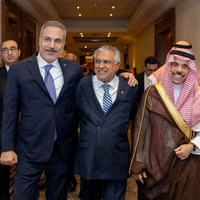
Foreign dignitaries—particularly figures linked to Hezbollah and the Houthis—have reportedly expressed concern about attending, citing the killing of Hamas leader Ismail Haniyeh in Tehran during former President Ebrahim Raisi’s funeral.
Many Iranian officials likely share similar concerns. Lower-level Chinese and Russian delegations are expected to attend.
The question of succession adds further uncertainty. Ahmad Khatami, a member of the Assembly of Experts, said on state television Wednesday that the body had not yet reached a final decision on Khamenei’s successor.
“Allowing everyone to express their views is extremely difficult during wartime,” he added.
Some clerical figures argue that naming a successor while the former leader remains unburied would be inappropriate. Others contend that announcing a new leader during the funeral itself—before a large crowd—would better project unity and legitimacy, despite widespread anti-government protests earlier this year.
The crowd problem
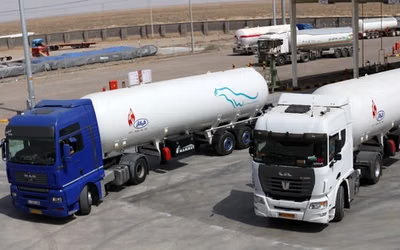
Officials also appear concerned about turnout. State television acknowledged that authorities were attempting to bus supporters in from other cities to produce what it described as “a funeral attended by millions.”
The leadership is keen to replicate the massive crowds that gathered for Ayatollah Ruhollah Khomeini in 1989. Official figures at the time claimed 10 million mourners, though foreign journalists estimated between two and four million. Replicating even a fraction of that turnout now—amid war and public discontent—appears uncertain.
Transporting large crowds between Tehran, Qom and Mashhad for a multi-city mourning procession adds further complications.
Khamenei’s supporters, including those backing his son as a potential successor, are seeking a large and symbolic display of loyalty when and if a new leader is announced.
Some officials and analysts say that effort to stage a carefully managed spectacle may help explain why the funeral has been repeatedly delayed over the past two days.
An illustration showing an ancient Iranian soldier and a Revolutionary Guard member holding a weapon together, displayed during a November 7 ceremony in Tehran where a statue of pre-Islamic Persian King Shapur I was unveiled.
Tehran’s unveiling of a towering statue depicting the Roman Emperor Valerian kneeling before pre-Islamic Persian King Shapur I has renewed criticism of the Islamic Republic’s appeal to nationalist sentiment following the June war with Israel.
For over forty years, the theocracy purged ancient Persian history from schoolbooks, replacing it with post-Islamic narratives. But after the 12-day conflict with Israel, officials have turned to the distant pre-Islamic past to rally a divided society.
From murals of ancient kings and soldiers to patriotic songs added to Shi’ite mourning ceremonies performed before Supreme Leader Ali Khamenei, Tehran now embraces imagery once deemed heretical by its own revolutionary ethos.
The statue unveiled in Tehran's Revolution Square
'Kneel before Iran' campaign
Tehran’s Revolution (Enghelab) Square was the scene of an unusual spectacle on Friday as officials unveiled a massive bronze statue depicting Roman Emperor Valerian kneeling in submission before Sassanid King Shapur I, commemorating Iran’s victory at the Battle of Edessa (260 AD).
The event was held under the slogan “Kneel before Iran,” part of what authorities describe as a campaign to project “national unity and historical pride” following the June war with Israel.
Tehran Mayor Alireza Zakani, a staunch ultraconservative, said on X: “Enmity with Great Iran can only end in kneeling before this historic nation.”
Municipal official Davood Goodarzi said the installation would be accompanied by visual displays depicting “other victories of Iranians over foreign aggressors,” including the defeat of British forces by local commander Rais-Ali Delvari, Mirza Kuchak Khan’s resistance against Russian troops, and Surena’s triumph over Rome at the Battle of Carrhae in 53 BCE.
The goal, Goodarzi said, is “strengthening concepts such as national dignity, social unity, and Iranian identity.”
The statue, he said, would remain temporarily at Revolution Square before being moved to a city gateway “where it will stand as the first emblem of Iran before diplomats and foreign visitors.”
Unveiled women were allowed to attend the unveiling ceremony—an uncommon scene at events organized by Tehran’s ultra-hardline municipality.
The turn to the pre-Islamic past
The sharp reversal also recalls remarks once made by Khamenei. In a 2011 speech, he asserted that “all the great military victories of this nation came after Islam,” dismissing pre-Islamic accounts as “things that are not documented.”
In 1987, he had said that prophets triumphed over kings such as Cyrus and that “nothing remains of these monarchs in history but names remembered with derision.”
Nevertheless, pro-government social media accounts have now gone so far as to circulate posters equating Khamenei himself with Shapur, showing him standing with a staff as Benjamin Netanyahu and Donald Trump kneel before him. The caption reads: “You will kneel before Iran.”
Image circulating by hardliners on social media
'Hypocrisy'
Pro-government figures have hailed the move as a patriotic success. Conservative political reporter Hossein Saremi posted: “Today’s grand Iranian gathering showed that people and the state share one essence: Iran itself. Nothing can take our homeland away.”
Others, however, called the spectacle “hypocrisy.” Journalist Gholamhossein Pashaei wrote on X: “Every year you close Pasargadae to stop people from celebrating Cyrus Day, yet you unveil Shapur’s statue in Enghelab Square with drums and fireworks during Fatimiyya (mourning period)!”
Dissident commentator Hamid Asafi called the ceremony “a perfect snapshot of the Islamic Republic’s contradictions.”
On Telegram he wrote: “A week ago they closed Cyrus’s tomb out of fear of the crowds, and now they glorify Shapur in the same breath. The Islamic Republic fears living history but poses for selfies with its corpse.”
He added: “They know people no longer respond to rosaries and sermons. That’s why they’ve brought history back to the stage—in a controlled costume. If they can’t erase the past, they’ll try to own it.”
The irony deepened as UNESCO formally recognized Cyrus’s Charter as one of the earliest human-rights documents.
President Masoud Pezeshkian wrote on X: “Iran, the cradle of dialogue, justice, and coexistence, can still inspire peace today.”
Users swiftly replied, questioning how such pride could coexist with a government that blocks access to Cyrus’s tomb each year to those wishing to visit it on his birthday.