IAEA chief says agency cannot account for 900 pounds of enriched uranium in Iran
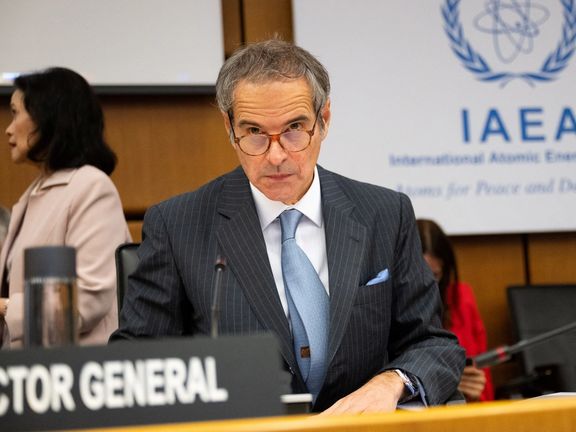
International Atomic Energy Agency (IAEA) Director General Rafael Grossi
The International Atomic Energy Agency has no information on the location of roughly 900 pounds (408 kilograms) of enriched uranium in Iran, Director General Rafael Grossi said Tuesday in an interview with Fox News.
Grossi said Iranian officials told the agency they removed the material for “protective measures” ahead of US strikes on nuclear facilities, but the IAEA has not been informed where it was taken. “We do not have information on the whereabouts of this material,” he said.
He stressed that locating the uranium is part of the agency’s mandate and not a political act. “My job is to determine where this material is, as Iran has an obligation to report and account for all nuclear material in its possession,” Grossi said. “This will continue to be my focus.”
Grossi also confirmed that US strikes caused “very serious damage” to a centrifuge hall at the Natanz nuclear site. He said the Isfahan facility was also hit, but added the IAEA does not currently have access to fully assess the extent of the damage.
The seal of the US Department of Homeland Security, File Photo.
An alleged Iranian military sniper and a former member of the Revolutionary Guards were among 11 Iranian nationals arrested across the United States over the weekend, the Department of Homeland Security said on Tuesday.
The arrests targeted individuals with criminal records, suspected terrorism ties, and past deportation orders, Homeland Security said. One US citizen was also taken into custody after allegedly threatening to shoot federal officers while shielding an illegal Iranian national.
Ribvar Karimi
In Alabama, agents arrested Ribvar Karimi, a former sniper for the Iranian army from 2018 to 2021. Karimi was found with an Iranian military ID card and had entered the country in October 2024 on a K-1 fiancé visa under the Biden administration, Homeland Security said. He never adjusted his immigration status and is now in federal custody pending removal.
Mehran Makari Saheli, a 56-year-old Iranian citizen and ex-member of the IRGC, was arrested on June 22 in St. Paul, Minnesota, the department said. Saheli, who also admitted ties to Hezbollah, had previously been convicted as a felon in possession of a firearm. He was ordered removed in 2022 but remained in the US illegally, officials said.
Other arrests included individuals in Texas, Arizona, California, Colorado, Mississippi, and New York. Among them was Behzad Sepehrian Bahary Nejad, detained in Houston while carrying a loaded 9mm pistol and previously arrested for domestic violence. Hamid Reza Bayat, also arrested in Houston, had been ordered removed in 2005 and has multiple drug convictions.
In Mississippi, Yousef Mehridehno—once a lawful permanent resident—was taken into custody after being listed as a known or suspected terrorist earlier this year, DHS said. His residency had been revoked in 2017 for lying on his visa application and suspected marriage fraud.
Several of those arrested had been living in the US for years despite removal orders, some with criminal records that included drug trafficking, firearms violations, and fraud. All are now in ICE custody awaiting removal proceedings, Homeland Security said.
A tense meeting at the United Nations Security Council on Tuesday laid bare the deepening global rift over the Iran-Israel conflict, as member states clashed over the legality of US and Israeli airstrikes and Iran’s nuclear ambitions.
The meeting came just days after a fragile ceasefire ended the 12-day war between Iran and Israel that drew in the United States and marked the most direct military confrontation between the parties in decades.
“Diplomacy and dialogue are the only path to resolving the unnecessary crisis over Iran's peaceful program,” said Iran’s UN Ambassador Amir-Saeid Iravani. He accused the United States and Israel of launching an illegal war on Iran.
Israel’s Ambassador Danny Danon said, "If there were a Nobel prize for deception, the Iranian regime would win it every single year."
Iran’s actions, Danon said, left no room for trust. “While the diplomats and politicians talked, Iran built. While you negotiated, they enriched. While you hoped, they lied.”
“These strikes, in accordance with the inherent right to self-defense, collective self-defense, consistent with the UN Charter, aimed to mitigate the threat posed by Iran to Israel, the region, and to more broadly international peace and security,” said Rosemary DiCarlo, the US Ambassador to the UN.
“We must all urge Iran to seize this opportunity for peace and prosperity and abide by its international obligations.”
US forces attacked Iranian nuclear sites - Fordow, Natanz and Isfahan - on Saturday, in a mission dubbed "Operation Midnight Hammer."
Nuclear material
Germany raised alarms about the aftermath of the strikes, suggesting Iran may be moving sensitive nuclear materials out of view.
“We are particularly concerned by any possible relocation of nuclear material since the recent military strikes,” said Germany’s ambassador to the UN.
Britain's UN Ambassador Barbara Woodward said: “The situation remains extremely fragile... It is critical that Iran does not miss this window for diplomacy.”
Woodward warned that Iran’s enriched uranium stockpile is now “40 times the limit set by the JCPOA” and stressed, “It is urgent that the IAEA have full access, especially on Iran’s enriched uranium stockpiles.”
Russia, in contrast, condemned the Israeli and American airstrikes.
“The actions of the US and Israel directly violated the UN Charter,” said Russian Ambassador Vasily Nebenzya.
“They constitute a direct and very dangerous challenge to the authority of the NPT, especially Iran’s right guaranteed under Article 4 of the treaty to use nuclear energy for peaceful purposes, including uranium enrichment.”
US President Donald Trump on Tuesday night criticized CNN and New York Times for “teaming up” to cast shadow of doubt on the success of US military strikes on Iran.
“Fake news CNN together with failing New York Times have teamed up in an attempt to demean one of the most successful military strikes in history. The nuclear sites in Iran are completely destroyed,” Trump posted on his Truth Social platform.
"Both the Times and CNN are getting slammed by the public.”
CNN, The New York Times and several other outlets cited an early assessment by the Defense Intelligence Agency that said the US air strikes on three nuclear sites in Esfahan, Natanz and Fordow failed to destroy them completely.
Earlier US Secretary of Defense Pete Hegseth also criticized CNN's reporting, saying, “Based on everything we have seen and I’ve seen it all, our bombing campaign obliterated Iran’s ability to create nuclear weapons.”
"Our massive bombs hit exactly the right spot at each target and worked perfectly. The impact of those bombs is buried under a mountain of rubble in Iran.”
He added, “So anyone who says the bombs were not devastating is just trying to undermine the president and the successful mission.”
The Islamic Republic executed three men accused of smuggling equipment for the assassination of Iranian officials, the judiciary's news agency Mizan reported on Wednesday.
Edris Aali, Azad Shojaei, and Rasoul Ahmad Rasoul were executed at Urmia Prison on the official charges of "spreading corruption on earth and moharebeh (enmity against God) through collaboration with hostile foreign governments in the Zionist regime's interest," the report said.
"They hid the assassination tools in a shipment of alcohol, which ultimately led to the killing of a notable figure," Mizan added.
Earlier reports said the three men were kolbars (cross-border porters) accused of smuggling equipment and weapons used in the 2020 assassination of Mohsen Fakhrizadeh, a key figure in Iran’s nuclear program.
“The US attacks on three nuclear facilities were so effective that, for certain, Iran cannot develop any nuclear weapons,” US Special Envoy Steve Witkoff said on Tuesday.
“Esfahan destroyed, Natanz eviscerated, and Fordow obliterated," he told Fox News.
Citing a variety of damage assessments he has seen, Witkoff said three components of Iran’s ability to make a nuclear weapon are destroyed.
“The Esfahan facility for conversion was above ground and was hit by a bunker-buster bomb. This means that even if Iran enriches uranium to 90 percent, it still cannot make any weapon.”
“At Natanz, there are two enrichment facilities, one underground and one above ground. The underground one was eviscerated, and the above-ground one, already hit by Israel, was struck again by us with another bomb just to ensure it is totally destroyed,” he added.
Witkoff said that Fordow was the last enrichment operation in Iran, and “we dropped 12 bunker-buster bombs there. There is no doubt it was obliterated.”
He said that once the US and Israel’s objective of completely dismantling Iran’s enrichment capabilities was met, President Trump reached out to both sides and secured a ceasefire settlement.