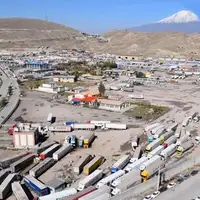
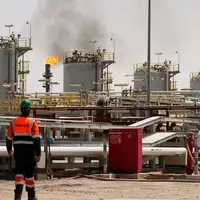
Iranian officials report that 18 of the country’s 31 provinces have been affected by Israeli airstrikes, following overnight raids involving dozens of fighter jets.
Here's a visual breakdown of the key locations hit so far.
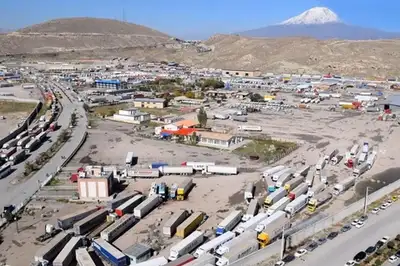
Tweet unavailable

Iran International has obtained information indicating that Ali Asghar Hejazi, deputy chief of staff to Supreme Leader Ali Khamenei, is in negotiations with Russian officials to secure a potential exit from Iran for himself and his family if the situation deteriorates.
According to the information, a senior Russian official has assured Hejazi that in case of escalation, Moscow would facilitate his evacuation via a secure corridor.
Other senior Iranian officials have reportedly received similar contacts, with some already finalizing their own exit routes.
Israeli Prime Minister Benjamin Netanyahu said in a video statement Saturday that senior Iranian leaders were “packing their bags.”

As Iran faces its biggest military challenge in decades amid relentless Israeli attacks nationwide and assassinations of its top military leadership, one man stands atop its complex military apparatus.
Though a network of powerful institutions and senior military advisors shape Iran’s defense strategy, ultimate authority over military decisions lies with Supreme Leader Ali Khamenei.
This network includes a select group of Khamenei’s personal military aides, the General Staff of the Armed Forces (GSAF), the Supreme National Security Council (SNSC), and the Military Advisors Center in the Leader’s Office.
Khamenei swiftly reshuffled the military leadership on June 13 in response to Israel's targeted strike that killed at least twenty top Iranian military commanders.
These included Iran's Chief of the General Staff of the Armed Forces (GSAF), Major General Mohammad Bagheri, and IRGC Commander-in-Chief Major General Hossein Salami.
He appointed Major General Abdolrahim Mousavi as Chief of the GSAF, Major General Mohammad Pakpour as the new Commander-in-Chief of the IRGC, and Major General Amir Hatami as the Commander-in-Chief of the Artesh (regular Army).
Khamenei's top military advisors
Two of Khamenei’s top military advisors, Ali Shamkhani and Gholam-Ali Rashid, who also served as acting chief of the GSAF, were also targeted.
Ali Shamkhani: Admiral Shamkhani, appointed as Khamenei’s senior military and political advisor in May 2023, is currently in critical condition in the hospital.
He previously served as Secretary of the Supreme National Security Council (SNSC) for over a decade and was widely seen as a key behind-the-scenes figure in Iran's nuclear talks with the United States.
Gholam-Ali Rashid: Major General Rashid, a longtime commander of Khatam al-Anbiya Central Headquarters—Iran’s top joint operational planning command—was also killed in the attack.
Rashid had served as acting chief of the General Staff for seventeen years.
Ali Shahbazi: Major General Shahbazi, a former commander-in-chief of the army and chief of the Joint Staff (now GSAF), currently heads the Military Advisory Center within the Leader’s Office.
The little-known elite advisory body provides strategic counsel on defense doctrine, intelligence operations, senior military appointments, and regional proxy strategies, including nuclear policy.
Yahya Rahim-Safavi: Major General Rahim-Safavi, a former IRGC commander-in-chief, has served as a senior military aide to Khamenei since 2007.
Hossein Dehghan: Brigadier General Dehghan, also a former IRGC commander, heads the Defense and Security Commission in Khamenei’s office.
The General Staff of the Armed Forces (GSAF)
The GSAF is Iran’s highest military planning and coordination body, reporting directly to the Supreme Leader. It oversees all branches of Iran’s armed forces: the army, the IRGC, the Basij, and the Law Enforcement Command.
On June 13, Major General Abdolrahim Mousavi became the first army officer appointed as chief of the GSAF.
Mousavi is known for his hardline stance; in 2018, he declared that his “greatest wish is the annihilation of Israel.”
Supreme National Security Council (SNSC)
The SNSC formulates Iran’s national security and foreign policy. Chaired by the president, it includes top officials from the military, intelligence services, judiciary, parliament, and the foreign ministry.
However, no decision becomes official without Khamenei’s approval.
The Supreme Leader also appoints two voting representatives to the council, one of whom is typically the SNSC’s secretary.
Ali-Akbar Ahmadian, appointed by President Ebrahim Raisi in 2021, currently serves as the council’s secretary and one of Khamenei’s two representatives.
Saeed Jalili, the SNSC’s former secretary, has served as Khamenei’s other representative on the council since 2008.
The Israeli campaign against Iran is set to take “weeks, not days,” CNN cited White House and Israeli officials as saying, and is proceeding with implicit US assent.
Washington has not criticized the timeframe of weeks in private discussions with Tel Aviv, CNN cited an Israeli official as saying. A White House official cited by CNN said the Trump administration was aware of Israel's plans and supported them implicitly
“The Trump administration firmly believes this can be solved by continuing negotiations with the US,” CNN cited the US official as saying, adding that the US supported Israel's self-defense.
Around 35 people are missing at the site of the Iranian missile attack in Bat Yam south of Tel Aviv, the Times of Israel reported.
Photographs published by Iranian state media outlets depicted the extent of damage on buildings in Tehran after Israeli air attacks.