Iran could take far-reaching steps beyond nuclear measures if Western powers trigger the snapback mechanism following an expected resolution by the IAEA Board of Governors, the hardline Farhikhtegan daily warned on Sunday.
Citing unnamed officials, the paper said Tehran's response may include boosting uranium enrichment to near weapons-grade levels, installing advanced centrifuges at the underground Fordow site, and reducing cooperation with the IAEA — including curbing inspections and disabling surveillance cameras.
The paper also said that Iran’s threat to withdraw from the Nuclear Non-Proliferation Treaty (NPT), first issued years ago, remains on the table but is now seen as a minimum response, given Iran's enhanced enrichment capabilities.
“The time for symbolic threats is over,” Farhikhtegan wrote.
US President Donald Trump’s recent remarks and actions suggest a dwindling interest in diplomacy with Iran, despite five rounds of indirect nuclear talks, according to an analysis published by the Tehran Times.
The Tehran Times argued that Trump's “zero-sum demands” and fresh US sanctions show a preference for pressure over compromise.
Speaking to reporters aboard Air Force One on Friday, Trump once again said that Iran cannot enrich uranium inside the country, adding, “There is not going to be enrichment [of uranium in Iran].”
“Donald Trump’s strategy regarding Iran’s nuclear program is characterized not by a sincere intent to achieve a fair and enduring agreement, but by maneuvers focused on enforcing unilateral conditions," read the article.

A senior Iranian lawmaker has said that the United States has no alternative but to accept uranium enrichment on Iranian soil.
“America knows well that it has no option but to accept enrichment in Iran,” said Mohammad Mehdi Shahriari, a member of the Iranian parliament’s National Security and Foreign Policy Committee.
Shahriari also emphasized the importance of continued diplomatic engagement. “We should not leave the negotiating table, because Iran’s presence in talks demonstrates that the Islamic Republic is seeking a solution.”
Iranian Parliament Speaker Mohammad Bagher Ghalibaf on Sunday criticized the US proposal on nuclear talks, saying it lacked any commitment to lifting sanctions and dismissed it as one-sided and irrational.
“America smiles on one hand and speaks of economic relief measures for Iran, but in practice, it seeks to deprive us of our internationally recognized right to enrich uranium,” Ghalibaf said in a televised address to parliament, according to state broadcaster IRIB. “Even worse, it does not even promise sanctions relief. No rational mind would accept such an imposed agreement.”
The speaker added that he recently represented Iran at the BRICS parliamentary summit in Latin America, holding bilateral talks with senior officials from Venezuela, Cuba, and Brazil to expand political and economic ties.


Iran uses its overseas missions to covertly surveil dissidents and fund influence operations via state-backed cultural initiatives, multiple former Iranian diplomats and embassy staff members told Iran International.
Their accounts document a sprawling overseas network operating under direct orders from the Supreme Leader’s office and the Islamic Revolutionary Guard Corps intelligence arm well out of step with common diplomatic practice.
“Every embassy has a list. People to watch. People to engage. People to silence,” an Iranian former diplomatic employee told Iran International.
“It’s not foreign policy—it’s field execution,” another told Iran International. “The people sent abroad are on assignment, not appointment.”
Their account outlines a foreign service shaped not by diplomacy but by ideology, surveillance and illicit finance.
According to these individuals—whose names are withheld for their safety—Iran’s diplomatic missions double as intelligence gathering hubs tasked with tracking dissidents, surveilling student communities and delivering cash and equipment under the protection of diplomatic immunity.
UK authorities detained eight men in May, including three charged under the National Security Act for surveilling Iran International journalists on behalf of Tehran between August 2024 and February 2025.
It was not clear whether the charges related in any way to the Iranian embassy in London.
Iran’s foreign ministry denounced the charges as politically motivated, but former officials say such actions are core to the Islamic Republic’s overseas agenda.
Iran’s embassies maintain the outward structure of any diplomatic mission—ambassadors, attachés and advisers—but according to the sources, the roles often serve as cover.
“A person listed as a translator might actually coordinate funds for proxy groups,” said one of the former diplomats. “Titles are just for appearances.”
In one high-profile case, Iranian diplomat Asadollah Asadi used his status to transport explosives intended for an opposition rally in Paris. His 2021 conviction in Belgium exposed how far such dual roles can go.

Another ex-staffer recalled colleagues arriving in Istanbul and Baku with briefcases of undeclared dollars. “They know no one will search their bags,” he said.
Cultural attachés, especially those linked to the Islamic Culture and Communications Organization, are said to organize religious events abroad that double as screening grounds for potential recruits.
Germany shuttered the Islamic Center of Hamburg in July over its ties to Tehran and what the Interior Ministry called promotion of extremism and antisemitism.

The diplomatic corps itself, sources say, is dominated by the sons of clerics and system insiders.
“Your father is a Friday prayer leader? Your uncle is close to the Supreme Leader? You’re in,” said one.
Posts rarely align with professional background; language skills and experience are often secondary to loyalty.
Though often expelled or exposed, the structure endures. Loyal staff are rotated across continents with little interruption.

“Each post is a mission. If you complete it to the system’s satisfaction, you’re held in reserve for the next,” one former diplomat said.
The network’s reach is enhanced by front organizations. The Imam Khomeini Relief Foundation has been linked to Hezbollah financing. The Iranian Red Crescent has faced accusations of being used by Quds Force operatives for weapons transport. IRGC members have admitted posing as aid workers during the Bosnian war.

IRIB outlets—Press TV, Al-Alam, Hispan TV—have functioned as propaganda arms and intelligence fronts. France expelled one of their journalists in 2011 for spreading state messaging.
The Iranian Red Crescent and the IRGC officially denied these remarks, saying that any such actions were unauthorized and not representative of their organizations.

Despite the rhetoric of resistance, many live in luxury. One former ambassador’s Paris residence cost over €40,000 per month.
“They send their kids to secular schools while preaching Islamic values,” said another. Leaked records show senior envoys receiving up to $12,000 monthly, with generous stipends and ceremonial budgets.
“It’s both reward and insulation,” an ex-diplomatic employee said. “The system buys loyalty with luxury—and distances them from the reality of ordinary Iranians.”
What emerges is not a diplomatic corps, but a global extension of Iran’s security state—trained, titled, and deployed to safeguard the Islamic Republic, not represent it.

Since the US exited from the 2015 nuclear deal, Tehran has neither raced toward a bomb nor returned to full compliance, maintaining a state of strategic suspension that might best be described as rule at the threshold.
Grown—partly at least—out of necessity, the inaction has with time hardened into a governing doctrine: a form of power rooted less in coherent planning than in the instincts of political survival.
Iran’s rulers have learned to wield ambiguity as leverage, drawing strength not from action but its possibility. That is why they view enrichment as essential.
Maintaining near-weapons level enrichment without actual weaponization—the threshold condition—generates enough uncertainty to make Western powers cautious about Tehran’s next move. It creates a degree of deterrence without escalation.
But that effect appears to be eroding.
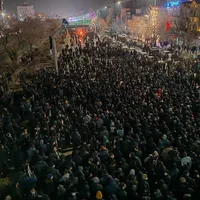
Internationally, the tolerance threshold for such maneuvering has narrowed. Domestically, endless uncertainty has undercut the rulers’ legitimacy and drained public resilience—driving growing numbers into apathy or protest.
Enrichment: suspension as power
Iranian officials have repeatedly denied any intention to build nuclear weapons, citing a religious ruling by supreme leader Ali Khamenei that forbade their use in 2010.
Still, after the United States exited the nuclear deal in 2018, Iran resumed enrichment and now possesses more than 274 kilograms of uranium enriched to 60 percent, according to the IAEA’s February 2025 report.
Inspectors have also confirmed that Iran has the technical infrastructure to reach weapons-grade capacity.
Nuclear experts have been debating Iran’s ‘break out time’ for many years. But the threshold status may be less of a transitional stage than it is a chosen posture: deter without provoking.
Without ever testing a bomb, Tehran has altered the regional military balance, particularly with Israel. Ambiguity has kept global powers on alert, calculating whether to cooperate with or contain Iran.
At home, this posture yields symbolic capital: scientific progress, defiance, and dignity. Enrichment has been folded into the Islamic Republic’s core narrative.
As indirect talks with the United States resume, the threshold position remains a pillar of Tehran’s strategy. But this time, the international response is sharper.
Calling for permanent inspections, proposing offshore stockpile transfers and—above all—Washington’s insistence on “zero enrichment” may suggest that the era of ambiguity is running out of road.
Sanctions: prolonging suspension
Sanctions have reinforced the threshold logic. They have damaged Iran’s economy but not collapsed it. They have left the country on the edge—in a prolonged state of uncertainty where everything seems possible, but nothing is guaranteed.
President Trump’s maximum pressure campaign has transformed sanctions: from broad embargoes to surgical strikes, targeting Iran’s critical sectors—missiles, drones, petrochemicals, dual-use technologies—applying pressure where it hurts most.
The aim, it appears, is not just to punish, but to constrict the Islamic Republic’s strategic arteries. Yet the targeted sanctions have not forced a retreat. Even as its economy bleeds and its regional allies perish, the regime’s rhetoric sharpens.
Iran’s increasingly aggressive tone against Britain, France and Germany—who can reimpose UN sanctions halted under the 2015 deal—might be a sign of self-confidence or deep unease.
Sanctions have clearly shaped Tehran’s behavior. But they have not broken its logic.
Iran’s rulers continue to see the nuclear ambiguity as their last safeguard of strategic balance, a critical bargaining chip they cannot afford to lose.
Suspension: eroding the nation
For now, Iran is unlikely to rush toward weaponization. But it is equally unwilling to dismantle its nuclear capability.
Iran's adversaries, lacking better tools, continue to rely on sanctions and vague ultimatums. Both sides, in effect, sustain the Islamic Republic’s threshold posture.
But the logic is fraying.
The United States and Europe appear to have lost patience with Tehran. Washington’s call for zero enrichment and Europe's warnings about a return of UN sanctions may signal a wish to step out of ambiguity, a will to end chronic suspension.
Domestically, too, the cost of this posture is rising.
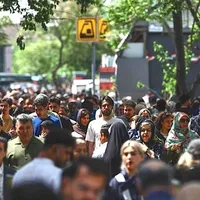
A society long held in suspense now faces fatigue, frustration, and declining trust. What once symbolized resistance has come to represent gridlock. “Dignity” has curdled into a deadlock.
The leadership in Tehran may persist in this suspended state, but its power to dictate the terms of uncertainty is weakening. The ‘calculated ambiguity’ looks more like a trick revealed.
What once shielded the Islamic Republic is now hastening its erosion. It will either change course or collide with reality, at home and abroad.