Now is the time for effective military action on Iran, ex-UK commander says


Former British army commander Richard Kemp has urged US President Donald Trump to take immediate military action against Iran, warning that diplomacy will only serve to delay the inevitable.
In an article published by The Telegraph on Sunday, Kemp argued that Tehran is using negotiations to buy time. “Iran will do everything it can to spin out talks with the US, doing its best to lead the negotiators along while manipulating Europeans to throw a lifeline,” he wrote.
Kemp said Iran is rebuilding its military capabilities, including replacing Russian-supplied air defenses damaged in Israeli strikes last October, and is further hardening and dispersing its nuclear facilities. He argued that Tehran has repeatedly violated both the 2015 nuclear deal and its commitments under the Nuclear Non-Proliferation Treaty.
“Even if a deal is agreed, it won’t be worth the paper it’s written on,” Kemp wrote. “Whatever obfuscation it comes up with, Iran will not voluntarily surrender its nuclear weapons program.”
He called on Washington to give Israeli Prime Minister Benjamin Netanyahu a green light to act against Iran’s nuclear infrastructure and to provide full support.
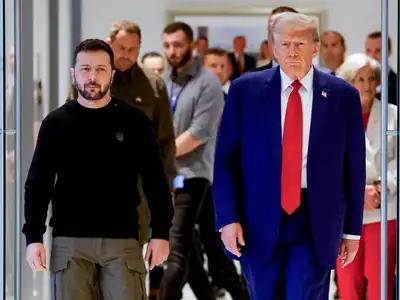
Iran's Foreign Minister Abbas Araghchi said Sunday that the Islamic Republic will soon deliver an appropriate response to the US nuclear proposal, as he briefed cabinet members on the Tehran-Washington talks.

Iranian prosecutors have expanded a ban on dog walking to more than 20 cities across the country, building on similar restrictions first introduced in the capital Tehran in 2019.
The ban has now spread to at least 25 cities, including Kermanshah, Ilam, Hamadan, Kerman, Boroujerd, Robat Karim, Lavasanat, and Golestan, according to a report by Tehran-based reformist-leaning outlet Faraz News on Sunday.
While no national legislation has been passed, judicial authorities are enforcing the ban through local directives and police orders, citing various articles of Iran’s Penal Code and Constitution.
These include Article 638 on public morality, Article 688 on threats to public health, and Article 40 of the Constitution, which prohibits harm to others.
Several prosecutors across various provinces announced the new bans over the weekend.
Kashmar, a city in northeastern Iran’s Razavi Khorasan province, is among the latest to implement the ban.
“Dog walking has been prohibited in this county in order to safeguard public hygiene and the physical and psychological safety of the public,” the city’s public prosecutor said on Sunday.
Khalkhal’s public prosecutor Mozaffar Rezaei in northwest Iran’s Ardabil province announced the ban came into effect on June 6. “Offenders will face consequences if they are seen walking dogs in parks, public spaces, or carrying them on their vehicles,” Rezaei said in remarks to Islamic Republic News Agency (ILNA) published Sunday.
"In addition to the financial and physical damages, religious rulings and cultural considerations must be taken into account, as this practice reflects the promotion of a Western lifestyle," he added.
In Ilam, western Iran, authorities imposed a dog walking ban on Saturday, warning that anyone seen walking dogs in parks, public areas, or transporting them in vehicles would face legal action. Police have also been instructed to impound vehicles involved in violations, according to provincial judicial chief Omran Ali Mohammadi.
In Isfahan, central Iran, the ban was announced last week by Mohammad Mousavian, the city’s public prosecutor who also ordered police to impound vehicles carrying dogs and shut down pet shops and unauthorized veterinary clinics.
A group of animal rights activists gathered outside the governor’s office in Isfahan on Sunday, calling for an end to what they described as municipal dog culling.
A former head of Iran’s parliamentary national security committee said on Sunday that the sixth round of nuclear negotiations will not be the last if a partial agreement is reached.
“If an interim agreement is achieved, the sixth round won’t be the final one,” Heshmatollah Falahatpisheh told Eghtesad Online. Without this, he warned, “failure is certain and definitive.”
“The United States seeks a comprehensive plan to contain Iran, starting with the nuclear issue,” he added.
Former Deputy National Security advisor Victoria Coates says a possible nuclear-armed Iran would pose a direct threat to the United States, pointing to decades of hostile rhetoric and attacks attributed to Tehran.
“Iran has been chanting ‘death to America’ and ‘death to Israel’ for almost 50 years now, and the Supreme Leader has said that that's not just a slogan, that's a policy,” she added. “He is responsible for the deaths of Americans in Beirut, in Iraq, in Latin America.”
Coates highlighted Iran’s investments in long-range missile capabilities and warned of potential nuclear terrorism through allied groups.
“They've been willing to pour resources into developing a delivery mechanism in the form of an intercontinental ballistic missile,” she said. “They could provide it to a terrorist proxy… What if Hamas had had a backpack bomb on October 7th?”

Israeli security experts have cast doubt on Tehran’s recent claims of obtaining sensitive Israeli intelligence as exaggerated or psychological warfare while Iran’s intelligence minister says the documents will soon be made public.
Iran’s state broadcaster IRIB reported on Saturday that Iranian intelligence services had obtained a large volume of sensitive material from Israel, including documents related to the Jewish state's nuclear and strategic facilities.
Asher Ben-Artzi, a former head of Israel’s Interpol, told Iran International, “I know that the relevant information is well-guarded in Israel and it does not seem to me that hackers can access it."
He warned that the intelligence may not be as significant as claimed. “Iran wants to tell the world that their intelligence personnel are professionals, but they probably think that their use of disinformation will increase their achievements,” he said.
Intelligence analyst Ronen Solomon also said, “We don’t know if it’s something scientific or operational, and it could possibly be something like details of the supply chain. Nobody in Israel has confirmed this officially so it could also be a psychological operation.”
"Iran is attempting to replicate what Israel did to Tehran’s nuclear archives in 2018," he said, referring to the Israeli intelligence operation that allegedly seized Iranian nuclear files from a warehouse in Tehran.
In 2018, Israel said it had stolen Iran's nuclear documents including 55,000 pages and 55,000 digital files from a warehouse in Tehran's Shourabad area through an intelligence operation.
Iran has since been accusing the UN nuclear watchdog of using those documents in its reports about the Islamic Republic's nuclear activities.
Iran says it will release documents soon
Iran’s Intelligence Minister Esmail Khatib said on Sunday that Tehran had obtained “a vast collection of strategic and sensitive documents, including plans and data on the nuclear facilities of the Zionist regime,” referring to Israel. He added that the documents would be published soon.
According to Iran’s state news agency ISNA, Khatib said the material would enhance Iran’s “offensive power” and added that the documents also contained data about the United States, European countries, and others.
“Complete nuclear documents have been obtained and transferred,” he said.
He described the operation as broad, multi-dimensional, and complex, involving infiltration, recruitment, and increased access to Israeli sources.
“The transfer method is just as important as the documents themselves. We ensured the documents reached us securely, and we are protecting the methods as well,” Khatib said, adding that the transfer process itself would remain classified for now.
Iran’s state broadcaster IRIB had earlier reported that the documents were already outside Israeli territory and under review, but provided no evidence.
The reports come as Israeli authorities investigate the arrest of Roy Mizrahi and Almog Atias, two Israelis accused of conducting surveillance for Iran, allegedly in the town of Kfar Ahim, home to Israeli Defense Minister Israel Katz.
Iran’s media linked their arrest to the intelligence haul, saying it happened after the data had been exfiltrated.
Israeli officials have accused the two of cooperating knowingly with Iranian handlers, and that they carried out tasks including the transfer of a suspected explosive device.
A report by Microsoft last year that Israel had surpassed the United States as the primary target of Iranian state-backed cyberattacks following the war in Gaza.