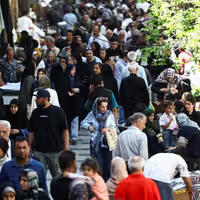
The mere presence of both teams in the same place—even if not in the same room—has sparked fresh hopes among a public weary of years of inconclusive diplomacy. Many Iranians have grown frustrated with what has often felt like a “negotiations for negotiations” cycle, with little to show in terms of real progress.
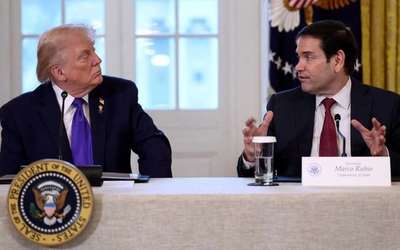
This time, however, the mood feels different. With Donald Trump pushing for concrete results and Iranian officials hinting that Supreme Leader Ali Khamenei may finally be open to genuine engagement, optimism is spreading across Iranian cities. Many are hoping not only for economic relief but also for a de-escalation of tensions and an end to the ever-present threat of war.
The economic daily Tejarat asserted on Thursday that “Iran and America will come to the negotiating table with genuine intent—and perhaps even political honesty.” The paper noted that public optimism is high about the possibility of an agreement between Tehran and Washington. According to Tejarat, Trump is seeking a swift deal to halt Iran’s nuclear advances, while Iran is acutely aware that time is limited—particularly with the trigger mechanism of the 2015 nuclear agreement likely to be activated by October 18.
Over the past week, many Iranians appear to have moved past the debate over direct versus indirect negotiations, the paper said. Even Foreign Minister Abbas Araghchi now seems to agree that the substance of the talks matters more than their format. At this stage, confidence-building appears to be the top priority for both sides.
Still, Tejarat cautioned that “despite Trump’s efforts to restrain Israeli Prime Minister Benjamin Netanyahu, the shadow—and possibly the quiet influence—of Israel on the Oman negotiations cannot be ignored.”
In a hopeful assessment, Iranian academic Alireza Soltani, an international relations and foreign policy analyst, told Khabar Online that “the very fact that the talks are set to begin is already the first achievement in Iran-US diplomacy.” Soltani expressed optimism about the potential success of the negotiations in Oman.
He suggested that the two sides are likely to reach a quick agreement on at least two initial points: continuing the negotiations and moving toward direct talks. From there, progress could follow on Iran’s nuclear program and, more broadly, on reducing tensions in the region.
Meanwhile, in interviews with the Fararu website, foreign policy analysts Abdolreza Faraji Rad and Ali Ghanbari noted that the talks are unlikely to produce results quickly, estimating that it could take at least six months to reach any agreement. Ghanbari also cautioned that the Iranian market’s positive response to news of the talks may be short-lived. “However,” he added, “if the negotiations proceed smoothly, we could see an economic breakthrough.”
Meanwhile, in an interview with the pro-reform daily Arman Melli, reformist figure and former Tehran City Councillor Zahra Nejad Bahram stressed that “Iranian society seeks peace.” She suggested that, to counter hardline opposition to the talks, the government should allow a public rally in support of negotiations—demonstrating the popular backing such efforts enjoy.
“Hardliners who entered parliament with the support of only three percent of eligible voters lack legitimacy,” she said. Still, Nejad Bahram emphasized that Iran will proceed with the talks based on national interests. “While there’s no guarantee of success, opposing negotiations amounts to betrayal of the country,” she added.
As preparations for the talks continue, hardline media close to the core of power appear eager to shift responsibility to the Pezeshkian administration—seemingly to shield Supreme Leader Ali Khamenei from blame should the negotiations fail. In contrast, pro-Pezeshkian outlets such as Etemad argue at length that the president is simply carrying out the Supreme Leader’s directives, with little independent authority of his own.
This gap in messaging reflects the deeper political struggle over who owns the process—and who will answer for its outcome.