Former official urges inclusion of Zarif and Larijani in talks
Former deputy parliament speaker Ali Motahari called for the inclusion of senior current and former officials in Iran’s negotiating team with the United States, now led by Foreign Minister Abbas Araghchi.
“I suggest appointing Mr. Zarif, Salehi, Ali Larijani, and Takht-Ravanchi to the delegation to benefit from their experience and reach a fair agreement,” he wrote on X.
Javad Zarif is the architect of Iran’s 2015 nuclear deal and a former foreign minister; Ali-Akbar Salehi is a former head of the Atomic Energy Organization; Ali Larijani is a former parliament speaker; and Majid Takht-Ravanchi is currently deputy foreign minister for political affairs.
Frustrated ultra-hardliners are subtly warning Supreme Leader Ali Khamenei that making major concessions to Washington could risk a fate similar to Libya’s Muammar Gaddafi.
“Negotiation, whether direct or indirect, with [Qasem] Soleimani’s killers, those who murdered 50,000 people in Palestine, is not going to end well," warned Fatemeh Tashakori, an ultra-hardliner activist on X, referring to an Iranian commander assassinated in a US drone strike in President Donald Trump's first term.
"The reason: Gaddafi’s fate in Libya!” she added.
As US-Iran talks are set to begin on Saturday, Israeli Prime Minister Benjamin Netanyahu and influential US Senator Tom Cotton in recent days both said Tehran ought to follow the example of Libya and renounce weapons of mass destruction.
Tripoli under veteran strongman Muammar Gaddafi made the move in 2003, only to be toppled in a Western-backed uprising and murdered by armed rebels in 2011.
Another popular ultra-hardliner activist with 22,000 followers, @Ya_Fatemeh, echoed similar sentiments, arguing that Gaddafi complied with US demands—scrapped Libya’s nuclear program, limited missile ranges—and it only brought years of civil war. “Yes, that’s what the Libyan model negotiations are like.”
The Libyan civil war was primarily rooted in internal grievances against Gaddafi’s authoritarian rule, including political repression and corruption.
While the United States and NATO intervened militarily in 2011 to prevent a massacre in Benghazi, they did not start the uprising. The conflict began as part of the broader Arab Spring uprisings, with Libyans taking to the streets demanding change well before any foreign involvement.
Ultra-hardliners who claim to be Khamenei’s most loyal—and only—true followers are well aware that the upcoming talks in Oman would not be happening without his tacit approval.
Though they stop short of naming him directly, the implication is unmistakable—and widely noted on social media. “Shame on you for comparing the Leader of the Revolution with these three people,” hardliner figure Mohammad-Ali Ahangaran, who has nearly 28,000 followers on X, wrote in response to a post that invoked the fates of Egypt’s Hosni Mubarak and Iraq’s Saddam Hussein.
In their opposition to renewed nuclear talks between Tehran and Washington, ultra-hardliners frequently cite Israel’s influence over the Trump administration, particularly its push for the total dismantling of Iran’s uranium enrichment program.
“America and Israel’s Main Strategy Against Iran: Libyazation of Iran,” read the headline of a Raja News article—the outlet affiliated with supporters of former nuclear negotiator Saeed Jalili an ultra-hardliner ideologue.
The piece referenced statements by Israeli Prime Minister Benjamin Netanyahu and US Senators Tom Cotton and Lindsey Graham advocating the use of the "Libyan model" in dealing with Iran’s nuclear program.
While Israeli media reported that Netanyahu discussed the Libyan model during his recent visit to Washington, the US stance remains ambiguous, as Trump gave no firm indication on whether he would adopt the model.
Ultra-hardliners recently warned that the Islamic Republic was risking alienation of its staunchest supporters, who they said make up the “solid core of the system”, if authorities continued suspending strict hijab enforcement.
Often referred to as “super-revolutionaries” by rival conservatives, most ultra-hardliners have strong links to the Paydari (Steadfastness) Party and a group known as MASAF. The two parties form the majority in the Parliament.
Last week, Iran’s Press Supervisory Board issued a rare warning to Kayhan newspaper, a leading ultra-hardline publication, after it published an article interpreted as a threat to assassinate Trump over the 2020 killing of Soleimani. The paper later claimed the piece was satirical.
Officials have made clear that tolerance for dissent against the talks, even from the far right, will depend on the outcome of negotiations—and the Supreme Leader’s position.
Some hardline publications appear to be adjusting their tone. An editorial by Gholamreza Sadeghian, chief editor of the Revolutionary Guards (IRGC) linked Javan newspaper, for instance, said on Wednesday that Iran may agree to reduce its enrichment levels but warned that this should not be viewed as a concession.
In return for reduced enrichment and increased inspections by the UN nuclear watchdog, IAEA, Iran should demand full sanctions relief and an end to Western support for the Islamic Republic’s opposition, the editorial argued.
An Iranian lawmaker has raised concerns over the contradictory messaging emanating from within the country as indirect talks with the United States are set to proceed.
Mohammad-Mehdi Shahriari, a member of the National Security Committee, questioned why Kayhan -- a media outlet affiliated with the Supreme Leader -- would issue a threat against the life of the US president while Khamenei has authorized the upcoming discussions.
"When the Supreme Leader has permitted indirect negotiations, why does one media outlet say that Trump will be assassinated? What does this mean?" Shahriari asked, highlighting the apparent disconnect between the official approval for talks and the aggressive rhetoric from the hardline publication.
Shahriari's remarks referenced a recent rhetorical column by the Kayhan daily, whose editor is appointed by Khamenei, which called for the assassination of Trump for the 2020 killing of Revolutionary Guard commander Qasem Soleimani.
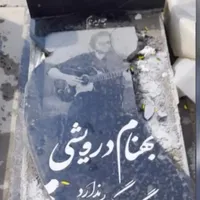
Germany’s Federal Prosecutor says the investigation into the 1992 murder of dissident Iranian singer Fereydoun Farrokhzad remains open, following claims by an ex-IRGC official that the Islamic Republic ordered the killing in Bonn.
Mohsen Rafiqdoost, a founding member of the Islamic Revolutionary Guard Corps (IRGC) and its minister from 1980 to 1999, recently described his role in funding covert operations abroad. His statements indicated that Iran was directly involved in orchestrating political assassinations beyond its borders, including the 1992 murder of Farrokhzad in Bonn, Germany.
Ines Peterson, a spokeswoman for the German Federal Prosecutor, told Iran International that “I can only inform you that the case of Mr. Fereydoun Farrokhzad is not closed, but still under investigation. As a rule, however, we do not comment on details or alleged suspects. Likewise, we do not comment on motions or requests made by third parties to our office. Therefore, I can only confirm that we have received the email you have mentioned.”
The E-mail that Peterson referenced was a letter sent by the German-Iranian activist Behrouz Asadi from the group Forum Woman, Life, Freedom.
The group urged the Federal Prosecutor, Jens Rommel, “to intensify the criminal investigation into these matters – regardless of political considerations. It is of utmost importance that the Federal Prosecutor's Office exhaust all legal means at its disposal to identify those responsible, hold them criminally accountable, and take appropriate measures to protect democracy and public security in Germany.”
The German Federal Criminal Police Office (BKA) proposed, according to a 2024 report by North German Broadcasting, the theory that Iran’s government executed Farrokhzad because he mocked Iran’s religious leaders during his concerts. The BKA reported said Farrokhzad said during one concert appearance that he had sex with Islamic clerics.
Farrokhzad, who publicly declared his homosexuality at a time when many gay entertainers remained in the closet, frequently ridiculed the Islamic government's restrictions on sexuality.
German-Iranians have long criticized the authorities in the Federal Republic for showing no appetite to solve Farrokhzad's murder case.
Asadi continued that “There is increasing evidence that the IRGC is directly involved in the planning, organization, and execution of assassinations and attacks against opposition figures and dissidents in Europe,” especially in Germany and France, the statement notes. It highlighted the 1992 killing of Farrokhzad as a particularly serious case, adding that legal proceedings are still pending.
When questioned about Farrokhzad’s murder in Bonn, a spokesman for the prosecutor’s office for the former capital of Germany, Martin Kriebisch, told Iran International “The exclusive responsibility for any statements concerning your inquiry is with the Federal Public Prosecutor General, so I kindly ask you again to address further inquiries directly there.”
Kriebisch initially sent Iran International’s press query to the Munichprosecutor’s office, which replied that the crime was in Bonn and Munich would be the wrong place to refer to.
Asadi’s letter added that “ In particular, there are statements indicating that high-ranking IRGC representatives—including Mohsen Rafiqdoost - were directly involved in the planning and execution of this crime. In several interviews, he has spoken openly about the elimination of opposition figures, particularly the targeted killing of Mr. Farrokhzad.”
Mina Ahadi, a German-Iranian dissident who is slated to start a speaking tour this month in the US, brought up the case of Iran’s former ambassador to Germany, Seyed Hossein Mousavian, who is currently a researcher at Princeton University, and called for his arrest by authorities because of his alleged role in the murder of Farrokhzad.
Mousavian wrote on X that “After reading the interview with Mohsen Rafiqdoust, ex-IRGC minister, I was stunned, amazed, and shocked...At that time, I was the Iranian Ambassador to Germany, and along with my colleagues at the embassy, I made extensive efforts for the return of Iranians residing in Germany who wanted to return to Iran.”
Iran International reported that Mousavian allegedly played a role in the assassinations of more than 20 Iranian dissidents in Europe in the 1990s, including Farrokhzad. Mousavian, who was Iran’s ambassador to Germany from 1990 to 1997, has vehemently denied the allegations that he was involved in the mass assassination of Kurdish dissidents at the Berlin restaurant Mykonos in 1992.
The former high-level Islamic Republic of Iran intelligence agent, Abolghasem Mesbahi, said during the Mykonos trial in 1997 that "Mr. Mousavian had a role in most of the assassinations committed in Europe."
AAIRIA organized a protest in at Princeton in April 2024 to demand Mousavian’s dismissal. Mousavian and Princeton University’s President Christopher Eisgruber refused to answer multiple Iran International press queries about Farrokhzad.
Iran’s former national security chief said the country's nuclear capability forms a complete and irreversible chain, from mining to final product, emphasizing that is has vital role in medicine, energy, agriculture, and the environment.
“Iran’s peaceful nuclear capability, is a complete chain from mine to the final product; not just a scientific achievement but also a vital driver for medicine, energy, agriculture and environment,” said Ali Shamkhani on X. “This national technology is stabilized, irreversible and indestructible.”
Iran’s Foreign Ministry spokesperson Esmaeil Baghaei on Wednesday marked National Nuclear Technology Day by defending the country’s atomic program as peaceful and nationally driven.
“The Islamic Republic of Iran’s peaceful nuclear program is a symbol of national will and the result of the Iranian nation’s effort, innovation, and perseverance,” Baghaei wrote on X.
He said the technology is now “an indigenous knowledge serving the country’s progress, development, and scientific strength,” and added: “Protecting the achievements of the Iranian nation in the field of nuclear science and its peaceful applications is a national responsibility.”