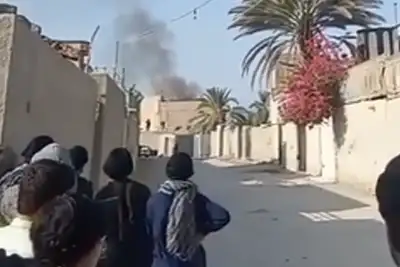
Defiance of hijab has significantly grown in Iran in the past few years
Iran's ultra-hardliners and vigilantes associated with them are increasingly warning that the Islamic Republic risks alienating its staunchest supporters if authorities continue suspending strict hijab enforcement.
In a viral video circulating on social media last week, ultra-hardliner lawmaker Mohammad-Mannan Raisi blasted the Supreme National Security Council (SNSC) for its mid-September decision to halt the implementation of the proposed Hijab and Chastity Law.
The proposed law had been slammed globally for its draconian measures, the UN branding it "gender apartheid".
“The new hijab law marks an intensification of state control over women’s bodies in Iran and is a further assault on women’s rights and freedoms,” the UN said at the time.
Raisi argued that the clerical rule’s “solid core” supporters have endured severe economic hardship out of loyalty to the Islamic Republic, expecting it to uphold the Sharia law. However, by showing indifference to religious beliefs and values, he claimed, authorities are behaving like a secular government and eroding trust among their most devoted base.
“The solid core of the system will be disillusioned if you suspend God’s commandments and fail to implement them based on unjustified expediency,” Raisi warned, suggesting these loyalists could lose their motivation to defend those in power whom they hold responsible for enforcing the Sharia.
The decision of the Supreme National Security Council (SNSC) not to enforce the controversial law could not have been made without the approval of Supreme Leader Ali Khamenei, who has avoided discussing the issue in his speeches for months despite his firm stance in April 2023, declaring that disregarding hijab was “religiously and politically haram (forbidden).”
Authorities appear to be treading carefully, as enforcing the controversial law—punishing violators, including businesses, with hefty fines and prison sentences—could spark fresh anti-government protests.
Defiance of hijab rules has significantly grown among Iranian women since the violently suppressed 2022-2023 protests that followed the death of the 22-year-old Mahsa Amini in the custody of morality police.
The young woman was arrested for not wearing her hijab properly, leading to a tidal wave of opposition to the decades-long law.
•
•
Many women now refuse to wear the compulsory head covering, long tunics, and trousers as dictated by the country's Shariah law. They are also now often seen singing and dancing in public in defiance of the religious establishment.
The crackdowns, which led to more than 500 deaths of protesters at the hands of security forces during the initial uprising, and thousands more arrests, have seen Iran levied with global sanctions, which come in addition to sanctions for its nuclear program and support of Russia's invasion of Ukraine.
Sanctions have seen Iran land in its worst economic crisis since the founding of the Islamic Republic, at least one-third of the country now living below the poverty line, and Iran increasingly isolated on the world stage.
Raisi, who led hardliner Saeed Jalili’s campaign in Qom during June’s snap presidential election, is closely aligned with the ultra-conservative Paydari (Steadfastness) Party and its allies, including Jebhe-ye Sobh-e Iran (Iran Morning Front).
His remarks came just days after an unprecedented police crackdown on pro-hijab vigilantes who had camped outside the Iranian parliament for over 45 days. While no arrests were reported, religious vigilante groups claim police used excessive force—an unexpected turn for those who have long operated with impunity and, at times, direct security force backing.
Hossein Allahkaram, a spokesman for the pro-hijab protesters, condemned the police response and vowed that demonstrations would resume after the Iranian New Year holidays.
Vigilante groups have historically played a key role in suppressing opposition movements and even participated in high-profile attacks like the storming of the British embassy in 2011 and the Saudi embassy in 2016—both of which triggered diplomatic crises.
Raisi’s warning has ignited intense debate on social media, with critics, particularly supporters of Parliament Speaker Mohammad-Bagher Ghalibaf, accusing him of issuing veiled threats against the authorities.
So far, most expressions of frustration from vigilante groups are directed at top officials. However, there are also some highly veiled complaints over Khamenei's silence, or approval, of the relative leniency shown in the hijab matter on domestic social media platforms such as Eitaa, a popular forum among ultra-hardliners and their associates.
Their waning influence has not gone unnoticed by those opposing their interference in national governance.
Former IRGC commander turned reformist figure, Ghorbanali Salavatian, wrote in an X post, “They constantly call themselves the ‘solid core’ of the system, as if the country would collapse without them and as if they alone have protected it".
Iran’s Foreign Minister Abbas Araghchi said on Saturday that the removal of US sanctions could serve as a confidence-building measure to pave the way for negotiations with Washington.
Speaking to foreign diplomats in Tehran, Araghchi’s remarks marked a re-emphasis on a position Iranian officials have frequently taken since the US withdrawal from the 2015 nuclear deal (JCPOA) in 2018. It is unclear whether his comments signaled a policy shift or were intended to test the international response ahead of any potential talks.
Following the US exit from the JCPOA under President Donald Trump, senior Iranian officials, including then-Foreign Minister Mohammad Javad Zarif and Supreme Leader Ali Khamenei, maintained that Tehran would not enter into new negotiations unless sanctions were lifted or the US returned to the deal. That stance remained largely consistent throughout the Trump administration’s “maximum pressure” campaign.
Now, with Trump back in office and reportedly considering a tougher approach—including military threats—Iran’s renewed insistence on lifting sanctions before any negotiations may be seen either as a negotiating tactic or as a reaffirmation of a long-standing position.
It is not yet known whether this demand was included in the official letter Tehran sent to President Trump recently. Public discourse has increasingly focused on the format of possible talks, with Iranian officials emphasizing their preference for indirect negotiations over face-to-face meetings. Analysts suggest this preference could be driven by both domestic political considerations—such as preserving the government's image after years of hostile rhetoric toward Trump—and strategic calculations, including buying time in the hope that future developments may shift the diplomatic landscape.
Insisting on sanctions relief as a precondition could also function as a means of slowing down the diplomatic process, allowing Tehran to manage expectations and retain leverage. While such a stance could be seen as obstructive, it may also be calculated to prompt a measured response from Washington. Notably, the Biden administration, which preceded Trump’s return, took a more restrained approach to sanctions enforcement even before formal nuclear talks resumed in April 2021.
Iranian oil exports to China began to rise prior to the 2020 US election and have remained high into 2024. This trend may factor into Tehran’s thinking, with the possibility that pressing the issue of sanctions could influence US decision-making or encourage a pause in new restrictions as a way to facilitate dialogue.
Iran’s ultra-hardline Kayhan newspaper, managed by a representative of the Supreme Leader, has repeated weekend calls to assassinate US President Donald Trump to avenge the 2020 killing of IRGC commander Qassem Soleimani.
On Sunday, the daily expressed support for what it described as revenge for the drone strike in Iraq, ordered by Trump during his first time in office, just one day after a piece had warned "a few bullets are going to be fired into that empty skull of his".
"The shot hasn’t even been fired yet, and already a bunch of local lackeys and US bootlickers are totally freaking out,... since their skulls are as empty as Trump’s, they’ve gotten scared," the outlet wrote on Sunday.
Since the assassination, Trump and several of his aides were put on a hit list but the issue of Soleimani's killing had been somewhat dulled down in recent months amid Trump's renewed campaign of 'maximum pressure' and calls to make a fresh nuclear deal.
The column, presented as a fictional conversation, called advocates of nuclear talks with the US “America’s bootlickers”. Iran's Supreme Leader continues to refuse to engage in direct talks, but has warmed to the idea of using mediation in the wake of Trump's warning that if a new nuclear deal is not reached within two months, the US will bomb Iran.
The former head of the Parliament's National Security Committee reacted to the newspaper's piece on Saturday, criticizing it as inflammatory while the situation remains so volatile.
Heshmatollah Falahatpisheh wrote on X, “Iranians hate those who promote war and terrorism. If you had the courage for war, you would’ve gone to Lebanon. If you have an assassination plan, don’t attribute your recklessness to Iran.
“The nation pays the price for the extremists’ warmongering and terroristic bluffs. The government must disavow this destructive movement.”
Tabnak website also criticized the article, warning of its costs to a nation already suffering a social and economic crisis.
"A newspaper, which happens to be state-affiliated, is publicly promoting a slogan whose cost will ultimately be paid by the people. It seems that if these ultra-revolutionary individuals truly have the motivation to sacrifice for the country, there are plenty of real opportunities to demonstrate that sacrifice," it wrote.
The paper said assassinating Trump would be “a good thing and would bring joy to Palestinians” and armed groups.
The US continues to confront Iran's Houthi militia in Yemen in the Red Sea region amid the group's maritime blockade on commercial shipping.
Ordered by the Supreme Leader in 2023 as a means to target Israeli shipping in order to force a ceasefire in Gaza, the blockade has since affected global shipping, with Trump vowing to tackle the group head on.
As messaging between Tehran and Washington rapidly evolves, Iranian politicians and media continue to send mixed—and at times irrelevant—signals, while the US stance remains relatively consistent under President Donald Trump, who holds the final say.
His latest remarks on negotiations with Tehran—telling reporters to forget about past letters exchanged with Iran’s Khamenei and suggesting that Iran now seems to favor direct talks—may hint at behind-the-scenes communication between the two sides and possibly some early progress.
An indication of that progress came with the news of President Masoud Pezeshkian telling Saudi Arabia’s Crown Prince Mohammed Bin Salman in a telephone conversation on Friday that "Tehran is prepared to reduce the tensions," and reiterated that "all of Iran’s nuclear activities can be subject to verification."
Meanwhile, the Entekhab website in Tehran quoted “diplomatic sources in Iran” as saying that if the indirect talks in Oman proceed positively, they could be followed by direct negotiations.
Despite a shift in tone from some quarters, harsh rhetoric toward the United States has continued in Iran. Deputy IRGC Commander for Political Affairs Yadollah Javani warned that any attack on Iran’s nuclear facilities—as previously threatened by US officials—would push the country’s nuclear program into a “new phase,” implying potential weaponization. “In that case,” he said, “the West will need to redefine its understanding of Iran and the axis of resistance,” according to Etemad Online.
Javani added that US and Israeli threats would not succeed in destroying Iran’s nuclear knowledge or capabilities and reiterated that nuclear weapons have no place in Iran’s defense doctrine.
His remarks appeared to contrast with those of Supreme Leader Ali Khamenei’s senior adviser, Ali Larijani, who recently said that a military strike could prompt Iran to build nuclear weapons. However, a report on the Rouydad24 website downplayed that aspect of Larijani’s interview with state TV, emphasizing instead his suggestion that there is an opportunity for improved US-Iran trade relations.
The report appeared to frame Larijani’s comments as a pacifist message intended to encourage US investment in Iran. It also quoted Larijani as calling Donald Trump “a very talented man in the area of economy.”
Some Iranians on social media welcomed President Trump’s announcement of a 10% tariff on imports from Iran, framing it as a symbolic gesture of support for the opposition—even though Iran’s exports to the United States are negligible.
In a notably aggressive comment, ultraconservative commentator Mohammad Marandi warned on X that if Iran’s nuclear facilities were attacked, “Iran can destroy Qatar.” His remarks stood in sharp contrast to other hardliners, such as cleric and Majles presidium member Alireza Salimi, who dismissed recent US threats as mere “bluffs,” according to Etemad.
Meanwhile, Chief of Staff of Iran’s Armed Forces, General Mohammad Bagheri, struck a more conciliatory tone. In a video message recorded at the historic ruins of Persepolis, he said Iran seeks friendly relations with all its neighbors—an apparent attempt to reassure the public and ease regional tensions. He was wearing civilian cloths instead of IRGC uniform.
A report in the pro-reform Etemad newspaper said that Iranian lawmakers have drafted two bills related to the country’s nuclear program, with at least one focused on “expanding the peaceful use of nuclear technology.”
Meanwhile, Reformist commentator Abbas Abdi said in an interview with a Tehran-based website that despite President Trump’s threats last week, the United States has not yet made a final decision to launch a military strike against Iran. He added that Iran continues to advance its drone and missile capabilities, now capable of reaching any target in the region.
Another Reformist commentator, Ahmad Zeidabadi, urged figures like Ali Larijani to refrain from discussing the militarization of Iran’s nuclear program, warning that such remarks play into what he described as “a trap set by Israel” to depict Iran as an aggressor.
Iran’s President dismissed his deputy for parliamentary affairs on Saturday after images surfaced online showing the official on vacation in Argentina and en route to Antarctica during the Iranian new year holidays.
In a letter published by government-affiliated media outlets, President Masoud Pezeshkian wrote that the Antarctic vacation, “even if paid for personally,” could not be justified while “economic pressures remain severe and many in our country live in deprivation.”
Shahram Dabiri Oskuei has not commented publicly but shortly after the photos began circulating on March 25, the state-run IRNA news agency cited a member of his office denying the trip took place this year.
“The photo being shared is from past years,” the unnamed official said.
The controversy erupted after multiple images were posted on social media appearing to show Dabiri alongside a woman near a cruise ship and other landmarks in Buenos Aires.
Pezeshkian wrote that an internal review confirmed Dabiri had been on a recreational tour over the holiday.
However, the trip to Antarctica is not the VP's first controversial episode. In 2020, he was arrested on financial charges though in the end, the charges were dropped.
The holiday comes while one third of Iran is living below the poverty line in the worst economic crisis since the founding of the Islamic Republic, the average monthly income in Iran now as low as $200 for a family of four.
Nearly fifty years later, Iran International can reveal the untold story of a critical US mission to Tehran ordered by President Jimmy Carter to determine whether Mohammad Reza Pahlavi Shah could fend off a revolution.
Their conclusion, after facing militants' bullets and a ghostly encounter with the shell-shocked monarch, was that the US could no longer support its longtime ally's rule.
The consequences of Islamic Revolution to follow reverberate to the present day.
Ambassador John Craig, 80, was a young American diplomat when he was tasked with joining an exclusive group to meet the Shah alongside Senate majority leader Senator Robert Byrd.
It was a mission that went undisclosed even to American Ambassador to Iran William Sullivan, Craig told Iran International in an interview in Elizabethtown, Pennsylvania, where he teaches at the local university.
In a storied career, Craig went on to serve as US ambassador to Egypt and Oman.
“President Carter asked Senator Byrd to make a special trip to Tehran to give him a personal assessment of the longevity of the Shah. There was great concern in Washington”, said Craig, “Could the Shah hold on? Could the Shah defeat the revolution?”
Their task was to help Carter transcend the disagreements within the US foreign policy over whether one of Washington's key allies in the turbulent region could be salvaged and provide an unvarnished take on the Shah's mettle.
“Some were saying, yes, the Shah could hold on, others no. One of the issues in that debate was how much force should be used to put down the revolution,” said Craig.
"There were those who felt that the Shah should really be aggressive and shoot people. And there were those who felt that reforms were the way to defeat the revolution.”
Ambassador John Craig has Ambassador-in-Residence in the Center for Global Understanding and Peacemaking at Elizabethtown College in Elizabethtown, Pennsylvania.American politician who served as a United States House of Representatives from West Virginia for over 57 years, from 1953 until his death in 2010.
Mission: Tehran
To camouflage the trip's true purpose, Craig and the rest of the group made a diplomatic tour across the Middle East and the North Africa before arriving in Tehran.
Craig touched down in December 1978, just a few months before the Shah was ultimately toppled and as rebellion roiled cities nationwide.
Violence was escalating and martial law was in place as armed anti-Shah demonstrators roamed the streets chanting ‘death to the Shah!’
Iranian demonstrator holds poster of Khomeini as uprisings swept Iran in 1978.
Because of the security risk, Craig and the team were not able to drive to the Shah’s Niavaran palace and instead flew by helicopter.
“We were flying. You could see out the windows that people were shooting at us,” Craig said.
When they arrived, Craig said he was astonished to see bare walls - no paintings, no antiques - in what was once among the world's most opulent palaces.
It became clear that the Shah was preparing to flee.
Interior of Niavaran palace which is now a museum open to the public in Northern Tehran.
“I'm saying to myself, this is really weird. I said to myself immediately, these guys have packed up. They are ready to go. No question about that,” Craig said.
Entering the palace’s Hall of Mirrors, Craig caught sight of the Shah and his wife, Empress Farah Diba, standing to greet them.
'Inert' emperor
“He was comatose. Standing, but inert,” said Craig.
“I noticed that the Shah was looking straight ahead. He was not interacting. His eyes weren't moving. He did not raise his hand. But when the person put their hand in his hand, he didn't grasp it and he didn't shake it,” Craig said.
Mohammad Reza Shah Pahlavi, his wife Empress Farah Diba and their son, the crown prince.
They went on to have lunch in the palace. Craig said the Shah did not speak once over the course of the meal, leaving the Empress to do all the talking. She appeared to be in control and running the country in the last days of their rule, Craig concluded.
“He didn't eat. He didn't move. He didn't say a word,” said Craig about the Shah.
Pleasantries and small talk dominated the discussion and the violence in the streets went unmentioned. Senator Byrd and Ambassador Craig left convinced that the Shah was unfit to rule.
Little did anyone at the time realize it, but the lunch was to help determine US policy and Iran's future course for the coming decades.
Screaming match
What followed next was a visit by Senator Byrd and Ambassador Craig to Ambassador Sullivan’s house in Tehran to break the news on the special visit.
While Ambassador Craig did not partake in the conversation, he could hear what Sullivan and Byrd were saying.
“There was a lot of screaming and yelling. They were arguing about what our policy should be going forward,” said Craig on the encounter between the two men.
William H. Sullivan, the last American ambassador to Iran.
The conversation lasted about three hours, with Sullivan coming to the defense of the Shah and pushing to have the Americans keep him in power. Byrd argued the Shah was already done for and unable to rule over a people in revolt.
On the flight back to the United States, Senator Byrd prepared his report to Carter.
“We were such a small group, of course, that we could hear what the senator was dictating in the memo to the president. So we we all knew what the senator was saying in his memo,” said Craig.
Once they arrived back to D.C, the Senator had a car waiting to take him straight to the White House, where he informed the president of his dire conclusion: the scion of Iran's 2,500-year monarchy was doomed.
“He went back and told the president: This is not going to work," Craig said.
"The Shah cannot continue.”
You can watch the full interview with Ambassador John Craig on YouTube.