Iranian cleric uses divorce analogy from Quran to justify US relations
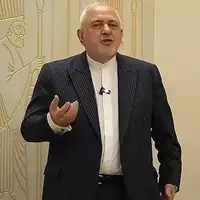
Iran’s Supreme Leader Ali Khamenei (left) and cleric Mohsen Qara’ati
Prominent Iranian cleric Mohsen Qara’ati offered an interpretation of a Quranic verse on divorce, applying it to the long-standing tensions between Iran and the United States and the possibility of a rapprochement.

In a recent address to a group of imams, Qara’ati, known for his accessible and often unconventional interpretations of religious texts, cited the verse "Al-Talaqu marratan" (Divorce is twice).
It refers to the Islamic practice of allowing two revocable divorce pronouncements before a final, irrevocable one, giving the couple a chance to reconcile. If the third declaration of divorce happens, it becomes irrevocable. He argued that this principle holds wisdom for international relations as well.
"The verse teaches us that even when ending a relationship or in conflict, one shouldn't destroy all bridges at once," he explained. "There should always be a path for return."
He pointed out that despite decades of strained relations and severed diplomatic ties, both Iran and the US maintain offices for the protection of their respective interests in each other's countries. "We've had a quarrel with America for 40-50 years," he noted, "yet both the Iranian interests section in the US and the American interests section in Iran remain open."
He implied that maintaining some level of communication, even through back channels, is crucial for keeping open the possibility of future reconciliation.
Earlier in the day, Supreme Leader Ali Khamenei defended the slogan ‘Death to America,” about a week after he tacitly gave the green light to possible talks with the US.
Infighting among rival factions in Tehran continues over potential US negotiations. Several key politicians who previously opposed talks with the US are now repositioning themselves.
Despite Khamenei hinting at a willingness to negotiate, his representatives across the country criticized the government's approach and voiced their opposition to talks with Washington.
Iran’s Supreme Leader Ali Khamenei praised the nation's boldness in standing up to what he called global arrogance, a term mainly referring to the United States.
"The Iranian nation has the courage to say, 'Death to America,'" Khamenei told an audience gathered at his headquarters on Sunday.
Noting that Iran is not alone in the global struggle against oppressive powers, he said, “The difference between the Iranian nation and others is that it has the courage to say this reality that America is aggressive, a liar, a deceiver, and a colonialist and is not committed to any of the principles of humanity; therefore, it says 'Death to America,' but others do not have the courage to express these truths and stand against America and fulfill their share in the fight against arrogance.”
Since its establishment 46 years ago, Iran’s Islamic government has promoted the slogan "Death to America." However, many Iranians on social media and commentators within the country advocate for improved relations and criticize such rhetoric.
Khamenei added that the Iranian nation not only did not suffer a blow and remained unscathed in its 46-year confrontation with the world's arrogant powers but also grew and progressed in all spheres. "Today's Iran is not the Iran of 40 years ago and has grown in all directions; the Iranian nation has been patient and striving and has made progress."
Tehran's confrontation with the United States has brought on harsh economic sanctions that have gradually weakened the country's economy, creating high, double-digit inflation and reduced international trade and investment.
Iran’s Supreme Leader Ali Khamenei during a meeting with a group of Quran reciters in Tehran on February 2, 2025
The Supreme Leader also pointed to the recent war in Gaza between its Palestinian ally Hamas and Israel, as an example of the defeat of Iran's two archenemies.
"No one could have imagined it: Gaza, a small and besieged territory, standing victorious against the combined might of Israel and the United States. This extraordinary outcome was only possible through divine intervention."
Since a ceasefire deal in Gaza last month, Iranian officials claim victory for Hamas, while their critics point to the large-scale destruction and loss of life among Palestinians.
Infighting among rival factions in Tehran continues over potential US negotiations following Khamenei’s implicit green light earlier this week—though tempered by his deep-seated distrust of America.
Meanwhile, several key politicians who previously opposed talks with the US are now repositioning themselves, adjusting their stances.
Despite Khamenei hinting at a willingness to negotiate, his representatives across the country criticized the government's approach and voiced their opposition to possible US talks.
A Swedish lawmaker called for the dismissal of Rouzbeh Parsi from the Swedish Institute for International Affairs, following a media investigation linking him to a Tehran-directed influence network.
Nima Gholam Ali Pour, an Iranian-born member of Sweden’s Parliament, said on Saturday that Parsi, who heads the Middle East and North Africa program at the institute, should not be employed by an organization funded by taxpayers.
“I will continue to work on this issue in the Riksdag until Rouzbeh Parsi is fired. It is completely unacceptable that a person who has promoted the interests of the Iranian regime should work for a tax-financed organization in Sweden,” he wrote on X.
His remarks follow a report by Sweden’s TV4, which linked Parsi to a network established by Iran’s foreign ministry to influence Western policy. The network referenced emails shared by Iran International, which had earlier revealed Tehran’s attempts to influence foreign analysts in a 2023 collaborative investigation with Semafor.
Gholam Ali Pour highlighted Iran’s history of espionage and illicit operations in Sweden, writing, “The Iranian regime has been conducting espionage in Sweden for decades. The regime has also planned assassinations in Sweden and uses criminal networks in Sweden to carry out acts of violence against other states and individuals.”
His comments come months after Sweden’s Security Service and Israel’s Mossad warned that Tehran was leveraging criminal groups in Europe to target Israeli embassies and individuals.
According to Reuters, Sweden’s security agency announced in May that Iranian operations had extended to foreign diplomatic representatives as well as opposition figures within the Iranian diaspora.
In a reference to European efforts to designate Iran’s Islamic Revolutionary Guard Corps as a terrorist organization, Gholam Ali Pour questioned Parsi’s role. “Should we expect the Institute of Foreign Policy to also employ “researchers” who support North Korea, Russia and China?” he asked.
Parsi has denied any cooperation with Tehran, saying that while Iran sought to shape Western perspectives, his participation was in the interest of foreign governments, including the UK’s Foreign Office.
Iran would retaliate if its nuclear facilities were targeted, Foreign Minister Abbas Araghchi said, warning that such an attack would lead to a war in the region.
In an interview aired on Al Jazeera, Araghchi called military action against Iran’s nuclear sites “one of the greatest historical mistakes the US could make.”
His comments follow growing concerns in Tehran that a second Trump administration could green light an Israeli attack on Iran.
On January 23, Donald Trump said that he hoped a deal over Iran's nuclear program would make it so that the United States did not have to support an Israeli attack on Iran.
Asked by a reporter in the Oval Office whether he would support Israel striking Iran's nuclear facilities, Trump said: "Obviously, I'm not going to answer that question."
"It would really be nice if that could be worked out without having to go that further step ... Iran hopefully will make a deal, and if they don't make a deal, I guess that's okay too."
In his interview with Al Jazeera, Araghchi suggested that unfreezing Iranian assets could serve as a confidence-building measure facilitating a deal between the two sides.
“The US has frozen Iran’s assets in various locations and has not fulfilled its commitments to release them. This move could be the first step toward establishing trust between us,” he said.
Trump withdrew from the 2015 nuclear deal in 2018, reinstating sanctions as part of his maximum pressure strategy. Iran responded by expanding its nuclear activities beyond the agreement’s limits.
During his campaign, Trump has indicated he would restore his previous policies, aiming to secure a broader deal that includes Iran’s missile program and regional influence.
A spokesperson for Israeli Prime Minister said on Thursday that Israel is closely monitoring Iran’s actions.
“War is one way to achieve our objectives… Even if Iran claims to comply, we must remain skeptical – it could be a deception. Trump’s previous policy of ‘maximum pressure’ worked, and Israel expects to collaborate with him to restore it,” he told the Jerusalem Post.
“If a deal is possible, he will try to make a deal. But in the end, there’s a limit to how much diplomacy can achieve. We’ll give it a chance, but the clock is ticking. If necessary, we will act – with or without American approval.”
Iran's ballistic missile and space launch technologies serve a deterrent purpose, not an offensive one, President Masoud Pezeshkian said Sunday after visiting an exhibition showcasing the latest military advancements.
"We have worked to continuously strengthen our defense capabilities with the efforts of dedicated, innovative young scientists. This development will continue, and dear Iran will join the ranks of countries conducting extraterrestrial flights, showcasing our nation's scientific strength," Pezeshkian told officials and media.
Defense Minister General Aziz Nasirzadeh framed Iran’s ballistic missile program as an extension of its space launch efforts.
“Iran began its space activities by developing satellites. When challenges arose in satellite launches, the country shifted to building satellite carriers, a field in which it has now reached maturity. He added that there are promising plans, including the possibility of providing services to friendly nations,” the minister said.
Iran has launched a few satellites into low orbit, but its ballistic missile technology is viewed as a serious threat to regional countries and even most of Europe if its range extends beyond 2,000 kilometers. Last year, Iran launched two missile attacks on Israel, firing hundreds of medium-range ballistic missiles. While Israeli, American, and allied air defenses limited the damage, the attacks underscored Tehran’s ability to threaten regional countries with an estimated arsenal of 3,000 missiles.
President Pezeshkian also highlighted Iran’s space program as a driving force behind its missile development. "Our enemies constantly try to prevent us from standing on our own feet, but this has driven us to achieve scientific and technological advancements."
Iranian media have voiced concerns that President Donald Trump may push for limits on Iran’s ballistic missile program, as he did in 2018 when he withdrew from the JCPOA nuclear deal during his first term. Largely state-controlled and often reflecting official views, the media has repeatedly emphasized that Iran will not negotiate on any issue beyond its nuclear program.
Roozbeh Parsi, director of the Swedish Institute for International Affairs’ Middle East program, has denied any cooperation with the Iranian government following a media investigation linking him to a Tehran-directed influence network.
His response followed a report by Sweden’s TV4 and an article by Expressen, one of Sweden's most prominent dailies, which accused him of involvement in a network linked to Iran’s ministry of foreign affairs.
On Tuesday, TV4 reported that Parsi, the brother of former NIAC president Trita Parsi, had been connected to an Iranian initiative aimed at shaping Western policies.
The investigation, which cited emails provided by Iran International, followed a 2023 joint exposé by Iran International and Semafor that detailed Tehran’s efforts to cultivate relationships with academics and analysts abroad to expand its influence.
Sophie Löwenmark, a columnist for Expressen, wrote on Friday that “Parsi has participated in an advocacy network for a brutal dictatorship that today is a threat to Sweden, Swedish-Iranians, and Jews.”
She argued that his engagement had been secretive, without disclosure to his employers, and concluded that “this is not how someone you have full confidence in acts, but rather someone who appears to be the mouthpiece of the mullahs in Sweden.”
Parsi rejected her remarks in a response published by Expressen, saying that he had no financial ties to the Islamic Republic. He emphasized that his role as an academic allowed him to engage with different parties without political consequences.
“Unlike states, I do not represent any party and can therefore speak to everyone,” he wrote.
He also said that he participated in the Iran-led initiative on behalf of the British Foreign Office, not the Swedish Institute for International Affairs, arguing that TV4 and Löwenmark had omitted that detail.
“Certainly, Iran's aim with the initiative was to influence the West, but the participants' motives were something else entirely,” Parsi noted, adding that Western governments used such interactions to strengthen their positions in nuclear negotiations with Iran.
He dismissed criticisms from some Swedish-Iranians over his alleged ties to the Islamic Republic, saying, “My ‘crime’ is that I refuse to follow their lead and don't paint everything related to the Middle East and Iran in bright colors consistent with their ideologies.”
Sofie Löwenmark, Columnist at Expressen
Löwenmark responded in Expressen, challenging Parsi’s arguments. She argued that he acknowledged Iran’s intent to influence Western perspectives but failed to address leaked data showing that participants actively collaborated with Tehran’s interests through ghostwriting and other methods. She also noted his lack of transparency about how he joined the network or why he kept his participation hidden from colleagues.
“More importantly, he doesn’t seem to mind being part of a confidential circle convened by one of the world’s most brutal and repressive states,” she wrote. “It is inexplicable that he does not seem to realize the significance of the fact that the agenda of this secret network was not human rights, taxes, or welfare—but nuclear programs.”
Swedish MP says Parsi promoting Iran's interests
Swedish lawmaker Nima Gholam Ali Pour on Saturday accused Parsi of "promoting the interests of the Iranian regime", vowing to follow up his dismissal from taxpayer-funded the Swedish Institute for International Affairs at the Parliament as his employment is "completely unacceptable."
"If individuals like Rouzbeh Parsi—who sympathize with Sweden’s enemies—are to work at the Institute, why should the Swedish people fund such an organization? The Institute might as well reach out to the mullahs and ask for money," the Swedish MP of Iranian origin said in a post on his X account.