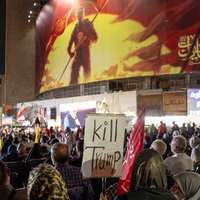
Domestic accounts—fragmentary and difficult to verify under heavy censorship—suggest that killings may be continuing beyond those reported during the nationwide unrest of January 8 and 9, when security forces opened fire on demonstrators in cities across the country.
One case frequently cited by rights activists involves Mohammad-Amin Aghilizadeh, a teenager detained in Fooladshahr in central Iran.
According to activists who followed the case, judicial authorities initially demanded bail for his release. Days later, his family was instead given his body, bearing signs of a gunshot wound to the head.
In another case, Javad Molaverdi was wounded by pellet fire during protests in Karaj, detained by security forces, and transferred to Ghezel Hesar Prison. His family later discovered his body in a cemetery, rights activists said.
Such cases have prompted warnings from international monitors. The United Nations special rapporteur on Iran, Mai Sato, has said she is closely following reports suggesting that executions and deaths in custody may be used to instill fear.
‘Doesn’t add up’
One of the most striking accounts received recently by Iran International comes from a journalist inside the country who described a conversation with a ritual washer working at a cemetery in Tehran province.
The journalist met the worker on January 27 and described him as visibly shaken, despite years of professional exposure to death. The washer told the journalist that the official reports “didn’t add up” for some bodies delivered to the cemetery.
“They bring a body that was clearly killed less than two days ago,” the worker said, “but say it has been in storage for 15 days because it was unidentified.”
“We have seen every kind of body for years—traffic accidents, heart attacks,” the worker added. “We can tell the difference. We know.”
Professionals working in forensic medicine and cemetery washing facilities often develop, over time, the ability to estimate time of death based on physical signs, even without laboratory tools.
Worrying precedents
The significance of the testimony lies not only in its emotional impact but in what it suggests about discrepancies between official explanations and physical evidence.
Such accounts cannot, on their own, establish a nationwide pattern. But taken together with reported cases of deaths in custody, they have intensified fears among activists that the authorities may be sending a broader message to protesters: that survival is no longer assured once dissent reaches detention centers.
Those fears are shaped in part by historical precedent.
Documented cases of extrajudicial killings in Iranian prisons—most notably in the early years after the 1979 revolution and during the 1988 mass executions—have heightened sensitivity to any signs that repression may again be moving out of public view.
The evidence gathered so far remains incomplete and uneven. But rights activists say it is sufficient to raise serious concern that deaths in custody and quiet executions may be occurring after protests have been suppressed.