Survivors of Iran’s protest crackdown demand justice from UN
Security forces in Iran crack down on protesters during demonstrations.
Survivors of the Iranian government’s repression of the 2022 Woman, Life, Freedom movement have voiced a plea for truth, justice, and accountability to members of the UN-mandated fact finding mission on Iran.
At a recent consultation in Germany, attendees shared testimonies and called for international support to address human rights violations and crimes against humanity committed during and after the protests.
“I don’t want to imagine a future where we see the perpetrators of these crimes posting on Instagram. Perpetrators need to be held accountable,” said one of the survivors whose identity was withheld for safety concerns.
While some survivors demanded justice for crimes committed, many called for systemic reform. “The law is being used as a weapon against us,” said another participant, emphasizing the need for legal reform to eliminate discrimination against women and minorities.
Participants also highlighted the courage of those inside Iran who supported protesters, including medical professionals and lawyers, often at great personal risk.
The UN Fact Finding Mission on Iran was established by the UN Human Rights Council in November 2022 to investigate abuses in Iran following the death of Jina Mahsa Amini in custody for violating the country’s mandatory hijab rules.
The nationwide protests sparked by her death were met with a crackdown that left countless victims of arbitrary detention, torture, and gender-based violence, including children and those blinded or severely injured by security forces.
Participants at the consultation included Iranians who had fled persecution and sought protection in Germany. Parents who lost loved ones in the protests described enduring repression, including denial of the right to mourn. They shared accounts of pervasive surveillance and judicial harassment in Iran that frustrate efforts for accountability.
“In this hearing, survivors - including children, and young women and men - spoke of their priorities for truth, justice, accountability and reparations,” said Sara Hossain, Chair of the Fact-Finding Mission in a press release on Wednesday.
The survivors welcomed the Fact-Finding Mission’s ongoing efforts but voiced disappointment at the lack of international action to pressure Iran into complying with its human rights obligations.
The Mission, which has gathered thousands of pieces of evidence, is preparing a roadmap for truth, justice, and reparations to present to the UN Human Rights Council in 2025. Viviana Krsticevic, a member of the Mission, highlighted plans for actionable recommendations, including measures for victim rehabilitation and accountability.
Shaheen Sardar Ali, another Mission member, emphasized the courage of the survivors and those who supported them inside Iran, such as medical professionals and lawyers, despite significant risks. “Their voices remind us of the continued need for solidarity and support,” Ali said.
Escalating repression and global condemnation
Amid these efforts, Iran’s human rights record continues to draw global criticism. A joint statement from 18 human rights organizations condemned the recent death sentences handed down to Kurdish political prisoner Varisheh Moradi and humanitarian worker Pakhshan Azizi.
Political prisoners Varisheh Moradi (right) and Pakhshan Azizi (left)
The organizations accused Iran of violating their rights to fair trials and extracting forced confessions under torture.
“These women, with their determination and courage, have initiated a new chapter in the struggle for freedom and equality,” the statement read, warning that their executions would further galvanize resistance against the Iranian government.
The organizations also noted that since the start of the protests, the Iranian government has escalated executions to instill fear, targeting women and Kurdish communities disproportionately. This systemic repression, the statement argued, underscores the urgent need for international action to hold Iran accountable for its human rights abuses.
The statement has been signed by organizations and individuals including PEN America, the Kurdistan Human Rights Network, the Ahwaz Human Rights Organization, the Baluch Activists Campaign, the Abdorrahman Boroumand Center for Human Rights in Iran, United4Iran, and Iran Prison Atlas.
Iran has experienced a significant surge in executions in 2024, with at least 711 individuals executed by mid-November, marking a substantial increase from previous years. This escalation has drawn widespread condemnation from international organizations.
These actions have intensified calls from the international community for Iran to impose a moratorium on the death penalty and adhere to its human rights obligations.
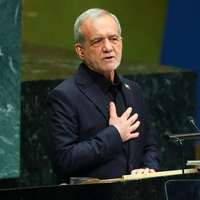
Iranian President Masoud Pezeshkian, who campaigned on a platform of reform and meritocracy, is facing criticism following nepotistic appointments within his administration.
Yousef Pezeshkian, the President's son, was appointed on Wednesday as the Media Advisor and Assistant to the Presidential Chief of Staff, Mohsen Haji-Mirzaei.
Despite publicly decrying preferential hiring practices, the president’s son, son-in-law, and other family members have secured government positions so far, echoing controversies that marred previous administrations led by Hassan Rouhani and Mahmoud Ahmadinejad.
Ironically, during a recent meeting with members of the medical community, Pezeshkian called for the inclusion of academics and experts in addressing national challenges.
“Unfortunately, problems are often entrusted to individuals who lack the necessary expertise,” he said, criticizing the influence of personal connections in staffing decisions. However, his remarks were overshadowed by media reports a day earlier that his son, Yousef Pezeshkian, had been appointed as media advisor and assistant to the chief of staff in his father’s administration.
Hassan Majidi, the president’s son-in-law, was previously named special assistant to the chief of staff. Meanwhile, Shahram Dabiri, the president’s parliamentary deputy, reportedly facilitated appointments for his own relatives, including his brother-in-law and brother, to key positions.
Hassan Majidi, Iranian president’s son-in-law, was previously named special assistant to the chief of staff.
The revelations are a sharp contrast to Pezeshkian’s campaign rhetoric. In addition to pledging a transparent and merit-based government, he promised to end internet restrictions, consult citizens before price hikes, and enact broad reforms.
However, internet access remains heavily restricted, and price increases have continued, fueling frustration among citizens who expected a reduction of the annual 40% inflation rate.
The move by Pezeshikian is not new in Iran’s political arena. Former president Hassan Rouhani faced backlash for appointing his brother, Hossein Fereydoun, as a special aide involved in nuclear negotiations. Fereydoun was later arrested on corruption charges.
Mahmoud Ahmadinejad’s tenure also saw the appointment of several family members, including his late brother Davoud as head of the Presidential Inspection Organization and his son’s father-in-law Esfandiar Rahim Mashaei to influential advisory roles. These appointments sparked controversy and accusations of consolidating power through personal networks.
The controversies surrounding family appointments in Pezeshkian’s administration come at a critical time for Iran, as economic challenges and public dissatisfaction grow.
The deputy coordinator of Iran’s Revolutionary Guards on Friday announced a pivot to proxy warfare against Israel as Tehran finds itself in the spotlight following crippling setbacks suffered by Hezbollah and Hamas.
“Many inquire about the fate of Operation True Promise 3. That is not my concern,” Mohammad-Reza Naghdi said. “We, as Basij forces, are focused on pursuing Al-Aqsa Storm 2 to bring an end to Israel, and that day is fast approaching.”
Tehran refers to its direct strikes on Israel as Operation True Promise, with the first taking place in April and the second in October. Additionally, Tehran has referred to Hamas's attack on Israel last year as Al-Aqsa Storm.
Naghdi’s comments come after the IRGC’s leadership took a stronger tone last month. IRGC commander Hossein Salami hinted at the possibility of more direct involvement in actions against Israel, reflecting intense Israeli attacks in the region.
Meanwhile, the United States is preparing to renew strict measures against Iran under President-elect Donald Trump. According to The Wall Street Journal, Trump’s administration plans to revive the “maximum pressure” campaign aimed at reducing Iran’s economic capacity to fund armed groups and other adversarial activities.
On Tuesday, Mike Waltz, Trump’s soon-to-be national security adviser, also said, “The change you’re going to see is more focus on Iran.” During his previous term, Trump’s administration implemented extensive sanctions targeting Iran’s oil industry, aimed at curbing its nuclear program and weakening its regional influence.
Iran’s proxies have faced notable losses over the past year. In September, a precision Israeli strike in Beirut killed Hezbollah leader Hassan Nasrallah and several senior commanders. Israeli military sources estimate that around 3,000 Hezbollah operatives have been killed since October 2023, while Reuters reports the figure could be as high as 4,000.
Meanwhile, Hamas has also faced significant challenges in Gaza. Over a year of Israeli bombardment has caused severe damage to the group’s infrastructure, reportedly killing more than 17,000 operatives since last year’s offensive began, according to Israeli military sources.
On Wednesday, a 60-day ceasefire brokered by the United States and France between Israel and Hezbollah took effect. This agreement aims to pause 14 months of fighting that began following Hamas’s October 2023 invasion of Israel. During this period, Hezbollah fired more than 17,000 projectiles at Israel in support of Hamas.
Armed opposition factions in Syria including the Islamist group Hay’at Tahrir al-Sham (HTS) killed a top Iranian military commander and pierced the outskirts of Aleppo in recent days, jolting the stalemated fight against President Bashar al-Assad’s forces.
These movements have highlighted an unexpected strength within the opposition, placing pressure on the Iranian-backed Syrian authorities amid an already complex political and military landscape.
These developments come at a critical time for the Syrian government, which is grappling with deep internal pressures due to a deteriorating economy and growing public discontent. Externally, Assad faces diminishing Russian support as Moscow remains preoccupied with the conflict in Ukraine, alongside mounting battlefield losses among Iranian-backed allies.
These shifts on the ground appear to signal a change in the rules of engagement in Syria, raising questions about the ability of both local and international actors to adapt to these changes and what they might mean for the country’s political future.
Unexpected military tactics
The operations were launched with meticulous coordination among different factions of Islamist groups and the Syrian National Army (SNA), focusing on strategic targets. Although the timing of the attacks was unexpected, evidence suggests that preparations had been underway for months, bolstered by advanced weaponry.
Armed drones and other sophisticated tools played a pivotal role, enabling the opposition to effectively manage the conflict and secure rapid territorial gains into Aleppo, Syria’s second-largest city.
Within hours, opposition forces seized key strategic locations, including stretches of the M5 highway and major military bases such as Brigade 46 and Regiment 46. These swift gains highlighted the opposition’s ability to challenge Assad’s forces—and even Russian troops—when sufficiently supported. Notably, the operations set aside internal factional disputes, presenting a rare display of unified military coordination.
The opposition’s treatment of prisoners added a notable dimension to their strategy, as humane practices are rarely observed in the Syrian conflict. Even HTS, an internationally designated terrorist organization, appeared to adopt a more calculated approach in handling detainees. This shift may reflect an effort to send a positive signal to the international community and position themselves for potential political transformation and broader acceptance on the global stage.
International stakeholders
The Syrian government finds itself in a precarious position, suffering heavy losses among its troops and allied militias. Iranian-backed militias, a critical pillar of support for Assad, have faced significant setbacks, including the death of a senior Iranian advisor and members of Hezbollah. These developments underscore Iran’s continued direct military involvement in Syria, despite mounting losses that reflect the depth of its entanglement in the conflict.
Meanwhile, Russia, a steadfast supporter of Assad, appears increasingly constrained in its ability to intervene decisively to restore balance, largely due to its focus on its invasion of Ukraine and growing international pressures. This could prompt Moscow to scale back its direct military support for Assad, opening the door to unpredictable military and political changes.
On the other hand, Turkey’s role in these operations cannot be overlooked. Analysts suggest that Ankara aims to achieve strategic objectives, including facilitating the return of thousands of Syrian refugees to safe zones in northern Syria and pressuring Assad to accept a political settlement on new terms.
Despite their field successes, extending the conflict to other regions, such as Deir ez-Zor, appears unlikely. The Syrian Democratic Forces (SDF), backed by the international coalition, control territories east of the Euphrates, while areas west of the river remain dominated by Iranian militias and Assad government forces. Any military advance into these regions would require significantly greater logistical support and troop numbers.
Shifting balance of power
These developments indicate that the Syrian conflict may be entering a new phase of escalation, potentially compelling Assad and his allies to reconsider their military and political strategies. As domestic and international pressures on the government intensify, the urgency for political solutions has grown, likely requiring terms that differ significantly from those previously proposed.
Iran: Official reactions and battlefield losses
On the official level, Iran has expressed deep concern over what it describes as the resurgence of “terrorist takfiri groups” in Syria. Iranian Foreign Ministry spokesman Esmail Baghaei warned that these developments pose a serious threat to regional stability, accusing the United States of orchestrating a “malicious plot” to destabilize the region. Iran called on regional countries to enhance cooperation to thwart these threats, framing them as part of a broader strategy to undermine Syria’s and the region’s stability.
Tehran blamed the armed factions for violating de-escalation agreements established under the Astana process, in which Iran, Turkey, and Russia serve as guarantor states. It described recent attacks near Aleppo and Idlib as blatant breaches of these accords, warning that continued operations could jeopardize the progress made in reducing violence over recent years.
Iran reaffirmed its unwavering support for the Assad against what it considers “takfiri terrorism” and praised the sacrifices of its “resistance martyrs.” The killing of senior military advisor General Kioumars Pourhashemi during recent clashes in rural Aleppo was framed as evidence of Iran’s commitment to safeguarding regional security. Iranian officials stressed that such losses would not deter Tehran from continuing its support for the Syrian government until full security and stability are restored.
A New Chapter in the Syrian crisis
Amid these rapid and complex developments, Syria’s landscape appears set for a significant shift in military and political power dynamics. The recent changes underscore evolving strategies by both local and international players, reigniting the Syrian crisis on new fronts.
As the Assad government and its allies face growing pressures, the opposition is striving to consolidate its gains, bolstered by limited but strategic support. The central question looms: will these developments open the door to a political resolution that could end the suffering of the Syrian people, or is the country destined for prolonged escalation, further entrenching the tragedies of the conflict?
Iranian negotiators held talks with the deputy head of the EU’s External Action Service on Thursday, setting the stage for Friday’s negotiations between the Islamic Republic and the three European nations collectively known as the E3.
A meeting is scheduled for Friday between the three European signatories of the 2015 JCPOA nuclear accord—the United Kingdom, France, and Germany (E3)—and the Islamic Republic, with the participation of EU representative Enrique Mora, who met with the Iranian envoys.
Both sides issued posts on X briefly describing the discussions, with widely different accounts, except calling the exchange as frank.
The EU official, Mora, enumerated the issues he brought to the attention of Majid Takht-Ravanchi and Kazem Gharibabadi, both Iran’s deputy foreign ministers.
“Frank exchange with Iran Deputy FM @TakhtRavanchi and @Gharibabadi on Iran’s military support to Russia that has to stop, the nuclear issue that needs a diplomatic solution, regional tensions (important to avoid further escalation from all sides) and human rights,” Mora tweeted.
Gharibabadi, tweeting on behalf of the Iranian side, detailed a lengthy list of alleged mistakes and missteps by the European Union and European powers.
“It was reaffirmed to him [Mora] that EU should abandon its self-centered and irresponsible behaviour towards issues and challenges of this continent and international matters,” he said.
The Iranian diplomat accused the European side of deflecting its own problems and mistakes onto others, particularly regarding the war in Ukraine. European nations have strongly condemned Iran’s role as a weapons supplier to Russia and have imposed sanctions on numerous companies and individuals linked to Tehran’s government.
Gharibabadi also strongly criticized Europe’s stance on Iran’s nuclear program, as Paris, London and Berlin have adopted a tougher position, backing a recent censure against Tehran at a meeting of UN’s nuclear watchdog, the International Atomic Energy Agency.
“Similarly, with regard to the nuclear issue of Iran, Europe has failed to be a serious player due to lack of self-confidence and responsibility. Europe is in need of self-recovery,” the Iranian diplomat said.
Iran’s government-controlled media has projected a positive tone regarding the talks with the Europeans, as US sanctions pose increasingly difficult challenges for Tehran. However, Gharibabadi’s tweet does not reflect a more flexible Iranian position.
The European Parliament on Thursday approved a resolution denouncing human rights violations in Iran, particularly the growing and systematic repression of women, with 562 votes in favor, 2 against, and 30 abstentions.
The EU resolution called on the Islamic Republic to end systematic discrimination against women and girls, including mandatory hijab laws, and to repeal the Hijab and Chastity Law and other gender-discriminatory legislation.
The resolution also highlighted rights violations, including “the murders of Mahsa Amini, Armita Geravand,” and over 811 executions in the past year, many targeting political prisoners.
It urged member states to extend sanctions under the EU Global Human Rights Sanctions Regime to include Iranian officials responsible for these violations. It also calls for the designation of the Iran’s Revolutionary Guards (IRGC) as a terrorist organization, citing the group’s role in suppressing dissent and its involvement in international acts of violence.
German MEP Hannah Neumann, in a plenary debate at the European Parliament, highlighted the case of Iranian student Ahoo Daryaie, who removed her clothing in protest after security forces allegedly assaulted her at Tehran's Islamic Azad University over her hijab. Authorities later labeled Daryaie as mentally ill, sparking outrage amongst activists and human rights advocates.
"The only one who is sick here is the Islamic regime. Sick with paranoia, terrified of women who dare to show their hair or sing a song. And the only thing that Iranian women are suffering from is being sick of this regime. Ahoo Daryaie is not a patient. She's a remedy. A symbol of courage and resistance against repression, like so many others, whose names we don't even know," Neumann said.
Neumann criticized these actions, describing them as "repression disguised as care," and drew parallels to historical misogyny.
The EU resolution comes a day after Mohammad Bagher Ghalibaf, speaker of Iran’s parliament announced that the Hijab and Chastity law would be officially enacted next month.