Israeli rabbi kidnapped in UAE, sparking fears of Iran's involvement
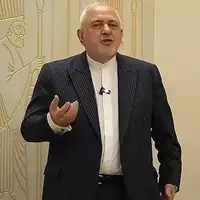
Israeli rabbi Zvi Kogan
An Israeli rabbi has been kidnapped in the United Arab Emirates, according to Israeli officials, giving rise to suspicions that his abduction may be related to Tehran's plan to avenge Israel's October 26 air strikes on Iranian military targets.
The rabbi, identified by the Israeli government as Zvi Kogan, was a Chabad emissary who may have been followed by the Iranian intelligence, according to Israeli media reports.
The Israeli Prime Minister’s Office confirmed that the Mossad intelligence service is investigating Kogan's disappearance on Thursday.
The office said the incident is being treated as terrorism. A dual Israeli-Moldovan national, Kogan has been part of the Abu Dhabi Chabad chapter since Israel normalized its relations with the United Arab Emirates in late 2020.
Walla News, citing Israeli officials, said he has been abducted in Dubai. Ynet also cited security sources as saying that the rabbi was likely abducted from the kosher supermarket he managed in Dubai.
Israel's Channel 11 reported that the rabbi has been kidnapped by a cell directed by Iran, which apparently managed to escape to Turkey. The Ynet report also confirmed that the perpetrators are believed to have fled to Turkey.
Senior Israeli officials told Walla News that the focus of investigations was "a terrorist squad of Uzbek origin that operated in Dubai on behalf of Iran and allegedly carried out the abduction and then fled to Turkey."
The Mossad and the Israeli National Security Council say Israel's intelligence indicated "he may have been under surveillance by terrorist elements," the Walla report added.
While Israel has not yet accused Iran of involvement in the abduction, Western officials believe Tehran runs intelligence operations in the UAE and keeps tabs on the hundreds of thousands of Iranians living across the country, according to the Associated Press.
In one of the most recent cases in 2020, German-Iranian citizen Jamshid Sharmahd was abducted by Iranian agents from his hotel in Dubai while on a layover. He was later transferred to Iran and sentenced to death.
On 5 November 2024, a spokesman for the Iranian judiciary said Sharmahd died in custody on October 28 before he could be executed.
Kogan's abduction comes as Iran has been threatening to retaliate against Israel over the October 26 air strikes, which according to Israeli and US officials, knocked out Iran's last three Russian-provided S-300 air defense missile systems and left the country "naked".
The West still has an opportunity to pursue engagement and abandon pressure, but Tehran is ready to confront any challenges, spokesperson and deputy head of Iran’s Atomic Energy Organization, announced on Saturday.
Addressing Western nations, Behrouz Kamalvandi wrote in a Tehran newspaper, “There is still time for engagement and for setting aside pressure and threats. While Iran has prepared itself to counter threats, it prefers dialogue over confrontation.”
Iranian officials have condemned a censure resolution adopted during the November 21 quarterly meeting of the UN’s International Atomic Energy Agency Board of Governors. While they claim Iran is ready to negotiate over its nuclear commitments, their calls for dialogue come against the backdrop of years of failed diplomatic efforts by the IAEA and Western powers to address concerns over Tehran’s reduced cooperation with the UN watchdog.
The IAEA Board of Governors approved a resolution proposed by four Western powers condemning the expansion of Iran’s nuclear activities and Tehran’s lack of necessary cooperation with the agency. The resolution passed with a majority vote.
This marked the second resolution adopted against the Islamic Republic by the Board of Governors in the past six months.
On Friday, Kamalvandi responded to the IAEA resolution by announcing a “significant increase” in uranium enrichment levels.
Speaking to state media, he said this step was part of Iran’s “compensatory measures in response to the new Board of Governors resolution” and noted that the process had “already begun immediately.”
The IAEA Board of Governors meeting in Vienna
The spokesperson for Iran’s Atomic Energy Organization stated that the Islamic Republic had informed the IAEA it would respond "immediately": "Before the agency officials left the Secretariat, we informed them, and today we also sent a DIQ (Design Information Questionnaire). This process is ongoing."
Kamalvandi provided details of Iran’s retaliatory measures, saying: "The enrichment sector is the most impacted area, and we are significantly increasing our enrichment capacity."
He added: "We are utilizing advanced centrifuges, accelerating research and development on each of them, expanding infrastructure, and implementing additional measures to enhance security."
Earlier, Ali Larijani, a top advisor to Supreme Leader Ali Khamenei tweeted that if the Trump administration wants Iran to refrain from making a bomb, "They must accept Iran's conditions and grant necessary concessions, including #compensating_Iran for damages and similar measures, to reach a new agreement, rather than issuing unilateral demands."
The escalation of Iran’s nuclear activities comes as the IAEA Board of Governors stated in its resolution that the Islamic Republic has still not cooperated with the agency “clearly and comprehensively” and has failed to take “the urgent and necessary actions outlined in the June 2024 resolution of the Board.”
The Board expressed “deep concern” over the situation, adding: “This lack of cooperation impacts the agency’s ability to ensure and verify the non-diversion of Iran’s nuclear materials toward nuclear weapons or other explosive devices.”
The resolution was adopted shortly after the Islamic Republic formally invited Rafael Grossi, Director General of the International Atomic Energy Agency, to visit Iran on November 11.
Regarding topics raised during Grossi’s visit, Kamalvandi said, "Mr. Grossi proposed during his trip to Iran that we temporarily refrain from increasing our 60% uranium stockpile, although not in a way that stops enrichment at various levels, including 60%."
He added: "We agreed to this with certain conditions, but we made it clear this would only apply if the resolution was not adopted."
Iran has amassed enough uranium enriched at 60% that it can quickly purify to 90% and produce four nuclear warheads, the IAEA and Western countries have said.
The IAEA resolution, combined with likely revival of the so-called maximum pressure campaign of sanctions on Iran from Trump's first term may set US-led Western countries on a collision course with Tehran over the nuclear dossier.
The US dollar surged past the 700,000 rials mark on Saturday again, reversing a brief period of relative stability, after Iran was censured for lack of cooperation with the UN's nuclear watchdog this week.
The milestone highlights the deepening economic strain in Iran, fueled by escalating geopolitical tensions and challenging domestic policy decisions.
A recent resolution from the International Atomic Energy Agency (IAEA) Board of Governors criticized Iran’s lack of cooperation on nuclear matters, prompting Tehran to threaten an escalation in uranium enrichment. Calls for producing nuclear weapons by some Iranian officials, combined with fears of more and stricter international sanctions, have further shaken confidence in the Iranian economy.
The rial’s value has plummeted over 20-fold since the 2015 nuclear agreement with world powers. Compared to its value at the time of the 1979 revolution, the currency has depreciated to just 1/10,000 of its original worth.
Last year in November, the dollar was trading at approximately 500,000 rials. By contrast, the sharp rise in recent months has been fueled by escalating tensions between the Islamic Republic and Israel.
Since the Iranian calendar year began in March, military confrontations—such as missile and drone attacks launched by the Islamic Revolutionary Guard Corps on Israeli targets also contributed to the rial's fall.
October marked the beginning of another downward trend. The dollar climbed to 690,000 rials on October 26 following an Israeli airstrike on military targets in Iran.
This upward momentum was reinforced by geopolitical developments, such as Donald Trump’s victory in the US presidential election and news of the IAEA resolution. On November 23, the dollar reached the 700,000 rials threshold again, signaling potential inflationary pressures in the months ahead.
The IAEA resolution on Thursday, supported by the United States, Britain, France, and Germany, called on Tehran to improve cooperation and clarify its nuclear activities. In response, Iran’s Atomic Energy Organization announced plans to increase uranium enrichment.
The potential activation of the snapback mechanism after the resolution could reintroduce sanctions lifted under the 2015 nuclear deal, likely deepening Iran’s economic woes. Such measures would mirror the international pressure during Mahmoud Ahmadinejad’s presidency, when the country faced severe economic and diplomatic isolation.
Iran's economy is also facing other challenges, such as shortages of natural gas and electricity, reducing industrial production, exports and earnings in foreign currency.
The Iranian prison system continues to expose political prisoners to significant risks by failing to adhere to the principle of separating inmates based on the nature of their crimes, according to an investigation by Iran International.
This neglect, despite being mandated in the Islamic Republic’s own regulations, has led to threats, violence, and deteriorating conditions for political detainees.
Human rights organizations have repeatedly warned that mixing political prisoners with those accused of violent offenses endangers their safety. Yet, officials from the judiciary and Prison Organization remain indifferent to these violations.
One notable case is Mehdi Meskinnavaz, a political prisoner serving a 13-year sentence in Bandar Anzali prison, north of Iran. After returning to incarceration on September 3 following a temporary suspension of his sentence, Meskinnavaz has faced repeated threats and physical abuse from an inmate accused of murder. His suffering highlights the dangers of housing political detainees with violent offenders.
Maryam Akbari Monfared, among Iran’s longest-serving female political prisoners, was transferred from Semnan prison to Gharchak women’s prison on October 22. Currently held in section six of Gharchak alongside approximately 120 other inmates, she faces dire conditions.
Gharchak Prison is a prison for women located in in Gharchak County, previously part of Varamin County, Tehran Province, (30 km SSE of the capital).
Jila Baniyaghoob, a journalist and activist, wrote on the Focus on Iranian Women website about the inhumane circumstances in Gharchak. She reported that section six has only one bathroom and one toilet for all inmates, forcing prisoners into long waits and frequent conflicts over access.
Baniyaghoob also noted that at least 20 inmates in the section are on death row, primarily for murder. These prisoners require both healthcare and psychological support, but such services are lacking in the overcrowded and unsanitary environment.
The systematic failure to separate prisoners is not limited to individual cases. The death of Alireza Shir Mohammad Ali in June 2019 is a reminder of the consequences. Shir Mohammad Ali, detained after the 2018 protests, was killed by two violent inmates in Tehran’s Grand Prison, where he was held without proper separation.
In another example, political prisoner Saeed Gharibi at Adelabad prison in Shiraz attempted self-immolation on November 16 to protest his conditions and the lack of adherence to the separation principle.
According to the Islamic Republic’s prison regulations, security detainees, including political prisoners, should be held in special facilities. These rules explicitly require the segregation of inmates by the nature of their crimes to prevent ideological, political, or personal conflicts. However, these regulations remain largely unenforced.
One day after suggesting a new nuclear deal with President-elect Donald Trump, a top advisor to Iran's Supreme Leader tweeted that Iran would avoid a nuclear bomb if the US accepted its terms, including payment of compensation.
Ali Larijani wrote that if the Trump administration wants Iran to refrain from making a bomb, "They must accept Iran's conditions and grant necessary concessions, including #compensating_Iran for damages and similar measures, to reach a new agreement, rather than issuing unilateral demands."
The earlier suggestion, also conveyed by Ali Larijani in an interview with Khamenei’s official website on Thursday, suggested Iran pledging not to produce weapons but retaining uranium enrichment capabilities.
Larijani directed both messages squarely at the incoming administration of President-elect Trump, who withdrew from the JCPOA nuclear agreement in 2018.
“You now have only two options: either return to the JCPOA that was already agreed upon … or, if you do not accept it as I have heard that the new US administration has said, then fine. It is not divine revelation. Come and discuss a new deal,” he had said on Thursday.
“You say, ‘We accept a nuclear Iran as long as it does not move toward a bomb!’ Fine. We have enrichment at this level. So, come to an agreement, bearing in mind that Iran has certain conditions for this based on past experiences." he added. "We will not move toward a bomb, and you must accept our conditions. Make a new agreement.”
Larijani said Iran had increased its enrichment to over 60%, a key concern of Western powers but well short of weapons-grade levels. He was speaking before a censure resolution against Iran was passed by the UN nuclear watchdog.
Larijani's new demand for compensation comes as Tehran's regional influence faces significant setbacks, with Hamas’s military infrastructure largely destroyed, Hezbollah under relentless Israeli attacks in Lebanon, and key militant leaders, including Hamas’s Ismail Haniyeh and Hezbollah’s Hassan Nasrallah, killed.
Larijani returns
Khamenei’s decision to entrust Larijani to speak publicly on key diplomatic issues may signal a move to assign the relative moderate a more prominent role in Iran's foreign affairs apparatus.
During two high-profile visits last week to Syria and Lebanon amid Israeli air strikes, Larijani delivered personal messages from Ali Khamenei to key regional players, Syrian President Bashar al-Assad and top Lebanese officials.
A former head of state broadcaster IRIB for a decade up to 2004, Larijani led Iran's Supreme National Security Council until 2008 and then served as speaker of parliament before a relative ebb in his public stature.
Now his bold offer to the Trump administration in an interview with the Supreme Leader's website may suggest a high-level new role for him in the nuclear dossier.
Following Trump's victory in the US presidential election, Iran extended an official invitation to Rafael Grossi, the director-general of the International Atomic Energy Agency, to visit Tehran in a possible renewed bid at diplomacy.
Last Friday, Grossi inspected two of Iran's key nuclear facilities as Tehran signaled its willingness to resume negotiations over its disputed nuclear program in a bid to alleviate sanctions which have dogged the Iranian economy.
With pressure mounting on Tehran following the IAEA’s 35-nation Board of Governors' resolution demanding improved cooperation with the UN nuclear watchdog, the Islamic Republic pledged to activate advanced centrifuges in retaliation.
The resolution, combined with likely revival of the so-called maximum pressure campaign of sanctions on Iran from Trump's first term may set US-led Western countries on a collision course with Tehran over the nuclear dossier.
Iran is technically capable of building a nuclear bomb and the diplomatic impasse over its disputed program could end in a "path of increased military action," including military escalation either by Iran or Israel, a top former UN weapons inspector told Iran International.
Speaking on the Eye for Iran podcast, David Albright said Iran or Israel may accidentally or deliberately engage in such an armed showdown. "Maybe Iran would target Tel Aviv. We know it can hit Tel Aviv and then Israel responds. I think it is a very dangerous time."
If both Iran and Israel feel threatened, then Iran's dash for a bomb and the chance of military confrontation seems more likely than ever, said Albright.
The former UN atomic inspector said Iran’s nuclear program is shrouded in secrecy and that the current measures in place do little to detect suspicious activity.
It would take a week or less for Iran to make enough weapon-grade uranium for a bomb, Albright said. It would take six months to make a weaponized nuclear warhead.
“I feel very, very worried about what’s going to take place in the future,” said Albright.
The International Atomic Energy Agency (IAEA) has grappled with Iran’s lack of cooperation and secrecy for more than two decades. In the past they have found uranium at locations that had not been declared, have been denied access to nuclear sites and faced official resistance to accrediting inspectors.
But the issue of secrecy and the findings of deep underground nuclear facilities that were previously undeclared like Fordow is much more complex and potentially dangerous, Albright told Iran International.
Iranian nuclear decision-makers are not only keeping secrets from the UN’s nuclear watchdog but also hiding it from their own government officials, said Albright.
“The technical people are preparing to build a bomb and if they're going to build a bomb at SPND they want to make sure that it can be done secretly," Albright said, referring to the Organization of Defensive Innovation and Research, known by its Farsi based acronym, SPND, which plays a key role in Iran's nuclear program.
"There's no oversight. They can exclude people in the parliament, in other parts of the Ministry of Defense from knowing what they're doing.”
Iran’s parliament recently expanded the funding and military pursuit of SPND, exempting it from oversight. The complex was previously under the guidance of Mohsen Fakhrizadeh, a mastermind behind Iran’s nuclear program before Israel allegedly assassinated him in Tehran with an AI-powered machine gun.
The SPND initiates projects to work on parts of the bomb, without any government approval, said Albright, who is the founder of the non-governmental Institute for Science and Internatinal Security (ISIS).
Iran maintains that its nuclear program is for peaceful purposes only. However, that’s not how Albright, Israel and the Western powers view it.
Out of 35 member countries on the IAEA's Board of Governors, 19 voted in favor of a censure resolution on Iran on Thursday, urging greater cooperation with the UN nuclear watchdog.
Britain, France, and Germany – dubbed the E3 – said during the IAEA meeting in Vienna that the findings of Director General Rafael Grossi after his recent visit to Iran, were deeply concerning.
Grossi announced that the Islamic Republic had expanded its uranium stockpiles by 60 percent purity, which is just a short technical step away from nuclear weapons.
Thousands of centrifuges
In response to the IAEA censure, Iran said Friday that it is pursuing new advanced uranium enrichment centrifuges.
Behrouz Kamalvandi, the spokesman for the Atomic Energy Organization of Iran, said Iran would retaliate by activating thousands of centrifuges, not just hundreds.
Much like a previous censure in June of this year, the latest resolution repeats its demand that Iran provide explanations for undeclared uranium traces and mandates that IAEA analysts be allowed to take samples.
Albright said Biden’s approach to Iran was a failure. He said the E3 had to trick the US into a censure resolution in June because they were frustrated with the pace of the US.
The former UN inspector who has been warning about Iran’s nuclear ambitions and lack of cooperation for more than 20 years, said he has learned over these years that pressure works.
Albright is a physicist and one of the world's leading nuclear experts. He was one of very few experts in the field who warned to the George W. Bush administration that the intelligence he possessed on invading Iraq on the pretense of weapons of mass destruction was unreliable.
Sanctions will work
In his interview with Iran International, Albright said crippling Iran's economy, like targeting key revenue such as oil sales, will force Tehran to cooperate.
"People always say, sanctions don't have an impact. But if they don't have an impact, why is it every time a deal is brought up as a possibility, the first thing the regime says is you've got to the lift the sanctions," said Albright.
The return of Donald Trump to the White House, the open and direct strikes between Iran and Israel and the weakening of Iran’s deterrence power via depleted armed allies Hamas and Hezbollah put Iran in a vulnerable position.
With geopolitics in the area remaining volatile and the unpredictable and uncanny approach of president-elect Donald Trump to world politics, Albright said the state of play could rapidly change.
"Trump, you don't know what he's going to do. He sent out a signal recently that maybe he wants to make a deal," he said, apparently referring to an alleged meeting between Trump's close ally Elon Musk and Iran's UN envoy.