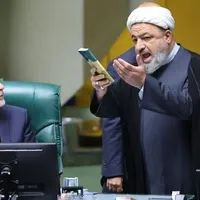
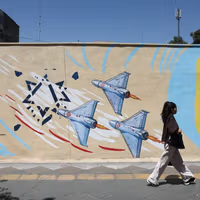
While the Islamic Republic’s establishment downplays Israel’s air strikes as ineffective and praises Iran’s air defenses, many hardliners are pushing for a retaliatory response—one that risks triggering further reciprocal attacks.
Details of the Israeli attack are still unclear. The only certainty is that the air strikes targeted air defense systems and missile production facilities, but exactly how many targets were hit and what the damage was, has not yet been disclosed.
Read more...


While the Islamic Republic’s establishment downplays Israel’s air strikes as ineffective and praises Iran’s air defenses, many hardliners are pushing for a retaliatory response—one that risks triggering further reciprocal attacks.
Details of the Israeli attack are still unclear. The only certainty is that the air strikes targeted air defense systems and missile production facilities, but exactly how many targets were hit and what the damage was, has not yet been disclosed.
What are Iran's options for retaliation, despite its earlier stance suggesting it might forgo a response to a limited Israeli attack to avoid prolonging the cycle of counterattacks? Iran has already launched hundreds of ballistic missiles at Israel twice this year, causing minimal damage. With no effective air force, Iran’s retaliatory capabilities are largely confined to a few types of medium-range ballistic missiles, whose accuracy remains uncertain.
Both Israel and the United States have warned Tehran not to respond to this attack. “We urge Iran to cease its attacks on Israel so that this cycle of fighting can end without further escalation,” US National Security Council spokesman Sean Savett told reporters. The US has boosted its forces in the region with the aim of deterring further Iranian attacks, especially against its Arab allies around the Persian Gulf.
Iran has around 3,000 missiles available for more attacks against Israel, but it is not so much an issue of weapons availability, as much as an issue of more Israeli counterstrikes, while Iran’s skies apparently remain defenseless. There are no reports of Iranian air defenses intercepting even one Israeli missile on October 26. There are also no reports of any fighter jets being scrambled to face Israeli planes, which probably fired their ordinance from Iraqi airspace.
This means that if Iran decides to launch another round of missiles, Israel could counterstrike by targeting assets that would significantly impact Iran's Islamic government—particularly its economic infrastructure. One major point of weakness is oil refineries that produce for the domestic market. Iran has two large refineries and even if one of them is damaged, the country would face serious problems at the onset of winter. This approach would avoid impacting global oil prices, allowing Israel to sidestep potential backlash from the US, which has advised against targeting Iran's oil production and export facilities.
In recent past, Iran’s rulers could count on their well-armed proxies, such as the Lebanese Hezbollah, to play the role of a deterrent against Israel. However, after Israeli operations that became intense in recent months, both Hezbollah and Hamas have been significantly weakened. Despite Israel’s relentless bombardment of targets in Lebanon, Hezbollah has not been able to launch tens of thousands of rockets that many feared could overwhelm air defenses.
As a result, Iran’s longstanding strategy of confronting Israel through proxies abroad appears to have faltered, with hostilities now reaching its own soil. A single major Israeli airstrike on critical economic targets could pose serious threats to the Islamic government, already grappling with multiple economic crises. An impoverished population—hard-hit over the past five years and shown to be ready to protest—may not tolerate another severe decline in living conditions.

In recent weeks, the rising tensions between the Islamic Republic and Israel, along with the increasing likelihood of an Israeli military strike, have had negative impacts on Iran's economy.
The Islamic Republic's threats of igniting a regional war have caused significant turmoil in Iran's financial markets. On Saturday, the Tehran Stock Exchange index plunged by 24,000 points, falling to just above two million points. Meanwhile, the US dollar surged to near-record highs, and gold prices spiked, both serving as clear indicators of the escalating crisis.
Iran's economy has clearly felt the looming threat of war and responded swiftly. As the likelihood of an Israeli military strike increases, further spikes in the dollar rate and gold prices seem inevitable, heightening public anxiety about their financial survival.
The U.S. dollar has surged by nearly 10 percent since August, before Israel escalated its attacks on Hezbollah, prompting an Iranian missile barrage on October 1. While the IRGC missiles were ostensibly aimed at Israel, their true impact has been felt directly on Iran's economy, with ripple effects hitting domestic markets like daily economic bombs.
Iran’s economy hostage to foreign policy
In this situation, President Masoud Pezeshkian's government is similarly powerless to take effective action, as both war and sanctions are beyond its control. Economy Minister Abdolnasser Hemmati's calls for lifting sanctions to improve economic conditions are made with the full knowledge—shared by Hemmati himself—that this is impossible under current circumstances. Iran’s military and foreign policy decision are made by Supreme Leader Ali Khamenei.
Iran's economy has essentially become hostage to its foreign policy—a policy that is increasingly moving toward greater tension and conflict with the US and Israel. Not only is there no hope of lifting the sanctions, but new sanctions, such as those against Iran Air, have worsened the situation, leading to the complete suspension of Iran's flights to Europe.
Social discontent and public anger
Amid the ongoing economic crisis, protests from various sectors of society, including retirees and nurses, have grown, with people consistently voicing complaints about worsening economic conditions and their increasingly empty dinner tables. A central theme in these protests is the widespread anger toward the government’s neglect of domestic issues in favor of supporting groups like Hezbollah in Lebanon and Hamas. Many feel that, in the face of these crises and mounting economic pressures, the government has abandoned its own people, focusing on its regional proxies. This sentiment has further widened the gap between the public and the government, with anger and dissatisfaction clearly reflected in the protestors’ messages.
Failed attempt to assassinate Netanyahu intensifies tensions
Meanwhile, the IRGC and its proxy groups’ attempt to assassinate Israeli Prime Minister Benjamin Netanyahu has ended in failure. A drone attack on Netanyahu’s residence in Caesarea, between Haifa and Tel Aviv, was unsuccessful as neither he nor his wife were home at the time. This failure has intensified Israel’s anger, resulting in renewed threats against the Islamic Republic.
The incident raises a crucial question: Why have Israel and the US successfully targeted and assassinated numerous IRGC commanders and leaders of proxy groups, while the Islamic Republic and its proxies have not managed to eliminate even a single senior Israeli commander? The answer is the Islamic Republics technological inferiority.
In summary, as political and military tensions persist, Iran's economy is facing mounting pressure with no clear path to recovery. The Islamic Republic's foreign policy, focused on supporting regional proxy groups rather than national interests, has effectively held the economy and people's livelihoods hostage. Continuing with this foreign policy approach will not only fail to improve the situation but will further exacerbate the economic and social crisis.

After Iran's Central Bank report on government banks providing large loans to their employees and affiliates, new reports have emerged about these loss-making financial institutions entering the local foreign currency market.
In Iran's heavily state-controlled economy, the government has long been the primary supplier of foreign currencies and controller of imports. Since 2012, when international sanctions began to sharply devalue the Iranian rial, the government has struggled to keep essential imports affordable. To manage this, it introduced multiple exchange rates, a system that has fueled widespread corruption. Influential insiders have taken advantage of government-provided privileges, such as export-import licenses, to profit from the disparities between official and market rates.
The official exchange rate is significantly lower than the free market rate for foreign currencies. The government aimed to control rising prices by subsidizing essential imports like basic food, animal feed, and medication, offering importers access to cheaper foreign currency in an effort to make these goods more affordable and prevent mass discontent
For instance, a portion of Iran's imports, such as medicine, is currently done using the government-subsidized rate of 285,000 rials per US dollar, while other imports, like food, are conducted through the "NIMA" system at 468,000 rials per dollar. Meanwhile, goods like household appliances or mobile phones are imported at the free market rate, which has soared to over 630,000 rials per dollar.
Iranian exporters are also obligated to either exchange their foreign currency earnings through the NIMA system or negotiate with importers to provide them with the required currency.
Recent reports from Iranian media reveal that Iranian banks are not only exporting goods directly but also selling the foreign currency earned from these exports to importers at a rate 10% higher than the NIMA rate. This allows the banks to profit from both exporting goods and selling the resulting foreign currency at a premium above the official NIMA rate.
Why is the government silent?
While the average inflation rate over the past few years has remained above 40%, and the Iranian rial has lost approximately 90% of its value since US sanctions were re-imposed on Iran in 2018, the government has mandated that banks provide loans to the public and companies at interest rates between 20% and 23%.
Moreover, from mid-2018 to mid-2024, the government’s debt to the country’s banking system skyrocketed by 430%, reaching 15.6 quadrillion rials—a sum equivalent to $23 billion at the free-market exchange rate and $55 billion at the official government rate.
The critical point here is that the government's debt to the banking system is in Iranian rials, meaning that with the annual decline in the value of the rial, banks are incurring massive financial losses.
For comparison, the free-market exchange rate for the US dollar has surged from 65,000 rials in mid-2018 to 630,000 rials today. As a result, the value of a large portion of the loans that Iran's banking system extended to the government and private sector at interest rates of 20% to 23% has been significantly eroded.
As a result, seven of Iran's largest banks are now struggling with accumulated losses totaling 4.6 quadrillion rials (approximately $7.3 billion at the free-market exchange rate). With the government's limited ability to cover these mounting losses, the banks face the risk of bankruptcy or are being pushed into activities normally prohibited for financial institutions, such as real estate management, property trading, and engaging in both domestic and foreign trade.
For instance, official statistics indicate that the value of banks' real estate holdings has now reached 2 quadrillion rials. Thanks to an 1100% increase in rial-denominated housing prices since mid-2018, a portion of the banks' losses has been offset.
Banks are using these unsound practices as another method to compensate for losses stemming from the declining value of the rial and the significantly lower interest rates compared to the inflation rate.
Recently, the Central Bank of Iran announced that in the last fiscal year, which began on March 20, the country's banks provided 1.2 quadrillion rials in loans to their employees or affiliated companies, which also benefits their managers. The affiliated companies use these cheap loans to plug their own financial losses.

The prospect of an Israeli attack on Iran has sparked new tensions within Iran’s opposition. Over 360 leftists, woke activists, and former Islamist/religious-nationalist figures have issued a statement titled "No to war, no to the Islamic Republic."
They argue that both the Islamic Republic’s policies and Israel's actions in the current Middle East conflict should be rejected. In contrast, constitutional monarchists, who have launched the "Stand by Israel" campaign on social media, believe that Iranians should support Israel in this ongoing conflict. There are also independent voices supporting Israel.
In terms of public attitudes toward Tehran’s foreign policy, approximately 65% of the population opposes the slogan "Death to Israel," while 23% support it. Meanwhile, 64% agree with the slogan "Neither Gaza nor Lebanon, I sacrifice my life for Iran," with 24% opposing it. Additionally, 73% back a common slogan about the Iranian government being the people’s enemy, and not the United States. These figures reflect significant public disagreement with some of the Islamic Republic's key foreign policy tenets.
At least 50% of ordinary Iranians are reportedly dissatisfied with the country's current state, as evidenced by consistently low voter turnout in recent elections. Many have also refrained from demonstrating public support for the government's missile strikes on Israel. Social media images have shown citizens celebrating the deaths of Hamas leader Ismail Haniyeh and Hezbollah’s Hassan Nasrallah by distributing sweets. Due to the lack of independent polling, it’s unclear what drives public opinion on these issues, but well-known figures inside and outside Iran have voiced support for both sides of the debate.
Arguments of opponents of an Israeli attack
The common denominator of the arguments of the opponents of supporting Israel in a possible war can be seen in the statement they issued:
1. "The one-year bombing of the people of Gaza ordered by the Netanyahu administration... is a clear manifestation of genocide."
2. "The claim of Israeli fundamentalists to impose a "new order" in the Middle East is only an invitation to more conflict, killing and destruction in the region."
3. "Israeli bombs will not bring peace, democracy, and freedom to Gaza, Lebanon and Iran."
4. "Both sides of this inhumane war of attrition are fueling the increase in tension and the spread of war in the region, and the result is nothing but death and destruction, displacement, intensification of repression and suffocation, the growth of extremism and insecurity."
They conclude from the above four arguments that it is necessary to "prevent the spread of the war to new fronts and stop the war by increasing the pressure on all sides of the conflict and trying to establish an immediate ceasefire in the region."
Argument of Israel supporters
The common denominator of the points that Israel's supporters make in its current war with the Islamic Republic are as follows:
1. There is a long-standing historical connection between Iranians and Jews dating back to the era of Cyrus the Great, and Iranians have no significant motives or grievances for hostility toward Jews or their government. The current conflict is driven by the Islamic Republic, not the Iranian people. Today, the enmity toward Israel largely reflects the ruling elite's agenda, not the sentiments of the broader population.
2. The tension between Iran and Israel stems largely from Islamist ideology, which seeks to eliminate Israel for reasons unrelated to Iran's national security or interests. This ideological stance, rather than any direct threat to Iran, drives the conflict and animosity toward Israel.
3. The Islamic Republic and its supporters are not only enemies of Israel, but enemies of Iran and Iranians. For this reason, Israel is an ally of the Iranians in people’s fight against the Islamic government and they should stand by it.
4. After the fall of the current government, Israel could become Iran's strongest democratic ally in the region, as there is no geopolitical rivalry or conflict of interest between the two nations. In contrast, Iran faces significant issues with its Arab, Turkish, and Afghan neighbors. A free Iran and Israel could collaborate on key issues like water management, information technology, military strategy, and agriculture, fostering a mutually beneficial relationship.
5. Tehran's nuclear program not only targets Israel but also drains Iran's national resources, costing tens of billions of dollars and causing hundreds of billions in losses from sanctions and missed revenues. Many Iranians opposed to the government see no benefit in continuing this costly program, just as Israel does. For them, the nuclear agenda serves neither Iran's interests nor its future, but instead deepens the nation's economic struggles and global isolation.
6. Instead of Gaza, Lebanon, Yemen, Syria, and Iraq, Iran's resources should be spent on Iranians, 90% of whom live near or at poverty levels. It is in the interest of the Iranian people that Israel weakens or removes the Islamic government from the region.
7. Iranians do not expect Israel to change their government for them. The focus of cooperation between Iranians and Israelis is on confronting common enemies and addressing shared security challenges, rather than promoting democratic reforms or government transitions.


Following Israel's October 4, 2024, strike on Beirut, which targeted Hashem Safiuddin, a potential successor to Hezbollah leader Hassan Nasrallah, speculation has also arisen regarding the status of Ismail Qa’ani, the chief commander of the Quds Force.
Although his deputy stated on Monday that Ismail Qa’ani is safe, the IRGC's public relations department has remained silent, releasing no official updates. Also, Tasnim News affiliated with the IRGC stated on Monday that Qa’ani sent a letter on the occasion of Hamas’s October 7 attack. However, according to Iran International sources, even his family was unaware of his status as of Sunday.
There are reports suggesting that Qa’ani traveled to Lebanon and was likely with Hashem Safiuddin when Israel launched its strike. Hezbollah has also stayed quiet on the outcome of this bombing, following a similar pattern as with Hassan Nasrallah, where the group only confirmed his safety 24 hours after an earlier Israeli bombardment.
Two Iranian officials told Reuters that Qa’ani traveled to Lebanon after Hassan Nasrallah was killed and has not been heard from since the recent Israeli attacks on southern Beirut. In response to a question about the status of Ismail Qa’ani, Mahmoud Qomati, a member of the political council of Lebanon's Hezbollah said: "I have no information."
Bragging vs. silence
The Islamic Republic is quick to publicize events it deems successful, often broadcasting them live. For instance, Friday prayers and war room directives to attack Israel are shown on state media, with foreign coverage re-aired on Farsi outlets. However, when incidents result in failure or embarrassment, the propaganda machine remains silent. A clear example is the conflicting reports following the crash of former President Ebrahim Raisi's helicopter, which remained unclear for 24 hours. Similarly, after the IRGC downed Ukrainian flight PS752, it took three days for officials to admit responsibility, despite their initial denials.
This model of no-information or disinformation has had a history in other totalitarian regimes. The Soviet government closed all channels of information about the Chornobyl nuclear reactor explosion for days in 1986. The Soviet government issued top-secret orders to classify all data related to the accident, especially information about the health of the affected population.
What does this behavior tell us about the propaganda apparatus of totalitarian and authoritarian regimes and even authoritarian parties in democratic systems?
People have no right to know
In authoritarian and totalitarian regimes, those in power often view government and public information as their exclusive property, treating the act of sharing information with citizens as a discretionary privilege rather than a fundamental duty. These systems routinely deny citizens the right to access details about government actions and decisions. For example, Ali Khamenei and the IRGC oversee vast economic enterprises, yet they consistently withhold financial statements, refusing to disclose their annual income and expenditures to the public.
In the Islamic Republic, people do not have the right to know what the officials do in their jobs. The Iranians have been curious why Ismail Qa’ani has been absent from the public arena, including the high-profile Friday prayer on October 4, led by Khamenei. The Revolutionary Guards did not provide any information about his whereabouts if he was with Sheikh Safiuddin during the attack on the Hezbollah building.
Internet disruption and low-quality connection in Iran, which constantly occurs in the conditions of a popular uprising, is to cut off the communication of political activists. In non-protest conditions, it is to prevent information-sharing on social networks, which today about 60 million smartphone owners use to get information. On October 6th, there was an Internet disruption by major providers in the country.
Why the government’s non-information policy?
The Islamic Republic does not consider information a tool to gain public trust. Four reasons can be mentioned for the Islamist government’s misinformation and disinformation policy:
1. Fear of public reactions: The government is wary of public celebrations or displays of enthusiasm following certain news events. Opponents have often reacted in stark contrast to the regime's sentiments—mourning when the government celebrates, as in the aftermath of 9/11, and celebrating when the government mourns, such as during rumors of Nasrallah's death. To control public sentiment, the government delays releasing information until emotions subside. For instance, news of Raisi's helicopter crash was announced early in the morning possibly to minimize potential celebrations. It was even falsely reported that his motorcade continued to Tabriz after an emergency landing to downplay the incident.
2. Fear of rebellion: The government fears that any display of weakness could spark rebellion, knowing that millions of Iranians are ready to rise up against the government. Major events, like Mahsa Amini’s murder, or any significant blow to the government, could act as a trigger. To avoid this, the authorities suppress information that might fuel dissent.
3. Spreading rumors to pollute public discourse: By withholding information, authorities create a vacuum filled with rumors, causing confusion and distrust. This tactic is aimed at undermining the credibility of foreign Persian-language media and social networks. Over the past 45 years, public officials have not only ignored the spread of rumors but have at times actively fueled them. Some government-affiliated or pseudo-independent outlets even have dedicated "rumor" columns.
4. Overloading the media space: The Islamic Republic uses its vast network of state-controlled outlets to flood the news sphere with contradictory messages. This deliberate saturation leaves the public bewildered and uncertain, making it easier for the government to evade accountability. The conflicting narratives serve to confuse rather than inform, reducing the possibility of coherent opposition.