Swedish PM: Iran Refused to Negotiate Djalali's Release

Sweden’s prime minister has expressed regret that Swedish-Iranian death-row prisoner Ahmadreza Djalali has started a hunger strike after being left out of the Stockholm-Tehran prisoner swap.

Sweden’s prime minister has expressed regret that Swedish-Iranian death-row prisoner Ahmadreza Djalali has started a hunger strike after being left out of the Stockholm-Tehran prisoner swap.
Prime Minister Ulf Kristersson said that Iran was unwilling to negotiate for Djalali’s release.
He also advised Swedes against traveling to Iran, saying Swedish citizens who go to countries advised against by the Ministry of Foreign Affairs should not expect help if something happens.

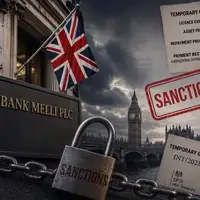
The United States on Thursday imposed new Iran-related sanctions in response to Tehran's "nuclear escalations and lack of cooperation with the UN nuclear watchdog."
The sanctions come in response to Iran’s “continued nuclear escalations and failure to cooperate with the IAEA,” according to the US Treasury Department and Secretary of State Antony Blinken.
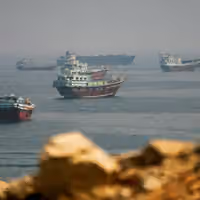
The sanctions have targeted three UAE-based companies linked to Iran’s petroleum and petrochemical trade including Al Anchor Ship Management FZE, Almanac Ship Management LLC, and Sea Route Ship Management FZE as well as 11 vessels connected to them, as per the Treasury Department website.
"Over the past month, Iran has announced steps to further expand its nuclear program in ways that have no credible peaceful purpose. Iran’s actions to increase its enrichment capacity are all the more concerning in light of Iran’s continued failure to cooperate with the IAEA and statements by Iranian officials suggesting potential changes to Iran’s nuclear doctrine," said Blinken in a statement on Thursday.
“We are committed to using all available tools to prevent Iran from developing a nuclear weapon,” Blinken said in a statement on X.
Recently, Group of Seven (G7) leaders warned Iran against advancing its nuclear enrichment program.
Iran is set to triple or even quadruple its uranium enrichment at Fordow, one of its most secretive nuclear sites, according to recent reports by the Institute for Science and International Security (ISIS) and the Washington Post.
Experts warned that within a month, Iran could produce enough weapons-grade uranium for five nuclear weapons at Fordow.
Earlier in June the UN nuclear watchdog's Board of Governors passed a resolution censuring Iran and demanding that it resolve outstanding issues with the IAEA over its advancing nuclear program.
In its June report, the IAEA said Iran aims to continue expanding its nuclear program in ways that "have no credible peaceful purpose."
The IAEA demanded Iran step up cooperation with the watchdog and reverse its recent barring of inspectors.

Iran's relations with the United States appear to be at the heart of the country's plethora of issues, as highlighted by state television and the Supreme Leader Ali Khamenei's selection of six candidates to replace former President Ebrahim Raisi.
The last two rounds of presidential election debates, aired on state television on Monday and Tuesday, revealed a consensus among all candidates. They agreed that the nation's most urgent expectation from the government and the new President is to solve the financial problems that have persisted for many years, especially since 2018.
The next most urgent expectation appears to be the lifting of sanctions.
Both of these expectations are fundamentally related to the country's foreign policy crisis, and more accurately regarding Iran's ties with the US.
While broadcasting the monologues that state TV claims are "debates" among the candidates, the broadcaster stated that viewers have indicated the most urgent problems they expect the next president to solve are, in order of significance:
Among these expectations, economic and financial demands include solving economic problems, improving welfare, reducing unemployment, addressing financial corruption, and lowering the cost of medical treatment.
On the other hand, the expectations of lifting sanctions and negotiating with the US pertain to foreign policy and relations with the US.
Obviously, the improvement of the financial situation depends on resolving foreign policy issues and maintaining ties with the US. The mention of improving relations with "other countries" is also a euphemism for resuming ties with the US.
Lifting internet filtering and easing the enforcement of the dress code (hijab) are two social issues that highlight the difference between the lifestyle the nation prefers and the one dictated by Islamic ideology.
Nearly all the candidates, even the most anti-US one, Saeed Jalili, agreed in their remarks on state television that negotiations with Washington are necessary, even if former President Donald Trump returns to power.
In the meantime, many were misled to believe that a 2019 video of Trump speaking during a news conference with the Japanese leader indicated a new development, suggesting Trump was eager to maintain ties with the current leadership of the Islamic Republic.
Some netizens went so far as to suggest that the US leadership does not care about Iranians' political demands and is ready to compromise. Iranian leaders seemed pleased with this incorrect conclusion, which was based on fake news.
Some social media users opined, however, that it was most certainly not possible for Khamenei to allow a compromise with Trump, given that he was the man who ordered the killing of former Islamic Revolutionary Guards Quds Force Commander Qasem Soleimani.
Be that as it may, the call made by all six candidates for negotiating with the US was in sharp contradiction with Supreme Leader Khamenei, who said on Tuesday that candidates should not turn to the United States and should instead do business with Russia and China.
If the candidates are serious about negotiating with the US to improve the populace’s financial situation, they need to think twice if they wish to remain loyal and obedient to Khamenei.
This would also indicate that Iran’s relations with the US are likely to remain a central dilemma for the Islamic Republic's problems for at least another four years.

The fate of the so-called "Resistance Front" is tied to that of its main sponsor, the Islamic Republic of Iran, the Secretary General of Lebanon's Hezbollah said.
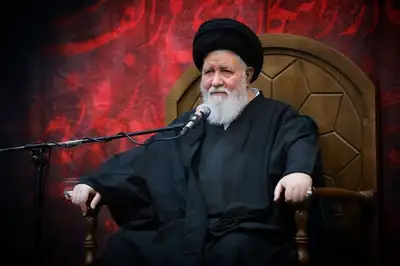
"Today the Islamic Republic does not just decide the Iranian nation's path... It rather decides the path and fates of regional nations and Resistance," Hassan Nasrallah said in a video message to a ceremony commemorating the 40th day since the death of Iran's President Ebrahim Raisi.
"The future of the region hinges on the developments of the Islamic Republic of Iran," he added, calling on Iranian people to elect "the right president" in the Friday's election.
The "Resistance" refers to the alliance of armed militant groups sponsored by Iran, including Hezbollah, Hamas, the Palestinian Islamic Jihad, Houthis in Yemen, and Iraqi Shiite militias.
Established in 1982 by Iran's Revolutionary Guard (IRGC), Hezbollah is the cornerstone of the Tehran-backed alliance hostile to Israel and the United States.
In his Thursday speech, Nasrallah also offered condolences to Raisi's family, praising Tehran's response to the chopper crash that killed him last month.
Ebrahim Raisi and his foreign minister Hossein Amir-Abdollahian died in a helicopter crash on May 19. Both Raisi and Amir-Abdollahian were considered the "driving force" behind what proxy leaders describe as "the achievements of the Resistance Front", including the October 7 attack on Israel or the Iraqi militants' attacks on American interests.
However, the Islamic Republic's policy of supporting its regional armed proxies is not controlled by the Executive Branch of the government and is expected to remain unchanged regardless of who becomes the president.

The United States ambassador to the United Nations Human Rights Council has expressed concern over Iranian transnational repression targeting media outlets, particularly Iran International.
In a statement released on Wednesday, Michèle Taylor condemned attempts to silence journalists “through physical harm, unlawful surveillance, including with commercial spyware, and forced exile.”
The statement addressed the concerns raised by Irene Khan, the UN Special Rapporteur on freedom of opinion and expression. Khan documented an alarming rise in journalists being forced into exile and facing violence. The trend, she argued, coincides with the worldwide growth of authoritarianism and suppression of media freedoms.
Unfortunately, exile does not guarantee journalists' safety. Taylor emphasized the urgent need for more significant support for journalists in exile, highlighting their exposure to grave risks such as assassination attempts, assaults, enforced disappearances, and retaliation against their families. She also underscored the escalating use of digital transnational repression in recent years.
The report comes less than three months after Iran International TV host Pouria Zeraati survived a stabbing outside his London residence as he left for work, sustaining leg injuries. Shortly following the incident, the London Metropolitan Police announced that due to prior threats targeting journalists in Persian-language media, the case was assigned to specialized officers from the Met's counter-terrorism division.
Iran International has faced relentless threats from the Iranian government, with numerous journalists facing grave threats in 2022 and 2023. In March, a leaked document disclosed that Tehran’s Revolutionary Court had convicted 44 foreign-based journalists and media activists in absentia two years earlier on "propaganda against the government," including Aliasghar Ramezanpour, executive editor of Iran International.
In 2022, escalating threats prompted Iran International to relocate its offices temporarily from London to Washington, as domestic security services could no longer guarantee the safety of its staff. Shortly before the incident, Iran's intelligence minister labeled Iran International a terrorist organization, opening the door to further actions against the network and its journalists.
In May, Iran International was honored with the 2024 Geneva Summit Courage Award for its fearless reporting on the daily abuses of the Islamic Republic of Iran.

A nationwide strike by contract workers in Iran's oil and gas industry that began last week has now spread to over 110 companies, involving more than 20,000 workers.
Launched by the unofficial Council for Organizing Oil Contract-Workers' Protests, the strike began on June 19. The workers are demanding the removal of intermediary contractors, wage increases, a 14-days-on, 14-days-off work schedule, improved dormitory conditions, and enhanced safety measures. The Council has warned that the strikes will intensify if these demands are not met.
Last week, the strike included 8,000 oil contract workers from over 60 contracting companies.
With the number of strikers now at 20,000, the protest action is rapidly gaining momentum.
These protests are part of a wave of labor unrest in Iran over delayed wages, low pay, and layoffs that have intermittently disrupted many industrial sectors since 2018.
In the past decade, many components of the oil and gas industry have been farmed out to influential regime insiders as intermediary contractors, who underpay workers and force them to work in difficult conditions. Traditionally, oil workers enjoyed the best salaries and benefits in Iran.
Djalali, a Swedish-Iranian currently on death row in Iran, has started a hunger strike to protest being left out of the recent prisoner swap deal that secured the release of two Swedes jailed in Tehran.
The two Swedes were released in return for former Iranian jailor Hamid Noury who was serving a life sentence in Sweden over his role in Iran’s mass executions of the 1980s.
“My husband, Ahmadreza Djalali, a Swedish-Iranian political prisoner facing imminent execution by the Islamic Republic, is going on hunger strike starting June 26th, after being abandoned by the Swedish government and excluded from the recent prisoner swap that secured the release of other Swedish citizens,” Djalale’s wife Vida Mehrannia wrote on X.
Arash Sadeghi, a former political prisoner, expressed grave concerns for Djalali, whom he met in Ward 4 of Evin Prison. Noting Djalali's severe emaciation from previous hunger strikes, Sadeghi warned that Djalali's life is now at serious risk.
Djalali, a specialist in emergency medicine was arrested in April 2016 during a visit to Iran and remains imprisoned in Tehran’s notorious Evin prison. He was accused of espionage and later sentenced to death in October 2017 by a Revolutionary Court in Tehran.
In December 2017, Iranian state TV aired forced confessions by Djalali which was widely condemned by human rights groups and viewed as a means to legitimize the death sentence verdict.