Fate of 'Resistance Front' Tied to Islamic Republic's Fate: Hezbollah Chief

The fate of the so-called "Resistance Front" is tied to that of its main sponsor, the Islamic Republic of Iran, the Secretary General of Lebanon's Hezbollah said.

The fate of the so-called "Resistance Front" is tied to that of its main sponsor, the Islamic Republic of Iran, the Secretary General of Lebanon's Hezbollah said.
"Today the Islamic Republic does not just decide the Iranian nation's path... It rather decides the path and fates of regional nations and Resistance," Hassan Nasrallah said in a video message to a ceremony commemorating the 40th day since the death of Iran's President Ebrahim Raisi.
"The future of the region hinges on the developments of the Islamic Republic of Iran," he added, calling on Iranian people to elect "the right president" in the Friday's election.
The "Resistance" refers to the alliance of armed militant groups sponsored by Iran, including Hezbollah, Hamas, the Palestinian Islamic Jihad, Houthis in Yemen, and Iraqi Shiite militias.
Established in 1982 by Iran's Revolutionary Guard (IRGC), Hezbollah is the cornerstone of the Tehran-backed alliance hostile to Israel and the United States.
In his Thursday speech, Nasrallah also offered condolences to Raisi's family, praising Tehran's response to the chopper crash that killed him last month.
Ebrahim Raisi and his foreign minister Hossein Amir-Abdollahian died in a helicopter crash on May 19. Both Raisi and Amir-Abdollahian were considered the "driving force" behind what proxy leaders describe as "the achievements of the Resistance Front", including the October 7 attack on Israel or the Iraqi militants' attacks on American interests.
However, the Islamic Republic's policy of supporting its regional armed proxies is not controlled by the Executive Branch of the government and is expected to remain unchanged regardless of who becomes the president.
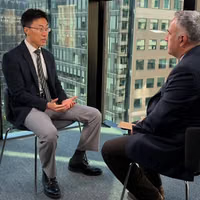
The United States ambassador to the United Nations Human Rights Council has expressed concern over Iranian transnational repression targeting media outlets, particularly Iran International.
In a statement released on Wednesday, Michèle Taylor condemned attempts to silence journalists “through physical harm, unlawful surveillance, including with commercial spyware, and forced exile.”
The statement addressed the concerns raised by Irene Khan, the UN Special Rapporteur on freedom of opinion and expression. Khan documented an alarming rise in journalists being forced into exile and facing violence. The trend, she argued, coincides with the worldwide growth of authoritarianism and suppression of media freedoms.
Unfortunately, exile does not guarantee journalists' safety. Taylor emphasized the urgent need for more significant support for journalists in exile, highlighting their exposure to grave risks such as assassination attempts, assaults, enforced disappearances, and retaliation against their families. She also underscored the escalating use of digital transnational repression in recent years.
The report comes less than three months after Iran International TV host Pouria Zeraati survived a stabbing outside his London residence as he left for work, sustaining leg injuries. Shortly following the incident, the London Metropolitan Police announced that due to prior threats targeting journalists in Persian-language media, the case was assigned to specialized officers from the Met's counter-terrorism division.
Iran International has faced relentless threats from the Iranian government, with numerous journalists facing grave threats in 2022 and 2023. In March, a leaked document disclosed that Tehran’s Revolutionary Court had convicted 44 foreign-based journalists and media activists in absentia two years earlier on "propaganda against the government," including Aliasghar Ramezanpour, executive editor of Iran International.
In 2022, escalating threats prompted Iran International to relocate its offices temporarily from London to Washington, as domestic security services could no longer guarantee the safety of its staff. Shortly before the incident, Iran's intelligence minister labeled Iran International a terrorist organization, opening the door to further actions against the network and its journalists.
In May, Iran International was honored with the 2024 Geneva Summit Courage Award for its fearless reporting on the daily abuses of the Islamic Republic of Iran.

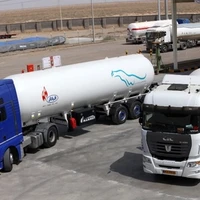
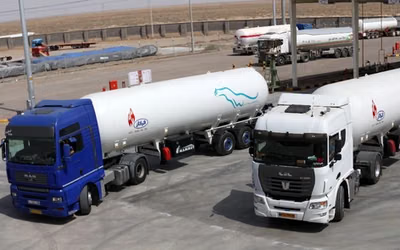
A nationwide strike by contract workers in Iran's oil and gas industry that began last week has now spread to over 110 companies, involving more than 20,000 workers.
Launched by the unofficial Council for Organizing Oil Contract-Workers' Protests, the strike began on June 19. The workers are demanding the removal of intermediary contractors, wage increases, a 14-days-on, 14-days-off work schedule, improved dormitory conditions, and enhanced safety measures. The Council has warned that the strikes will intensify if these demands are not met.
Last week, the strike included 8,000 oil contract workers from over 60 contracting companies.
With the number of strikers now at 20,000, the protest action is rapidly gaining momentum.
These protests are part of a wave of labor unrest in Iran over delayed wages, low pay, and layoffs that have intermittently disrupted many industrial sectors since 2018.
In the past decade, many components of the oil and gas industry have been farmed out to influential regime insiders as intermediary contractors, who underpay workers and force them to work in difficult conditions. Traditionally, oil workers enjoyed the best salaries and benefits in Iran.

The commander of the IRGC's Quds Force, Esmail Ghaani (Qaani), has praised former Foreign Minister Hossein Amir-Abdollahian for being the voice of Iran's armed proxies abroad.
On Thursday, Ghaani said, “While everyone was trying to silence the voice of resistance and the young people of the resistance were defending themselves in the battlefield, someone spoke for them on the international stage. That person was Amir-Abdollahian, the voice of the resistance.”
The Quds Force commander’s comments come amid growing concerns of an all-out Israel-Hezbollah war. Alongside the ongoing conflict in Gaza, the heavily armed, Iran-backed Hezbollah group has been exchanging fire with Israel for over eight months.
The Quds Force is IRGC's extra-territorial wing, which controls all armed groups supported by the Islamic Republic. Its former commander was Qasem Soleimani, a notorious operator who oversaw the expansion of Iran's armed proxy groups in Iraq, Syria, Yemen and elsewhere. He was targeted in a US airstrike in 2020 in Baghdad.
Ghaani made his remarks during the fortieth-day anniversary of Amir-Abdollahian's death. He was killed alongside former President Ebrahim Raisi, in a freak helicopter crash last month. The incident has triggered a snap election to be held on Friday.
While Iran continues its anti-Western and anti-Israeli policy, Ghaani reiterated the Supreme Leader’s red line about negotiating with the US. “Today, as you prepare to elect a new president, it is crucial to choose someone who will continue the path of martyr Raisi and the heroic figures who stood firm and acted decisively,” he stated.
“These men fought against the US and demonstrated that actions can be taken without relying on the US. Be aware that those advocating for solutions through relations with the US are unwilling to fight bravely if given authority; When you speak from a position of authority and power, even the US will be compelled to yield."
On Tuesday, Supreme Leader Ali Khamenei subtly indicated his favored presidential candidate by firmly rejecting negotiations with the US.
He asserted, "Some of our politicians believe they must align themselves with one power or another, or that the path to progress necessarily leads through the US; this is a grave misconception. Those who look beyond our borders fail to recognize and value our inherent capacities; naturally, they lack the vision to utilize them."
It essentially disqualifies three of the four approved presidential candidates; Mohammad Bagher Ghalibaf, Mostafa Pourmohammadi, and Masoud Pezeshkian.
Pezeshkian, in particular, is seen as disadvantaged due to his association with former Foreign Minister Mohammad Javad Zarif, the architect of the 2015 nuclear deal (JCPOA), who advocates for dialogue with other countries, including the US, to lift current sanctions.

A group of UN special rapporteurs have called on Iran to "immediately and unconditionally" release Nobel Peace Prize laureate Narges Mohammadi, and all other female human rights defenders.
The experts, including Javaid Rehman, the UN Special Rapporteur on Human Rights in Iran, said these women are jailed for their peaceful activism, which includes defending gender equality and human rights.
Mohammadi is currently serving multiple sentences which total over 13 years in Tehran’s Evin prison for her human rights activism, including a new case brought against her over advocating for the rights of female inmates subjected to sexual offenses by government officials.
The experts condemned her unfair trials and extended sentences, including an additional year added on 18 June for "propaganda against the state."
"We are alarmed about the unfair proceedings and lengthy sentences handed to human rights defender, Narges Mohammadi, directly related to her peaceful exercise of her rights to freedom of expression and assembly in the pursuit of gender equality in Iran," the experts said.
"Unduly covering charges under the framework of 'national security' or 'propaganda against the state' in order to silence critical voices needs to stop,” they added.
The experts noted an increase in arrests of women's rights activists in recent years.
Iranian officials have warned that individuals protesting against compulsory veiling may face national security charges. "Women human rights defenders challenging the imposition of a compulsory dress code on women are acting in defense of universally guaranteed human rights. We urge the government of Iran to remember that," the experts said.
They reiterated that the use of repressive laws to criminalize freedom of expression and peaceful assembly is incompatible with Iran's international human rights obligations.
"The use of repressive legislation to criminalize the exercise of freedom of expression and peaceful assembly is incompatible with Iran’s obligations under international human rights law," they emphasized.

Iran's vice president for women and family affairs has revealed that late President Ebrahim Raisi had banned women from holding executive positions.
The remarks come as Ensieh Khazali herself has reached the position of vice president.
She said “executive forces and organizations are tasked with implementing their [women’s] plans under the guidance of women as operational headquarters, with women themselves serving as command and planning centers focusing on initiatives for women and families".
Ebrahim Raisi and his delegation, including foreign minister Hossein Amir-Abdollahian, died during a helicopter crash last month, triggering a snap presidential election to be held on Friday with four men running for the office.
Under Raisi, brutal crackdowns on protesters saw over 550 Iranians killed by state security forces and thousands more rounded up and imprisoned since September 2022.
It was also under his watch that hijab enforcement was strengthened after the death in morality policy custody of Mahsa Amini. Her murder led to the Woman, Life, Freedom uprising.
Last year, Raisi told the UN that Iranian women's rights were 'unparalleled' in spite of a policy the UN had the same month ,called "gender apartheid".
The Guardian Council, an unelected 12-member body that vets candidates, prohibits women from running for president in Iran despite some constitutional interpretations suggesting otherwise.
According to the Global Economic Forum's 2024 Global Gender Gap Report, Iran ranks 143rd out of 146 countries regarding gender equality.
Additionally, the Women’s Workplace Equality Index, published by the Council on Foreign Relations, places Iran among the bottom five countries regarding women’s workforce equality, alongside Sudan, Qatar, Syria, and Yemen.