Italy, which holds the rotating presidency of the G7, has called a video meeting of G7 leaders on Sunday to discuss Iran's attack. The call will be held in the early afternoon European time, an Italian government statement said.
"We express our deep concern about a further destabilization of the situation in the region and continue to work to avoid that," Italian Prime Minister Giorgia Meloni said on social media platform X.

Italian Foreign Minister Antonio Tajani said he hoped that the Israeli government shows restraint in its response. "I hope that the Israeli government will adopt a cautious line. I hope that there will be no counterattack to the counterattack."
US President Joe Biden has pledged a coordinated G7 diplomatic response to the drone and missile attack.

Iran's top military commanders have labeled Sunday night's aerial bombardment on Israel a “success" in spite of the fact that 99 percent of the 350 or more projectiles failed to reach Israeli territory.
The Iranian Armed Forces Chief of Staff, Major General Mohammad Bagheri, said that the operation, launched as a retaliatory attack following Israel's alleged airstrike on the Iranian consulate in Damascus this month, was finished, the goals achieved.
Bagheri also revealed that Tehran has issued a warning to the United States via the Swiss embassy.
“If the US joins the Zionists' next aggression through its bases or military bases in the region and this becomes certain, then America's regional bases, personnel, and facilities will not be secure in the region,” Bagheri warned.
In the face of the humiliating failure of Iran's first ever direct hit on Israel, Hossein Salami, the Iranian Revolutionary Guard chief commander, also alleged that the attack had been a success “beyond expectations.”
Interceptions were carried out across the region before ballistic missiles, suicide drones and cruise missiles reached Israeli territory, a joint effort between Israel and its allies the US, UK, France and Jordan. A seven-year-old Bedouin girl has been injured by shrapnel in southern Israel however, from a direct hit which caused minimal damage to Nevatim Air Base which was fully operational within hours. No other casualties are known.
Iran’s attack came after top level calls for retaliation for the Damascus consulate attack which killed one of Iran's most high-ranking members of the Islamic Revolutionary Guard, along with several other officers.
Israeli Prime Minister Benjamin Netanyahu vowed his country would achieve victory after the military said it shot down almost all the more than 300 drones and missiles launched by Iran in a sharp escalation of the Middle East conflict.
"We intercepted, we repelled, together we shall win," Netanyahu posted on X.
The Israeli military said the armed forces had shot down more than 99% of the Iranian drones and missiles and were discussing follow-up options.
Israel's Channel 12 TV cited an unnamed Israeli official as saying there would be a "significant response" to the attack.
The chief of staff of Iran's armed forces, General Mohammad Bagheri has warned the United States not to assist Israel in any military operation, following Iran's attack on Saturday.
"We conveyed this message to the United States through the Swiss embassy that if there is any involvement of the United States in the next aggressive actions of the Zionists through the bases or military facilities it has in the region, and this information becomes certain to us, the United States will not have security in the region, and we will consider it as an aggressor and will respond to it accordingly."
US and UK air forces played an important role in intercepting Iranian drones launched against Israel overnight.


Iran launched more than 350 drones, ballistic and cruise missiles towards Israel Saturday/Sunday night local time, marking the first such attack in the history of the Islamic Republic.
Although the massive strike launched mostly from inside Iranian territory caused little damage, the risk of an Israeli response escalating into a full-blown war looms large.
The attack was anticipated given Iran's vow to retaliate against Israel's targeting of Iran’s consulate in Damascus on April 1. Intelligence assessments had predicted an imminent and significant strike.
The initial wave of the attack struck Israel around 2 am local time, resulting in explosions in the sky as Israeli defense systems intercepted drones and missiles. Some missiles managed to evade interception, hitting an airbase in southern Israel and causing minor damage, according to Israeli army spokesperson Daniel Hagari.
Of 170 UAVs 0 entered into Israeli territory / Of 30 Iranian cruise missiles, 0 entered Israeli air space, 25 downed by Israel. Most of 120 ballistic missiles were intercepted by the arrow defense system, causing minor damage to infrastructure at Nevatim Air Force base by direct hit but still operational.
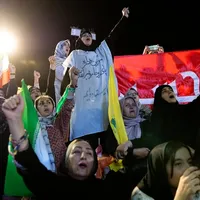
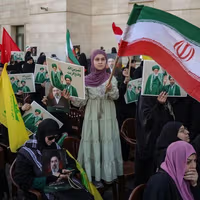
Iran’s state-affiliated media celebrated the operation as a huge success, and the foreign ministry called it “an inherent right of self-defense as recognized under Article 51 of the UN Charter, against Israel's recurring military aggressions.”
However, the attack drew condemnation from UN Secretary-General and several governments, including those of Canada, Germany, France, UK, and the US. President Biden lauded Israel's defense capability, reaffirming the US commitment to its security.
“Israel demonstrated a remarkable capacity to defend against and defeat even unprecedented attacks – sending a clear message to its foes that they cannot effectively threaten the security of Israel,” US President Joe Biden said shortly after the operation was over. He stated once more that his government’s commitment to Israel was “ironclad”.
It’s unclear how Israel would respond to the attack. Unnamed Israeli sources told Iran International that it certainly will. The Israeli War Cabinet did convene during the attacks and authorized Benjamin Netanyahu and two of his ministers to decide on the response –which, according to Israel’s Channel 14, would target “Iranian territory.”
What is also not clear is the timing of the Israeli response. Netanyahu would most likely discuss his options with Biden, who fears the tit-for-tat to lead to an all-out regional war and bog down the US military in yet another conflict in the Middle East less than six months before the 2024 US elections.
The Biden administration seems to want to downplay the significance of Iran’s attack in a bid to restrain Netanyahu.
CNN quoted a senior administration official who said President Biden has told Netanyahu that “Israel should consider tonight a win” because Iran’s attacks had been “largely unsuccessful” and nothing of “value” was hit. CNN also reported that Biden had made it clear to Netanyahu that the United States “will not participate in any offensive operation against Iran.”
Biden’s stance is bound to anger his more hawkish critics, who accuse him of abandoning Israel and even appeasing Iran. He will feel the heat in Washington, and in the Capitol, in particular, in the days to come, as ardent supporters of Israel push for a tougher stance on Iran.
“This is the moment for the US to show we stand together with our allies,” Senator Roger Wicker (R-MS), Ranking Member of the Armed Service Committee posted on X. “Our shared enemies, including Iran & their proxies, need to know our commitment is unwavering. We must join with Israel to ensure that Iran’s aggression is met with resolute action & resounding strength.”
Senator Marsha Blackburn (R-TN) was another lawmaker who called for US involvement in a military operation against Iran.
“Iran has begun launching drone strikes on Israel,” she posted on X shortly after news broke of Iranian drones heading for Israel. “We must move quickly and launch aggressive retaliatory strikes on Iran.”
Former President Donald Trump was also quick to weigh in on the subject, albeit from a more personal angle.
“Israel is under attack! This should never have been allowed to happen,” he posted on his digital platform Truth Social. “This would never have happened if I was President,” he said, in a comparatively subtle sneer at Biden –who, in all likelihood, will face him in the battle for the White House this November.
Follow developments on Iran International's Live coverage of ongoing tensions between Iran and Israel.
"Iran would not hesitate to take further necessary defensive measures to protect its legitimate interests against any act of military aggression or unlawful use of force," Iran's foreign ministry said following the attack on Israel on Saturday night.
The official statement called the attack an "inherent right of self-defense as recognized under Article 51 of the Charter, against Israel's recurring military aggressions."
"The Islamic Republic of Iran reaffirms its commitment to the purposes and principles of...international law, while reiterating its determination to forcefully defend its sovereignty, territorial integrity and national interests," the statement read.