US Targets Houthi Anti-Ship Missiles In New Strike - Reuters

The US military on Tuesday carried out a new strike in Yemen targeting anti-ship ballistic missiles Of Iran-backed Houthi forces, two US officials told Reuters.

The US military on Tuesday carried out a new strike in Yemen targeting anti-ship ballistic missiles Of Iran-backed Houthi forces, two US officials told Reuters.
The strike was the latest Western military action against the militant group over its targeting of Red Sea shipping.
US officials, speaking on the condition of anonymity, said the strike on Tuesday targeted four anti-ship missiles. The strike has not been previously reported.
Houthi attacks on Red Sea shipping have continued even after President Joe Biden last week ordered an initial wave of strikes to degrade Houthi capabilities.
The Houthis, who control most of Yemen's Red Sea coast, have claimed their attacks on commercial ships are aimed at supporting the Palestinians in Israel's war in Gaza. The attacks began in mid-November after Iran’s Supreme Leader Ali Khamenei called for a blockade of Israel.
On Tuesday, Khamenei praised the Houthis, saying that they proved they were not afraid of the United States.
The Houthi movement has pledged to expand its targets in the Red Sea region to include US ships and has vowed to keep up attacks after US and British forces carried out dozens of strikes last week against radar and missile capabilities.
On Monday, Houthi forces struck the US-owned and operated dry bulk ship Gibraltar Eagle with an anti-ship ballistic missile, the US military said.


Baghdad has exhibited an unusually strong reaction to the Iranian missile strike Monday night on targets in Erbil, northern Iraq, by recalling its ambassador.
Iraq has close ties with the Islamic Republic of Iran, both Shia-dominated governments, but the Iranian attack that destroyed the house of a well-know Iraqi Kurd, killing him and his family, solicited Baghdad’s angry response on Tuesday.
Tehran claimed that it targeted an Israeli “spy center” but Iraqi Kurdish leaders condemned the ballistic missile launch that killed a wealthy and influential member of their community.
Iran's Revolutionary Guards and regime officials in Tehran took a victory lap on Tuesday while also highlighting that they fired ballistic missiles at northern Syria, in their longest-range attack to date. They claimed they hit ISIS bases, where Afghan Islamic State forces were being trained. The Afghan ISIS had claimed responsibility for a January 13 twin suicide bombing in Iran that killed nearly 100 people.
It remains unclear why the IRGC did not target the specific group allegedly responsible for the terror attack in Afghanistan.
Iran’s missile strike in Iraq, however, is likely to deepen worries about worsening instability across the Middle East since the war between Israel and Hamas started on October 7, with Iran's militant proxy forces also entering the fray from Lebanon, Syria, Iraq and Yemen.

There has also been concern that Iraq could again become a theater for regional conflict after a series of US strikes on Iran-linked militant groups that are also part of Iraq's formal security forces. Those strikes came in response to dozens of attacks on US forces in the region carried out since mid-October.
The Guards said the late Monday attack, Iran's first direct military strike in the region linked to the Gaza war, was in response to Israeli 'atrocities" against several of its commanders and those of Iranian-allied forces around the Middle East since the conflict started.
Iraq National Security Adviser Qasim al-Araji condemned the strike as an infringement of sovereignty.
"We are very astonished by what happened because the Iraqi government was not informed," he said.
In protest to the strike, Iraq recalled its envoy from Tehran and summoned Iran's charge d'affaires in Baghdad, with the foreign ministry saying Baghdad would take all legal steps against what it called a violation of sovereignty.
The strike, on a residential area near the US consulate in Kurdistan's capital Erbil, was described by Iraqi Kurdish Prime Minister Masrour Barzani as a "crime against the Kurdish people" in which at least four civilians were killed and six injured.
Multimillionaire Kurdish businessman Peshraw Dizayee and several members of his family were among the dead, killed when at least one rocket crashed into their home, Iraqi security and medical sources said.
Araji denied the house was an Israeli spy center.
"To respond to the claim that there is a Mossad headquarters we visited the place and toured every corner of this house, and everything indicates that it is a family house belonging to an Iraqi businessman from Erbil," he told reporters.

'RECKLESS'
Israeli government spokesperson Avi Hayman said he would not speculate, when asked at a press briefing about Iran's assertion that it struck a Mossad site.
"What I will say is Iran continues to use its proxies to attack Israel on multiple fronts. We condemn Iran's activities, and we call on the international community to stand up in defiance of Iran and call for peace in the region as soon as possible," he said.
Defending the attack, Iranian Foreign Ministry spokesman Nasser Kanaani said Tehran respected the sovereignty and territorial integrity of other countries, but it was Iran's "legitimate right to deter national security threats".
The Guards said the attacks would continue "until avenging the last drops of martyrs' blood", referring to the killing of three members of the Guards in Syria last month who had served as military advisers there.
France and Britain accused Iran of violating Iraq's sovereignty and Washington condemned the attacks as "reckless", while American officials said no US facilities were struck and there were no US casualties.
With reporting by Reuters

Iran has claimed its attacks on the Iraqi Kurdistan region were in line with “the defense of the country's sovereignty, security, and ongoing counterterrorism efforts.”
Nasser Kanaani, the spokesperson for the Iranian Foreign Ministry, stated on Tuesday that the operation formed a crucial component of the Islamic Republic's strategy to administer "punishment against those who threaten the country's security."
He claimed that Iran is “committed to exercising its legitimate and legal right to address threats to national security, safeguard its citizens, and prosecute criminals.”
Though not mentioned, the declaration may be linked to the Kerman attacks on January 3, which resulted in a loss of nearly one hundred lives and scores of injuries along the route leading to the burial site of former IRGC commander Qasem Soleimani. The attack was later claimed by the Islamic State.
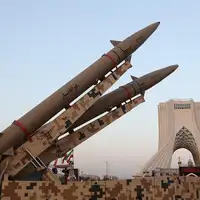
The Islamic Revolutionary Guard Corps (IRGC) also announced on Tuesday that their operations “successfully” targeted gathering places of key commanders and elements associated with “recent terrorist activities'', particularly those linked to ISIS, in Syria. The IRGC's Aerospace Force Commander, Amir-Ali Hajizadeh, disclosed that four Khaibar-class ballistic missiles were launched from southern Khuzestan to a destination in Idlib, Syria, controlled by a group labeled as a "terrorist group."
Hajizadeh provided additional details, saying that, in addition to the operations in Khuzestan, in the south, four missile launches originated from Kermanshah, west of Iran and seven were launched from West Azarbaijan, targeting "Zionist regime facilities in the Kurdistan region of Iraq."
The reported target of the IRGC's attack was the residence of Kurdish businessman Peshraw Dizayee, a multimillionaire involved in oil exports from Iraqi Kurdistan to Israel.
The IRGC-affiliated Tasnim news agency alleged that the attacks were in direct response to the assassination of specific IRGC and "resistance front" commanders by Israel.

Iraq has summoned the Iranian charge d'affaires in Baghdad over the attacks in several areas of Erbil on Monday.
The state news agencies reported on Tuesday that the Iraqi government expressed deep concern regarding civilian casualties in residential zones, condemning what it labeled as Iran's "aggression" on Erbil.
The condemnation follows a statement from Iran's Revolutionary Guards, taking responsibility for an assault on what they referred to as Israel's "spy headquarters" in Iraq's Kurdistan region. In response, the Iraqi government announced its intention to take legal measures against such actions, considering them a violation of Iraq's sovereignty and a threat to its citizens' security. This includes filing a complaint with the United Nations Security Council.
Iran's Revolutionary Guards reported their attack on Israel's "spy headquarters" in Iraq's semi-autonomous Kurdistan region on Monday. Additionally, they claimed to have carried out strikes against ISIS in Syria.
The Israeli "spy headquarters" mentioned in the IRGC statement appears to be the residence of the Kurdish businessman Peshraw Dizayee, a multimillionaire who facilitated the export of oil from Iraqi Kurdistan to Israel. Dizayee and several members of his family lost their lives in the attack on his house, as reported by local medical sources. Dizayee had close ties to the ruling elite in Iraqi Kurdistan.
Shortly after the incident, Iranian state-affiliated media released footage purportedly showing the aftermath of the missile attack on Dizayee's residence.
The developments unfold against the backdrop of escalating tensions in the Middle East, exacerbated by the conflict between Israel and the Palestinian militia Hamas since October 7. Iran's allies, including Lebanon, Syria, Iraq, and Yemen, have become involved, further complicating the situation in the region.

Israel's internal security agency, Shin Bet, uncovered a plot run by Iranian intelligence to spy on Israeli defense chiefs through social media.
Fake online profiles were used by Iranian operatives asking Israelis to photograph residences of their homes and the homes of other governmental officials, known to speak against Iran.
The social media accounts had even managed to initiate gatherings near the families of hostages held in Gaza by Iran-backed militia, Hamas.
Through surveys, the social media accounts -- on Instagram, Telegram and TikTok -- had managed to begin gathering personal information on Israeli civilians in an attempt to utilize them in later operations.
The latest revelation was apparently run by the same Iranian network behind attempts uncovered last month to recruit Israelis over social media to carry out spying missions, including an assassination, in exchange for money.
Shin Bet said that since the beginning of the war in the Gaza, triggered by the Hamas invasion on October 7, killing at least 1,200 and taking 246 more hostage, the agency has identified that “the activity efforts of Iranian security forces have greatly intensified, while using digital space for the purposes of intimidation, conveying messages or advancing terror activity.”
The agency said: “Its purpose is to assist Hamas in its war and to damage Israel’s national resilience and war effort, sowing demoralization and deepening social divisions."

In a show of force amid heightened regional tensions, Iran’s Revolutionary Guards unleashed a barrage of ballistic missiles against “enemies” in Iraq and Syria.
Iranian missiles hit several locations in Syria’s northwest and Iraqi Kurdistan Monday night, in what IRGC claimed to be retaliatory attacks against ISIS and Israeli spies. The attack on targets in Idlib, Syria, Tehran claimed its longest range missile strike ever on targets more than 1,200 kilometers away from its western borders.
Explosions were heard near the US consulate in Erbil with no damage to American interests, according to US officials, but killing at least four civilians and injuring six more, according to Kurdish officials.
The IRGC issued three statements to take responsibility for, and explain, the attacks –which it said was “in response to” the recent bombing in Iran and the killing of “resistance” commanders, presumably, by Israelis in Syria and Lebanon.
In the past few weeks, Iran’s top man in Syria, Sayyed Razi, and several high-ranking figures from Hamas, Hezbollah and other Iran-sponsored groups have been killed in similar fashion –by precision strikes, widely believed to have been carried out by Israel.
Israeli officials had no immediate reaction to IRGC’s Monday attacks. The US government, however, issued a brief statement, “strongly” condemning the missile strike at Erbil.
“We oppose Iran’s reckless missile strikes and support the Government of Iraq and the Kurdistan Regional Government’s efforts to meet the aspirations of the Iraqi people,” US state department spokesperson Mathew Miller posted on X.
Kurdish prime minister Mansour Barzani was also quick to slam Iran for the “cowardly” attacks and called it a “flagrant violation of Iraq’s and the Kurdistan Region’s sovereignty.”
“I also call on our partners in the international community,” he posted on X, “not to remain silent in the face of repeated attacks against the people of Kurdistan.”
Iran’s IRGC have targeted Iraqi Kurdistan before, claiming that the region is used by Iranian separatist groups and Israeli agents.
It seems the Israeli “spying headquarters” mentioned in the IRGC statements, was in fact the home of the multimillionaire Kurdish businessman Peshraw Dizayee, who facilitated export of oil from Iraqi Kurdistan to Israel.
Dizayee died in the attack on his house, along with several members of his family, according to local medical sources. He was close to the ruling elite in Iraqi Kurdistan.
Not long after the attack, Iranian state-affiliated media published footage purporting to show the aftermath of the missile attack on Dizayee’s house. Some images include a dead child and are too gruesome to be republished here.
Much less is known about the missile attacks on Syria, which the IRGC claims to have hit ISIS sites in retaliation for January 3 twin bombings at a memorial event for Iran’s most influential commander Qassem Soleimani –killed in Iraq by an American drone attack upon Donald Trump’s order.
The IRGC had warned that it would retaliate for the bombings and the killing of its commander and other proxies’ figures. It has done so, but against ‘soft targets’, not the Israelis or the Americans. It follows a familiar pattern where the regime in Iran speaks and plays tough while taking extra care to avoid direct confrontation with stronger foes.
“They always find baseless excuses to attack Erbil,” the Kurdish Regional Government said in a statement late Monday night local time. “Erbil as a stable region has never been a source of threat to any party.”
Since Hamas attacked Israel on October 7, the image of the Islamic Republic as a powerful and defiant force against Israel and the United States has been partly damaged, as it has avoided direct involvement to defend its Palestinian proxy. The January 3 terror attack in Kerman that killed nearly 100 people further exposed the regime’s weakness in not being able to provide domestic security.
The missile launched on Monday can be seen as a way for Tehran to demonstrate power, while still avoiding direct confrontation with the US and Israel.