Israel's Shin Bet Uncovers Iranian Intel Plot
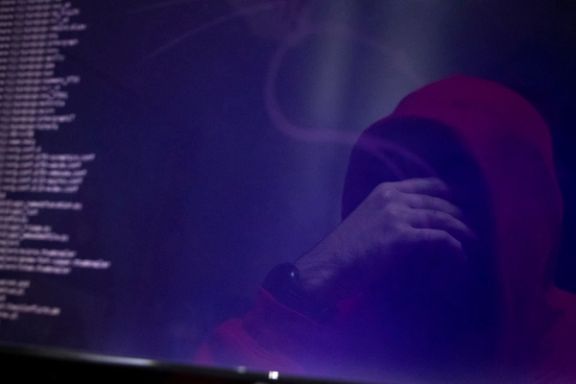
Israel's internal security agency, Shin Bet, uncovered a plot run by Iranian intelligence to spy on Israeli defense chiefs through social media.
Israel's internal security agency, Shin Bet, uncovered a plot run by Iranian intelligence to spy on Israeli defense chiefs through social media.
Fake online profiles were used by Iranian operatives asking Israelis to photograph residences of their homes and the homes of other governmental officials, known to speak against Iran.
The social media accounts had even managed to initiate gatherings near the families of hostages held in Gaza by Iran-backed militia, Hamas.
Through surveys, the social media accounts -- on Instagram, Telegram and TikTok -- had managed to begin gathering personal information on Israeli civilians in an attempt to utilize them in later operations.
The latest revelation was apparently run by the same Iranian network behind attempts uncovered last month to recruit Israelis over social media to carry out spying missions, including an assassination, in exchange for money.
Shin Bet said that since the beginning of the war in the Gaza, triggered by the Hamas invasion on October 7, killing at least 1,200 and taking 246 more hostage, the agency has identified that “the activity efforts of Iranian security forces have greatly intensified, while using digital space for the purposes of intimidation, conveying messages or advancing terror activity.”
The agency said: “Its purpose is to assist Hamas in its war and to damage Israel’s national resilience and war effort, sowing demoralization and deepening social divisions."






In a show of force amid heightened regional tensions, Iran’s Revolutionary Guards unleashed a barrage of ballistic missiles against “enemies” in Iraq and Syria.
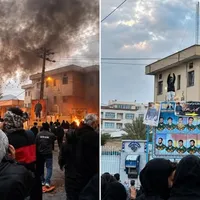
Iranian missiles hit several locations in Syria’s northwest and Iraqi Kurdistan Monday night, in what IRGC claimed to be retaliatory attacks against ISIS and Israeli spies. The attack on targets in Idlib, Syria, Tehran claimed its longest range missile strike ever on targets more than 1,200 kilometers away from its western borders.
Explosions were heard near the US consulate in Erbil with no damage to American interests, according to US officials, but killing at least four civilians and injuring six more, according to Kurdish officials.
The IRGC issued three statements to take responsibility for, and explain, the attacks –which it said was “in response to” the recent bombing in Iran and the killing of “resistance” commanders, presumably, by Israelis in Syria and Lebanon.
In the past few weeks, Iran’s top man in Syria, Sayyed Razi, and several high-ranking figures from Hamas, Hezbollah and other Iran-sponsored groups have been killed in similar fashion –by precision strikes, widely believed to have been carried out by Israel.
Israeli officials had no immediate reaction to IRGC’s Monday attacks. The US government, however, issued a brief statement, “strongly” condemning the missile strike at Erbil.
“We oppose Iran’s reckless missile strikes and support the Government of Iraq and the Kurdistan Regional Government’s efforts to meet the aspirations of the Iraqi people,” US state department spokesperson Mathew Miller posted on X.
Kurdish prime minister Mansour Barzani was also quick to slam Iran for the “cowardly” attacks and called it a “flagrant violation of Iraq’s and the Kurdistan Region’s sovereignty.”
“I also call on our partners in the international community,” he posted on X, “not to remain silent in the face of repeated attacks against the people of Kurdistan.”
Iran’s IRGC have targeted Iraqi Kurdistan before, claiming that the region is used by Iranian separatist groups and Israeli agents.
It seems the Israeli “spying headquarters” mentioned in the IRGC statements, was in fact the home of the multimillionaire Kurdish businessman Peshraw Dizayee, who facilitated export of oil from Iraqi Kurdistan to Israel.
Dizayee died in the attack on his house, along with several members of his family, according to local medical sources. He was close to the ruling elite in Iraqi Kurdistan.
Not long after the attack, Iranian state-affiliated media published footage purporting to show the aftermath of the missile attack on Dizayee’s house. Some images include a dead child and are too gruesome to be republished here.
Much less is known about the missile attacks on Syria, which the IRGC claims to have hit ISIS sites in retaliation for January 3 twin bombings at a memorial event for Iran’s most influential commander Qassem Soleimani –killed in Iraq by an American drone attack upon Donald Trump’s order.
The IRGC had warned that it would retaliate for the bombings and the killing of its commander and other proxies’ figures. It has done so, but against ‘soft targets’, not the Israelis or the Americans. It follows a familiar pattern where the regime in Iran speaks and plays tough while taking extra care to avoid direct confrontation with stronger foes.
“They always find baseless excuses to attack Erbil,” the Kurdish Regional Government said in a statement late Monday night local time. “Erbil as a stable region has never been a source of threat to any party.”
Since Hamas attacked Israel on October 7, the image of the Islamic Republic as a powerful and defiant force against Israel and the United States has been partly damaged, as it has avoided direct involvement to defend its Palestinian proxy. The January 3 terror attack in Kerman that killed nearly 100 people further exposed the regime’s weakness in not being able to provide domestic security.
The missile launched on Monday can be seen as a way for Tehran to demonstrate power, while still avoiding direct confrontation with the US and Israel.
The Office of the US Special Envoy for Iran has condemned Iran's persistent use of the death penalty as a means to suppress human rights.
Deputy US Special Envoy for Iran Abram Paley highlighted the troubling trend in a statement on Monday, stating that the death penalties were often imposed following what he referred to as "sham trials against defendants who lacked adequate legal counsel."
Paley went on to condemn the Iranian government's record in 2023, emphasizing in his message that the execution of hundreds of citizens reflected a new level of cruelty.
“The Iranian government’s cruelty reached new levels in 2023 with the execution of nearly 800 of its own citizens, many following unfair trials and arbitrary detentions.”
The Norway-based Iran Human Rights (IHRNGO) group played a pivotal role in exposing the severity of the situation. Their recent report disclosed a shocking 33-percent increase in executions in Iran last year, with at least 791 individuals put to death. Over one-fifth of those executed belonged to the predominantly Sunni Baluch community, indicating a disproportionate impact on ethnic minorities.
IHRNGO had previously sounded the alarm, warning of a potential surge in drug-related executions. The warning came in response to a statement from an Iranian lawmaker in Lorestan province, revealing that the cases of 1000-2000 drug death-row inmates were in the implementation stage.
The concerning trend of drug-related executions has been on the rise for the past three years, with a staggering 69% increase between January 1 and October 10, 2023, compared to the same period in
Dissident singer-songwriter Shervin Hajipour’s new song Ashghal (Trash) has broken the record on Instagram in the past year with 35 million plays in the first 24 hours.
In 2022 Hajipour’s song “Baray-e Azadi” (For Freedom), which he composed by taking lines from protesters’ social media posts, turned into an anthem and unofficial manifesto of Iran’s Woman, Life, Freedom protests ignited by the death of 22-year-old Mahsa (Jina) Amini in the custody of ‘morality’ or ‘hijab police’.
The song reflected people’s concerns about class gap, social pressures, economic worries, and environmental problems.
The impactful song which was played nearly 40 million times during the protests won him a Grammy for “Best Song for Social Change”. Protesters in Iran and their supporters around the world called the award a triumph for the anti-government protests.
In his new song Hajipour alludes to his troubles with authorities who have several times, including recently, summoned him to court and implied that they want him to leave Iran, but his message in the song is clear, he will not go.
“I'm that trash who didn't have anyone to post bail for him, …
The one you got rid of one day,
Who is even not allowed to sing [in public] …
Leave, all of you, someday!
This trash will stay here to rebuild this city.
Do not ask me to leave this land.
Wherever I go, my heart will remain here,
I will keep my promise,
The son of Iran will not go back on his word.”
Hajipour was arrested in September 2022 and was released on bail in October, at the hight of anti-government protests that lasted several months. His lawyer, Majid Kaveh, said at the time that he had been charged with "propaganda against the regime" and "inciting people to violence".
Authorities allegedly subjected him to huge psychological pressures during and after his detention to post dictated content on social media and say he was sorry his song was being used by dissident political groups outside Iran. After winning the award he also said in a post he regretted that his award was presented, in absentia, by the US First Lady Jill Biden.
In his new Instagram post Friday which included his new song, Hajipour said he had no idea how long his “fear and uncertain circumstances” would continue.
“All I know is that I didn't care whose lungs the polluted air affected, or which political faction's supporters were empty-pocketed and poor, or who, leftist or right winger, would mourn the extinction of [Iranian cheetah] Pirouz when I wrote For [Freedom],” he wrote about what inspired him, adding that he knew, however, that “We, the ordinary people are victims of every kind of political extremism.”
“And I knew that protesting was necessary for growth and that it was not possible to solve problems without showing them. I knew that we ordinary people also have the right to be passionate about our country and think about its development,” he wrote. “But now, I think maybe I was wrong. Maybe they have a monopoly over the land, maybe the homeland does not belong to us ordinary people. Man is nothing without his homeland other than trash to be tossed.”
Iran's IRGC announced they attacked "espionage centers and gatherings of anti-Iranian terrorist groups" in Iraq and Syria, before midnight local time on Monday.
The Revolutionary Guard issued several communiques saying that the ballistic missile strikes were in retaliation to “recent crimes of terrorist groups in killing innocent compatriots in Kerman and Rask.” It also singled out Israel for killing the Guard's high-ranking officers and proxy forces in air strikes in Syria.
There are unconfirmed reports that some missiles landed near the US-led International Coalition Headquarters & the US consulate in Erbil.
No US facilities were impacted by the missiles strikes, two US officials told Reuters.
Deputy Speaker of Kurdistan's Parliament, Hemn Hawrami, said that "unjustified attacks in Erbil by the IRGC targeted a civilian house" belonging to Peshraw Dizayee, killing him and 4 members of his family. Dizayee was an business mogul and head of Falcon Investment Group. In the past Tehran has accused some Iraqi Kurds of collaborating with Israel.
The IRGC was referring to a twin-bombing on January 3 near the tomb of one of its top commanders, Qasem Soleimani, in Kerman where around 100 people were killed, on the fourth anniversary of his killing by a US strike in Baghdad.
The Afghanistan branch of ISIS took responsibility for the attack that came as a major embarrassment to Iranian security forces.
The IRGC announcement said that it fired ballistic missiles and eliminated “the commanders and main elements linked to the recent terrorist operation.” It did not explain why the retaliation was against ISIS in Syria and not in Afghanistan. Later, Al Mayadeen network, affiliated with the Iranian regime said that IRGC targeted training centers in Syria where Afghanistan ISIS forces were being trained.
In its earlier communique, the IRGC did not mention targets in Iraq, but specifically mentioned Syria. However, Iranian media and Iraqi officials said that targets in Erbil were hit.
In a later statement, however, the IRGC said it had targeted an Israeli "espionage center" in Erbil.
"The Islamic Revolutionary Guard Corps (IRGC) in response to recent aggressions by the Zionist regime resulting in the martyrdom of IRGC commanders and members of the Resistance Front...targeted and destroyed one of the main espionage centers of the Zionist regime (Mossad) in the Kurdistan region of Iraq using ballistic missiles. This center has been the hub for developing espionage operations and designing terrorist activities in the region, especially in our beloved country," the statement said.
Iran has been claiming for a long time that Israel has an “espionage center” in Erbil and fired missiles at a building there in March 2022.
Iranian officials blamed Israel and the United States after the terror attack and claimed that ISIS is a tool that carried out Israeli and US plans.
Iran has emerged as the world leader in internet disruptions, with nearly half of all websites experiencing interruptions in the past nine months.
The Internet and Infrastructure Commission of the Tehran Electronic Commerce Association disclosed the alarming trend, attributing it to the recent deployment of filtering equipment within the domestic network and the government's plans to expand existing internet restrictions.
The country's internet situation has been evaluated based on disruption indicators, restrictions, and speed, placing Iran among the worst 50 nations surveyed for internet quality.
“Increasing online censorship in Iran has become a noticeable trend, with a daily surge in disruptions occurring between 5 PM and 11 PM.”
The association attributes the phenomenon to functional disruptions and processor saturation of filtering equipment.
Technical examinations conducted by the authors of the report reveal that Iranian officials, “due to a lack of knowledge, impose website censorship indiscriminately and at the IP level." Many websites remain on the filtering blacklist without a clear reason provided by the Islamic Republic, leading to their continued restriction.
Furthermore, the Electronic Commerce Association's examinations indicate that Iran's internet speed has slowed down approximately three times in the past five years, as observed in Google loading times.
Despite the presence of numerous decision-making bodies on internet censorship, the report emphasizes the significant role of the country's president in enhancing internet quality and holding others accountable. Under the administration of President Ebrahim Raisi, internet censorship has intensified, and the report notes a decline in Iran's international bandwidth consumption compared to the previous government.