Sunni Leader Urges Iranian Regime To Show Restraint Amid Economic Woes

The outspoken Sunni cleric of Zahedan has urged officials to exercise restraint and compassion amid the current economic crisis during Friday prayers.

The outspoken Sunni cleric of Zahedan has urged officials to exercise restraint and compassion amid the current economic crisis during Friday prayers.
Amid immense financial pressure faced by Iranians all over the country, Molavi Abdolhamid delivered a compelling Friday prayer sermon, emphasizing the need for support from the authorities and compassion for the situation of regular citizens.
Addressing the congregation, Abdolhamid criticized the common practice of attributing inefficiencies and problems to external "enemies." He was referring to the term "enemy," often used by Supreme Leader Ali Khamenei and his loyalists to refer to the United States, he deemed it incorrect to solely blame external factors for internal issues, particularly in relation to domestic economic challenges.
During the Friday prayer, which coincided with the 10th of Muharram and the Day of Ashura, Abdolhamid, the Imam of Zahedan said, "No government, whether Muslim or non-Muslim, should resort to violence against its own people merely to ensure its survival."
He further stressed that the regime, its rulers, and the entire system owe their existence to the people, adding that the right to govern and elect officials lies with the citizens, and therefore, it is essential to listen to their voices and their concerns.
As the sermon concluded on the 43rd Friday of protests in Zahedan, Abdolhamid urged demonstrators to leave the mosque without engaging in chanting or further protests. During the previous two Friday prayers, worshipper and protestors honored Abdolhamid’s request and observe silence as a sign of respect for the sacred days of Muharram.

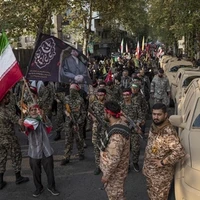
Shiite mourners in Iran refused to trample on the flags of Sweden and the United States during an Ashura mourning procession.
The incident, captured in a video obtained by Iran International, shows supporters of the oppressive Iranian regime placing the Swedish and US flags on the procession route in an attempt to exploit the religious sentiments of the crowd and encourage further public outrage at the recent Quran burnings.
However, the mourners rejected these attempts, refusing to step on the flags and the propagators of the political agenda, were forced to the flags.
This incident is not the first time that Iranians have expressed their refusal to disrespect the US flag.
Back in 2020, following the tragic shooting down of a Ukrainian International Airlines passenger jet by the IRGC, people outside Beheshti University in Tehran similarly resisted trampling upon giant American and Israeli flags that had been painted on the ground.
Prominent figures, including Professor Sadegh Zibakalam, an academic and author who is described as reformist and neo-liberal, have also exemplified their commitment to avoiding acts of disrespect towards foreign symbols. In 2016, Zibakalam chose to show his respect for other nations by shuffling along a nearby railing to avoid stepping on flags painted on the ground

An Iranian labor activist has raised concerns over the increasing prices of red meat and chicken putting increased pressure on household incomes.
Eid-Ali Karimi, Executive Secretary of Qazvin Labor House, made the comments amid the government's delay in holding the meeting of the Supreme Labor Council, which plays a crucial role in determining workers' salaries in the state-controlled economy.
Karimi criticized, "red meat is over 5,000,000 rials ($10) per kilogram, and chicken is over 1,000,000 rials ($2). The increase in these prices places an immense burden on workers." He emphasized that the rising costs of essential items have made it increasingly challenging for households to make ends meet.
"If a worker wants to buy three kilograms of red meat and five kilograms of chicken to feed his family of four per month, he has to spend more than a quarter of his salary. This leaves little room for covering basic expenses like rent, daily necessities, and education for his children," Karimi said.
Officials have stated that the monthly minimum wage, currently less than $150, only suffices for nine days of a family's livelihood. The resulting financial struggles for workers and their families are further exacerbated by soaring inflation rates.
Furthermore, house rents have surged by more than 100%, leaving many workers with a major portion of their earnings dedicated only to housing costs. Karimi noted that this situation forces workers to take on multiple jobs, often working long hours, just to cover basic living expenses.

The bipartisan Mahsa Amini Human Rights and Security Accountability (MAHSA) Act has been submitted to the US Senate, seeking more sanctions on Iranian leadership.
Following a unanimous approval at US House of Representatives Foreign Affairs Committee in April, Senators Marco Rubio (R-FL) and Alex Padilla (D-CA) introduced the bipartisan legislation to the Senate on Thursday, potentially tightening the noose on top leaders of the regime -- the Supreme Leader and the President as well as their inner circles – over human rights abuses and support for terrorism.
“The Ayatollah’s systematic human rights violations against the Iranian people are barbaric," Rubio said, underlining that “as a State Sponsor of Terrorism, the Iranian regime has actively wreaked havoc against its own people and countless other nations.”
The MAHSA Act – which has 68 Republican and 60 Democrat cosponsors – and is supported by the National Union for Democracy in Iran (NUFDI), United Against Nuclear Iran (UANI) and the American Israel Public Affairs Committee (AIPAC), was first introduced by Representatives Jim Banks (R-IN) and Eric Swalwell (D-CA) during the 117th Congress in January, about four months into pro-democracy and anti-regime protests following the death of 22-year-old Iranian-Kurdish woman Mahsa Amini at the hands of Iran's hijab police.

Essentially similar and a companion to the one passed in the House committee, the MAHSA Act will potentially commit the administration to report to Congress in 90 days after the date of the enactment and periodically thereafter, making determinations about whether certain existing sanctions apply to specified persons and impose the applicable sanctions.
“The US must evaluate and re-amp economic pressure against Senior Iranian regime officials who are actively partaking in the crackdown of Iranian protesters and civilians,” Rubio added in a statement.
Senator Padilla said, “Iranian protesters have demonstrated tremendous courage in voicing their outrage toward the Iranian regime after the brutal murder of Mahsa Amini,” noting that “we must do our part to hold Iranian leaders accountable for their violent crackdown of these protests and the regime’s ongoing repression, censorship, and abuse against its people.”

The bipartisan bicameral move requires the executive branch to impose applicable sanctions on Ali Khamenei, his office and his appointees, as well as President Ebrahim Raisi and his cabinet officials, foundations and other entities affiliated with the Supreme Leader under section 105(c) of the Comprehensive Iran Sanctions, Accountability, and Divestment Act of 2010, section 7031 (c) of the Department of State, Foreign Operations, and Related Programs Appropriations Act, 2021, and Executive Orders 13876, 13553, 13224, and 13818.
“The Supreme Leader is an institution of the Islamic Republic of Iran...that holds ultimate authority over Iran’s judiciary and security apparatus, including the Ministry of Intelligence and Security, law enforcement forces under the Interior Ministry, the Islamic Revolutionary Guard Corps (IRGC), and the Basij, a nationwide volunteer paramilitary group, subordinate to the IRGC, all of which have engaged in human rights abuses in Iran,” read a paragraph of the MAHSA Act.
Some lobbyists and a few lawmakers have been seeking to dilute the act, describing it as “Islamophobic” or “not leading to any increased sanctions” because Khamenei and Raisi were already sanctioned by the US. NIAC, advocating non-confrontational policies toward the Islamic Republic, said in a statement that “the bill would make it more difficult for a President to lift sanctions on these officials as part of any diplomatic agreement... This bill does not include a sunset and would target the offices themselves, rather than individuals. As a result, it would remain in effect indefinitely and be applied to any future Supreme Leader or President of Iran until its repeal."
Amini’s death in September 2022 led to the boldest revolt against the clerical regime since its establishment in 1979 in Iran in what became known as the Woman, Life, Freedom movement. More than 500 people have been killed in the nationwide rallies, nearly 20,000 detained, and seven executed on trumped up charges.

A member of the Iranian parliament's national security committee acknowledges that the consequences of last year's protests continue to impact the nation's psychology.
Jalil Rahimi Jahanabadi further warned Iranian officials that exerting pressure on the people under these circumstances would be a mistake. He added that the people are already suffering from immense economic pressures and might not tolerate any further tension.
Recalling his own experience, Jahanabadi shared that during a shopping trip in Tehran, he witnessed a strikingly large number of morality police vans without any official emblem or logo, surrounded by a sizable number of policemen and women. He expressed concern over the overwhelming security presence, causing difficulties for people and vehicles to move around freely.
Jahanabadi stated, "I do not know who has planned and is steering this move, but I can tell you with absolute assurance that no other government in the world will do anything similar, as this will certainly distance the people from the government."
According to the lawmaker, the Police Intelligence Chief mentioned that there are no vehicles marked as morality police in the streets, and the police only maintain an operational presence. However, Jahanabadi expressed his confusion about what "operational presence" actually entails and emphasized that whatever it is, it is a foolish act not in the state's best interest.

He further asserted, "You cannot push people to embrace Islam by using force." Jahanabadi highlighted that the government is aware of how people feel about the morality police, but no one in the government is willing to take responsibility for its presence in the streets.
Last September, the morality police arrested Mahsa Amini, a young Kurdish woman visiting the capital, Hours later she was transferred to hospital with fatal head wounds and died three days later. Her death in custody triggered several months of nationwide protests, which were marked by the brutality of security forces.
Last September Morality police arrested Mahdavi Amini, a young Kurdish woman visiting the capital and later reportedly murdered her at the Morality Police’s detention Center for not wearing the appropriate hijab. Mahsa’s death in custody triggered several months of nationwide protests in Iran that were marked by the brutality of security forces.
A report released by Amnesty International this week raised alarm over the Iranian authorities' intensified crackdown on women and girls defying compulsory hijab.
“The organization has revealed the severe oppression faced by those who choose not to wear headscarves in public, with patrols enforcing the veiling and threatening legal action against those who defy it,” the report said, adding that “The situation has escalated further, with videos circulating on social media showing women being violently assaulted in Tehran and Rasht, while security forces have used teargas against people trying to help women escape arrests.”
Following the reports about the resurgence of the morality police to the streets, Agnès Callamard, Amnesty International’s Secretary General, commented, “Morality policing in Iran is back. The authorities are not fooling anyone by removing the insignia of the ‘morality’ police…, while emboldening the enforcers of the Islamic Republic’s oppression.”
Jahanabadi, who has been a vocal critic among lawmakers, urged the parliament to defend people's privacy and security. He expressed concern that the behavior of the morality police will push people to leave Iran and distance them from religion. Additionally, he opined that the government's crackdown on women who defy compulsory hijab is creating unnecessary tensions, akin to a government trying to overthrow itself.
Meanwhile responding to demands by hardline officials and clerics for harsher punishment for women who defy hijab, reformist cleric Mohammad Taghi Fazel Maybodi said, “A society that is mainly preoccupied with enforcing hijab, rather than tackling social and economic problems is no longer a healthy religious society as Iran’s leaders and hardliners claim.”

Maybodi added: “Those who try to impose the compulsory hijab on women are in fact advocating hypocrisy.” He further warned that the officials should take a closer look at the society to find out what is going on under its skin.
In another development, Yahya Ebrahimi, another Iranian lawmaker also warned the official about the tensions in the Iranian society and said: “The people have lost everything under economic pressures, and cases of crimes, drug abuse and divorce have been on the rise as a result while the situation is getting worse on a daily basis.”
Under such a circumstance, the Iranian government’s sole concern appears to be imposing the compulsory hijab rather than solving the economic and social problems. In its Wednesday’s statement, Amnesty International has called for the abolition of compulsory hijab, the quashing of all convictions and sentences related to defying veiling laws, and the unconditional release of all detainees. Furthermore, the organization urges the international community to take strong action, including legal pathways, to hold Iranian officials accountable for the human rights violations perpetrated against women and girls.

A parliament committee in Iran has passed a hijab bill proposing to confiscate up to 10 percent of celebrities' assets and incomes if they violate hijab rules.
Hardliners on social media support the severe punishments, aiming to deter celebrities and influencers from defying hijab rules.
Hossein-Ali Haji-Deligani, a former high-ranking Revolutionary Guards (IRGC) officer and hardline lawmaker in the parliament's judicial committee, described the bill as considering any action that weakens the family, including nudity, immorality, unveiling, and inappropriate clothing, as a crime. The bill defines "nudity" as appearing in public in clothing considered nude by social norms and will be punishable by a cash fine of 1 to 1.5 billion rials and a prison term of six months to ten years.
Haji-Deligani emphasized that the bill, named "Protection of Family Through Promotion of Hijab and Chastity Culture," includes measures against individuals “connected with foreign governments” and “media outside Iran” promoting nudity, immorality, unveiling, and inappropriate dressing with heavy sentences.
This was a clear reference to regime opponent and critical media, such as Iran International, the BBC Persian Service and others.

Since March, hardliners have attempted to end women's increasing defiance of compulsory hijab and reclaim lost ground, but their efforts have been unsuccessful. The draft bill, jointly prepared by the government and judiciary, faced strong criticism from hardliners for its perceived leniency towards unveiling.
Apart from unveiling, the bill also targets individuals who confront citizens in public, use violence, and threaten unveiled women. Radical clerics have incited citizens to take the law into their own hands as a moral duty.
If approved, adherence to hijab laws would become a criterion for employment in public or private organizations in the future. Clothing that reveals the neck, arms above the wrist, and legs above the ankles will be considered "inappropriate clothing" and will be punishable by a cash fine of up to 500 million rials ($1,000) for the first infringement.
Not covering the head will also be punishable by a cash fine of 240 to 500 million rials for the first instance and up to 1.5 billion rials if repeated more than four times.
The hijab bill also bans taking photos or videos of police while enforcing hijab, but details of proposed punishments have not been made public yet.

Female employees and visitors are still sometimes inspected by female inspectors before entering government buildings to ensure compliance with regulations regarding their tunic, pants, and headscarves or Maghna'e (pullover headscarf with stitched front).
In the first two decades of the Islamic Revolution, inspectors also ensured women's hair did not show from under their headscarf or Maghna'e, and they did not wear makeup, nail polish, or "inappropriate accessories." Clothing generally had to be black, brown, navy, gray, or beige and very loose-fitting.
Over the years, the rules were relatively relaxed depending on which political faction was in power, and some makeup and a little color in clothing became more acceptable.
In July 2022, after weeks of harsh measures on the streets, President Ebrahim Raisi ordered all government entities to strictly implement a “chastity and hijab” law approved by the Supreme Cultural Revolution Council under hardliner Mahmoud Ahmadinejad in 2005.
Shortly after, the death of 22-year-old Mahsa Amini in the custody of hijab enforcers fueled protests that spread throughout the country.