Iran Tested Suicide Drone In Gulf Of Oman, US Official Says

Iran tested a suicide drone against a practice vessel in the Persian Gulf region and fired one other missile or drone without warning ships in the area, a US official said.

Iran tested a suicide drone against a practice vessel in the Persian Gulf region and fired one other missile or drone without warning ships in the area, a US official said.
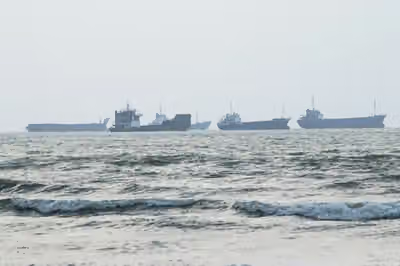
The one-way drone was launched on Wednesday from the Jask area of Iran 8-9 miles out to sea - within Iran's territorial waters - against a practice barge, the official said, citing US intelligence data.
"Essentially practicing hitting merchant vessels. That's the only reason why you would do that in the Gulf of Oman," the official said.
The United States has accused Iran of being behind several attacks since 2019 against merchant vessels in strategic Persian Gulf waters, which contain some of the world's most important oil and shipping routes.
Iranian media have so far not reported, and officials have not commented on the development.
Iran periodically tests explosive or suicide drones and broadcasts footage of them being tested.
"The closest merchant vessel was about 30 miles out away from the barge, but it was still dangerous," the official said.
Iran has supplied hundreds of its Shahed 131 and 136 suicide drones to Russia that have been extensively used against Ukrainian military and civilian targets.
Early on Thursday Russia launched 20 of these drones against Ukraine but all were shot down before reaching their targets. One purpose of the Iranian drones that are much cheaper than long-range missiles, is to swarm Ukraine’s air defenses during missile attacks.
Reporting by Reuters

Afghan immigrants have been warned of deportation if caught flouting Iran's mandatory hijab laws.
Ali Akbar Zarei, the Director General of Foreign Nationals and Immigrant Affairs of Qom Province warned offenders will be stripped of "all social services" under a new enforcement program.
Speaking on the sidelines of a conference titled "Hijab of Afghan Immigrants" Zarei told Iran's state TV: “If they do not observe the hijab, it may lead to their deportation."
He also criticized the "inappropriate appearance" of young Afghan children in his speech at the conference.
"The sanctity of the holy city of Qom must be preserved by respecting hijab, and in case of non-compliance, legal means will be used."
During the nationwide protests in Iran last year some deported Afghans said the Iranian government had arrested dozens of their fellow countrymen on charges of participating in anti-regime protests.
Meanwhile, local officials of the Taliban in Herat told Radio Azadi, the Afghan Service of Radio Free Europe, that with the beginning of the protests in Iran, expelling Afghan immigrants from this country increased by 25%.
On October 13, Amnesty International reported that two Afghan teenagers were killed by the Iranian security forces.
On the other hand, the Wall Street Journal quoted some UN officials in December as saying that about 360,000 Afghan nationals were expelled from Iran after the Taliban came to power.

The wife of President Ebrahim Raisi says it is an example of violence when women study and work like men.
In an interview with Venezuelan state TV, Jamileh Alamolhoda claimed that governments abuse women sexually or at the workplace in the name of freedom.
Alamolhoda, who is accompanying President Ebrahim Raisi on a tour of Latin America, made the remarks on Venezuela’s teleSUR TV as the first lady of Iran Tuesday night.
She claimed that women's rights organizations mostly focus on domestic violence while “the organized violence outside the family is much more important”.
"We want women to remain women. Why should we be like men? Why should we study, work or live like men? This is a form of violence," she said.
In response to a question about the state murder of Mahsa Amini, she alleged the world's attention to the death of the 22-year-old girl was a “fake media hype".
Iranian security forces have killed over 500 civilians, injured thousands and arrested 22,000 since September when anti-government protests began. One of the main slogans of the demonstrators was “Death to the Dictator (Khamenei)”.
"Unfortunately, by calling (Ali Khamenei) a dictator, they used a fake victory to disrespect our spiritual father and the leader of our revolution," the first lady claimed.
"He [Khamenei] has shown kindness and love to everyone, but the media called him a dictator."

Narrowing down the circle of trusted regime insiders, a process dubbed by critics as political "purification" ruthlessly continues in Iran.
This is a process the hard core of the Islamic regime in Iran has persistently followed since 1979. A report in Khabar Online website this week said similar processes in other ideological regimes have gradually led to the collapse of those regimes.
In Iran, the latest examples included the disqualification of former parliament Speaker Ali Larijani in the 2021 Presidential election which came as a surprise even to regime insiders.
Before that the regime's vetting process disqualified and effectively discredited former Presidents Mahmoud Ahmadinejad and his predecessors Akbar Hashemi Rafsanjani who finally drowned during a swim in a suspicious incident, and Mohammad Khatami whose name and pictures are not allowed in government newspapers.

Former Parliament Speaker Ali Larijani openly discussed the process and coined the word "purification" [Khales Sazi, in Persian] for barring some heavyweight regime insiders from elections and giving opportunities to sheepish and more loyal aspirants to rise to power.
Larijani spoke out after he was angered by the publication of a news story on the website of IRGC-linked Tasnim news agency in May.
Supreme Leader Ali Khamenei, ahead of the 2020 Majles elections called for the nomination of "young revolutionaries," signaling a new round of purification.
The outcome was the rise to power of more than 200 new members of parliament who, according to critics, believe in no principle other than climbing the ladder of power, and failed to introduce even one bill that would serve the nation's interests. Their only function so far has been echoing Khamenei's hardline domestic policies and trumpeting his irrational and paranoid anti-US and anti-Israeli foreign policy.
The website wrote that purification started in Iran with the 1905 constitutional revolution during which traditional Shiite clerics opposed any sign of the modernism advocated by intellectuals. The same process was renewed after nearly half a century later with the 1979 Islamic revolution when Ayatollah Ruhollah Khomeini’s supporters set fire to cinemas and cultural centers, barred women from active social life and imposed compulsory hijab.
It was then followed by a "cultural revolution" that led to several years of keeping universities closed and the execution of thousands of young men who believed in ideologies other than that of the Islamic Republic. That was followed by Khamenei's conspiracy theory of a western cultural onslaught which culminated in the murders of intellectuals and writers in the 1990s.
Next came the omission of reform minded individuals in the early 2000s. The same thing happened to President Ahmadinejad when some of his vice presidents were called "deviates" by politicians and clerics close to Khamenei. The development was ironic as Ahmadinejad himself was the product of Khamenei's purification process which involved replacing reform-minded individuals in the government with ultraconservatives.

In a backlash, moderates under President Hassan Rouhani took over for a difficult eight-year period (2013-2021) during which the ultraconservatives went out of their way to obstruct his moves to get closer to the West, with a more open foreign policy.
Khamenei's answer was his biggest purification operation by engineering ultraconservative's takeover of the government and the Majles in the 2020 and 2021 elections.
The method was straightforward. He used the Guardian Council loyal to him to disqualify hundreds of candidates.
Although the consolidation of ultraconservatives' power has led to nothing Khamenei or his men can be proud of, it appears that he is keen to continue the purification.
However, there is no bright outlook for purification in the horizon as it is easy to get rid of the old guard, but it is dreadfully difficult to replace it with others who can run the daily affairs of the state.

During exams in Iran, school students were given questionnaires to probe religious, political and social beliefs.
Among the questions, one asks if people must obey the decisions by the government. The students had five options as “strongly agree, agree, no idea, disagree, and strongly disagree.”
“I am happy about living under the Islamic Republic in Iran”, “I have to obey all the rules although I might not agree with some of them” are among the other questions.The questionnaire also asked if they enjoy the “peace and safety” in Iran.
It is not clear what organization has conducted the probe, but the type of questions suggests the intelligence institutes are involved.
Following the death in custody of Mahsa Amini, schools were the hub of daily protests against the regime with teenagers and even elementary school students chanting slogans.
The chemical attacks on schools raised eyebrows among many Iranians with countless ordinary citizens being suspicious of the regime’s involvement. However, the regime denied responsibility and even staged arrests of suspects after protests against the poisonings.
International reaction has demanded answers to the mystery poisonings including a spokesperson for the UN Human Rights Council in Geneva calling for a transparent investigation along with the White House, which demanded accountability for those responsible.

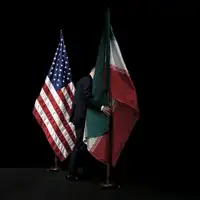
Tehran and Washington are inching closer to an agreement on the release of Americans imprisoned in Iran.
The revelations were made by Oman’s foreign minister, Sayyid Badr Albusaidi, speaking to Al-Monitor who claimed on Wednesday that he feels a sense of “seriousness” on the part of both the US and Iran.
He said negotiators are doing their best to salvage the 2015 nuclear pact under which the Islamic Republic agreed to curb its nuclear ambitions in exchange for sanctions easing.
Siamak Namazi, Emad Shargi and Morad Tahbaz are three of an unknown number of dual nationals imprisoned in Tehran’s notorious Evin Prison on espionage charges.
Al-Monitor also quoted experts as saying that the Biden administration will not reach a deal with Iran over its nuclear dossier unless Tehran releases the prisoners first.
If inked, the deal would lead to release of billions of Iran’s frozen assets in North Korea though according to sanctions, the Iranian regime would only be allowed to use those funds for humanitarian issues.
Oman, Qatar, and the UK have also been attempting to mediate to bring the nuclear talks to a conclusion, but attempts have failed so far. “I can say they are close. This is probably a question of technicalities,“ Albusaidi told Al-monitor.
Albusaidi did not confirm Oman's involvement, but said his country has “offered in good faith our offices to help both sides, be it here or anywhere else.”
Oman has been active in mediation efforts between Iran and its neighbors, including the recent detente between Saudi Arabia and Iran, of which Oman, China and Iraq played key roles.