Israeli air strikes targeting Iran-linked assets in Syria have been concentrating on airports as the Islamic Republic is trying to step up its presence while Russia is focusing on Ukraine.
•
The Syrian army said on Monday that a volley of air-launched missiles, coming from the direction of Lake Tiberias in Israel, hit the Damascus International Airport at 2 am local time and briefly put the airport out of service.
Missiles also hit targets in the south of Damascus, killing two members of the Syrian armed forces and causing some damage, the army said. Earlier, two regional intelligence sources said the strikes had hit an outpost near the airport of the Revolutionary Guard’s Quds Force -- a division primarily responsible for extraterritorial military and clandestine operations – and its affiliated militias.
Last year, Israel intensified strikes on Damascus International and other civilian airports to disrupt Tehran's increasing use of aerial supply lines to deliver arms to allies in Syria and Lebanon, including Hezbollah. Syria halted flights to and from the airport in June for nearly two weeks after Israeli strikes caused extensive damage to infrastructure.
Since late in November, Syria and Iran have been deploying new air defense systems, including jamming and early warning systems, around Damascus to prevent Israeli airstrikes in the area. There are reports that the new systems were built by Korean and Chinese companies and provided by Iran as part of agreements reached between Damascus and Tehran.
On Monday, Iran's foreign ministry spokesman Nasser Kanaani decried the Israeli attack on Damascus airport, calling on the global community to condemn the violation of Syrian territorial integrity. “We were informed that the Damascus airport was hit by the Zionist regime; this action is condemned in our opinion and the United Nations and other institutions should condemn these aggressions,” he said.
Last week, a report by Asharq Al-Awsat said Iran is seeking to revive the expansion of its presence near Damascus, something it has always sought to do but was previously prevented by Russia. According to the report, the Islamic Republic’s objective is to create another “southern suburb”, commonly known as Dahieh, like the Hezbollah-dominated suburb of the Lebanese capital Beirut.
Now the landscape has changed as Russia seems to be needing its forces for the invasion of Ukraine, so it is evacuating the region with coordination of the Islamic Republic, which is supplying Moscow with drones and missiles to be used in against the Ukrainians.
A local resident checks his house after a Russian missile strike, amid Russia's attack on Ukraine, in Kyiv, Ukraine December 31, 2022.
Also on Monday, a salvo of Iranian-made Russian drones targeted infrastructure in Ukraine's capital and surrounding areas, damaging energy facilities and causing some power outages, officials said.
Ukraine’s air force said that its air defense systems destroyed all of Russia's 39 Iranian-made Shahed drones that targeted Ukraine overnight in what it said was a “massive attack”.
"Russians launched several waves of Shahed drones. Targeting critical infrastructure facilities. Air defense is at work," Kyiv Governor Oleksiy Kuleba said.
Kyiv Mayor Vitali Klitschko said 40 drones “headed for Kyiv” overnight. Klitschko said 22 drones were destroyed over Kyiv, three in the outlying Kyiv region and 15 over neighboring provinces.
Iran claimed Monday that Ukraine has never submitted any proof of Iranian-made drones being used by Russia in the war, as Russia launched another large attack.
Ukraine said waves of Iranian-made Russian drones targeted infrastructure in Kyiv and surrounding areas on Monday, damaging energy facilities and causing some power outages, officials said, as Russia extended its bombardment into the second day of 2023.
Ukraine’s air force said that its air defense systems destroyed all of Russia's 39 Iranian-made Shahed 131 and 136 drones that targeted Ukraine overnight in what it said was a “massive attack”.
Iran’s foreign ministry spokesman Nasser Kanaani in his weekly briefing implicitly denied the use of Iranian-made drones and said Kyiv has never produced any evidence.
Ukraine said December 13 that it provided Iran with the evidence. "We are not surprised by yet another objection from Iran regarding the supply of weapons to Russia. During the technical meeting, Ukrainian experts provided the Iranians with the sufficient evidence," Foreign Ministry spokesman Oleg Nikolenko said during an interview with Kyiv-based news agency Interfax-Ukraine.
Iran’s decision to supply weapons to Russia has played a major role in the deterioration of its already frayed ties with Europe that has put nuclear talks with Tehran on the back-burner since evidence emerged of the kamikaze drones being launched by Russia in October.
Kanaani also spoke about these talks, having little to offer as a sign of any positive movement. After 18 months of negotiations to revive the 2015 nuclear accord known as the JCPOA the talks broke down in early September. The United States has said i tis not focused on the diplomatic effort any more because Iran presented last-minute extraneous demands.
Meanwhile, nationwide antigovernment protests in Iran have posed the most serious challenge to the Islamic Republic in its 43year history, with the economy in serious trouble. Consequently, Tehran has been showing renewed interest in reviving the nuclear talks, because the process, if successful, could end harsh US sanctions and bring a much-needed financial relief to the embattled regime.
Kanaani insisted that Iran is ready to conclude the nuclear talks based on a draft agreement prepared "after months of difficult talks," referring to what the European Union submitted in August to all sides to wrap up the negotiations. It was at this juncture when Tehran and Washington were giving their feedback to the draft that talks came to a standstill.
Kanaani also tried to put a positive spin on chances of improving relations with Saudi Arabia and Egypt, amid its regional isolation. Iran was not even invited to tripartite defense talks between Russia, Turkey and Syria last week, although it is a major player in the Syrian conflict. It has also not been invited to a similar meeting of foreign minsters to take place in the second half of January.
Asked about why Iran has not been invited, Kanaani simply replied that "Russia, Turkey and Syria are well aware of Iran’s decisive role in the fight against terrorism in Syria and its support for the people and the government [of Syria]".
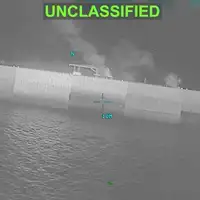
The Iranian military says it launched a drone to warn off a reconnaissance plane trying to approach Iranian war games near the Persian Gulf.
Fars News Agency, affiliated to the Revolutionary Guard, said Saturday that the warning procedure was carried out by Iranian drone Karrar; however, it did not specify the nationality of the reconnaissance aircraft.
The US State Department has refused to comment on the report referring questions to the Pentagon, which declined to comment as well, according to Reuters.
Iran’s military began to test new attack drones in the coastal area of the Gulf of Oman and near the strategic Strait of Hormuz since Thursday as part of its annual drills.
“During the exercises, a P-8 manned intelligence aircraft belonging to extra-regional forces, which had tried to reduce altitude to collect more accurate information from the exercise area, was forced to leave the area by the firing of a Karrar drone by (Iran's) air defense,” Fars reported.
Last week, top Iranian military official General Mohammad Bagheri said the Islamic Republic will continue to develop drones according to its interests and Tehran will cooperate with other countries in this regard.
According to IRNA, Chief of General Staff of the Iranian Armed Forces said the country’s UAVs are accurate enough to respond to any threat endangering its interests.
Bagheri, however, did not name any specific country with which the Islamic Republic is cooperating to develop UAVs.
German media say investigations are underway about the role of nearly a dozen Iran IRGC-linked people who are accused of launching attacks on Jewish centers.
Die Welt daily wrote Thursdaythat Iran’s Revolutionary Gurad manages such operations outside of Iran by hiring criminals.
Police has now launched an investigation to find out more about a terrorist cell in North Rhine-Westphalia, said Welt, adding that one of the suspects had been in radical circles for some time.
Germany and the European Union are discussing the listing of the IRGC as a terrorist organization for its role in violence on protesters in Iran.
In November, an unknown person fired several times at the door of a synagogue in downtown Essen west of Germany.
Nobody got hurt, but the investigators assume the act was part of a series of anti-Semitic attacks probably launched by a cell of terrorists managed by the IRGC, the report said.
Last month, a German TV channel reported the country's security institutions believe the Revolutionary Guard is behind the attacks on Jewish centers in the country.
On November 18, a German-Iranian was detained on suspicion of committing arson at a synagogue in the city of Bochum in Germany.
Local police suspected that the man is connected to Ramin Yektaparast, the founder of the Hell’s Angels group in the city of Mönchengladbach.
German Media reported Yektaparast fled to Iran last year to escape trial for the brutal murder of another member of the gang in 2014.
The suspect might also have been responsible for the attack on the old synagogue in the city of Essen, said German officials.
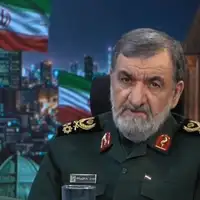
A military commander of Iran's Revolutionary Guard has threatened to attack any regional country which cooperates with Israel and provides bases to its military.
On the sidelines of ceremonies to kick off joint military drills codenamed Zulfaqar 1400 in the Sea of Oman on Friday, an IRGC Commander Major General Gholam-Ali Rashid warned regional countries against any cooperation with Israel in threatening the Islamic Republic’s national security by providing bases or facilities.
“Those bases as well as the points of aggression -- which is the occupying regime of Israel will be the target of attacks by our armed forces.”
Noting that the General Staff of the Armed Forces of the Islamic Republic, the traditional Army and the Revolutionary Guard concur that Israel is the most significant threat to Iran's national security, he said that the Islamic Republic Armed Forces consider military exercises as a “half war” and even a “war before war.”
Commander of Iran’s Khatam al-Anbiya Central Headquarters Major General Gholam-Ali Rashid
Zulfaqar 1400 began with the key motto of “self-confidence, power, sustainable security” in an area stretching from the eastern sector of the strategic Strait of Hormuz to the northern tip of the Indian Ocean, with the first hours of the maneuver dedicated to safeguarding the coasts.
“The Navy’s rangers used improved arms and equipment to carry out the operation that lasted until dawn, and the naval forces used Dehlavieh, TOW, and shoulder-fired Misagh missiles against the enemy’s aggression on coastal lines,” Brigadier General Alireza Sheikh, spokesman for the drills, said.
Air raid sirens sounded in Kyiv at 2:00 am Friday as a swarm of Iranian-made drones were headed towards targets in the capital of Ukraine and other locations.
In a second day of Russian attacks on cities and civilian infrastructure, 16 16 Shahed suicide drones were sent over Ukraine, where military official said all were destroyed. Kyiv mayor Vitali Klitschko said 7 were aimed at city and that one administration building was partly destroyed.
Ukrainian President Volodymyr Zelenskiy said most regions hit in Thursday's massive air attack suffered power outages.
The areas where loss of power was "especially difficult" included the capital Kyiv, Odesa and Kherson in the south and surrounding regions, and around Lviv near the western border with Poland, Zelenskiy said.
Iran’s delivery of hundreds of Shahed-131 and 136 drones to Russia has enraged the West, which is assisting Ukraine to resist Moscow’s invasion. Western officials have been citing Iran’s weapons deliveries as one reason why they are not inclined to continue nuclear talks with Tehran.
NATO Secretary General Jens Stoltenberg Friday called on member states to supply more weapons to Ukraine.
"I call on allies to do more. It is in all our security interests to make sure Ukraine prevails and (Russian President Vladimir) Putin does not win," Stoltenberg told German news agency DPA.
Stoltenberg said that military support for Ukraine was the fastest way to peace.