Its operating model is neither innovative nor cohesive, but a set of pragmatic mechanisms built on three pillars: sanctions-evasion finance, covert oil lifelines and proxy leverage.
Beneath these pillars sits a twin base: China, the economic enabler which buys its oil, and Russia, a fellow bearer of stiff sanctions whose alignment offers diplomatic cover but also commercial competition.
With the aid of these two powers, the Islamic Republic survives not through mastery but through continual manoeuvre.
Understanding this architecture matters because it now shapes a broader convergence in global security. As the United States expands its military buildup in the Caribbean, Iran faces the potential loss of a Western Hemisphere partner long utilised by the Revolutionary Guards Quds Force.
Should Washington succeed in pulling Caracas away from Tehran, one more long-alleged sanctions evasion route may be blocked.
Sanctions evasion
Tehran continues to move funds with notable agility despite the so-called snapback of UN sanctions triggered by Western Europe in October and successive US-led actions to interdict missile and drone procurement networks.
Dubai, Istanbul, Muscat and Baghdad have been named as transit points in US Treasury press releases. Exchange houses and front companies facilitate conversions that allow restricted revenues to re-enter circulation.
Some networks targeted by Western authorities are alleged to have funnelled substantial sums to Hezbollah through opaque trade and currency channels.
These mechanisms define the Islamic Republic’s financial landscape.
Even so, these flows are tributaries. The main current runs east.
Chinese lifeline
The economic centre of the Islamic Republic increasingly lies in Shandong, Shanghai and the harbors of southern China.
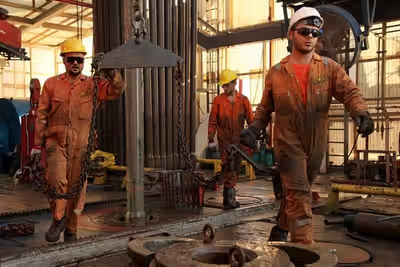
Analysts estimate that roughly 80–90 percent of Iranian crude exports ultimately land in China, often routed through ship-to-ship transfers, re-flagged vessels and blends labelled as Malaysian, Omani or others.
These operations appear in tanker-tracking data and in recent investigations highlighting the Revolutionary Guards tightening oversight of a global shadow fleet.
For Beijing, the rationale is straightforward: discounted supplies, insulation from Western price caps and evidence that sanctions enforcement is no longer uniform. For Tehran, the lifeline underscores deepening dependence on a far more powerful state.
Russia’s role differs. Also under sanctions, Moscow competes directly with Tehran for China’s crude demand while simultaneously normalising sanctions-defiance as a geopolitical posture.
Two sanctioned exporters move in parallel: rivals commercially, yet aligned in resisting Western leverage.
Armed allis
Armed groups in Iraq, Lebanon and Yemen remain central to Tehran’s deterrence and diplomacy. They function, in effect, as strategic currency.
Western intelligence assessments circulated this year suggest Tehran transferred around one billion dollars to Hezbollah—an unusually high figure under any sanctions regime.
While details of the financial conduits remain incomplete, defence officials say Hezbollah is rearming despite the 2024 ceasefire, while Lebanon’s armed forces lack the capacity to enforce disarmament provisions. This comes as Israel maintains outposts in the country and launches deadly air strikes it says target militants.
In this environment, Iranian support is not merely financial but structural.
The Houthis continue to grow more assertive. Their maritime disruptions and drone activity reflect a movement whose operational confidence increasingly exceeds Tehran’s ability to shape or restrain it.
Europe’s reassessment
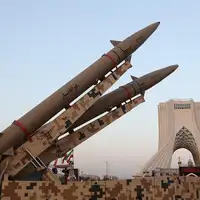
Europe, long divided over Iran, has entered a period of strategic recalibration. Tehran’s supply of Shahed-series drones to Russia has shifted its significance from a regional issue to a European security concern.
Western officials now warn that such transfers pose direct risks to continental defence.
Germany’s deployment of the Arrow-3 air-defence system—developed jointly with Israel—reflects the jitters. Senior officials from Ukraine and Israel met last week to coordinate responses to Iran’s expanding missile and drone proliferation.
European scrutiny has also grown over Iranian cultural, religious and financial centres suspected of facilitating sanctions evasion or money-laundering.
What was once treated as a bilateral nuisance is now cast as a collective security challenge.
A strained machinery
Thus stands the Islamic Republic in 2025: its revenues routed through offshore channels, its diplomacy reinforced by Russia, its economy dependent on China, its proxies potent but increasingly difficult to manage, and its domestic legitimacy fragile.
It survives on a framework effective in the short term but vulnerable in the long run.
Historical parallels caution that states relying on improvised economic lifelines and brittle alliances can appear stable until stresses accumulate beyond what the system can absorb.
These comparisons do not determine Iran’s trajectory, but they underline that a state held together by constrained revenues and external dependence is off balance and inherently unstable.