• العربية
  • فارسی
BrandBrand
  • Iran Insight
  • Politics
  • Economy
  • Analysis
  • Special Report
  • Opinion
  • Podcast
  • Live TV
  • Iran Insight
  • Politics
  • Economy
  • Analysis
  • Special Report
  • Opinion
  • Podcast
  • Live TV
  • Theme
  • Language
    • العربية
    • فارسی
  • Iran Insight
  • Politics
  • Economy
  • Analysis
  • Special Report
  • Opinion
  • Podcast
  • Live TV
All rights reserved for Volant Media UK Limited
volant media logo

Acclaimed Iranian director denies arrest after video of altercation goes viral

Nov 28, 2026, 23:20 GMT+0
Director Saeed Roustaee attends a press conference for the film "Woman and Child" (Zan o bacheh) in competition at the 78th Cannes Film Festival in Cannes, France, May 23, 2025

Award-winning Iranian filmmaker Saeed Roustaee on Saturday denied reports by state-affiliated media that he had been arrested for drunken driving following a car accident in Tehran, saying he was instead assaulted and robbed.

The Revolutionary Guards-affiliated Fars news agency and other state-linked outlets reported that Roustaee was intoxicated when he crashed into several vehicles on Tehran's Sanai Street on Friday night. They said he attempted to flee before being arrested by police.

Roustaee, whose film Leila's Brothers won the international critics' prize at the 2022 Cannes Film Festival, told ISNA news agency that another vehicle struck his car from behind while he was fully sober.

He said the driver then assaulted him, while another person stole belongings from his vehicle. Roustaee said he attempted to pursue the thief but was blocked by the other car, resulting in another collision.

He rejected social media videos suggesting he had tried to flee the accident scene and said he had filed a police complaint over the incident.

Roustaee also disputed reports of his arrest, saying in an Instagram post Saturday that he was free and at home.

“I was not drunk. I’m now free and at home,” he said, rejecting what he called rumors.

Police have yet to confirm whether he was taken into custody.

Meanwhile, media affiliated with the Revolutionary Guards and the Basij militia circulated Roustaee's earlier criticism of Iran's economic conditions while attacking the filmmaker.

Roustaee's award-winning film Leila’s Brothers was banned in Iran, and he received a six-month prison sentence in 2023 over its screening at Cannes.

100%

His next film, Woman and Child, also competed for the Palme d’Or at the 2025 Cannes Film Festival. Fellow Iranian filmmaker Jafar Panahi won the prize for his drama It Was Just an Accident.

Most Viewed

Trump deploys extra aircraft carrier, says Iran is making ‘big mistakes’
1

Trump deploys extra aircraft carrier, says Iran is making ‘big mistakes’

2
INSIGHT

Iraq shuts more border crossings with Iran under US pressure to seal land routes

3

Iran’s central bank chief admits economic squeeze is hurting families

4

A dark, cold office: Pezeshkian's austerity gesture backfires

5
PODCAST

Who flogs a singer? The ‘public decency’ case against Parastoo Ahmadi

Banner

Spotlight

  • Iran cries wolf over nuclear treaty withdrawal
    ANALYSIS

    Iran cries wolf over nuclear treaty withdrawal

  • Who flogs a singer? The ‘public decency’ case against Parastoo Ahmadi
    PODCAST

    Who flogs a singer? The ‘public decency’ case against Parastoo Ahmadi

  • A dark, cold office: Pezeshkian's austerity gesture backfires

    A dark, cold office: Pezeshkian's austerity gesture backfires

  • Iranian women break silence on a lifetime of violence
    VOICES FROM IRAN

    Iranian women break silence on a lifetime of violence

  • Too poor to marry, young Iranians are offered religious workarounds
    INSIGHT

    Too poor to marry, young Iranians are offered religious workarounds

Banner
Banner
Banner
Banner
Banner
Banner
•
•
•

More Stories

Iran's security chief builds parallel power structure outside cabinet

Nov 28, 2026, 19:16 GMT+0
100%
President Masoud Pezeshkian and Mohsen Rezaei attend a farewell ceremony for Iran's late Supreme Leader Ali Khamenei, July 3, 2026

Iran's top security official has appointed a group of conservative politicians to oversee economic, energy and infrastructure affairs, raising questions about the growing reach of the security establishment into areas traditionally managed by the elected government.

Mohsen Rezaei, secretary of the Supreme National Security Council (SNSC) and a former commander of the Revolutionary Guards, announced eight appointments to the council's secretariat, drawing heavily on officials who served under the late President Ebrahim Raisi.

The appointments extend across economic resilience, infrastructure, energy, food security, social affairs and relations with parliament, giving the secretariat a team whose responsibilities overlap with those of several government ministries.

The changes come as Iran faces a prolonged confrontation with the United States, a naval blockade that has severely restricted oil exports, and mounting pressure on its economy.

They also raise questions about how much authority President Masoud Pezeshkian and his cabinet retain as more of the country's economic and administrative challenges are treated as matters of national security.

Although Pezeshkian chairs the council, the appointments were made by Rezaei, whose authority also derives from the supreme leader.

A government outside the cabinet?

Among the most prominent appointments is Seyed Mohsen Dehnavi, a former conservative lawmaker named deputy for the so-called resistance economy.

Dehnavi has longstanding ties to ultraconservative politician Saeed Jalili, whose student campaign he headed during the 2013 presidential election.

Ali-Akbar Mehrabian, Ebrahim Raisi's energy minister and a former industries minister under Mahmoud Ahmadinejad, was appointed Rezaei's energy adviser.

Alireza Peyman-Pak, who headed Iran's Trade Promotion Organization and later held a senior agricultural trade position under Raisi, was named head of the secretariat's food security headquarters.

Mehdi Dousti, a former governor of Hormozgan province under Raisi, was appointed deputy for infrastructure. He previously worked with the Revolutionary Guards' Khatam al-Anbiya construction organization and in the oil, gas and petrochemical industries.

Unlike several other appointees, Dousti also held a senior economic position in Pezeshkian's Interior Ministry.

The other appointments include Mostafa Zamanian, who headed the presidential Center for Strategic Studies under Raisi, as Rezaei's social affairs adviser.

Former conservative lawmaker Majid Fooladgar was appointed head of Rezaei's office, while former parliamentarian Ali Ahmadi took charge of legal and parliamentary affairs.

The appointments bring several prominent figures from Raisi's administration back into influential positions, despite the change of government following his death in 2024.

Who runs the security council?

The Supreme National Security Council is formally chaired by the president, and its membership includes senior ministers, military commanders and the heads of Iran's other branches of government.

But the president does not exercise exclusive control over the institution.

Under Article 176 of Iran's Constitution, the council coordinates political, intelligence, social, cultural and economic activities related to national security. Its decisions take effect only after approval by the supreme leader.

Rezaei was appointed the supreme leader's representative on the council by Mojtaba Khamenei in August, before Pezeshkian formally appointed him secretary.

That sequence illustrates the overlapping lines of authority within the institution. Although the president chairs the council, its secretary also represents the supreme leader and oversees the secretariat's day-to-day work.

The latest appointments were made by Rezaei, rather than announced as cabinet appointments by Pezeshkian.

There is no public evidence that the president opposed the choices or that the secretariat has formally assumed powers belonging to government ministries.

Nevertheless, the appointment of senior officials covering energy, infrastructure, food supplies and economic policy highlights the extent to which the council's machinery operates in areas that would ordinarily fall within the government's responsibilities.

One more step

The reshuffle comes at a time when Iran's economic problems are increasingly inseparable from its confrontation with the United States.

The American naval blockade has disrupted oil exports, while sanctions and the continuing threat of military escalation have made access to energy, essential goods and trade routes central security concerns.

Ministers are nominated by the president and must secure parliamentary approval. Senior officials appointed to the security council's secretariat do not undergo the same process, even when their portfolios overlap with those of cabinet ministers.

Rezaei's appointments do not establish that the council has displaced the cabinet or acquired new constitutional powers. But they suggest that more of the government's work is being drawn into a security apparatus beyond the president's direct control.

Iranian mother dies after husband sets her on fire, local media reports

Nov 28, 2026, 13:57 GMT+0
100%

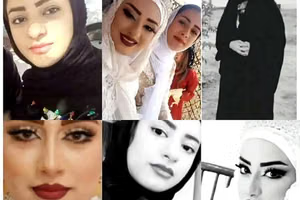
A 39-year-old Iranian mother of two died after her husband reportedly set her on fire, in the latest case of suspected femicide in Iran, according to media reports on Saturday.

Kajal Sadeghi, a resident of Saqqez in Iran’s western Kurdistan province, died after 12 days in hospital with severe burns, the Iranian news outlet Rokna reported.

Her husband poured gasoline over her and set her alight following an argument on November 16, according to accounts cited by Rokna.

Sadeghi, who had two daughters aged eight and 15, was transferred to a hospital in Urmia with burns covering more than 90% of her body and remained in intensive care until her death.

100%
Kajal Sadeghi, a 39-year-old mother of two from Saqqez in western Iran, who died after her husband reportedly set her on fire.

Prosecutors in Saqqez are investigating the case, though police and judicial authorities have yet to officially confirm the circumstances of her death, Rokna reported.

The killing follows another reported case of femicide in Kordestan province. Police announced on November 24 that the parents of a young woman named Helia Fattahi had been arrested on suspicion of murdering their daughter in Sanandaj.

  • Iranian parents arrested over killing of pregnant daughter, rights groups say

    Iranian parents arrested over killing of pregnant daughter, rights groups say

Police cited family disputes as the motive, while the Kurdish human rights organization Hengaw linked the killing to so-called honor-related motives.

Legislation remains stalled

A bill aimed at protecting women from violence has yet to receive final approval in Iran after more than 14 years of deliberations among successive governments, parliament and other state institutions.

“Our definition of violence is completely different from the Western view,” Iranian lawmaker Zohreh Lajevardi said on Wednesday, addressing disagreements over the legislation.

Iran’s legal and institutional shortcomings in addressing femicide and domestic violence are rooted in social and political structures that perpetuate violence against women, social affairs analyst Asieh Amini previously told Iran International.

  • Femicide rates in Iran up by 60% in two years, report says

    Femicide rates in Iran up by 60% in two years, report says

At least 104 cases of femicide, 178 cases of domestic violence and 63 cases of rape and sexual abuse against women were documented in Iran over the past year, the Human Rights Activists News Agency (HRANA) reported on Wednesday.

Economic dependence, family pressure, a shortage of safe accommodation, limited access to judicial protection and discriminatory laws governing marriage, divorce and employment remain major obstacles preventing Iranian women from leaving abusive relationships, HRANA said.

Iran cries wolf over nuclear treaty withdrawal

Nov 28, 2026, 03:57 GMT+0
•
Behrouz Turani
100%
Iranian parliament speaker Mohammad Bagher Ghalibaf (center) speaks with fellow lawmakers during a session of the Majlis in Tehran, November 21, 2026

Another bill to withdraw Iran from the Nuclear Non-Proliferation Treaty was introduced in parliament this week, as repeated threats to abandon the treaty appear to be losing their force.

The double-urgency bill, registered by MP Mohammad Manan Raisi on November 22, would automatically trigger withdrawal if Iran's nuclear facilities were attacked again, without requiring a further parliamentary vote.

It is the latest in a series of initiatives. Ebrahim Rezaei, spokesman for the Majlis National Security Committee, has said at least ten withdrawal bills have been registered. None has reached a floor vote.

Six years of stalled motions

The pattern goes back to January 2020, when a withdrawal motion was tabled after the E3 triggered the JCPOA dispute mechanism. Foreign Minister Mohammad Javad Zarif warned that Iran would leave the treaty if its nuclear file were referred to the UN Security Council.

The warnings resurfaced after the June 2025 war. In September, following the activation of snapback sanctions, one MP declared a withdrawal motion "finalized and ready for a vote".

In March 2026, as US and Israeli strikes resumed, Malek Shariati submitted a triple-urgency bill. Six months later, 32 former officials signed an open letter calling for withdrawal.

Each effort stalled. One MP complained that the Majlis presiding board had blocked the bill last year. The Supreme National Security Council has never endorsed withdrawal.

Asked earlier this week whether Iran would leave the NPT, Foreign Ministry spokesman Esmaeil Baghaei replied: "So far no decision on this has been communicated to us."

Former foreign minister Manouchehr Mottaki, a supporter of withdrawal, said all 290 MPs would vote in favour if the Supreme Leader approved. His remark underscored the central reality: parliament makes the threats, but the decision rests elsewhere.

A diminishing threat

Iran's restrictions on international nuclear inspections have also complicated the significance of any formal withdrawal.

The IAEA has been unable to verify Iran's near-weapons-grade uranium stockpile since the June 2025 bombing campaign. Before inspections were disrupted, Iran had about 440 kilograms of uranium enriched to 60%, potentially enough for ten nuclear weapons if further enriched and weaponized, according to IAEA Director General Rafael Grossi.

With inspectors already denied access to much of Iran's nuclear programme, withdrawal would not necessarily change monitoring immediately. But it would mark a significant legal and diplomatic break.

Even some opponents of withdrawal favour maintaining treaty membership without restoring inspections. Tehran MP Mohammad Seraj argues that Iran should remain in the NPT while refusing IAEA inspectors access.

Critics inside the system

Seraj told Khabaronline that leaving would signal an intention to acquire a nuclear weapon and cause Iran to "lose our friends". He noted that the United States, Russia and China all oppose such a move.

Ali Jannati, culture minister during Hassan Rouhani's presidency, told Jamaran that advocates of withdrawal fail to understand how profoundly it conflicts with Iran's national interests. Even discussing the idea, he argued, could increase the risk of war.

Former MP Heshmatollah Falahatpisheh has argued that withdrawal would conceal parts of the nuclear programme without serving any national objective.

Esmail Gerami Moghaddam of the Etemad-e Melli party called the bill a trap that would strengthen claims Iran seeks a bomb.

Others object to the timing. Ahmad Bakhshayesh Ardestani, a member of the National Security Committee, has argued that Iran should leave only after acquiring a nuclear weapon. Announcing withdrawal beforehand, he says, would impose the costs without delivering any deterrent benefit.

The case for withdrawal

Advocates of withdrawal remain vocal.

Hossein Shariatmadari, the leader-appointed chief of hardline daily Kayhan, argues there is no reason for Iran to remain in the treaty after attacks on its nuclear sites.

IRGC-linked Tasnim News maintains that withdrawal would not signal a pursuit of nuclear weapons but would end what it calls "espionage" under the cover of IAEA inspections.

The ultraconservative Paydari Front has called for withdrawal, while the Assembly of Experts recently described a review of NPT membership and Iran's defence doctrine as "an unavoidable necessity".

Calls now come from Friday prayer pulpits, state television and the Expediency Council. Yet none of the parliamentary initiatives has secured the political approval needed to proceed.

What an exit would cost

Tehran's strongest argument abroad is that it is a treaty member whose nuclear facilities came under attack while subject to international safeguards. Leaving would weaken that argument and strengthen the case advanced by the United States and Israel.

It would also strain relations with important partners. The Kremlin has publicly opposed withdrawal.

The NPT requires three months' notice for withdrawal. Such an announcement could increase pressure on Washington and Israel to consider military action before Iran's departure took effect.

Withdrawal could also make a negotiated settlement, and the prospect of sanctions relief, considerably more difficult.

Iran is already subject to UN sanctions and a US-led oil embargo. Producer inflation reached 120% during the summer, while quarterly growth is estimated at minus 14%. Further isolation would add to the pressure on an already strained economy.

A warning sign, not leverage

Raisi's bill is therefore best understood as an attempt to deter further attacks and an instrument in the Majlis's internal factional battles, rather than a clear roadmap to withdrawal.

The repeated initiatives have produced no change in Iran's treaty status, while exposing disagreements within the Islamic Republic over whether abandoning the NPT would strengthen national security or undermine it.

The threat's remaining significance lies less in its deterrent value than in the possibility that it could help trigger the very conflict its supporters claim to be trying to prevent.

Some bootleg alcohol in Iran is poisoned on purpose, top psychiatrist warns

Nov 27, 2026, 11:39 GMT+0
100%

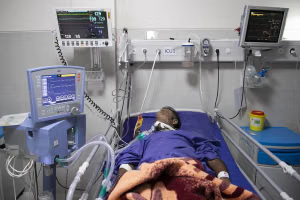
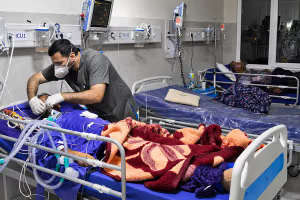
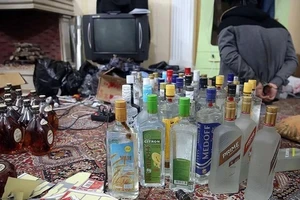
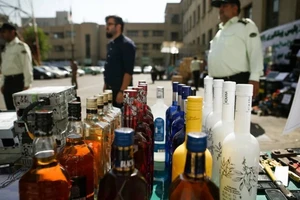
The head of Iran's psychiatric association has warned that some bootleg alcohol is being poisoned deliberately, as a wave of poisonings that has killed at least 26 people and sickened more than 550 spreads to a dozen regions, from Neyshabur to Bandar Abbas.

In large waves of alcohol poisoning, "people deliberately, and for various reasons such as profit, poison alcohol," Vahid Shariat, head of the Iranian Psychiatric Association, told the ISNA news agency on Friday. He did not say who they were or how they profited.

Drinkers have no way of telling whether what they buy is toxic, he said, and most of the harm could be prevented. He criticized what he called an "eliminationist" approach to alcohol and urged the state to put harm reduction first.

"There is widespread sloganeering at some levels of management, and those who make harsher slogans and bigger claims get more attention," he said.

'Which dealer can supply the whole country?'

The spread of the poisonings, from the northeast to the Persian Gulf coast and from Khoy in the northwest to Zabol in the southeast, has fed suspicion online that they are organized.

  • Bootleg alcohol kills 20, poisons 356 across Iran, health ministry says

    Bootleg alcohol kills 20, poisons 356 across Iran, health ministry says

  • Bootleg alcohol poisons 120 in northeastern Iran, four dead

    Bootleg alcohol poisons 120 in northeastern Iran, four dead

  • Deadly poisonings fuel anger over Iran's alcohol ban

    Deadly poisonings fuel anger over Iran's alcohol ban

"It's obviously the state's doing, otherwise the whole country wouldn't be poisoned," one Iranian wrote to Iran International. "Which dealer or bootlegger can distribute across the whole country?"

Earlier this month, the London-based channel Manoto aired an audio message from a man in Iran who said people linked to the security services and the Revolutionary Guards were involved in distributing alcohol and deliberately contaminating some shipments, without many producers knowing. He offered no evidence, and the claim could not be verified.

Others who wrote to Iran International blamed the ban itself. "The one responsible is whoever won't let quality, standard products in," one said.

543 cases, 23 deaths in the national count

The Health Ministry recorded 543 poisonings and 23 deaths across 12 medical university regions between October 31 and Wednesday evening, and eight people declared brain dead, ministry spokesman Hossein Kermanpour said.

  • Bootleg alcohol identified as top cause of deaths from poisoning in Iran

    Bootleg alcohol identified as top cause of deaths from poisoning in Iran

  • Who is behind the sale of lethal bootleg alcohol in Iran?

    Who is behind the sale of lethal bootleg alcohol in Iran?

Neyshabur had the most cases, 214, followed by Hormozgan with 93, Shiraz with 81 and Tehran province with 69. Kordestan, Khoy, Alborz, Mashhad, Isfahan, Zanjan, Khalkhal and Zabol also recorded cases.

Of those poisoned, 205 needed dialysis, 33 were in intensive care and 38 had blurred vision. The average age was 31, and 92 were under 20, according to ministry figures.

The toll has risen since. In Hormozgan, 126 people had been poisoned and 10 had died by Friday morning, nine in Bandar Abbas and one on Qeshm Island, the provincial health spokeswoman said, up from seven deaths in the ministry's count. The youngest was 12. In Neyshabur, 238 people had been treated by Thursday, with five dead and five declared brain dead. In Khoy, in West Azarbaijan, 20 people were poisoned and three died.

"No alcoholic drink can be considered safe," Kermanpour wrote on X, adding that the figures were published "not to frighten or blame people" but to prevent more deaths.

'Even a small amount'

Methanol, an industrial alcohol, cannot be detected by smell, taste or appearance, and even a small amount can be dangerous, said Shervin Tabrizi, a spokesman for Tehran's emergency services.

Symptoms, which can appear hours after drinking, include blurred vision, headache, nausea, vomiting, abdominal pain and drowsiness. He urged anyone with symptoms to call the 115 emergency line at once.

A deadly market

Alcohol is banned in Iran for Muslims, who face flogging if caught drinking, and only recognized religious minorities may make it for private use. Bootleggers often stretch drinks with cheap industrial methanol, and mass poisonings recur.

The worst came in early 2020, when 796 people died after drinking methanol in the false belief that it protected against COVID-19, according to Iran's Legal Medicine Organization.

In 2023, methanol-laced drinks killed 17 people and blinded 191 in Alborz province, near Tehran. Four people were later sentenced to death for "corruption on earth" for distributing them.

Iraq shuts more border crossings with Iran under US pressure to seal land routes

Nov 27, 2026, 10:37 GMT+0
•
Arash Sohrabi
100%
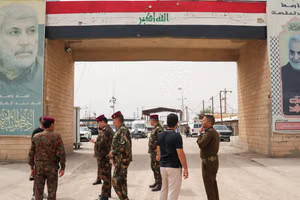
An Iranian traveler walks at the Shalamcheh border crossing between Iraq and Iran, Iraq, March 2, 2026.

Iraq closed two more border crossings with Iran this week, including one run by the Kurdistan region, extending weeks of closures that followed a US request that Baghdad keep only two crossings open, and squeezing one of Tehran's main remaining trade routes.

On Thursday, Iraqi forces closed Sheikh Saleh, a crossing in Iran's western Kermanshah province, the Mehr news agency reported, citing the governor of Salas-e Babajani county. He said Baghdad had acted on a central government order to shut "unofficial" crossings with neighboring countries.

About 300 trucks loaded with goods and building materials were stranded, Kermanshah's customs chief said, and would be rerouted through other crossings.

The same day, Iraq's border forces closed the Bashta crossing with Iran and the al-Waleed crossing with Syria, both run until now by the Kurdistan Regional Government, Reuters reported, citing Iraqi state media.

There were unconfirmed reports that a third crossing, Shoushmi, in Kermanshah's Paveh county, had also been shut. Kermanshah's customs chief said he had received no official notice of it.

'Only two'

Washington asked for this. On November 8, Iraqi Foreign Minister Fuad Hussein said the US Treasury had formally asked Baghdad to close all its crossings with Iran except two, one in the Kurdistan region and one elsewhere in Iraq.

"There are many official and unofficial crossings with Iran, and closing them all is difficult and affects our economy," he told Al Jazeera.

Trade between the two countries is worth $15 billion to $18 billion a year, he said, including about $4 billion in Iranian gas.

  • Iran-backed Iraqi militia prepares for renewed US-Iran war, report says

    Iran-backed Iraqi militia prepares for renewed US-Iran war, report says

The day before, US Central Command had set up Task Force Iron Gate, a unit of about 20 military and civilian staff in Florida, to disrupt the movement of weapons, dual-use technology, sanctioned goods and illicit revenue across Iran's land borders and the Caspian Sea.

Without US personnel at the crossings, it relies on neighboring governments, chiefly Iraq, Turkey and Pakistan, to do the closing.

Open, shut, open again

Iraq and Iran share a border of about 1,600 kilometers, with nine official crossings and many unofficial ones. Over the past six weeks, Baghdad has closed and reopened them one by one, usually citing technical reasons.

On October 21, Iraq closed Chazabeh, known in Iraq as Sheeb, between Iran's Khuzestan province and Iraq's Maysan, citing inadequate preparations.

An adviser to Prime Minister Ali al-Zaidi said Iran had "deliberately undermined Iraq's security," with people linked to it crossing without permits.

  • Iraq plays down Iran border disruption as more closures reported

    Iraq plays down Iran border disruption as more closures reported

Truckers and traders in Maysan protested over rising prices, and the provincial council chairman, who threatened civil disobedience, was briefly detained. Chazabeh reopened on November 10.

On November 13, Iraq closed Somar, known in Iraq as Mandali, between Kermanshah and Iraq's Diyala province, for what it called maintenance before the rainy season. It is still closed.

On November 26, Sheikh Saleh and Bashta followed.

Major crossings such as Mehran, which carries millions of Iranian pilgrims to Karbala each year, remain open.

Why the border matters to Tehran

With its ports under US naval blockade since July and seaborne oil exports all but stopped, Iran depends more than ever on land routes for imports, exports and cash.

Iraq is one of Iran's largest export markets, its biggest buyer of gas and electricity, and a long-standing route around sanctions, through fuel smuggling, currency trading and companies fronting for Iranian interests.

Pro-Iran factions in Baghdad have pushed back. The Badr Organization's bloc in parliament condemned what it called American interference in Iraq's border policy and demanded the crossings reopen, and the Asaib Ahl al-Haq bloc asked why the government's technical explanations differed from the foreign minister's account.

The Revolutionary Guards dismissed Iron Gate, saying Tehran had made arrangements to keep trading with its neighbors.

  • Iraqi forces enter Iran-backed militia stronghold, but who holds power?

    Iraqi forces enter Iran-backed militia stronghold, but who holds power?

  • Iraq begins taking back town held for a decade by Iran’s strongest militia ally

    Iraq begins taking back town held for a decade by Iran’s strongest militia ally

The pressure comes from more than one direction. Iraq's oil revenues still pass through an account at the Federal Reserve Bank of New York, an arrangement dating from the 2003 US-led invasion, and Washington warned Baghdad this year that it could cut off access to them if Iraq did not reduce Tehran's influence in its government, Reuters reported.

US officials also discussed with Zaidi the idea of Iraq leaving OPEC, Reuters reported. The prime minister raised it with his cabinet, but the oil ministry opposed it and proposed seeking a higher production quota instead. The US government said the issue had not been raised in high-level talks.

A standoff with Erbil

The closures in the Kurdistan region are also part of a separate fight. On Tuesday, Zaidi ordered federal authorities to take over all crossings run by the Kurdistan Regional Government, and the federal oil ministry to take over oil fields held by Kurdish security forces in Diyala, Kirkuk, Salahuddin and Nineveh provinces.

After the Kurdistan Regional Government objected, Iraq's Federal Supreme Court ruled on Wednesday that Baghdad could deploy federal forces along all international borders, including in the region.

  • Iran says US land blockade would be nearly impossible, denies supply shortages

    Iran says US land blockade would be nearly impossible, denies supply shortages

Thousands of people protested in the Kurdistan region on Thursday, while supporters of the prime minister rallied in Mosul.

The moves came a week after Zaidi sent troops into Jurf al-Sakhar, a stronghold of the Iran-backed militia Kataib Hezbollah, over an oil smuggling network.

Not all of Baghdad's moves answer to Washington. The operations against smuggling, the push into Jurf al-Sakhar and the takeover of the Kurdistan region's crossings and oil fields also concentrate power in the central government, a goal that overlaps with US demands but is not the same thing.

Both standoffs turn on control of oil, borders and the money that flows across them, and both put Zaidi, who came to power after Washington opposed the return of Nouri al-Maliki, a longtime ally of Tehran, at odds with powerful forces at home.

How far Baghdad can go

Iraq cannot easily cut its ties with Iran. It depends on Iranian gas and electricity, particularly in summer, and Iran-aligned factions sit in parliament, in the governing coalition and in the Popular Mobilization Forces, the state-funded umbrella of armed groups. Moving against them too fast risks unrest at home.

Even Iranian media now describe a shift. Baghdad "appears to be redefining its relations with Tehran," the Iranian news site Rouydad24 wrote on Thursday, in a course that is "less a separation than an effort to increase Iraq's bargaining power with both sides."

Tehran says it can ride out the squeeze. Iran's diplomats, especially in neighboring countries, were working "around the clock" to meet the country's needs and keep trade routes open, Foreign Minister Abbas Araghchi said in the northeastern city of Mashhad.

"The goal is for the enemies to know that besieging Iran is not possible, and that they cannot besiege our country," he said.