• العربية
  • فارسی
BrandBrand
  • Iran Insight
  • Politics
  • Economy
  • Analysis
  • Special Report
  • Opinion
  • Podcast
  • Live TV
  • Iran Insight
  • Politics
  • Economy
  • Analysis
  • Special Report
  • Opinion
  • Podcast
  • Live TV
  • Theme
  • Language
    • العربية
    • فارسی
  • Iran Insight
  • Politics
  • Economy
  • Analysis
  • Special Report
  • Opinion
  • Podcast
  • Live TV
All rights reserved for Volant Media UK Limited
volant media logo

Iran's security chief builds parallel power structure outside cabinet

Nov 28, 2026, 19:16 GMT+0
President Masoud Pezeshkian and Mohsen Rezaei attend a farewell ceremony for Iran's late Supreme Leader Ali Khamenei, July 3, 2026

Rezaei's appointments do not establish that the council has displaced the cabinet or acquired new constitutional powers. But they suggest that more of the government's work is being drawn into a security apparatus beyond the president's direct control.

Iran's top national security official has appointed a group of conservative politicians and former officials to oversee economic, energy and infrastructure affairs, raising questions about the growing reach of the country's security establishment into areas traditionally managed by the elected government.

Mohsen Rezaei, secretary of the Supreme National Security Council (SNSC) and a former commander of the Revolutionary Guards, announced eight appointments to the council's secretariat, drawing heavily on officials who served under the late President Ebrahim Raisi.

The appointments extend across economic resilience, infrastructure, energy, food security, social affairs and relations with parliament, giving the secretariat a team whose responsibilities overlap with those of several government ministries.

The changes come as Iran faces a prolonged confrontation with the United States, a naval blockade that has severely restricted oil exports, and mounting pressure on its economy.

They also raise questions about how much authority President Masoud Pezeshkian and his cabinet retain as more of the country's economic and administrative challenges are treated as matters of national security.

Although Pezeshkian chairs the council, the appointments were made by Rezaei, whose authority also derives from the supreme leader.

A government outside the cabinet?

Among the most prominent appointments is Seyed Mohsen Dehnavi, a former conservative lawmaker named deputy for the so-called resistance economy.

Dehnavi has longstanding ties to ultraconservative politician Saeed Jalili, whose student campaign he headed during the 2013 presidential election.

Ali-Akbar Mehrabian, Raisi's energy minister and a former industries minister under Mahmoud Ahmadinejad, was appointed Rezaei's energy adviser.

Alireza Peyman-Pak, who headed Iran's Trade Promotion Organization and later held a senior agricultural trade position under Raisi, was named head of the secretariat's food security headquarters.

Mehdi Dousti, a former governor of Hormozgan province under Raisi, was appointed deputy for infrastructure. He previously worked with the Revolutionary Guards' Khatam al-Anbiya construction organization and in the oil, gas and petrochemical industries.

Unlike several other appointees, Dousti also held a senior economic position in Pezeshkian's Interior Ministry.

The other appointments include Mostafa Zamanian, who headed the presidential Center for Strategic Studies under Raisi, as Rezaei's social affairs adviser.

Former conservative lawmaker Majid Fooladgar was appointed head of Rezaei's office, while former parliamentarian Ali Ahmadi took charge of legal and parliamentary affairs.

The appointments bring several prominent figures from Raisi's administration back into influential positions, despite the change of government following his death in 2024.

Who runs the security council?

The Supreme National Security Council is formally chaired by the president, and its membership includes senior ministers, military commanders and the heads of Iran's other branches of government.

But the president does not exercise exclusive control over the institution.

Under Article 176 of Iran's Constitution, the council coordinates political, intelligence, social, cultural and economic activities related to national security. Its decisions take effect only after approval by the supreme leader.

Rezaei was appointed the supreme leader's representative on the council by Mojtaba Khamenei in August, before Pezeshkian formally appointed him secretary.

That sequence illustrates the overlapping lines of authority within the institution. Although the president chairs the council, its secretary also represents the supreme leader and oversees the secretariat's day-to-day work.

The latest appointments were made by Rezaei, rather than announced as cabinet appointments by Pezeshkian.

There is no public evidence that the president opposed the choices or that the secretariat has formally assumed powers belonging to government ministries.

Nevertheless, the appointment of senior officials covering energy, infrastructure, food supplies and economic policy highlights the extent to which the council's machinery operates in areas that would ordinarily fall within the government's responsibilities.

One more step

The reshuffle comes at a time when Iran's economic problems are increasingly inseparable from its confrontation with the United States.

The American naval blockade has disrupted oil exports, while sanctions and the continuing threat of military escalation have made access to energy, essential goods and trade routes central security concerns.

Ministers are nominated by the president and must secure parliamentary approval. Senior officials appointed to the security council's secretariat do not undergo the same process, even when their portfolios overlap with those of cabinet ministers.

Rezaei's appointments do not establish that the council has displaced the cabinet or acquired new constitutional powers. But they suggest that more of the government's work is being drawn into a security apparatus beyond the president's direct control.

Most Viewed

Trump deploys extra aircraft carrier, says Iran is making ‘big mistakes’
1

Trump deploys extra aircraft carrier, says Iran is making ‘big mistakes’

2
INSIGHT

Iraq shuts more border crossings with Iran under US pressure to seal land routes

3

Iran faces global condemnation over Kuwait attack that killed two Italians

4

A dark, cold office: Pezeshkian's austerity gesture backfires

5

Iran’s central bank chief admits economic squeeze is hurting families

Banner

Spotlight

  • Iran cries wolf over nuclear treaty withdrawal
    ANALYSIS

    Iran cries wolf over nuclear treaty withdrawal

  • Who flogs a singer? The ‘public decency’ case against Parastoo Ahmadi
    PODCAST

    Who flogs a singer? The ‘public decency’ case against Parastoo Ahmadi

  • A dark, cold office: Pezeshkian's austerity gesture backfires

    A dark, cold office: Pezeshkian's austerity gesture backfires

  • Iranian women break silence on a lifetime of violence
    VOICES FROM IRAN

    Iranian women break silence on a lifetime of violence

  • Too poor to marry, young Iranians are offered religious workarounds
    INSIGHT

    Too poor to marry, young Iranians are offered religious workarounds

Banner
Banner
Banner
Banner
Banner
Banner
•
•
•

More Stories

Iran cries wolf over nuclear treaty withdrawal

Nov 28, 2026, 03:57 GMT+0
•
Behrouz Turani
100%
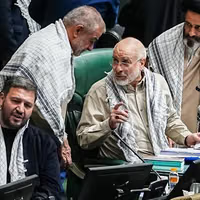
Iranian parliament speaker Mohammad Bagher Ghalibaf (center) speaks with fellow lawmakers during a session of the Majlis in Tehran, November 21, 2026

Another bill to withdraw Iran from the Nuclear Non-Proliferation Treaty was introduced in parliament this week, as repeated threats to abandon the treaty appear to be losing their force.

The double-urgency bill, registered by MP Mohammad Manan Raisi on November 22, would automatically trigger withdrawal if Iran's nuclear facilities were attacked again, without requiring a further parliamentary vote.

It is the latest in a series of initiatives. Ebrahim Rezaei, spokesman for the Majlis National Security Committee, has said at least ten withdrawal bills have been registered. None has reached a floor vote.

Six years of stalled motions

The pattern goes back to January 2020, when a withdrawal motion was tabled after the E3 triggered the JCPOA dispute mechanism. Foreign Minister Mohammad Javad Zarif warned that Iran would leave the treaty if its nuclear file were referred to the UN Security Council.

The warnings resurfaced after the June 2025 war. In September, following the activation of snapback sanctions, one MP declared a withdrawal motion "finalized and ready for a vote".

In March 2026, as US and Israeli strikes resumed, Malek Shariati submitted a triple-urgency bill. Six months later, 32 former officials signed an open letter calling for withdrawal.

Each effort stalled. One MP complained that the Majlis presiding board had blocked the bill last year. The Supreme National Security Council has never endorsed withdrawal.

Asked earlier this week whether Iran would leave the NPT, Foreign Ministry spokesman Esmaeil Baghaei replied: "So far no decision on this has been communicated to us."

Former foreign minister Manouchehr Mottaki, a supporter of withdrawal, said all 290 MPs would vote in favour if the Supreme Leader approved. His remark underscored the central reality: parliament makes the threats, but the decision rests elsewhere.

A diminishing threat

Iran's restrictions on international nuclear inspections have also complicated the significance of any formal withdrawal.

The IAEA has been unable to verify Iran's near-weapons-grade uranium stockpile since the June 2025 bombing campaign. Before inspections were disrupted, Iran had about 440 kilograms of uranium enriched to 60%, potentially enough for ten nuclear weapons if further enriched and weaponized, according to IAEA Director General Rafael Grossi.

With inspectors already denied access to much of Iran's nuclear programme, withdrawal would not necessarily change monitoring immediately. But it would mark a significant legal and diplomatic break.

Even some opponents of withdrawal favour maintaining treaty membership without restoring inspections. Tehran MP Mohammad Seraj argues that Iran should remain in the NPT while refusing IAEA inspectors access.

Critics inside the system

Seraj told Khabaronline that leaving would signal an intention to acquire a nuclear weapon and cause Iran to "lose our friends". He noted that the United States, Russia and China all oppose such a move.

Ali Jannati, culture minister during Hassan Rouhani's presidency, told Jamaran that advocates of withdrawal fail to understand how profoundly it conflicts with Iran's national interests. Even discussing the idea, he argued, could increase the risk of war.

Former MP Heshmatollah Falahatpisheh has argued that withdrawal would conceal parts of the nuclear programme without serving any national objective.

Esmail Gerami Moghaddam of the Etemad-e Melli party called the bill a trap that would strengthen claims Iran seeks a bomb.

Others object to the timing. Ahmad Bakhshayesh Ardestani, a member of the National Security Committee, has argued that Iran should leave only after acquiring a nuclear weapon. Announcing withdrawal beforehand, he says, would impose the costs without delivering any deterrent benefit.

The case for withdrawal

Advocates of withdrawal remain vocal.

Hossein Shariatmadari, the leader-appointed chief of hardline daily Kayhan, argues there is no reason for Iran to remain in the treaty after attacks on its nuclear sites.

IRGC-linked Tasnim News maintains that withdrawal would not signal a pursuit of nuclear weapons but would end what it calls "espionage" under the cover of IAEA inspections.

The ultraconservative Paydari Front has called for withdrawal, while the Assembly of Experts recently described a review of NPT membership and Iran's defence doctrine as "an unavoidable necessity".

Calls now come from Friday prayer pulpits, state television and the Expediency Council. Yet none of the parliamentary initiatives has secured the political approval needed to proceed.

What an exit would cost

Tehran's strongest argument abroad is that it is a treaty member whose nuclear facilities came under attack while subject to international safeguards. Leaving would weaken that argument and strengthen the case advanced by the United States and Israel.

It would also strain relations with important partners. The Kremlin has publicly opposed withdrawal.

The NPT requires three months' notice for withdrawal. Such an announcement could increase pressure on Washington and Israel to consider military action before Iran's departure took effect.

Withdrawal could also make a negotiated settlement, and the prospect of sanctions relief, considerably more difficult.

Iran is already subject to UN sanctions and a US-led oil embargo. Producer inflation reached 120% during the summer, while quarterly growth is estimated at minus 14%. Further isolation would add to the pressure on an already strained economy.

A warning sign, not leverage

Raisi's bill is therefore best understood as an attempt to deter further attacks and an instrument in the Majlis's internal factional battles, rather than a clear roadmap to withdrawal.

The repeated initiatives have produced no change in Iran's treaty status, while exposing disagreements within the Islamic Republic over whether abandoning the NPT would strengthen national security or undermine it.

The threat's remaining significance lies less in its deterrent value than in the possibility that it could help trigger the very conflict its supporters claim to be trying to prevent.

A dark, cold office: Pezeshkian's austerity gesture backfires

Nov 27, 2026, 20:59 GMT+0
•
Maryam Sinaiee
100%
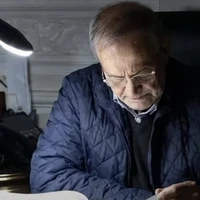
Iranian President Masoud Pezeshkian, wearing a jacket, reviews documents by the light of a desk lamp in his dimly lit office as part of a publicized effort to conserve energy.

Iranian President Masoud Pezeshkian's attempts to set an example by working in a dimly lit, unheated office have drawn criticism from hardliners who say the gesture projects weakness during the country's confrontation with the United States.

In a televised interview earlier this week, Pezeshkian said he wore a jacket because his office was cold, slept wearing one at home and would move to a smaller room if temperatures fell further to save energy.

What supporters portray as personal austerity and solidarity with the public has become a political controversy, with some critics comparing the president's gestures to the populist style of former president Mahmoud Ahmadinejad.

Tabnak, a news website close to Mohsen Rezaei, secretary of Iran's Supreme National Security Council, published an article titled "Mr. Pezeshkian, Your Dark Room Is a Display of Weakness."

The article acknowledged that the president presumably intended to demonstrate solidarity with Iranians facing difficult conditions and encourage energy conservation.

"But does staging a blackout in the president's workplace, especially when the country remains engaged in a difficult and costly war, really send the right message to society and beyond its borders?" it asked.

The website argued that a country at war and resisting foreign pressure should project effective management and strength.

‘Have a wonderful winter’

The conservative newspaper Farhikhtegan also criticized Pezeshkian in an article titled "The Wrong Signal from the Dark Room," describing the gesture as a staged performance. Instead of communicating "resistance," it argued, the president had conveyed "shortage" and "passivity."

Farhikhtegan also cited Foreign Minister Abbas Araghchi's readiness to reopen the Strait of Hormuz for two days as another example of what it called the government's "message of weakness."

Hardline analyst Ali Abdi questioned the president's public presentation during a roundtable discussion in a video published Friday by Hokmranan Online.

"Have people ever seen pictures of Putin or Zelensky sitting in a dark room after five years of war?" he asked.

US Treasury Secretary Scott Bessent appeared to seize on the images, sharing a Washington Post report about Pezeshkian's dimly lit, unheated office with a mocking message on X.

"Good job, guys. Have a wonderful winter," Bessent wrote.

‘Populist behaviour’

The controversy has revived comparisons with former president Mahmoud Ahmadinejad, who cultivated an image of modest living and informality as part of his populist appeal.

Similar comparisons emerged in November last year after photographs showed Pezeshkian playing soccer alongside members of Iran's national team at the country's National Football Center.

The news website Rouydad24 argued at the time that the episode might appear to be a friendly encounter with players but, viewed alongside the president's other public appearances, revealed a pattern.

"The more critical the country's situation becomes, the more populist President Pezeshkian's behavior becomes," the website wrote.

‘Being honest’

Government officials defended the president's gestures as an appeal for energy conservation during wartime.

Spokeswoman Fatemeh Mohajerani described his conduct as courageous and honest, saying it demonstrated the need to conserve energy under difficult conditions.

Elias Hazrati, head of the government's Information Council, said Pezeshkian had turned off the lights to encourage conservation, strengthen economic resilience and help the country withstand pressure from Trump and the United States.

The president did not need to sit behind a desk in a hall filled with chandeliers to demonstrate Iran's greatness, Hazrati argued.

The reformist newspaper Sazandegi offered a broader defense in a Wednesday editorial titled "The Neorealist President."

It argued that Pezeshkian's behavior reflected honesty and a refusal to mislead the public. His jacket, remarks about energy conservation and dimly lit office challenged a longstanding tradition in Iranian politics of concealing uncomfortable realities while projecting an image of perfection.

"His primary responsibility is to see reality, not conceal it, be honest with the people, and have solutions for overcoming the situation—and to implement those solutions with all his strength and capacity," the editorial said.

Iraq shuts more border crossings with Iran under US pressure to seal land routes

Nov 27, 2026, 10:37 GMT+0
•
Arash Sohrabi
100%
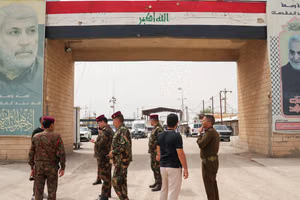
An Iranian traveler walks at the Shalamcheh border crossing between Iraq and Iran, Iraq, March 2, 2026.

Iraq closed two more border crossings with Iran this week, including one run by the Kurdistan region, extending weeks of closures that followed a US request that Baghdad keep only two crossings open, and squeezing one of Tehran's main remaining trade routes.

On Thursday, Iraqi forces closed Sheikh Saleh, a crossing in Iran's western Kermanshah province, the Mehr news agency reported, citing the governor of Salas-e Babajani county. He said Baghdad had acted on a central government order to shut "unofficial" crossings with neighboring countries.

About 300 trucks loaded with goods and building materials were stranded, Kermanshah's customs chief said, and would be rerouted through other crossings.

The same day, Iraq's border forces closed the Bashta crossing with Iran and the al-Waleed crossing with Syria, both run until now by the Kurdistan Regional Government, Reuters reported, citing Iraqi state media.

There were unconfirmed reports that a third crossing, Shoushmi, in Kermanshah's Paveh county, had also been shut. Kermanshah's customs chief said he had received no official notice of it.

'Only two'

Washington asked for this. On November 8, Iraqi Foreign Minister Fuad Hussein said the US Treasury had formally asked Baghdad to close all its crossings with Iran except two, one in the Kurdistan region and one elsewhere in Iraq.

"There are many official and unofficial crossings with Iran, and closing them all is difficult and affects our economy," he told Al Jazeera.

Trade between the two countries is worth $15 billion to $18 billion a year, he said, including about $4 billion in Iranian gas.

  • Iran-backed Iraqi militia prepares for renewed US-Iran war, report says

    Iran-backed Iraqi militia prepares for renewed US-Iran war, report says

The day before, US Central Command had set up Task Force Iron Gate, a unit of about 20 military and civilian staff in Florida, to disrupt the movement of weapons, dual-use technology, sanctioned goods and illicit revenue across Iran's land borders and the Caspian Sea.

Without US personnel at the crossings, it relies on neighboring governments, chiefly Iraq, Turkey and Pakistan, to do the closing.

Open, shut, open again

Iraq and Iran share a border of about 1,600 kilometers, with nine official crossings and many unofficial ones. Over the past six weeks, Baghdad has closed and reopened them one by one, usually citing technical reasons.

On October 21, Iraq closed Chazabeh, known in Iraq as Sheeb, between Iran's Khuzestan province and Iraq's Maysan, citing inadequate preparations.

An adviser to Prime Minister Ali al-Zaidi said Iran had "deliberately undermined Iraq's security," with people linked to it crossing without permits.

  • Iraq plays down Iran border disruption as more closures reported

    Iraq plays down Iran border disruption as more closures reported

Truckers and traders in Maysan protested over rising prices, and the provincial council chairman, who threatened civil disobedience, was briefly detained. Chazabeh reopened on November 10.

On November 13, Iraq closed Somar, known in Iraq as Mandali, between Kermanshah and Iraq's Diyala province, for what it called maintenance before the rainy season. It is still closed.

On November 26, Sheikh Saleh and Bashta followed.

Major crossings such as Mehran, which carries millions of Iranian pilgrims to Karbala each year, remain open.

Why the border matters to Tehran

With its ports under US naval blockade since July and seaborne oil exports all but stopped, Iran depends more than ever on land routes for imports, exports and cash.

Iraq is one of Iran's largest export markets, its biggest buyer of gas and electricity, and a long-standing route around sanctions, through fuel smuggling, currency trading and companies fronting for Iranian interests.

Pro-Iran factions in Baghdad have pushed back. The Badr Organization's bloc in parliament condemned what it called American interference in Iraq's border policy and demanded the crossings reopen, and the Asaib Ahl al-Haq bloc asked why the government's technical explanations differed from the foreign minister's account.

The Revolutionary Guards dismissed Iron Gate, saying Tehran had made arrangements to keep trading with its neighbors.

  • Iraqi forces enter Iran-backed militia stronghold, but who holds power?

    Iraqi forces enter Iran-backed militia stronghold, but who holds power?

  • Iraq begins taking back town held for a decade by Iran’s strongest militia ally

    Iraq begins taking back town held for a decade by Iran’s strongest militia ally

The pressure comes from more than one direction. Iraq's oil revenues still pass through an account at the Federal Reserve Bank of New York, an arrangement dating from the 2003 US-led invasion, and Washington warned Baghdad this year that it could cut off access to them if Iraq did not reduce Tehran's influence in its government, Reuters reported.

US officials also discussed with Zaidi the idea of Iraq leaving OPEC, Reuters reported. The prime minister raised it with his cabinet, but the oil ministry opposed it and proposed seeking a higher production quota instead. The US government said the issue had not been raised in high-level talks.

A standoff with Erbil

The closures in the Kurdistan region are also part of a separate fight. On Tuesday, Zaidi ordered federal authorities to take over all crossings run by the Kurdistan Regional Government, and the federal oil ministry to take over oil fields held by Kurdish security forces in Diyala, Kirkuk, Salahuddin and Nineveh provinces.

After the Kurdistan Regional Government objected, Iraq's Federal Supreme Court ruled on Wednesday that Baghdad could deploy federal forces along all international borders, including in the region.

  • Iran says US land blockade would be nearly impossible, denies supply shortages

    Iran says US land blockade would be nearly impossible, denies supply shortages

Thousands of people protested in the Kurdistan region on Thursday, while supporters of the prime minister rallied in Mosul.

The moves came a week after Zaidi sent troops into Jurf al-Sakhar, a stronghold of the Iran-backed militia Kataib Hezbollah, over an oil smuggling network.

Not all of Baghdad's moves answer to Washington. The operations against smuggling, the push into Jurf al-Sakhar and the takeover of the Kurdistan region's crossings and oil fields also concentrate power in the central government, a goal that overlaps with US demands but is not the same thing.

Both standoffs turn on control of oil, borders and the money that flows across them, and both put Zaidi, who came to power after Washington opposed the return of Nouri al-Maliki, a longtime ally of Tehran, at odds with powerful forces at home.

How far Baghdad can go

Iraq cannot easily cut its ties with Iran. It depends on Iranian gas and electricity, particularly in summer, and Iran-aligned factions sit in parliament, in the governing coalition and in the Popular Mobilization Forces, the state-funded umbrella of armed groups. Moving against them too fast risks unrest at home.

Even Iranian media now describe a shift. Baghdad "appears to be redefining its relations with Tehran," the Iranian news site Rouydad24 wrote on Thursday, in a course that is "less a separation than an effort to increase Iraq's bargaining power with both sides."

Tehran says it can ride out the squeeze. Iran's diplomats, especially in neighboring countries, were working "around the clock" to meet the country's needs and keep trade routes open, Foreign Minister Abbas Araghchi said in the northeastern city of Mashhad.

"The goal is for the enemies to know that besieging Iran is not possible, and that they cannot besiege our country," he said.

Iran’s ‘self-sanctions’ compound pressure from US blockade, critics say

Nov 26, 2026, 20:24 GMT+0
•
Maryam Sinaiee
100%
FILE PHOTO: Iranian people shop at the Tehran Bazaar in Tehran, Iran, March 26, 2025. Majid Asgaripour/WANA (West Asia News Agency) via REUTERS

Iranian lawmakers and analysts accuse the Pezeshkian administration of adding to the strain of US sanctions and the naval blockade through currency rules that penalize exporters and bureaucratic hurdles that make it harder for manufacturers to secure raw materials.

They describe a range of domestic measures as “self-sanctions,” pointing to restrictions on foreign currency transactions, banking and customs procedures, and price controls that make it more difficult for businesses to operate.

The criticism has taken on renewed significance as Iran faces restrictions on maritime trade and oil exports. Critics say the government has focused on the consequences of external pressure while doing too little to strengthen domestic production or expand trade through land borders and barter arrangements.

On Wednesday, Hassan Ghashghavi, the spokesman for parliament’s National Security and Foreign Policy Committee, urged the government to support producers during what he described as an “existential war.”

Manufacturers, he said, need access to foreign currency and raw materials to stay in business and avoid bankruptcy.

“Given the existing capacities, the country’s main problem is not a lack of resources but weak management,” Ghashghavi said.

‘Domestic sanctions’ on producers and exporters

Amir Sayyah, an economic advisor to Parliament Speaker Mohammad Bagher Ghalibaf during 2024 presidential debates, told the state TV that the government is making it harder for Iranian entrepreneurs and exporters to operate under already difficult conditions.

“The biggest problem with our economy, apart from foreign sanctions – and I’m not denying foreign sanctions – is domestic sanctions,” Sayyah said on the Be Vaghte Iran (Iran Time) TV debate.

“Whoever can negotiate should go and resolve [the foreign sanctions]. Whoever can find a way around them should do so. But as for domestic sanctions ... if [the enemy] is stabbing us from the front, the government and all these executive agencies should not stab [producers and exporters] in the back.”

Sayyah argued that Iranian businesses could maintain production, trade and financial transactions despite international sanctions if domestic authorities gave them room to operate.

He said currency exchange companies were capable of transferring money from countries such as the United States to destinations in Europe, the Middle East and East Asia, but that the government had failed to make use of their services.

Easing administrative and regulatory restrictions, he argued, would allow businesses to operate more freely without waiting for foreign sanctions to be lifted. He said it would also strengthen Iran’s economic position in any negotiations with Washington.

One of the main obstacles facing exporters, according to Sayyah, is the requirement to bring their foreign currency earnings home at exchange rates set by the central bank. Those rates can put exporters at a financial disadvantage, he said, discouraging them from bringing their earnings back and reducing the supply of foreign currency at home.

“An exporter who earns foreign currency for the country despite sanctions should be regarded as part of the national effort to counter the blockade, rather than being treated as a violator by government agencies,” he said.

Sayyah said the administration of former President Ebrahim Raisi and the parliament at the time had removed some regulations that hampered producers and exporters, but that the work had stalled under Pezeshkian.

Government faces criticism over its economic response

Pezeshkian has repeatedly spoken about the difficulties posed by what he calls economic warfare, arguing that they are more complicated than those of military confrontation.

He has pointed to a shortage of funds and to shortfalls in electricity and natural gas supplies that are expected to lead to scheduled power cuts this winter.

The president has backed diplomacy, arguing that ending the current state of “neither war nor peace” is necessary to ease economic pressure and uncertainty.

His government has drafted next year’s budget around two scenarios, reflecting uncertainty over how long the maritime blockade will last.

The first assumes that current conditions will persist, requiring sharp spending cuts and a halt to new infrastructure projects. Under that scenario, the government would reserve all available foreign currency for essential goods and medicine.

The second envisages the lifting of restrictions and a gradual recovery in the supply of foreign currency, allowing the government to resume reconstruction and infrastructure projects.

Conservative and hardline critics have taken issue with how often the president and his ministers discuss the country’s economic difficulties. They argue that repeated warnings about electricity and gas shortages, scheduled power cuts and limited funds frighten the public and reinforce what they describe as Washington’s psychological warfare.

Hardliners have urged the government to do more to counter the blockade by expanding barter trade and helping domestic producers make fuller use of their capacity.

Imports and non-oil exports fall

The value of Iran’s non-oil exports fell 28.2% between the beginning of April and the end of August compared with the same period a year earlier, according to Foroud Asgari, head of Iran’s Customs Administration. Non-oil exports were down 32.5% from the corresponding period in 2024, before the war.

Imports fell from $23.02 billion to $17 billion, a 26.1% decrease from a year earlier. Compared with the same period in 2024, imports were down 38%, a steeper decline than for non-oil exports.

A substantial share of Iran’s imports consists of raw materials, intermediate goods and machinery used by domestic manufacturers. Economists warn that reduced access to those goods could further undermine production in an economy already under pressure from sanctions and the blockade.

Limits of land routes

Economist Mohammad-Mehdi Behkish has argued that the blockade presents a problem beyond the financial obstacles Iranian businesses faced under previous sanctions.

Even when importers find a way to transfer payments to foreign suppliers, they still face the challenge of getting the goods into the country, he said.

Iran has traditionally conducted a substantial share of its foreign trade by sea. Its land routes have limited capacity and cannot handle the volume of goods previously carried by ship, Behkish argued.

Iranian cleric says believers must avenge Khamenei if the state does not

Nov 26, 2026, 13:13 GMT+0
100%
Mohammad Javad Fazel Lankarani speaks at the “Jurisprudence of Revenge” seminar in Qom on November 25, 2026, where he described revenge for injustices against society as a binding religious obligation to be pursued by the state and citizens.

A senior cleric in the Iranian seminary city of Qom said on Wednesday that avenging attacks on Islam and the Islamic Republic, including the killing of Ali Khamenei, is a religious duty that cannot be forgiven, and that ordinary believers must act if the state does not.

Ayatollah Mohammad Javad Fazel Lankarani set out his case at a seminar titled "The Jurisprudence of Revenge," attended by clerics, university professors and students.

If officials fail to carry out the duty of revenge, he said, responsibility passes to individuals able to act, provided they do not disrupt the Islamic political order.

  • Against restraint: Iran's hardliners rewrite the rules of confrontation

    Against restraint: Iran's hardliners rewrite the rules of confrontation

  • Iranian clerical call to kill Trump spreads, attracts alleged fundraising

    Iranian clerical call to kill Trump spreads, attracts alleged fundraising

His argument gives religious grounds for individuals to take revenge into their own hands, at a time when Iran's commanders are vowing revenge for Khamenei, who was killed in US-Israeli strikes on February 28, and Iran-linked plots against people abroad are before courts in Britain, the United States and Europe.

Revenge, not retribution

Fazel Lankarani drew a line between revenge and qisas, the retribution in kind that Islamic law prescribes for murder and bodily harm. Qisas requires the punishment to match the crime. Revenge, he said, covers a much wider range of offenses and requires no such match.

He based the legitimacy of what he called "earthly revenge" on the Quran's depiction of God as an avenger, citing verses that name disbelief, persistent sin, crime and oppression as grounds for divine vengeance against societies.

100%
Ruhollah Khomeini's grandson, Hassan Khomeini, stands next to Iran's slain former Supreme Leader Ali Khamenei.

A duty no one can forgive

Quranic verses that urge patience and forgiveness apply only to personal wrongs, Fazel Lankarani said. When an injustice is done to society, religion or the Islamic political system, the right to revenge belongs to the whole community.

He cited the killing of Khamenei, of military commanders, and children in the southern city of Minab as cases where revenge, not qisas, is a religious duty.

Drawing on Shiite tradition, he also suggested extending the role of vali-ye dam, the heir entitled to demand retribution for a killing, to the entire community of believers. Because religious leaders are spiritual fathers to the faithful, he said, avenging their deaths could become a right all believers share.

Once revenge is religiously required, he said, an Islamic state is bound to pursue it, and cannot waive it by forgiving the offender. That limits the room officials have to choose not to retaliate.

From fatwa to violence

Religious rulings have been used before to sanction violence by individuals far from Iran.

  • Rushdie returns to the fatwa that nearly cost him his life

    Rushdie returns to the fatwa that nearly cost him his life

Ruhollah Khomeini, the founder of the Islamic Republic, issued a fatwa in 1989 calling for the killing of the novelist Salman Rushdie, who was stabbed and badly wounded on stage in New York in 2022.

A dynasty of clerics

Fazel Lankarani is the son of the late Grand Ayatollah Mohammad Fazel Lankarani, a marja-e taqlid, or senior religious authority whom Shiite Muslims follow on religious and legal matters. He now heads the jurisprudence research center his father founded in Qom in 1997.

He is part of a pattern of clerical families keeping religious institutions and political influence across generations. The most prominent example is Supreme Leader Mojtaba Khamenei, who succeeded his father this year.