• العربية
  • فارسی
BrandBrand
  • Iran Insight
  • Politics
  • Economy
  • Analysis
  • Special Report
  • Opinion
  • Podcast
  • Live TV
  • Iran Insight
  • Politics
  • Economy
  • Analysis
  • Special Report
  • Opinion
  • Podcast
  • Live TV
  • Theme
  • Language
    • العربية
    • فارسی
  • Iran Insight
  • Politics
  • Economy
  • Analysis
  • Special Report
  • Opinion
  • Podcast
  • Live TV
All rights reserved for Volant Media UK Limited
volant media logo

A dark, cold office: Pezeshkian's austerity gesture backfires

Maryam Sinaiee
Maryam Sinaiee

Iran International

Nov 27, 2026, 20:59 GMT+0
Iranian President Masoud Pezeshkian, wearing a jacket, reviews documents by the light of a desk lamp in his dimly lit office as part of a publicized effort to conserve energy.

Iranian President Masoud Pezeshkian's attempts to set an example by working in a dimly lit, unheated office have drawn criticism from hardliners who say the gesture projects weakness during the country's confrontation with the United States.

In a televised interview earlier this week, Pezeshkian said he wore a jacket because his office was cold, slept wearing one at home and would move to a smaller room if temperatures fell further to save energy.

What supporters portray as personal austerity and solidarity with the public has become a political controversy, with some critics comparing the president's gestures to the populist style of former president Mahmoud Ahmadinejad.

Tabnak, a news website close to Mohsen Rezaei, secretary of Iran's Supreme National Security Council, published an article titled "Mr. Pezeshkian, Your Dark Room Is a Display of Weakness."

The article acknowledged that the president presumably intended to demonstrate solidarity with Iranians facing difficult conditions and encourage energy conservation.

"But does staging a blackout in the president's workplace, especially when the country remains engaged in a difficult and costly war, really send the right message to society and beyond its borders?" it asked.

The website argued that a country at war and resisting foreign pressure should project effective management and strength.

‘Have a wonderful winter’

The conservative newspaper Farhikhtegan also criticized Pezeshkian in an article titled "The Wrong Signal from the Dark Room," describing the gesture as a staged performance. Instead of communicating "resistance," it argued, the president had conveyed "shortage" and "passivity."

Farhikhtegan also cited Foreign Minister Abbas Araghchi's readiness to reopen the Strait of Hormuz for two days as another example of what it called the government's "message of weakness."

Hardline analyst Ali Abdi questioned the president's public presentation during a roundtable discussion in a video published Friday by Hokmranan Online.

"Have people ever seen pictures of Putin or Zelensky sitting in a dark room after five years of war?" he asked.

US Treasury Secretary Scott Bessent appeared to seize on the images, sharing a Washington Post report about Pezeshkian's dimly lit, unheated office with a mocking message on X.

"Good job, guys. Have a wonderful winter," Bessent wrote.

‘Populist behaviour’

The controversy has revived comparisons with former president Mahmoud Ahmadinejad, who cultivated an image of modest living and informality as part of his populist appeal.

Similar comparisons emerged in November last year after photographs showed Pezeshkian playing soccer alongside members of Iran's national team at the country's National Football Center.

The news website Rouydad24 argued at the time that the episode might appear to be a friendly encounter with players but, viewed alongside the president's other public appearances, revealed a pattern.

"The more critical the country's situation becomes, the more populist President Pezeshkian's behavior becomes," the website wrote.

‘Being honest’

Government officials defended the president's gestures as an appeal for energy conservation during wartime.

Spokeswoman Fatemeh Mohajerani described his conduct as courageous and honest, saying it demonstrated the need to conserve energy under difficult conditions.

Elias Hazrati, head of the government's Information Council, said Pezeshkian had turned off the lights to encourage conservation, strengthen economic resilience and help the country withstand pressure from Trump and the United States.

The president did not need to sit behind a desk in a hall filled with chandeliers to demonstrate Iran's greatness, Hazrati argued.

The reformist newspaper Sazandegi offered a broader defense in a Wednesday editorial titled "The Neorealist President."

It argued that Pezeshkian's behavior reflected honesty and a refusal to mislead the public. His jacket, remarks about energy conservation and dimly lit office challenged a longstanding tradition in Iranian politics of concealing uncomfortable realities while projecting an image of perfection.

"His primary responsibility is to see reality, not conceal it, be honest with the people, and have solutions for overcoming the situation—and to implement those solutions with all his strength and capacity," the editorial said.

Most Viewed

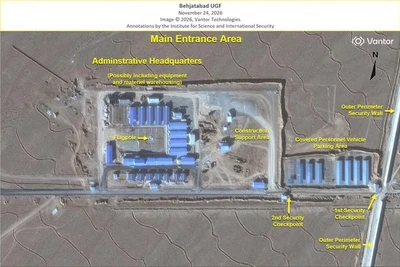
Iran rapidly builds underground complex near nuclear sites – US institute
1

Iran rapidly builds underground complex near nuclear sites – US institute

2
INSIGHT

Iran’s efforts to offset US naval blockade fall short, economists warn

3

Trump deploys extra aircraft carrier, says Iran is making ‘big mistakes’

4

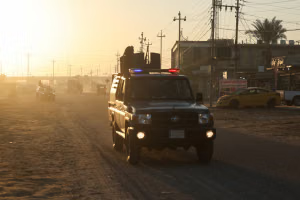
Iran-backed Iraqi militia prepares for renewed US-Iran war, report says

5

Iranian truckers’ strike spreads to more cities on fifth day, union says

Banner

Spotlight

  • A dark, cold office: Pezeshkian's austerity gesture backfires

    A dark, cold office: Pezeshkian's austerity gesture backfires

  • Iranian women break silence on a lifetime of violence
    VOICES FROM IRAN

    Iranian women break silence on a lifetime of violence

  • Too poor to marry, young Iranians are offered religious workarounds
    INSIGHT

    Too poor to marry, young Iranians are offered religious workarounds

  • Persian Gulf oil exports near prewar levels despite Hormuz attacks
    INSIGHT

    Persian Gulf oil exports near prewar levels despite Hormuz attacks

  • Iran faces year-end cash squeeze if US blockade holds
    INSIGHT

    Iran faces year-end cash squeeze if US blockade holds

  • A broken leg and broken trust: Violence in Iran’s schools
    VOICES FROM IRAN

    A broken leg and broken trust: Violence in Iran’s schools

Banner
Banner
Banner
Banner
Banner
Banner
•
•
•

More Stories

Iran’s central bank chief admits economic squeeze is hurting families

Nov 27, 2026, 18:20 GMT+0
100%
A woman walks in a local market in Tehran, Iran, September 26, 2026. Majid Asgaripour/WANA (West Asia News Agency)

Iran’s central bank governor acknowledged Friday that access to foreign currency was limited, government revenues were under pressure and soaring prices were eroding families’ purchasing power, with the dollar trading above 2.93 million rials on the unofficial market.

“We know how heavily high prices and instability weigh on your lives,” Abdolnaser Hemmati wrote in an open letter to Iranians. “People have the right to be worried, to ask questions and to demand results from officials.”

Hemmati said sanctions and the US naval blockade had made trade more expensive and restricted Iran’s access to its financial resources. Those pressures, together with the strain on state revenues, were affecting both the exchange rate and the prices Iranians pay, he said.

Two days earlier, Hemmati had credited central bank intervention with keeping the currency market relatively stable over the previous two months. The dollar crossed 2.9 million rials that day, up from about 1.6 million in early April. By Friday, the rial had lost about 45% of its value against the dollar over that period.

“The foreign currency constraints are real,” Hemmati wrote, though he rejected the suggestion that Iran had reached a deadlock. He also dismissed talk of an imminent economic collapse, saying the central bank had supplied more than $32 billion in foreign currency for imports through official channels. He gave no timeframe for the figure.

US Treasury Secretary Scott Bessent, in an interview with Iran International last month, warned Iranians to stock up on gasoline and heating fuel ahead of expected shortages, predicting the economy would shrink by more than a quarter in the year ending March 2027.

“I would predict that from March of '26 until March of '27, the economy would contract more than 25 percent, which is more than the Soviet Union contracted after its collapse,” Bessent said, adding that the campaign was intended to pressure Iran's leadership rather than its population.

Hemmati accused the United States and Israel of seeking to turn economic hardship into social instability. But he also conceded that Tehran’s own policies needed reform and that officials had a responsibility beyond asking people to endure the cost.

“Blaming every problem on sanctions is no substitute for reforming domestic policies,” he wrote. The letter announced no new relief for households or producers.

Iran raised the basic monthly minimum wage by about 60% to 166 million rials for the Iranian year that began in March. At Friday’s exchange rate, that wage was worth about $57.

Even at the time of the wage talks, it covered less than 40% of the estimated 429 million rials a worker’s household needed each month for basic necessities. A promised wage review has yet to produce a decision.

Consumer prices in October were 88.7% higher than a year earlier, according to the Statistical Center of Iran. October was the ninth consecutive month in which food prices were more than double their level a year earlier.

Iraq shuts more border crossings with Iran under US pressure to seal land routes

Nov 27, 2026, 10:37 GMT+0
•
Arash Sohrabi
100%
An Iranian traveler walks at the Shalamcheh border crossing between Iraq and Iran, Iraq, March 2, 2026.

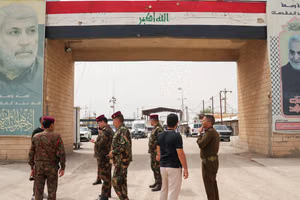
Iraq closed two more border crossings with Iran this week, including one run by the Kurdistan region, extending weeks of closures that followed a US request that Baghdad keep only two crossings open, and squeezing one of Tehran's main remaining trade routes.

On Thursday, Iraqi forces closed Sheikh Saleh, a crossing in Iran's western Kermanshah province, the Mehr news agency reported, citing the governor of Salas-e Babajani county. He said Baghdad had acted on a central government order to shut "unofficial" crossings with neighboring countries.

About 300 trucks loaded with goods and building materials were stranded, Kermanshah's customs chief said, and would be rerouted through other crossings.

The same day, Iraq's border forces closed the Bashta crossing with Iran and the al-Waleed crossing with Syria, both run until now by the Kurdistan Regional Government, Reuters reported, citing Iraqi state media.

There were unconfirmed reports that a third crossing, Shoushmi, in Kermanshah's Paveh county, had also been shut. Kermanshah's customs chief said he had received no official notice of it.

'Only two'

Washington asked for this. On November 8, Iraqi Foreign Minister Fuad Hussein said the US Treasury had formally asked Baghdad to close all its crossings with Iran except two, one in the Kurdistan region and one elsewhere in Iraq.

"There are many official and unofficial crossings with Iran, and closing them all is difficult and affects our economy," he told Al Jazeera.

Trade between the two countries is worth $15 billion to $18 billion a year, he said, including about $4 billion in Iranian gas.

  • Iran-backed Iraqi militia prepares for renewed US-Iran war, report says

    Iran-backed Iraqi militia prepares for renewed US-Iran war, report says

The day before, US Central Command had set up Task Force Iron Gate, a unit of about 20 military and civilian staff in Florida, to disrupt the movement of weapons, dual-use technology, sanctioned goods and illicit revenue across Iran's land borders and the Caspian Sea.

Without US personnel at the crossings, it relies on neighboring governments, chiefly Iraq, Turkey and Pakistan, to do the closing.

Open, shut, open again

Iraq and Iran share a border of about 1,600 kilometers, with nine official crossings and many unofficial ones. Over the past six weeks, Baghdad has closed and reopened them one by one, usually citing technical reasons.

On October 21, Iraq closed Chazabeh, known in Iraq as Sheeb, between Iran's Khuzestan province and Iraq's Maysan, citing inadequate preparations.

An adviser to Prime Minister Ali al-Zaidi said Iran had "deliberately undermined Iraq's security," with people linked to it crossing without permits.

  • Iraq plays down Iran border disruption as more closures reported

    Iraq plays down Iran border disruption as more closures reported

Truckers and traders in Maysan protested over rising prices, and the provincial council chairman, who threatened civil disobedience, was briefly detained. Chazabeh reopened on November 10.

On November 13, Iraq closed Somar, known in Iraq as Mandali, between Kermanshah and Iraq's Diyala province, for what it called maintenance before the rainy season. It is still closed.

On November 26, Sheikh Saleh and Bashta followed.

Major crossings such as Mehran, which carries millions of Iranian pilgrims to Karbala each year, remain open.

Why the border matters to Tehran

With its ports under US naval blockade since July and seaborne oil exports all but stopped, Iran depends more than ever on land routes for imports, exports and cash.

Iraq is one of Iran's largest export markets, its biggest buyer of gas and electricity, and a long-standing route around sanctions, through fuel smuggling, currency trading and companies fronting for Iranian interests.

Pro-Iran factions in Baghdad have pushed back. The Badr Organization's bloc in parliament condemned what it called American interference in Iraq's border policy and demanded the crossings reopen, and the Asaib Ahl al-Haq bloc asked why the government's technical explanations differed from the foreign minister's account.

The Revolutionary Guards dismissed Iron Gate, saying Tehran had made arrangements to keep trading with its neighbors.

  • Iraqi forces enter Iran-backed militia stronghold, but who holds power?

    Iraqi forces enter Iran-backed militia stronghold, but who holds power?

  • Iraq begins taking back town held for a decade by Iran’s strongest militia ally

    Iraq begins taking back town held for a decade by Iran’s strongest militia ally

The pressure comes from more than one direction. Iraq's oil revenues still pass through an account at the Federal Reserve Bank of New York, an arrangement dating from the 2003 US-led invasion, and Washington warned Baghdad this year that it could cut off access to them if Iraq did not reduce Tehran's influence in its government, Reuters reported.

US officials also discussed with Zaidi the idea of Iraq leaving OPEC, Reuters reported. The prime minister raised it with his cabinet, but the oil ministry opposed it and proposed seeking a higher production quota instead. The US government said the issue had not been raised in high-level talks.

A standoff with Erbil

The closures in the Kurdistan region are also part of a separate fight. On Tuesday, Zaidi ordered federal authorities to take over all crossings run by the Kurdistan Regional Government, and the federal oil ministry to take over oil fields held by Kurdish security forces in Diyala, Kirkuk, Salahuddin and Nineveh provinces.

After the Kurdistan Regional Government objected, Iraq's Federal Supreme Court ruled on Wednesday that Baghdad could deploy federal forces along all international borders, including in the region.

  • Iran says US land blockade would be nearly impossible, denies supply shortages

    Iran says US land blockade would be nearly impossible, denies supply shortages

Thousands of people protested in the Kurdistan region on Thursday, while supporters of the prime minister rallied in Mosul.

The moves came a week after Zaidi sent troops into Jurf al-Sakhar, a stronghold of the Iran-backed militia Kataib Hezbollah, over an oil smuggling network.

Not all of Baghdad's moves answer to Washington. The operations against smuggling, the push into Jurf al-Sakhar and the takeover of the Kurdistan region's crossings and oil fields also concentrate power in the central government, a goal that overlaps with US demands but is not the same thing.

Both standoffs turn on control of oil, borders and the money that flows across them, and both put Zaidi, who came to power after Washington opposed the return of Nouri al-Maliki, a longtime ally of Tehran, at odds with powerful forces at home.

How far Baghdad can go

Iraq cannot easily cut its ties with Iran. It depends on Iranian gas and electricity, particularly in summer, and Iran-aligned factions sit in parliament, in the governing coalition and in the Popular Mobilization Forces, the state-funded umbrella of armed groups. Moving against them too fast risks unrest at home.

Even Iranian media now describe a shift. Baghdad "appears to be redefining its relations with Tehran," the Iranian news site Rouydad24 wrote on Thursday, in a course that is "less a separation than an effort to increase Iraq's bargaining power with both sides."

Tehran says it can ride out the squeeze. Iran's diplomats, especially in neighboring countries, were working "around the clock" to meet the country's needs and keep trade routes open, Foreign Minister Abbas Araghchi said in the northeastern city of Mashhad.

"The goal is for the enemies to know that besieging Iran is not possible, and that they cannot besiege our country," he said.

Iran’s ‘self-sanctions’ compound pressure from US blockade, critics say

Nov 26, 2026, 20:24 GMT+0
•
Maryam Sinaiee
100%
FILE PHOTO: Iranian people shop at the Tehran Bazaar in Tehran, Iran, March 26, 2025. Majid Asgaripour/WANA (West Asia News Agency) via REUTERS

Iranian lawmakers and analysts accuse the Pezeshkian administration of adding to the strain of US sanctions and the naval blockade through currency rules that penalize exporters and bureaucratic hurdles that make it harder for manufacturers to secure raw materials.

They describe a range of domestic measures as “self-sanctions,” pointing to restrictions on foreign currency transactions, banking and customs procedures, and price controls that make it more difficult for businesses to operate.

The criticism has taken on renewed significance as Iran faces restrictions on maritime trade and oil exports. Critics say the government has focused on the consequences of external pressure while doing too little to strengthen domestic production or expand trade through land borders and barter arrangements.

On Wednesday, Hassan Ghashghavi, the spokesman for parliament’s National Security and Foreign Policy Committee, urged the government to support producers during what he described as an “existential war.”

Manufacturers, he said, need access to foreign currency and raw materials to stay in business and avoid bankruptcy.

“Given the existing capacities, the country’s main problem is not a lack of resources but weak management,” Ghashghavi said.

‘Domestic sanctions’ on producers and exporters

Amir Sayyah, an economic advisor to Parliament Speaker Mohammad Bagher Ghalibaf during 2024 presidential debates, told the state TV that the government is making it harder for Iranian entrepreneurs and exporters to operate under already difficult conditions.

“The biggest problem with our economy, apart from foreign sanctions – and I’m not denying foreign sanctions – is domestic sanctions,” Sayyah said on the Be Vaghte Iran (Iran Time) TV debate.

“Whoever can negotiate should go and resolve [the foreign sanctions]. Whoever can find a way around them should do so. But as for domestic sanctions ... if [the enemy] is stabbing us from the front, the government and all these executive agencies should not stab [producers and exporters] in the back.”

Sayyah argued that Iranian businesses could maintain production, trade and financial transactions despite international sanctions if domestic authorities gave them room to operate.

He said currency exchange companies were capable of transferring money from countries such as the United States to destinations in Europe, the Middle East and East Asia, but that the government had failed to make use of their services.

Easing administrative and regulatory restrictions, he argued, would allow businesses to operate more freely without waiting for foreign sanctions to be lifted. He said it would also strengthen Iran’s economic position in any negotiations with Washington.

One of the main obstacles facing exporters, according to Sayyah, is the requirement to bring their foreign currency earnings home at exchange rates set by the central bank. Those rates can put exporters at a financial disadvantage, he said, discouraging them from bringing their earnings back and reducing the supply of foreign currency at home.

“An exporter who earns foreign currency for the country despite sanctions should be regarded as part of the national effort to counter the blockade, rather than being treated as a violator by government agencies,” he said.

Sayyah said the administration of former President Ebrahim Raisi and the parliament at the time had removed some regulations that hampered producers and exporters, but that the work had stalled under Pezeshkian.

Government faces criticism over its economic response

Pezeshkian has repeatedly spoken about the difficulties posed by what he calls economic warfare, arguing that they are more complicated than those of military confrontation.

He has pointed to a shortage of funds and to shortfalls in electricity and natural gas supplies that are expected to lead to scheduled power cuts this winter.

The president has backed diplomacy, arguing that ending the current state of “neither war nor peace” is necessary to ease economic pressure and uncertainty.

His government has drafted next year’s budget around two scenarios, reflecting uncertainty over how long the maritime blockade will last.

The first assumes that current conditions will persist, requiring sharp spending cuts and a halt to new infrastructure projects. Under that scenario, the government would reserve all available foreign currency for essential goods and medicine.

The second envisages the lifting of restrictions and a gradual recovery in the supply of foreign currency, allowing the government to resume reconstruction and infrastructure projects.

Conservative and hardline critics have taken issue with how often the president and his ministers discuss the country’s economic difficulties. They argue that repeated warnings about electricity and gas shortages, scheduled power cuts and limited funds frighten the public and reinforce what they describe as Washington’s psychological warfare.

Hardliners have urged the government to do more to counter the blockade by expanding barter trade and helping domestic producers make fuller use of their capacity.

Imports and non-oil exports fall

The value of Iran’s non-oil exports fell 28.2% between the beginning of April and the end of August compared with the same period a year earlier, according to Foroud Asgari, head of Iran’s Customs Administration. Non-oil exports were down 32.5% from the corresponding period in 2024, before the war.

Imports fell from $23.02 billion to $17 billion, a 26.1% decrease from a year earlier. Compared with the same period in 2024, imports were down 38%, a steeper decline than for non-oil exports.

A substantial share of Iran’s imports consists of raw materials, intermediate goods and machinery used by domestic manufacturers. Economists warn that reduced access to those goods could further undermine production in an economy already under pressure from sanctions and the blockade.

Limits of land routes

Economist Mohammad-Mehdi Behkish has argued that the blockade presents a problem beyond the financial obstacles Iranian businesses faced under previous sanctions.

Even when importers find a way to transfer payments to foreign suppliers, they still face the challenge of getting the goods into the country, he said.

Iran has traditionally conducted a substantial share of its foreign trade by sea. Its land routes have limited capacity and cannot handle the volume of goods previously carried by ship, Behkish argued.

Iranian patients pay doctors under the table as health system falters

Nov 26, 2026, 14:22 GMT+0
100%
A medical worker attends to a patient at a hospital in Iran.

Weak oversight and financial strain in Iran's healthcare system have left patients facing demands for under-the-table payments, some running to billions of rials for essential treatment, the state news agency IRNA reported on Wednesday.

IRNA called the practice, known in Iran as zirmizi, or "under the table," a possible form of "modern-day extortion" that exploits patients' dependence on their doctors and their fear of losing treatment.

Patients have reported demands for hundreds of millions of rials for routine operations such as removing an appendix or tonsils, and several billion rials for specialized treatment such as bone marrow procedures, IRNA said. One hundred million rials is about $36, and 3 billion rials about $1,070, at a time when the monthly minimum wage is about 166 million rials, or $59.

The payments fall outside insurance and can bypass hospital accounts through cash, personal bank accounts, intermediaries and installments. Patients have told Iran International that some doctors demanded cash or gold coins before performing surgery.

  • Soaring medical costs and staff shortages strain Iran’s hospitals

    Soaring medical costs and staff shortages strain Iran’s hospitals

Fear of speaking up

Fear of delayed surgery, retaliation or losing follow-up care keeps many patients from reporting unauthorized charges, which weakens a system of oversight that depends on formal complaints.

Many cases referred to the Government Discretionary Penalties Organization end in acquittal for lack of evidence, such as missing receipts, Deputy Health Minister Sajjad Razavi told local media last month.

There are no reliable figures, said lawmaker Mohammad Jamalian, who heads a parliamentary committee investigating the payments, because so few violations lead to complaints.

In August, the head of the Medical Council, Mohammad Raeeszadeh, cited a survey of more than 60,000 people in which only 5.6 percent said they had paid above approved rates. IRNA questioned the survey's method and whether it counted payments that went unreported.

Patients pay

Iranian patients are paying 55 to 75 percent of their healthcare costs out of pocket this year, and some medicine prices have risen 400 to 500 percent, Hosseinali Shahriari, chairman of parliament's Health Committee, said in September.

  • Unpaid insurance bills push Iran's private hospitals into financial strain

    Unpaid insurance bills push Iran's private hospitals into financial strain

  • Iran’s healthcare crunch forces patients to cut treatment

    Iran’s healthcare crunch forces patients to cut treatment

Nearly half of those who answered a voluntary Iran International audience survey from October 30 to November 3 said they had postponed treatment or medication because of rising prices. Rising costs have also pushed patients from private hospitals into overstretched public ones.

Much of the strain comes from the state itself. Hospitals and doctors say official tariffs are too low to cover costs, and some state-run basic and supplementary insurers are seven to eight months behind on their payments, Raeeszadeh has said.

None of that justifies unlawful charges, IRNA said, adding that fixing medical pricing and health financing was the job of policymakers, not patients. It called for insurers to pay on time, for transparent hospital billing, for protection for patients who report violations, and for disciplinary cases to be made public.

Iranian cleric says believers must avenge Khamenei if the state does not

Nov 26, 2026, 13:13 GMT+0
100%
Mohammad Javad Fazel Lankarani speaks at the “Jurisprudence of Revenge” seminar in Qom on November 25, 2026, where he described revenge for injustices against society as a binding religious obligation to be pursued by the state and citizens.

A senior cleric in the Iranian seminary city of Qom said on Wednesday that avenging attacks on Islam and the Islamic Republic, including the killing of Ali Khamenei, is a religious duty that cannot be forgiven, and that ordinary believers must act if the state does not.

Ayatollah Mohammad Javad Fazel Lankarani set out his case at a seminar titled "The Jurisprudence of Revenge," attended by clerics, university professors and students.

If officials fail to carry out the duty of revenge, he said, responsibility passes to individuals able to act, provided they do not disrupt the Islamic political order.

  • Against restraint: Iran's hardliners rewrite the rules of confrontation

    Against restraint: Iran's hardliners rewrite the rules of confrontation

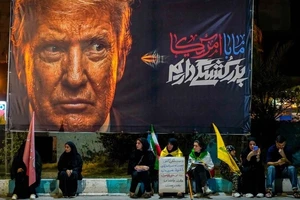
  • Iranian clerical call to kill Trump spreads, attracts alleged fundraising

    Iranian clerical call to kill Trump spreads, attracts alleged fundraising

His argument gives religious grounds for individuals to take revenge into their own hands, at a time when Iran's commanders are vowing revenge for Khamenei, who was killed in US-Israeli strikes on February 28, and Iran-linked plots against people abroad are before courts in Britain, the United States and Europe.

Revenge, not retribution

Fazel Lankarani drew a line between revenge and qisas, the retribution in kind that Islamic law prescribes for murder and bodily harm. Qisas requires the punishment to match the crime. Revenge, he said, covers a much wider range of offenses and requires no such match.

He based the legitimacy of what he called "earthly revenge" on the Quran's depiction of God as an avenger, citing verses that name disbelief, persistent sin, crime and oppression as grounds for divine vengeance against societies.

100%
Ruhollah Khomeini's grandson, Hassan Khomeini, stands next to Iran's slain former Supreme Leader Ali Khamenei.

A duty no one can forgive

Quranic verses that urge patience and forgiveness apply only to personal wrongs, Fazel Lankarani said. When an injustice is done to society, religion or the Islamic political system, the right to revenge belongs to the whole community.

He cited the killing of Khamenei, of military commanders, and children in the southern city of Minab as cases where revenge, not qisas, is a religious duty.

Drawing on Shiite tradition, he also suggested extending the role of vali-ye dam, the heir entitled to demand retribution for a killing, to the entire community of believers. Because religious leaders are spiritual fathers to the faithful, he said, avenging their deaths could become a right all believers share.

Once revenge is religiously required, he said, an Islamic state is bound to pursue it, and cannot waive it by forgiving the offender. That limits the room officials have to choose not to retaliate.

From fatwa to violence

Religious rulings have been used before to sanction violence by individuals far from Iran.

  • Rushdie returns to the fatwa that nearly cost him his life

    Rushdie returns to the fatwa that nearly cost him his life

Ruhollah Khomeini, the founder of the Islamic Republic, issued a fatwa in 1989 calling for the killing of the novelist Salman Rushdie, who was stabbed and badly wounded on stage in New York in 2022.

A dynasty of clerics

Fazel Lankarani is the son of the late Grand Ayatollah Mohammad Fazel Lankarani, a marja-e taqlid, or senior religious authority whom Shiite Muslims follow on religious and legal matters. He now heads the jurisprudence research center his father founded in Qom in 1997.

He is part of a pattern of clerical families keeping religious institutions and political influence across generations. The most prominent example is Supreme Leader Mojtaba Khamenei, who succeeded his father this year.