• العربية
  • فارسی
BrandBrand
  • Iran Insight
  • Politics
  • Economy
  • Analysis
  • Special Report
  • Opinion
  • Podcast
  • Live TV
  • Iran Insight
  • Politics
  • Economy
  • Analysis
  • Special Report
  • Opinion
  • Podcast
  • Live TV
  • Theme
  • Language
    • العربية
    • فارسی
  • Iran Insight
  • Politics
  • Economy
  • Analysis
  • Special Report
  • Opinion
  • Podcast
  • Live TV
All rights reserved for Volant Media UK Limited
volant media logo

Turkey, Saudi Arabia sign defense industry cooperation deal

Nov 26, 2026, 22:27 GMT+0
Turkish and Saudi officials pose with documents following the signing of a defense industry cooperation agreement. (Anadolu/X)

Turkey and Saudi Arabia have signed an agreement to strengthen cooperation in the defense industry, Turkey’s Defense Industries President Haluk Gorgun announced on Thursday, the state-run Anadolu news agency reported.

The agreement covers further cooperation in research, development and innovation in defense and military technologies.

The agreement follows the signing of the Mecca Joint Defense Agreement by Turkey, Saudi Arabia and Pakistan in August, under which an armed attack against one member is considered an attack against all three.

Turkey’s parliament ratified the pact earlier this month amid escalating attacks by Yemen’s Iran-backed Houthis on Saudi Arabia. The three countries are set to meet in Islamabad on Friday and Saturday to discuss the mutual defense agreement.

Most Viewed

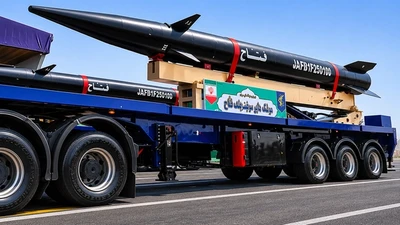
Iran develops new ballistic missile variants, US think tanks say
1

Iran develops new ballistic missile variants, US think tanks say

2
INSIGHT

Iran’s efforts to offset US naval blockade fall short, economists warn

3

Iran rapidly builds underground complex near nuclear sites – US institute

4

Iran-backed Iraqi militia prepares for renewed US-Iran war, report says

5

Iran dismisses US blockade, warns of broader confrontation

Banner

Spotlight

  • Iran’s ‘self-sanctions’ compound pressure from US blockade, critics say

    Iran’s ‘self-sanctions’ compound pressure from US blockade, critics say

  • Iranian women break silence on a lifetime of violence
    VOICES FROM IRAN

    Iranian women break silence on a lifetime of violence

  • Too poor to marry, young Iranians are offered religious workarounds
    INSIGHT

    Too poor to marry, young Iranians are offered religious workarounds

  • Persian Gulf oil exports near prewar levels despite Hormuz attacks
    INSIGHT

    Persian Gulf oil exports near prewar levels despite Hormuz attacks

  • Iran faces year-end cash squeeze if US blockade holds
    INSIGHT

    Iran faces year-end cash squeeze if US blockade holds

  • A broken leg and broken trust: Violence in Iran’s schools
    VOICES FROM IRAN

    A broken leg and broken trust: Violence in Iran’s schools

Banner
Banner
Banner
Banner
Banner
Banner
•
•
•

More Stories

Iran faces global condemnation over Kuwait attack that killed two Italians

Nov 26, 2026, 22:00 GMT+0
100%
File photo shows a large plume of black smoke and flames near an oil facility in Mangaf, Kuwait, on July 18, 2026.

Arab governments condemned Iran and the European Commission president urged greater pressure on Tehran after a drone attack killed two Italian technicians in Kuwait on Thursday, while Iran denied responsibility and suggested a possible “false flag” operation.

Kuwait’s defense ministry said its forces intercepted several drones and that falling debris struck four people at a military site. The two Italians died of their injuries. A Kuwaiti army captain and a Pakistani national were also wounded.

The technicians worked for Rheinmetall Italia, the Italian arm of the German defense company. They were servicing radar antennas for a Skyguard air defense system used by Kuwait’s armed forces, Italy’s foreign ministry said.

Italian Foreign Minister Antonio Tajani said Rome would lodge a complaint with the Iranian embassy. He urged restraint, saying the Arab countries across the Persian Gulf from Iran were not parties to the war.

European Commission President Ursula von der Leyen urged greater pressure on Tehran to end attacks on its neighbors, saying security in the Persian Gulf “is a matter of security for us all.”

Arab governments condemn attack

Saudi Arabia called for an immediate halt to Iranian attacks and said it held Tehran responsible for the consequences. Bahrain urged the UN Security Council to hold Iran accountable and called on Tehran to pay compensation for the damage.

Qatar warned that repeated attacks on Kuwait could undermine diplomatic efforts to ease regional tensions. The United Arab Emirates and Jordan also condemned the strike, describing it as a violation of Kuwait’s sovereignty.

Kuwait’s foreign ministry said the attack violated UN Security Council Resolution 2817 and cited the country’s right to self-defense under Article 51 of the UN Charter. UN Secretary-General Antonio Guterres expressed solidarity with Kuwait in a call with Foreign Minister Sheikh Jarrah Jaber Al-Ahmad Al-Sabah, according to the ministry.

Iran offers joint investigation

Iranian Foreign Minister Abbas Araghchi denied responsibility in separate calls with Sheikh Jarrah and Tajani. He offered to work with Kuwait to establish where the drones came from and who launched them, according to Iran’s foreign ministry.

Iran’s embassy in Rome raised the possibility of a “false flag” operation intended to draw Europe into the conflict.

The Revolutionary Guards-affiliated Fars news agency suggested a possible Ukrainian role, citing an interview with an unnamed security source who alleged that Ukraine had deployed drones in the region, including in Iraqi Kurdistan. The source offered no evidence linking Ukraine to the attack in Kuwait.

Earlier this month, Iran said it had targeted US military sites in Kuwait after the United States struck Iran’s Qeshm Island in the Strait of Hormuz.

Iran’s ‘self-sanctions’ compound pressure from US blockade, critics say

Nov 26, 2026, 20:24 GMT+0
•
Maryam Sinaiee
100%
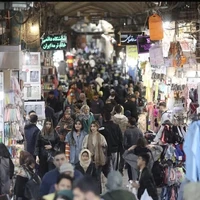
FILE PHOTO: Iranian people shop at the Tehran Bazaar in Tehran, Iran, March 26, 2025. Majid Asgaripour/WANA (West Asia News Agency) via REUTERS

Iranian lawmakers and analysts accuse the Pezeshkian administration of adding to the strain of US sanctions and the naval blockade through currency rules that penalize exporters and bureaucratic hurdles that make it harder for manufacturers to secure raw materials.

They describe a range of domestic measures as “self-sanctions,” pointing to restrictions on foreign currency transactions, banking and customs procedures, and price controls that make it more difficult for businesses to operate.

The criticism has taken on renewed significance as Iran faces restrictions on maritime trade and oil exports. Critics say the government has focused on the consequences of external pressure while doing too little to strengthen domestic production or expand trade through land borders and barter arrangements.

On Wednesday, Hassan Ghashghavi, the spokesman for parliament’s National Security and Foreign Policy Committee, urged the government to support producers during what he described as an “existential war.”

Manufacturers, he said, need access to foreign currency and raw materials to stay in business and avoid bankruptcy.

“Given the existing capacities, the country’s main problem is not a lack of resources but weak management,” Ghashghavi said.

‘Domestic sanctions’ on producers and exporters

Amir Sayyah, an economic advisor to Parliament Speaker Mohammad Bagher Ghalibaf during 2024 presidential debates, told the state TV that the government is making it harder for Iranian entrepreneurs and exporters to operate under already difficult conditions.

“The biggest problem with our economy, apart from foreign sanctions – and I’m not denying foreign sanctions – is domestic sanctions,” Sayyah said on the Be Vaghte Iran (Iran Time) TV debate.

“Whoever can negotiate should go and resolve [the foreign sanctions]. Whoever can find a way around them should do so. But as for domestic sanctions ... if [the enemy] is stabbing us from the front, the government and all these executive agencies should not stab [producers and exporters] in the back.”

Sayyah argued that Iranian businesses could maintain production, trade and financial transactions despite international sanctions if domestic authorities gave them room to operate.

He said currency exchange companies were capable of transferring money from countries such as the United States to destinations in Europe, the Middle East and East Asia, but that the government had failed to make use of their services.

Easing administrative and regulatory restrictions, he argued, would allow businesses to operate more freely without waiting for foreign sanctions to be lifted. He said it would also strengthen Iran’s economic position in any negotiations with Washington.

One of the main obstacles facing exporters, according to Sayyah, is the requirement to bring their foreign currency earnings home at exchange rates set by the central bank. Those rates can put exporters at a financial disadvantage, he said, discouraging them from bringing their earnings back and reducing the supply of foreign currency at home.

“An exporter who earns foreign currency for the country despite sanctions should be regarded as part of the national effort to counter the blockade, rather than being treated as a violator by government agencies,” he said.

Sayyah said the administration of former President Ebrahim Raisi and the parliament at the time had removed some regulations that hampered producers and exporters, but that the work had stalled under Pezeshkian.

Government faces criticism over its economic response

Pezeshkian has repeatedly spoken about the difficulties posed by what he calls economic warfare, arguing that they are more complicated than those of military confrontation.

He has pointed to a shortage of funds and to shortfalls in electricity and natural gas supplies that are expected to lead to scheduled power cuts this winter.

The president has backed diplomacy, arguing that ending the current state of “neither war nor peace” is necessary to ease economic pressure and uncertainty.

His government has drafted next year’s budget around two scenarios, reflecting uncertainty over how long the maritime blockade will last.

The first assumes that current conditions will persist, requiring sharp spending cuts and a halt to new infrastructure projects. Under that scenario, the government would reserve all available foreign currency for essential goods and medicine.

The second envisages the lifting of restrictions and a gradual recovery in the supply of foreign currency, allowing the government to resume reconstruction and infrastructure projects.

Conservative and hardline critics have taken issue with how often the president and his ministers discuss the country’s economic difficulties. They argue that repeated warnings about electricity and gas shortages, scheduled power cuts and limited funds frighten the public and reinforce what they describe as Washington’s psychological warfare.

Hardliners have urged the government to do more to counter the blockade by expanding barter trade and helping domestic producers make fuller use of their capacity.

Imports and non-oil exports fall

The value of Iran’s non-oil exports fell 28.2% between the beginning of April and the end of August compared with the same period a year earlier, according to Foroud Asgari, head of Iran’s Customs Administration. Non-oil exports were down 32.5% from the corresponding period in 2024, before the war.

Imports fell from $23.02 billion to $17 billion, a 26.1% decrease from a year earlier. Compared with the same period in 2024, imports were down 38%, a steeper decline than for non-oil exports.

A substantial share of Iran’s imports consists of raw materials, intermediate goods and machinery used by domestic manufacturers. Economists warn that reduced access to those goods could further undermine production in an economy already under pressure from sanctions and the blockade.

Limits of land routes

Economist Mohammad-Mehdi Behkish has argued that the blockade presents a problem beyond the financial obstacles Iranian businesses faced under previous sanctions.

Even when importers find a way to transfer payments to foreign suppliers, they still face the challenge of getting the goods into the country, he said.

Iran has traditionally conducted a substantial share of its foreign trade by sea. Its land routes have limited capacity and cannot handle the volume of goods previously carried by ship, Behkish argued.

France urges Iran to halt executions at Paris gathering that drew Tehran’s ire

Nov 26, 2026, 17:17 GMT+0
•
Sajedeh Sharifi
100%
“Liberté” (freedom) lights up the facade of the Arab World Institute in Paris on November 25, 2026, as part of a projection of the Iranian protest slogan “Woman, Life, Freedom.” Screengrab from a video shared on X by French Foreign Minister Jean-Noël Barrot.

France urged Iran to halt executions immediately at a Paris gathering of Iranian artists on Wednesday, drawing a rebuke from Tehran’s foreign minister, who accused his French counterpart of lecturing Iranians about their rights.

French Foreign Minister Jean-Noël Barrot opened the “Iranian Voices” event at the Arab World Institute by naming Milad Armoon and Navid Najjaran, two protesters facing execution in a case dating back to the 2022 uprising.

He said the Islamic Republic had failed to crush the protest movement.

“France stands with Iranian women and men who are rightly calling for justice, freedom and dignity,” Barrot wrote on X on Wednesday. His post included a video showing the slogan “Woman, Life, Freedom” projected onto the facade of the Arab World Institute in Paris.

In a separate Instagram post, Barrot shared a clip pairing his French television interview with footage of Iranian singer Parastoo Ahmadi performing. “Caught between repression and war, Iranian voices must not fall silent,” he wrote.

Iranian Foreign Minister Abbas Araghchi mocked the gathering in a post on X on Thursday, pointing to the French foreign ministry’s role in organizing it.

Araghchi shared footage of chanting during a dispute at the gathering and said Barrot should focus on protecting freedom of expression for Iranians in France before lecturing Tehran about the rights of Iranians at home.

Barrot’s appeal came hours after Armoon’s lawyer said he had received word by phone that his client’s execution had been suspended shortly before it was due to take place.

Iran’s judiciary-affiliated Mizan news agency disputed reports about the timing and said the death sentences against both men, who were detained over protests in Tehran’s Ekbatan neighborhood, remained in force.

Barrot also spoke about Iranian singer Parastoo Ahmadi, who received 74 lashes on Monday for performing without a headscarf in a concert streamed online in 2024.

Ahmadi’s voice accompanied a video Barrot shared on Instagram showing the words “Woman, Life, Freedom” projected onto the institute’s facade. France stood with Iranian women and men demanding “justice, freedom and dignity,” he wrote.

100%
A photo of Mahsa "Jina" Amini at the Paris event held on Nov. 25, 2026.

The event marked the International Day for the Elimination of Violence against Women. The Arshid Azarine Trio performed “Song to Jina,” and actor Mina Kavani read Iranian poet Forough Farrokhzad’s “Earthly Verses” in Persian and French. A short film by Tanin Torabi showed a young woman dancing in public spaces in Iran.

Barrot had announced the gathering in Brussels on November 16, when he sought European Union sanctions over an October cyberattack on refrigeration systems at about 700 French supermarkets.

Paris blamed Iran’s Revolutionary Guards, an accusation Tehran rejected. Barrot said he hoped EU foreign ministers would approve sanctions against those responsible at their December 14 meeting.

Iranian patients pay doctors under the table as health system falters

Nov 26, 2026, 14:22 GMT+0
100%
A medical worker attends to a patient at a hospital in Iran.

Weak oversight and financial strain in Iran's healthcare system have left patients facing demands for under-the-table payments, some running to billions of rials for essential treatment, the state news agency IRNA reported on Wednesday.

IRNA called the practice, known in Iran as zirmizi, or "under the table," a possible form of "modern-day extortion" that exploits patients' dependence on their doctors and their fear of losing treatment.

Patients have reported demands for hundreds of millions of rials for routine operations such as removing an appendix or tonsils, and several billion rials for specialized treatment such as bone marrow procedures, IRNA said. One hundred million rials is about $36, and 3 billion rials about $1,070, at a time when the monthly minimum wage is about 166 million rials, or $59.

The payments fall outside insurance and can bypass hospital accounts through cash, personal bank accounts, intermediaries and installments. Patients have told Iran International that some doctors demanded cash or gold coins before performing surgery.

  • Soaring medical costs and staff shortages strain Iran’s hospitals

    Soaring medical costs and staff shortages strain Iran’s hospitals

Fear of speaking up

Fear of delayed surgery, retaliation or losing follow-up care keeps many patients from reporting unauthorized charges, which weakens a system of oversight that depends on formal complaints.

Many cases referred to the Government Discretionary Penalties Organization end in acquittal for lack of evidence, such as missing receipts, Deputy Health Minister Sajjad Razavi told local media last month.

There are no reliable figures, said lawmaker Mohammad Jamalian, who heads a parliamentary committee investigating the payments, because so few violations lead to complaints.

In August, the head of the Medical Council, Mohammad Raeeszadeh, cited a survey of more than 60,000 people in which only 5.6 percent said they had paid above approved rates. IRNA questioned the survey's method and whether it counted payments that went unreported.

Patients pay

Iranian patients are paying 55 to 75 percent of their healthcare costs out of pocket this year, and some medicine prices have risen 400 to 500 percent, Hosseinali Shahriari, chairman of parliament's Health Committee, said in September.

  • Unpaid insurance bills push Iran's private hospitals into financial strain

    Unpaid insurance bills push Iran's private hospitals into financial strain

  • Iran’s healthcare crunch forces patients to cut treatment

    Iran’s healthcare crunch forces patients to cut treatment

Nearly half of those who answered a voluntary Iran International audience survey from October 30 to November 3 said they had postponed treatment or medication because of rising prices. Rising costs have also pushed patients from private hospitals into overstretched public ones.

Much of the strain comes from the state itself. Hospitals and doctors say official tariffs are too low to cover costs, and some state-run basic and supplementary insurers are seven to eight months behind on their payments, Raeeszadeh has said.

None of that justifies unlawful charges, IRNA said, adding that fixing medical pricing and health financing was the job of policymakers, not patients. It called for insurers to pay on time, for transparent hospital billing, for protection for patients who report violations, and for disciplinary cases to be made public.

Iranian cleric says believers must avenge Khamenei if the state does not

Nov 26, 2026, 13:13 GMT+0
100%
Mohammad Javad Fazel Lankarani speaks at the “Jurisprudence of Revenge” seminar in Qom on November 25, 2026, where he described revenge for injustices against society as a binding religious obligation to be pursued by the state and citizens.

A senior cleric in the Iranian seminary city of Qom said on Wednesday that avenging attacks on Islam and the Islamic Republic, including the killing of Ali Khamenei, is a religious duty that cannot be forgiven, and that ordinary believers must act if the state does not.

Ayatollah Mohammad Javad Fazel Lankarani set out his case at a seminar titled "The Jurisprudence of Revenge," attended by clerics, university professors and students.

If officials fail to carry out the duty of revenge, he said, responsibility passes to individuals able to act, provided they do not disrupt the Islamic political order.

  • Against restraint: Iran's hardliners rewrite the rules of confrontation

    Against restraint: Iran's hardliners rewrite the rules of confrontation

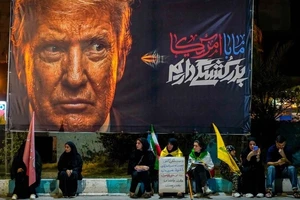
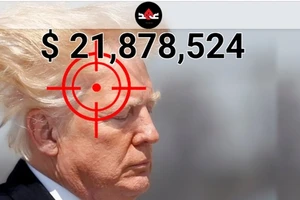
  • Iranian clerical call to kill Trump spreads, attracts alleged fundraising

    Iranian clerical call to kill Trump spreads, attracts alleged fundraising

His argument gives religious grounds for individuals to take revenge into their own hands, at a time when Iran's commanders are vowing revenge for Khamenei, who was killed in US-Israeli strikes on February 28, and Iran-linked plots against people abroad are before courts in Britain, the United States and Europe.

Revenge, not retribution

Fazel Lankarani drew a line between revenge and qisas, the retribution in kind that Islamic law prescribes for murder and bodily harm. Qisas requires the punishment to match the crime. Revenge, he said, covers a much wider range of offenses and requires no such match.

He based the legitimacy of what he called "earthly revenge" on the Quran's depiction of God as an avenger, citing verses that name disbelief, persistent sin, crime and oppression as grounds for divine vengeance against societies.

100%
Ruhollah Khomeini's grandson, Hassan Khomeini, stands next to Iran's slain former Supreme Leader Ali Khamenei.

A duty no one can forgive

Quranic verses that urge patience and forgiveness apply only to personal wrongs, Fazel Lankarani said. When an injustice is done to society, religion or the Islamic political system, the right to revenge belongs to the whole community.

He cited the killing of Khamenei, of military commanders, and children in the southern city of Minab as cases where revenge, not qisas, is a religious duty.

Drawing on Shiite tradition, he also suggested extending the role of vali-ye dam, the heir entitled to demand retribution for a killing, to the entire community of believers. Because religious leaders are spiritual fathers to the faithful, he said, avenging their deaths could become a right all believers share.

Once revenge is religiously required, he said, an Islamic state is bound to pursue it, and cannot waive it by forgiving the offender. That limits the room officials have to choose not to retaliate.

From fatwa to violence

Religious rulings have been used before to sanction violence by individuals far from Iran.

  • Rushdie returns to the fatwa that nearly cost him his life

    Rushdie returns to the fatwa that nearly cost him his life

Ruhollah Khomeini, the founder of the Islamic Republic, issued a fatwa in 1989 calling for the killing of the novelist Salman Rushdie, who was stabbed and badly wounded on stage in New York in 2022.

A dynasty of clerics

Fazel Lankarani is the son of the late Grand Ayatollah Mohammad Fazel Lankarani, a marja-e taqlid, or senior religious authority whom Shiite Muslims follow on religious and legal matters. He now heads the jurisprudence research center his father founded in Qom in 1997.

He is part of a pattern of clerical families keeping religious institutions and political influence across generations. The most prominent example is Supreme Leader Mojtaba Khamenei, who succeeded his father this year.