• العربية
  • فارسی
BrandBrand
  • Iran Insight
  • Politics
  • Economy
  • Analysis
  • Special Report
  • Opinion
  • Podcast
  • Live TV
  • Iran Insight
  • Politics
  • Economy
  • Analysis
  • Special Report
  • Opinion
  • Podcast
  • Live TV
  • Theme
  • Language
    • العربية
    • فارسی
  • Iran Insight
  • Politics
  • Economy
  • Analysis
  • Special Report
  • Opinion
  • Podcast
  • Live TV
All rights reserved for Volant Media UK Limited
volant media logo

Iran-backed Houthi attack on Saudi oil refinery kills one worker, injures several

Nov 26, 2026, 21:35 GMT+0

A Nepali worker was killed and several others were injured after an aerial projectile struck Saudi Arabia’s Jazan oil refinery on Thursday amid escalating attacks by Yemen’s Iran-backed Houthis, the Saudi Press Agency reported, citing an official source at the kingdom’s energy ministry.

“The attack caused a fire, which has been put out, and temporarily halted some operations at the refinery. The injured are receiving medical care,” the source said.

“Emergency teams and specialized technical crews responded immediately and, in coordination with the relevant authorities, are assessing the damage and checking the safety of the facilities,” the source added.

The refinery, located near the Yemeni border on Saudi Arabia’s Red Sea coast, is designed to process up to 400,000 barrels of crude oil per day.

The Saudi-led military coalition said on Thursday that Yemen’s Iran-backed Houthis had attacked the Jazan refinery and later announced that it had destroyed a Houthi ballistic missile launch platform in Yemen’s Hodeidah province used to carry out the attack.

Most Viewed

Iran develops new ballistic missile variants, US think tanks say
1

Iran develops new ballistic missile variants, US think tanks say

2
INSIGHT

Iran’s efforts to offset US naval blockade fall short, economists warn

3

Iran rapidly builds underground complex near nuclear sites – US institute

4

Iran-backed Iraqi militia prepares for renewed US-Iran war, report says

5

Iran dismisses US blockade, warns of broader confrontation

Banner

Spotlight

  • Iran’s ‘self-sanctions’ compound pressure from US blockade, critics say

    Iran’s ‘self-sanctions’ compound pressure from US blockade, critics say

  • Iranian women break silence on a lifetime of violence
    VOICES FROM IRAN

    Iranian women break silence on a lifetime of violence

  • Too poor to marry, young Iranians are offered religious workarounds
    INSIGHT

    Too poor to marry, young Iranians are offered religious workarounds

  • Persian Gulf oil exports near prewar levels despite Hormuz attacks
    INSIGHT

    Persian Gulf oil exports near prewar levels despite Hormuz attacks

  • Iran faces year-end cash squeeze if US blockade holds
    INSIGHT

    Iran faces year-end cash squeeze if US blockade holds

  • A broken leg and broken trust: Violence in Iran’s schools
    VOICES FROM IRAN

    A broken leg and broken trust: Violence in Iran’s schools

Banner
Banner
Banner
Banner
Banner
Banner
•
•
•

More Stories

Iran’s ‘self-sanctions’ compound pressure from US blockade, critics say

Nov 26, 2026, 20:24 GMT+0
•
Maryam Sinaiee
100%
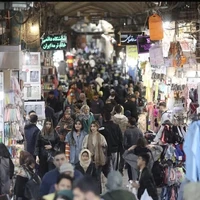
FILE PHOTO: Iranian people shop at the Tehran Bazaar in Tehran, Iran, March 26, 2025. Majid Asgaripour/WANA (West Asia News Agency) via REUTERS

Iranian lawmakers and analysts accuse the Pezeshkian administration of adding to the strain of US sanctions and the naval blockade through currency rules that penalize exporters and bureaucratic hurdles that make it harder for manufacturers to secure raw materials.

They describe a range of domestic measures as “self-sanctions,” pointing to restrictions on foreign currency transactions, banking and customs procedures, and price controls that make it more difficult for businesses to operate.

The criticism has taken on renewed significance as Iran faces restrictions on maritime trade and oil exports. Critics say the government has focused on the consequences of external pressure while doing too little to strengthen domestic production or expand trade through land borders and barter arrangements.

On Wednesday, Hassan Ghashghavi, the spokesman for parliament’s National Security and Foreign Policy Committee, urged the government to support producers during what he described as an “existential war.”

Manufacturers, he said, need access to foreign currency and raw materials to stay in business and avoid bankruptcy.

“Given the existing capacities, the country’s main problem is not a lack of resources but weak management,” Ghashghavi said.

‘Domestic sanctions’ on producers and exporters

Amir Sayyah, an economic advisor to Parliament Speaker Mohammad Bagher Ghalibaf during 2024 presidential debates, told the state TV that the government is making it harder for Iranian entrepreneurs and exporters to operate under already difficult conditions.

“The biggest problem with our economy, apart from foreign sanctions – and I’m not denying foreign sanctions – is domestic sanctions,” Sayyah said on the Be Vaghte Iran (Iran Time) TV debate.

“Whoever can negotiate should go and resolve [the foreign sanctions]. Whoever can find a way around them should do so. But as for domestic sanctions ... if [the enemy] is stabbing us from the front, the government and all these executive agencies should not stab [producers and exporters] in the back.”

Sayyah argued that Iranian businesses could maintain production, trade and financial transactions despite international sanctions if domestic authorities gave them room to operate.

He said currency exchange companies were capable of transferring money from countries such as the United States to destinations in Europe, the Middle East and East Asia, but that the government had failed to make use of their services.

Easing administrative and regulatory restrictions, he argued, would allow businesses to operate more freely without waiting for foreign sanctions to be lifted. He said it would also strengthen Iran’s economic position in any negotiations with Washington.

One of the main obstacles facing exporters, according to Sayyah, is the requirement to bring their foreign currency earnings home at exchange rates set by the central bank. Those rates can put exporters at a financial disadvantage, he said, discouraging them from bringing their earnings back and reducing the supply of foreign currency at home.

“An exporter who earns foreign currency for the country despite sanctions should be regarded as part of the national effort to counter the blockade, rather than being treated as a violator by government agencies,” he said.

Sayyah said the administration of former President Ebrahim Raisi and the parliament at the time had removed some regulations that hampered producers and exporters, but that the work had stalled under Pezeshkian.

Government faces criticism over its economic response

Pezeshkian has repeatedly spoken about the difficulties posed by what he calls economic warfare, arguing that they are more complicated than those of military confrontation.

He has pointed to a shortage of funds and to shortfalls in electricity and natural gas supplies that are expected to lead to scheduled power cuts this winter.

The president has backed diplomacy, arguing that ending the current state of “neither war nor peace” is necessary to ease economic pressure and uncertainty.

His government has drafted next year’s budget around two scenarios, reflecting uncertainty over how long the maritime blockade will last.

The first assumes that current conditions will persist, requiring sharp spending cuts and a halt to new infrastructure projects. Under that scenario, the government would reserve all available foreign currency for essential goods and medicine.

The second envisages the lifting of restrictions and a gradual recovery in the supply of foreign currency, allowing the government to resume reconstruction and infrastructure projects.

Conservative and hardline critics have taken issue with how often the president and his ministers discuss the country’s economic difficulties. They argue that repeated warnings about electricity and gas shortages, scheduled power cuts and limited funds frighten the public and reinforce what they describe as Washington’s psychological warfare.

Hardliners have urged the government to do more to counter the blockade by expanding barter trade and helping domestic producers make fuller use of their capacity.

Imports and non-oil exports fall

The value of Iran’s non-oil exports fell 28.2% between the beginning of April and the end of August compared with the same period a year earlier, according to Foroud Asgari, head of Iran’s Customs Administration. Non-oil exports were down 32.5% from the corresponding period in 2024, before the war.

Imports fell from $23.02 billion to $17 billion, a 26.1% decrease from a year earlier. Compared with the same period in 2024, imports were down 38%, a steeper decline than for non-oil exports.

A substantial share of Iran’s imports consists of raw materials, intermediate goods and machinery used by domestic manufacturers. Economists warn that reduced access to those goods could further undermine production in an economy already under pressure from sanctions and the blockade.

Limits of land routes

Economist Mohammad-Mehdi Behkish has argued that the blockade presents a problem beyond the financial obstacles Iranian businesses faced under previous sanctions.

Even when importers find a way to transfer payments to foreign suppliers, they still face the challenge of getting the goods into the country, he said.

Iran has traditionally conducted a substantial share of its foreign trade by sea. Its land routes have limited capacity and cannot handle the volume of goods previously carried by ship, Behkish argued.
France urges Iran to halt executions at Paris gathering that drew Tehran’s ire

Nov 26, 2026, 17:17 GMT+0
•
Sajedeh Sharifi
100%
“Liberté” (freedom) lights up the facade of the Arab World Institute in Paris on November 25, 2026, as part of a projection of the Iranian protest slogan “Woman, Life, Freedom.” Screengrab from a video shared on X by French Foreign Minister Jean-Noël Barrot.

France urged Iran to halt executions immediately at a Paris gathering of Iranian artists on Wednesday, drawing a rebuke from Tehran’s foreign minister, who accused his French counterpart of lecturing Iranians about their rights.

French Foreign Minister Jean-Noël Barrot opened the “Iranian Voices” event at the Arab World Institute by naming Milad Armoon and Navid Najjaran, two protesters facing execution in a case dating back to the 2022 uprising.

He said the Islamic Republic had failed to crush the protest movement.

“France stands with Iranian women and men who are rightly calling for justice, freedom and dignity,” Barrot wrote on X on Wednesday. His post included a video showing the slogan “Woman, Life, Freedom” projected onto the facade of the Arab World Institute in Paris.

In a separate Instagram post, Barrot shared a clip pairing his French television interview with footage of Iranian singer Parastoo Ahmadi performing. “Caught between repression and war, Iranian voices must not fall silent,” he wrote.

Iranian Foreign Minister Abbas Araghchi mocked the gathering in a post on X on Thursday, pointing to the French foreign ministry’s role in organizing it.

Araghchi shared footage of chanting during a dispute at the gathering and said Barrot should focus on protecting freedom of expression for Iranians in France before lecturing Tehran about the rights of Iranians at home.

Barrot’s appeal came hours after Armoon’s lawyer said he had received word by phone that his client’s execution had been suspended shortly before it was due to take place.

Iran’s judiciary-affiliated Mizan news agency disputed reports about the timing and said the death sentences against both men, who were detained over protests in Tehran’s Ekbatan neighborhood, remained in force.

Barrot also spoke about Iranian singer Parastoo Ahmadi, who received 74 lashes on Monday for performing without a headscarf in a concert streamed online in 2024.

Ahmadi’s voice accompanied a video Barrot shared on Instagram showing the words “Woman, Life, Freedom” projected onto the institute’s facade. France stood with Iranian women and men demanding “justice, freedom and dignity,” he wrote.

100%
A photo of Mahsa "Jina" Amini at the Paris event held on Nov. 25, 2026.

The event marked the International Day for the Elimination of Violence against Women. The Arshid Azarine Trio performed “Song to Jina,” and actor Mina Kavani read Iranian poet Forough Farrokhzad’s “Earthly Verses” in Persian and French. A short film by Tanin Torabi showed a young woman dancing in public spaces in Iran.

Barrot had announced the gathering in Brussels on November 16, when he sought European Union sanctions over an October cyberattack on refrigeration systems at about 700 French supermarkets.

Paris blamed Iran’s Revolutionary Guards, an accusation Tehran rejected. Barrot said he hoped EU foreign ministers would approve sanctions against those responsible at their December 14 meeting.

Iranian patients pay doctors under the table as health system falters

Nov 26, 2026, 14:22 GMT+0
100%
A medical worker attends to a patient at a hospital in Iran.

Weak oversight and financial strain in Iran's healthcare system have left patients facing demands for under-the-table payments, some running to billions of rials for essential treatment, the state news agency IRNA reported on Wednesday.

IRNA called the practice, known in Iran as zirmizi, or "under the table," a possible form of "modern-day extortion" that exploits patients' dependence on their doctors and their fear of losing treatment.

Patients have reported demands for hundreds of millions of rials for routine operations such as removing an appendix or tonsils, and several billion rials for specialized treatment such as bone marrow procedures, IRNA said. One hundred million rials is about $36, and 3 billion rials about $1,070, at a time when the monthly minimum wage is about 166 million rials, or $59.

The payments fall outside insurance and can bypass hospital accounts through cash, personal bank accounts, intermediaries and installments. Patients have told Iran International that some doctors demanded cash or gold coins before performing surgery.

  • Soaring medical costs and staff shortages strain Iran’s hospitals

    Soaring medical costs and staff shortages strain Iran’s hospitals

Fear of speaking up

Fear of delayed surgery, retaliation or losing follow-up care keeps many patients from reporting unauthorized charges, which weakens a system of oversight that depends on formal complaints.

Many cases referred to the Government Discretionary Penalties Organization end in acquittal for lack of evidence, such as missing receipts, Deputy Health Minister Sajjad Razavi told local media last month.

There are no reliable figures, said lawmaker Mohammad Jamalian, who heads a parliamentary committee investigating the payments, because so few violations lead to complaints.

In August, the head of the Medical Council, Mohammad Raeeszadeh, cited a survey of more than 60,000 people in which only 5.6 percent said they had paid above approved rates. IRNA questioned the survey's method and whether it counted payments that went unreported.

Patients pay

Iranian patients are paying 55 to 75 percent of their healthcare costs out of pocket this year, and some medicine prices have risen 400 to 500 percent, Hosseinali Shahriari, chairman of parliament's Health Committee, said in September.

  • Unpaid insurance bills push Iran's private hospitals into financial strain

    Unpaid insurance bills push Iran's private hospitals into financial strain

  • Iran’s healthcare crunch forces patients to cut treatment

    Iran’s healthcare crunch forces patients to cut treatment

Nearly half of those who answered a voluntary Iran International audience survey from October 30 to November 3 said they had postponed treatment or medication because of rising prices. Rising costs have also pushed patients from private hospitals into overstretched public ones.

Much of the strain comes from the state itself. Hospitals and doctors say official tariffs are too low to cover costs, and some state-run basic and supplementary insurers are seven to eight months behind on their payments, Raeeszadeh has said.

None of that justifies unlawful charges, IRNA said, adding that fixing medical pricing and health financing was the job of policymakers, not patients. It called for insurers to pay on time, for transparent hospital billing, for protection for patients who report violations, and for disciplinary cases to be made public.

Iranian cleric says believers must avenge Khamenei if the state does not

Nov 26, 2026, 13:13 GMT+0
100%
Mohammad Javad Fazel Lankarani speaks at the “Jurisprudence of Revenge” seminar in Qom on November 25, 2026, where he described revenge for injustices against society as a binding religious obligation to be pursued by the state and citizens.

A senior cleric in the Iranian seminary city of Qom said on Wednesday that avenging attacks on Islam and the Islamic Republic, including the killing of Ali Khamenei, is a religious duty that cannot be forgiven, and that ordinary believers must act if the state does not.

Ayatollah Mohammad Javad Fazel Lankarani set out his case at a seminar titled "The Jurisprudence of Revenge," attended by clerics, university professors and students.

If officials fail to carry out the duty of revenge, he said, responsibility passes to individuals able to act, provided they do not disrupt the Islamic political order.

  • Against restraint: Iran's hardliners rewrite the rules of confrontation

    Against restraint: Iran's hardliners rewrite the rules of confrontation

  • Iranian clerical call to kill Trump spreads, attracts alleged fundraising

    Iranian clerical call to kill Trump spreads, attracts alleged fundraising

His argument gives religious grounds for individuals to take revenge into their own hands, at a time when Iran's commanders are vowing revenge for Khamenei, who was killed in US-Israeli strikes on February 28, and Iran-linked plots against people abroad are before courts in Britain, the United States and Europe.

Revenge, not retribution

Fazel Lankarani drew a line between revenge and qisas, the retribution in kind that Islamic law prescribes for murder and bodily harm. Qisas requires the punishment to match the crime. Revenge, he said, covers a much wider range of offenses and requires no such match.

He based the legitimacy of what he called "earthly revenge" on the Quran's depiction of God as an avenger, citing verses that name disbelief, persistent sin, crime and oppression as grounds for divine vengeance against societies.

100%
Ruhollah Khomeini's grandson, Hassan Khomeini, stands next to Iran's slain former Supreme Leader Ali Khamenei.

A duty no one can forgive

Quranic verses that urge patience and forgiveness apply only to personal wrongs, Fazel Lankarani said. When an injustice is done to society, religion or the Islamic political system, the right to revenge belongs to the whole community.

He cited the killing of Khamenei, of military commanders, and children in the southern city of Minab as cases where revenge, not qisas, is a religious duty.

Drawing on Shiite tradition, he also suggested extending the role of vali-ye dam, the heir entitled to demand retribution for a killing, to the entire community of believers. Because religious leaders are spiritual fathers to the faithful, he said, avenging their deaths could become a right all believers share.

Once revenge is religiously required, he said, an Islamic state is bound to pursue it, and cannot waive it by forgiving the offender. That limits the room officials have to choose not to retaliate.

From fatwa to violence

Religious rulings have been used before to sanction violence by individuals far from Iran.

  • Rushdie returns to the fatwa that nearly cost him his life

    Rushdie returns to the fatwa that nearly cost him his life

Ruhollah Khomeini, the founder of the Islamic Republic, issued a fatwa in 1989 calling for the killing of the novelist Salman Rushdie, who was stabbed and badly wounded on stage in New York in 2022.

A dynasty of clerics

Fazel Lankarani is the son of the late Grand Ayatollah Mohammad Fazel Lankarani, a marja-e taqlid, or senior religious authority whom Shiite Muslims follow on religious and legal matters. He now heads the jurisprudence research center his father founded in Qom in 1997.

He is part of a pattern of clerical families keeping religious institutions and political influence across generations. The most prominent example is Supreme Leader Mojtaba Khamenei, who succeeded his father this year.

Iran rapidly builds underground complex near nuclear sites – US institute

Nov 26, 2026, 10:28 GMT+0
100%
Satellite imagery shows construction at Iran’s Behjatabad underground facility on November 24, 2026. (Vantor Technologies/Institute for Science and International Security)

Iran is rapidly constructing a fortified underground complex between two of its main nuclear sites that could house weapons systems or infrastructure linked to its nuclear program, a Washington-based research institute said on Wednesday.

“The function of the facility is not clear at this time. More information is needed to make an accurate assessment,” the Institute for Science and International Security said in a post on X.

The Behjatabad facility stands out among similar underground complexes built across Iran for its unusually rapid pace of construction, according to the institute, which published satellite imagery provided by Vantor Technologies.

The complex lies midway between the Isfahan nuclear site and Pickaxe Mountain near Natanz, approximately 62 kilometers from each. Its outer security perimeter is expected to encompass roughly 12,000 acres (5,000 hectares).

The site's security measures, the nature and pace of construction and Iran’s previous construction practices suggest the complex could serve several military purposes, including housing missile systems or other major weapons systems, the institute said.

“A nuclear purpose cannot be ruled out,” it added.

The facility was first identified by satellite imagery analyst Ben Tzion Macales, who said in a November 17 post on X that construction activity had accelerated following Operation Epic Fury, the US military campaign against Iran earlier this year.

The scale of construction activity was such that progress could be tracked even using relatively low-resolution Sentinel-2 satellite imagery, Macales added.

Satellite imagery reviewed by Vantor showed that initial construction activity began in December 2025 and expanded considerably throughout 2026.

The institute said it would publish additional satellite imagery and a more detailed assessment of the facility in a forthcoming report.

Rebuilding nuclear infrastructure

Construction of the Behjatabad complex comes as the Islamic Republic has sought to rebuild and reinforce some of its underground facilities following attacks on its nuclear and military infrastructure during the 12-day and 40-day wars.

An assessment published by the institute on November 21, 2025, five months after the 12-day war, found that the June attacks on Fordow, Natanz and Isfahan had inflicted extensive and, in some cases, catastrophic damage on Iran’s nuclear infrastructure.

Iran was unable at the time to enrich uranium on a significant scale or manufacture large numbers of centrifuges and had made little progress in restoring its damaged capabilities, according to the assessment.

Researchers warned, however, that the destruction of Iran’s main enrichment facilities did not mean all of its sensitive nuclear capabilities had been eliminated.

Satellite imagery at the time showed activity consistent with debris removal, equipment recovery and efforts to reinforce some facilities.

Remaining nuclear facilities

Among the facilities examined by the institute was Pickaxe Mountain, an underground complex near Natanz that was not targeted during the 12-day war in June 2025.

Iran announced in 2020 that it intended to establish a facility capable of assembling thousands of centrifuges annually at the complex.

Construction of the new facility was approaching completion by November 2025, according to the institute’s assessment.

Researchers identified Pickaxe Mountain as one of the potential sites where Iran could restore parts of its centrifuge manufacturing and assembly capabilities or potentially resume uranium enrichment.

The institute also examined reconstruction at Taleghan 2, a facility within the Parchin military complex that was targeted by Israel in October 2024.

Satellite imagery from 2025 showed extensive reconstruction at the site, including the installation of a cylindrical structure that researchers assessed could have applications in nuclear weapons-related research. Its intended function had not been independently confirmed.

100%
Satellite imagery shows the tunnel complex under construction at Iran’s Behjatabad underground facility on November 24, 2026. (Vantor Technologies/Institute for Science and International Security)

At least three sites associated with possible weapons-related activities had undergone clearance work following attacks, the institute said in its November 2025 assessment.

Uncertainty over enriched uranium stocks

The whereabouts and condition of Iran’s stockpile of some 440 kilograms of uranium enriched to 60% remain among the major unresolved questions surrounding its nuclear program.

Restrictions on access to Iranian nuclear facilities had prevented the International Atomic Energy Agency from fully accounting for the stockpile, the institute said in its November 2025 assessment.

The agency assessed at the time that the material had probably not been removed from the main nuclear sites at Isfahan, Fordow and Natanz, although it could have been relocated within those complexes.

Satellite imagery alone cannot establish what activities are taking place inside Iran’s underground facilities, where its enriched uranium is stored or the condition of its nuclear equipment, according to the institute.

The rapid construction at Behjatabad adds to the growing importance of underground facilities in assessing the future of Iran’s nuclear and military programs.